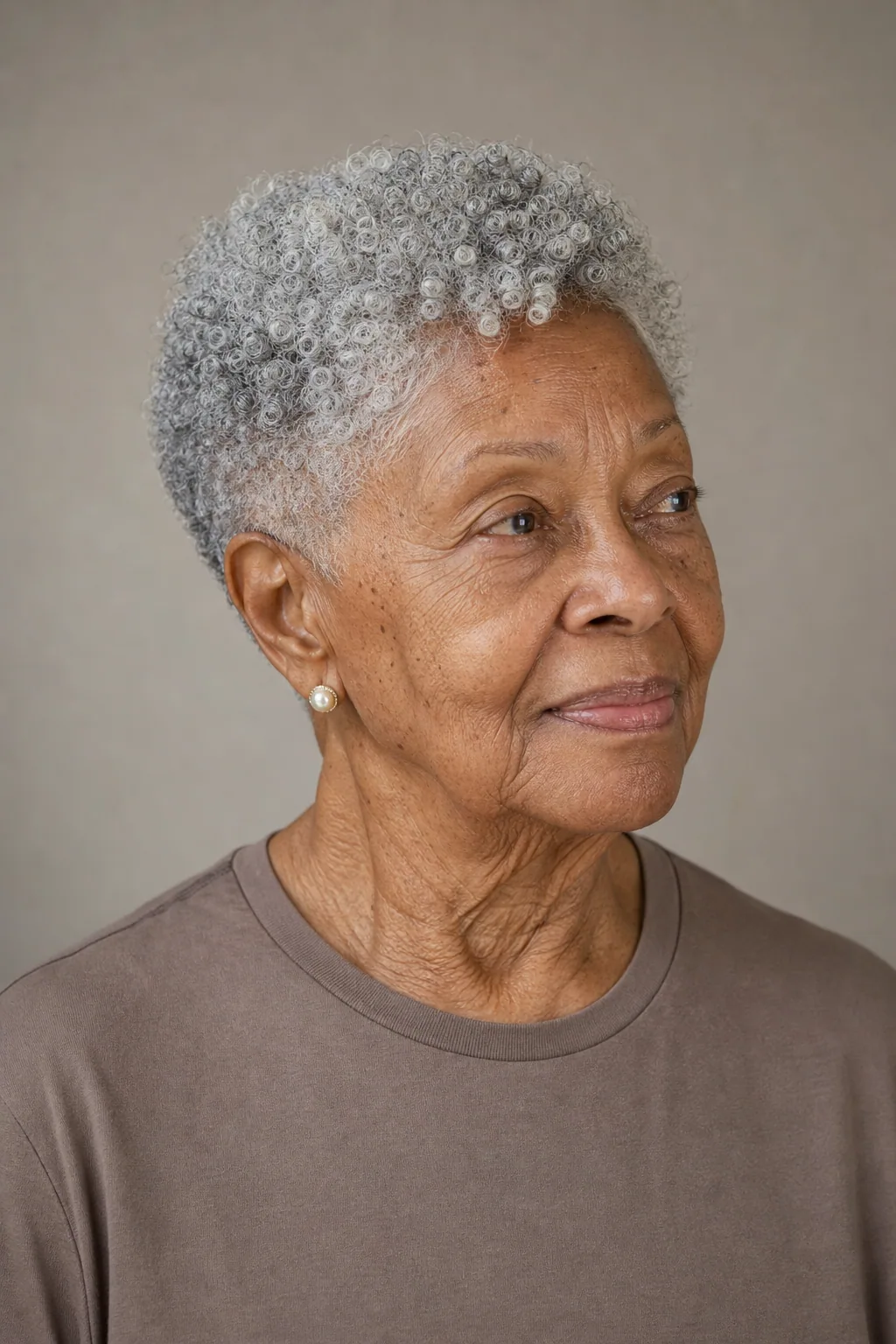
Hairstyles for Women Over 70: 12 Easy Cuts for Fine and Gray Hair
By Coral Pleas, Founder of Cutting Loose Salon · Reviewed by Jules Peacocke · Updated November 2026 · 12 min read
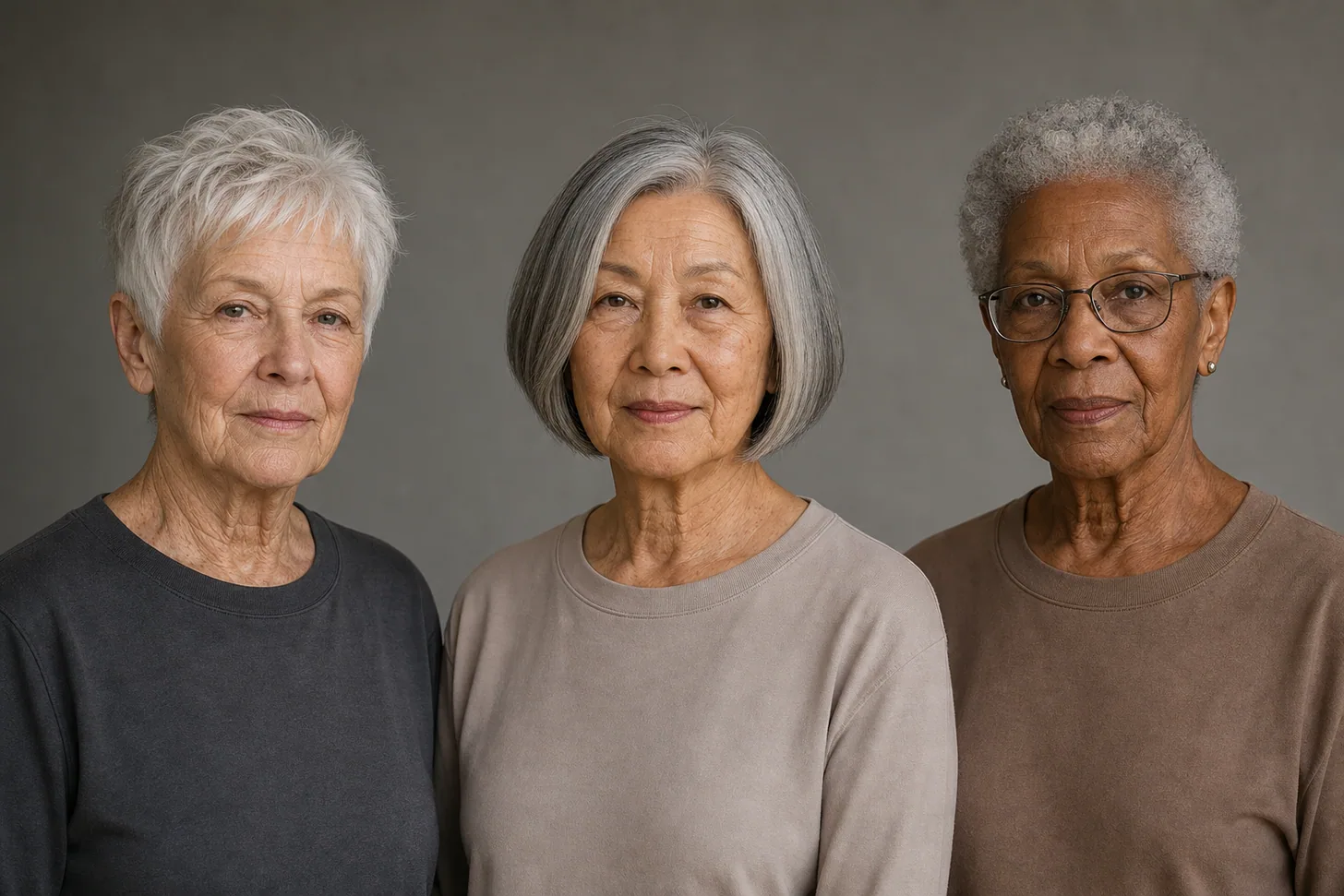
The best hairstyles for women over 70 are the ones your routine can keep up with: cuts that air-dry or finish with a hairdryer and your fingers, sit clear of glasses and hearing aids, and hold their shape for six to eight weeks between trims. For most women that means a short layered crop, a rounded chin-length bob or a soft pixie, though shoulder length still works if it clips up in seconds.
Below are 12 cuts grouped by the routine they suit, with trim intervals, styling minutes, what to ask for and who should skip each. If a round brush is still part of your morning, the cuts for hairstyles for women over 60 are built around lift and gray instead.
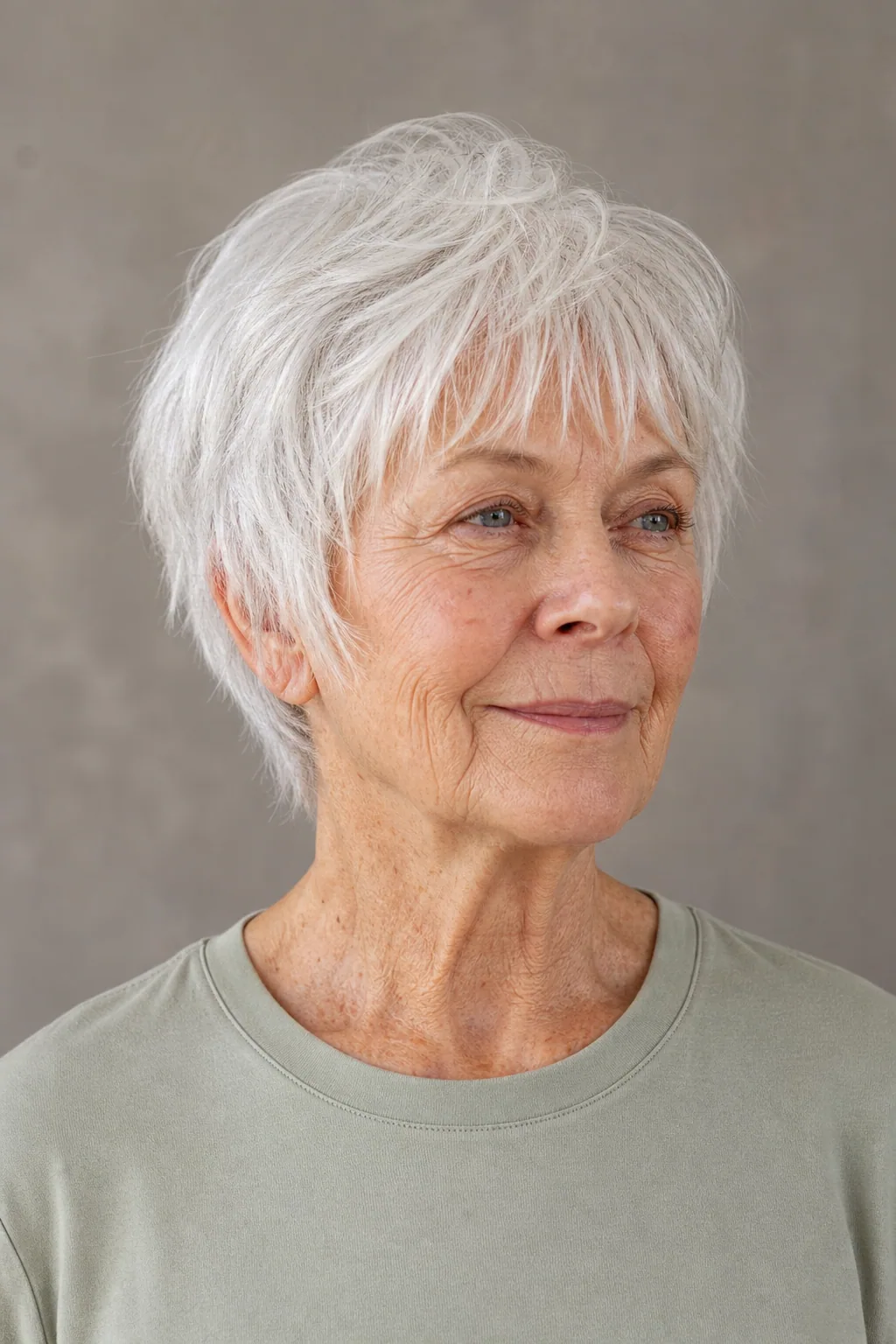
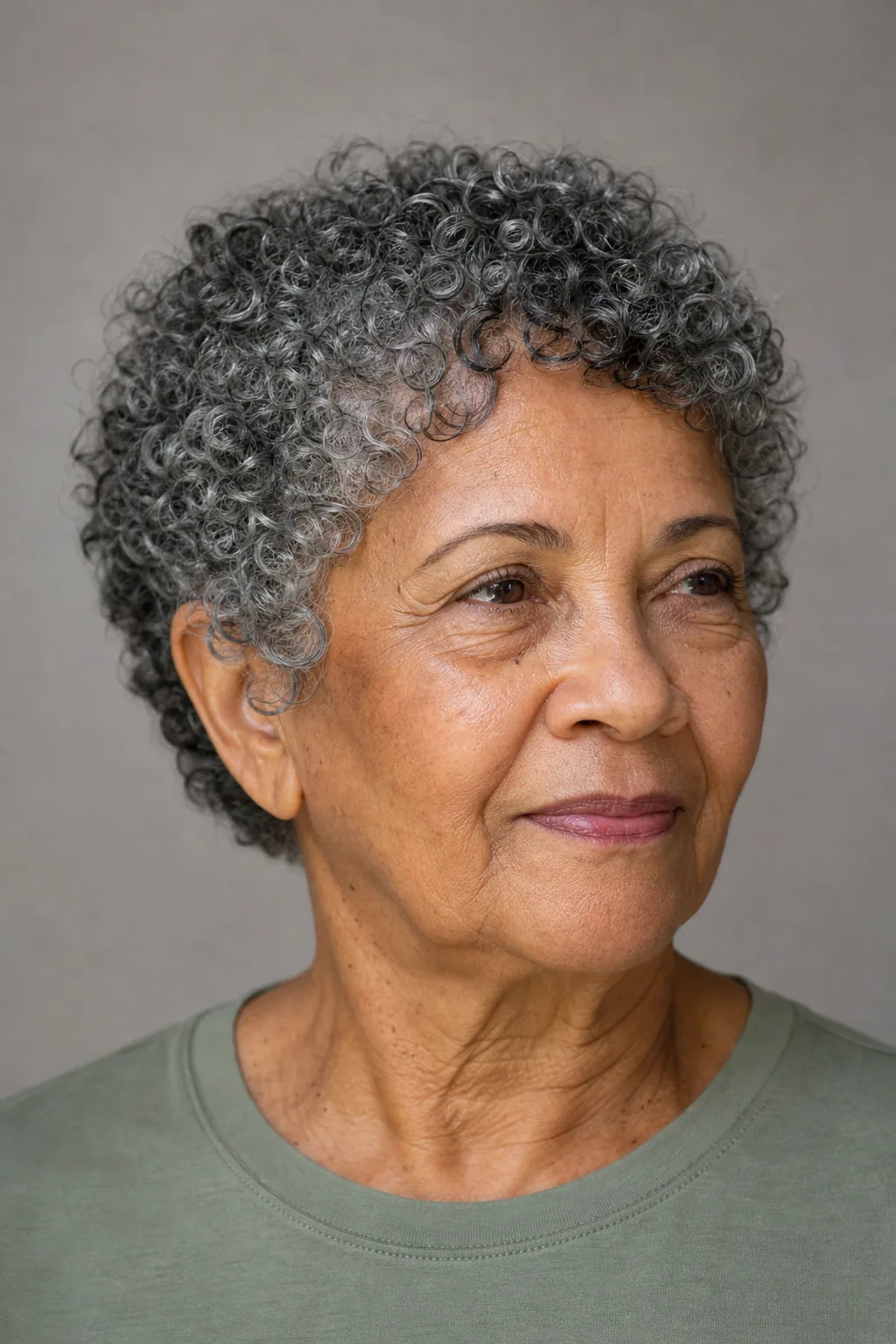
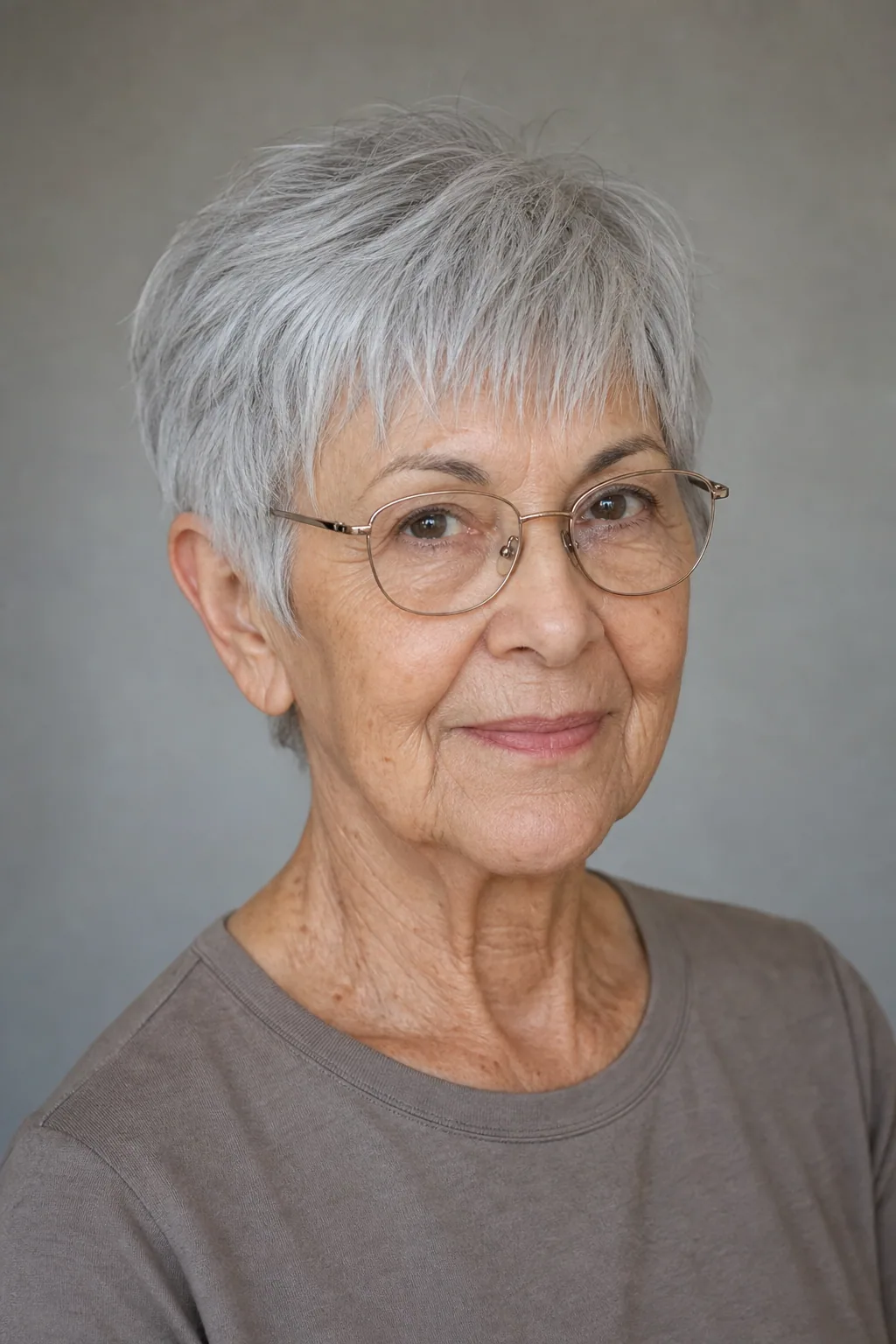
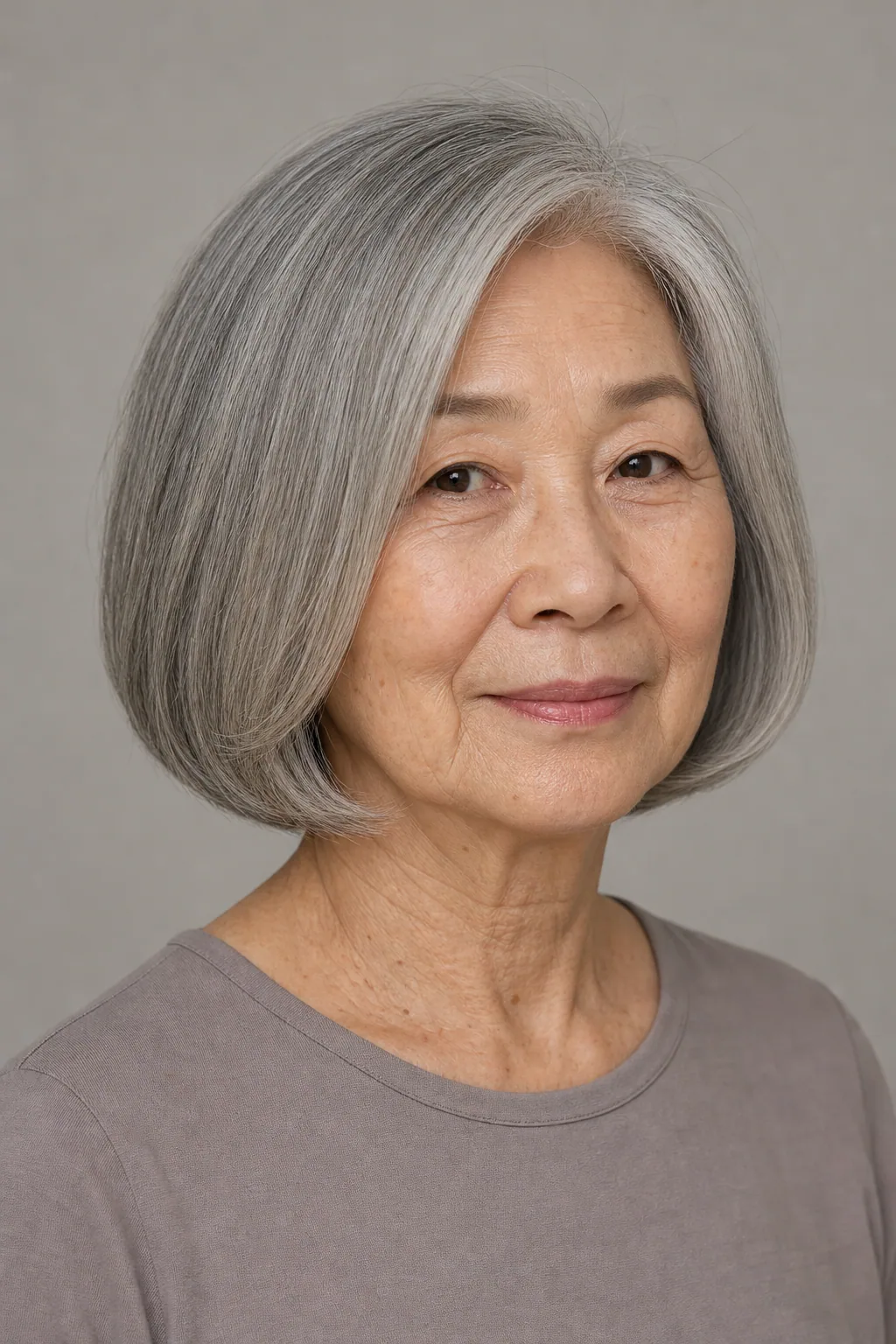
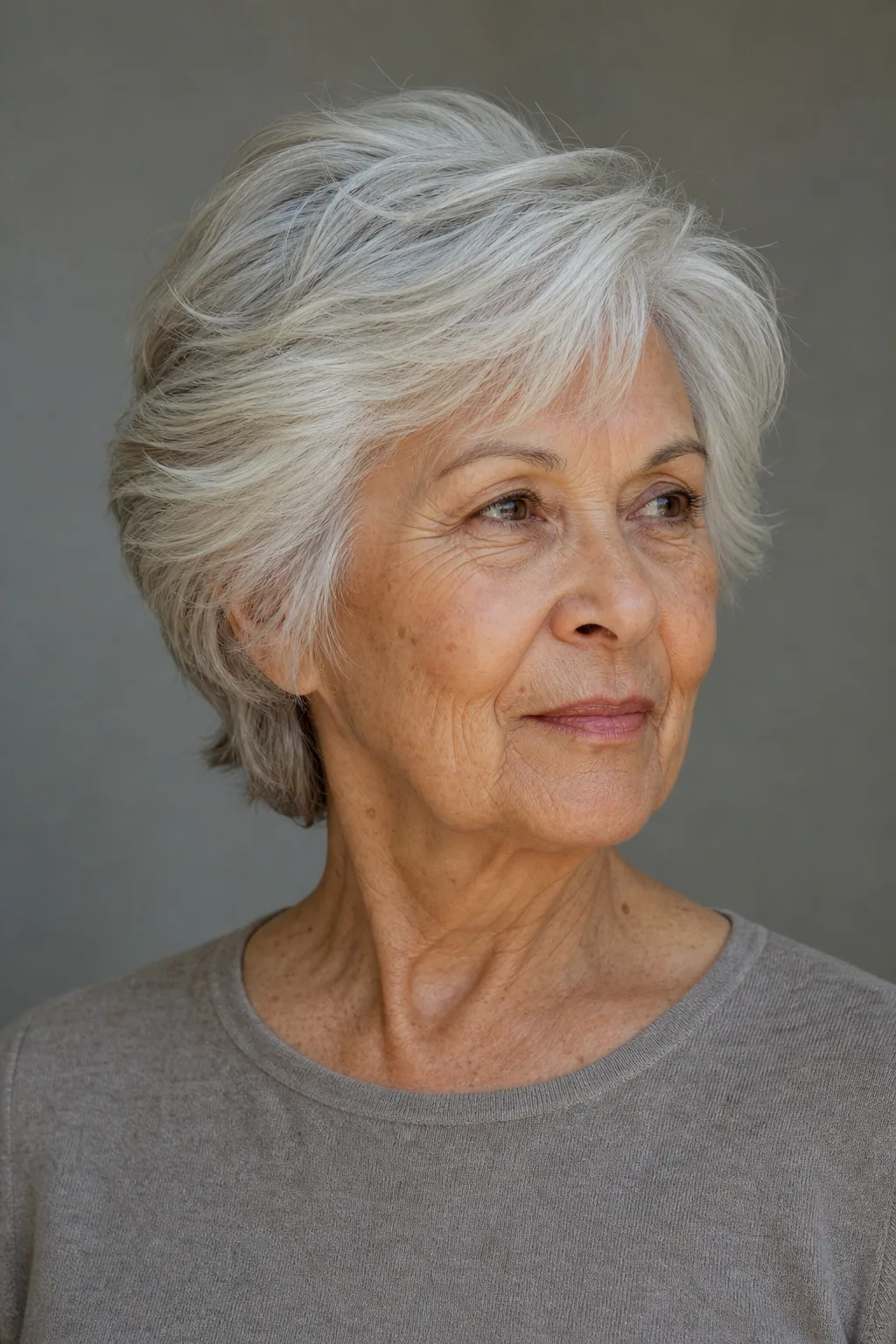
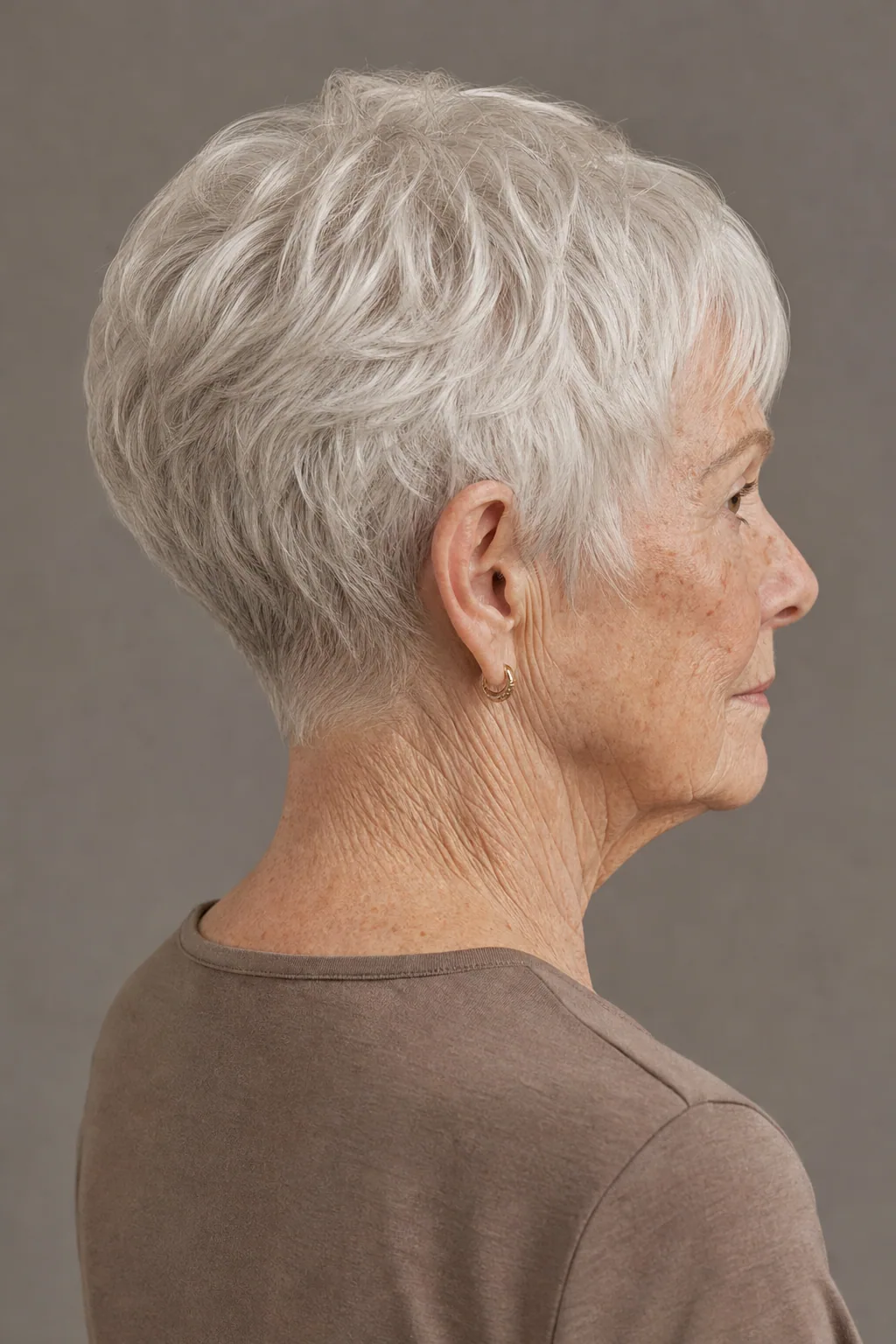
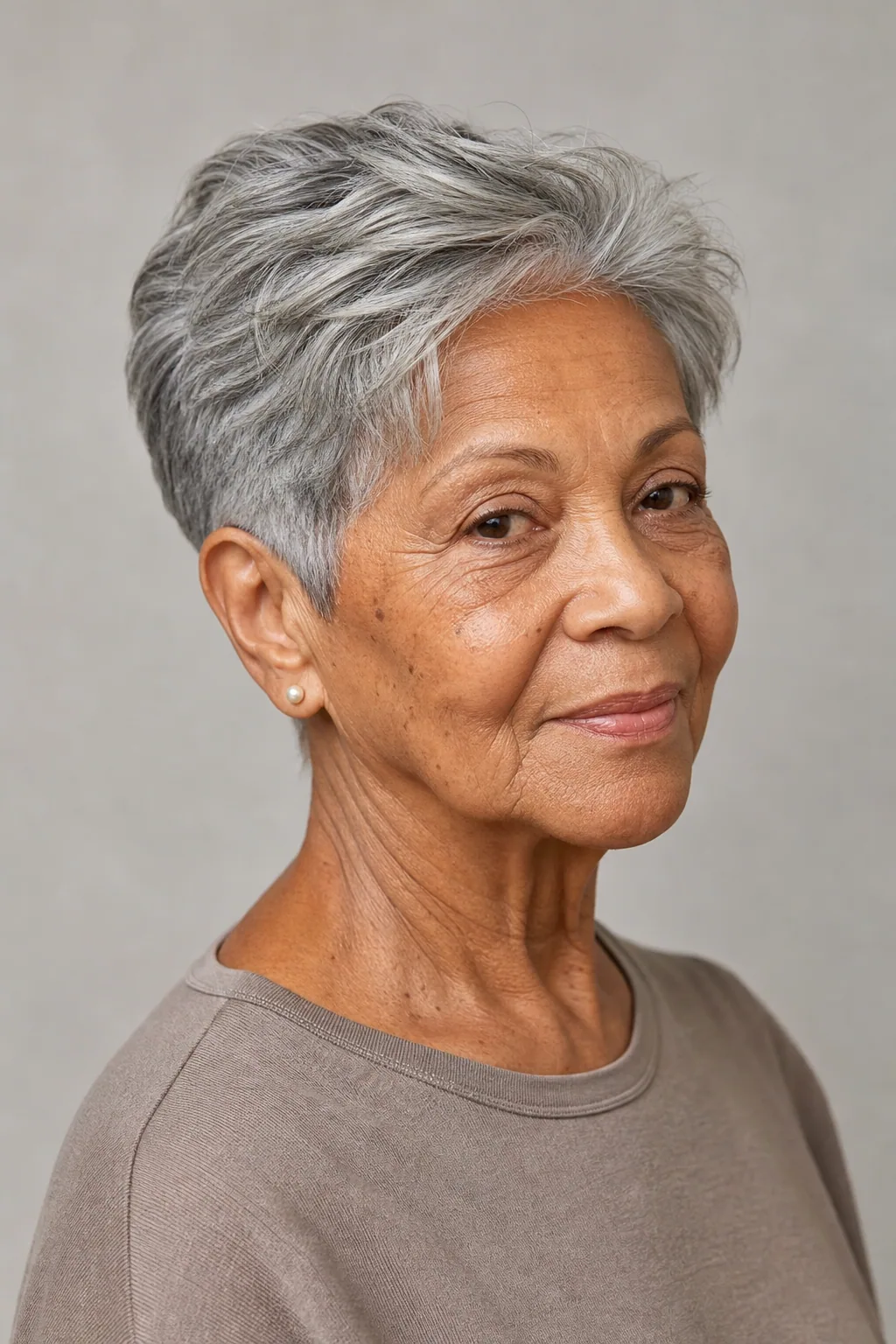
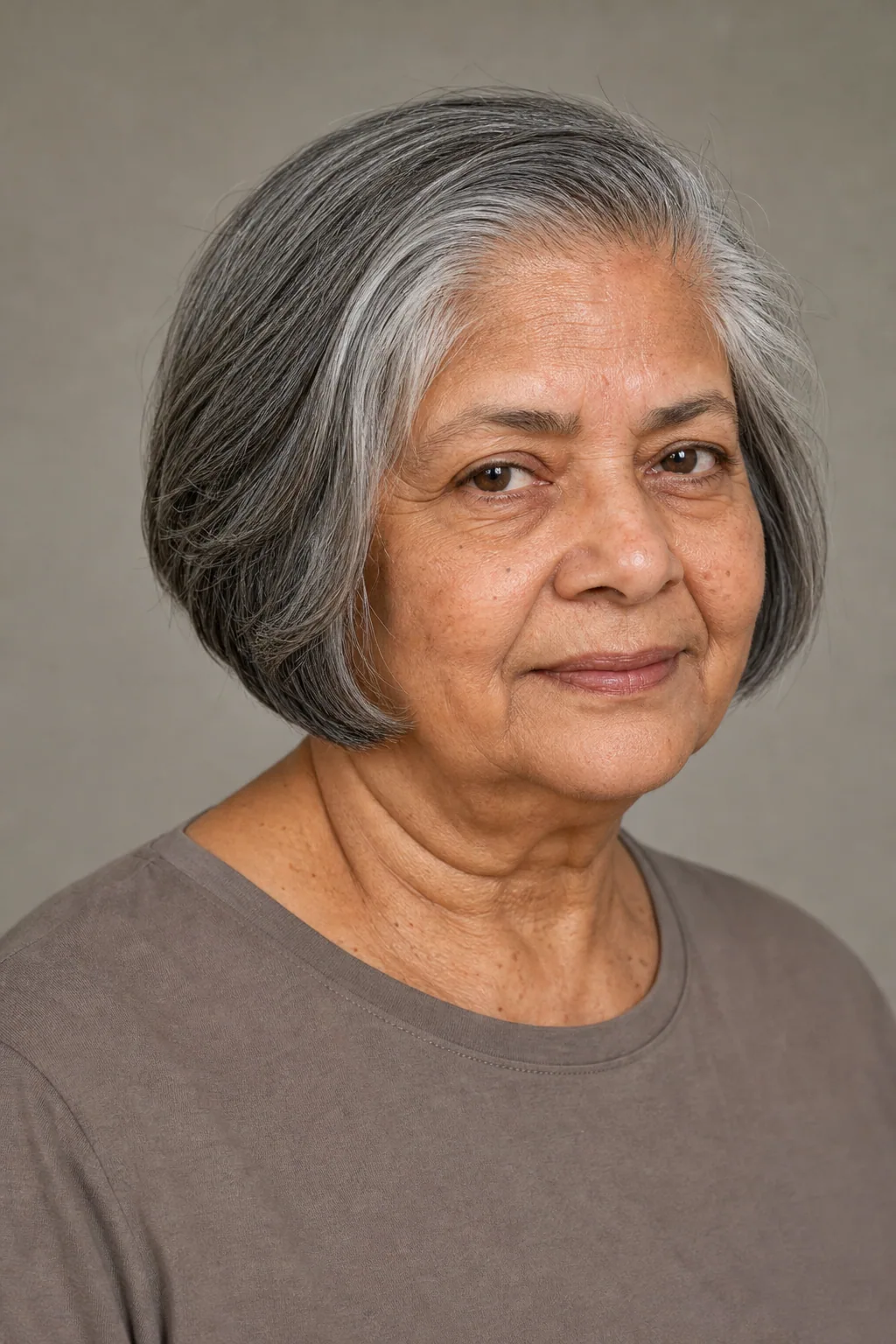
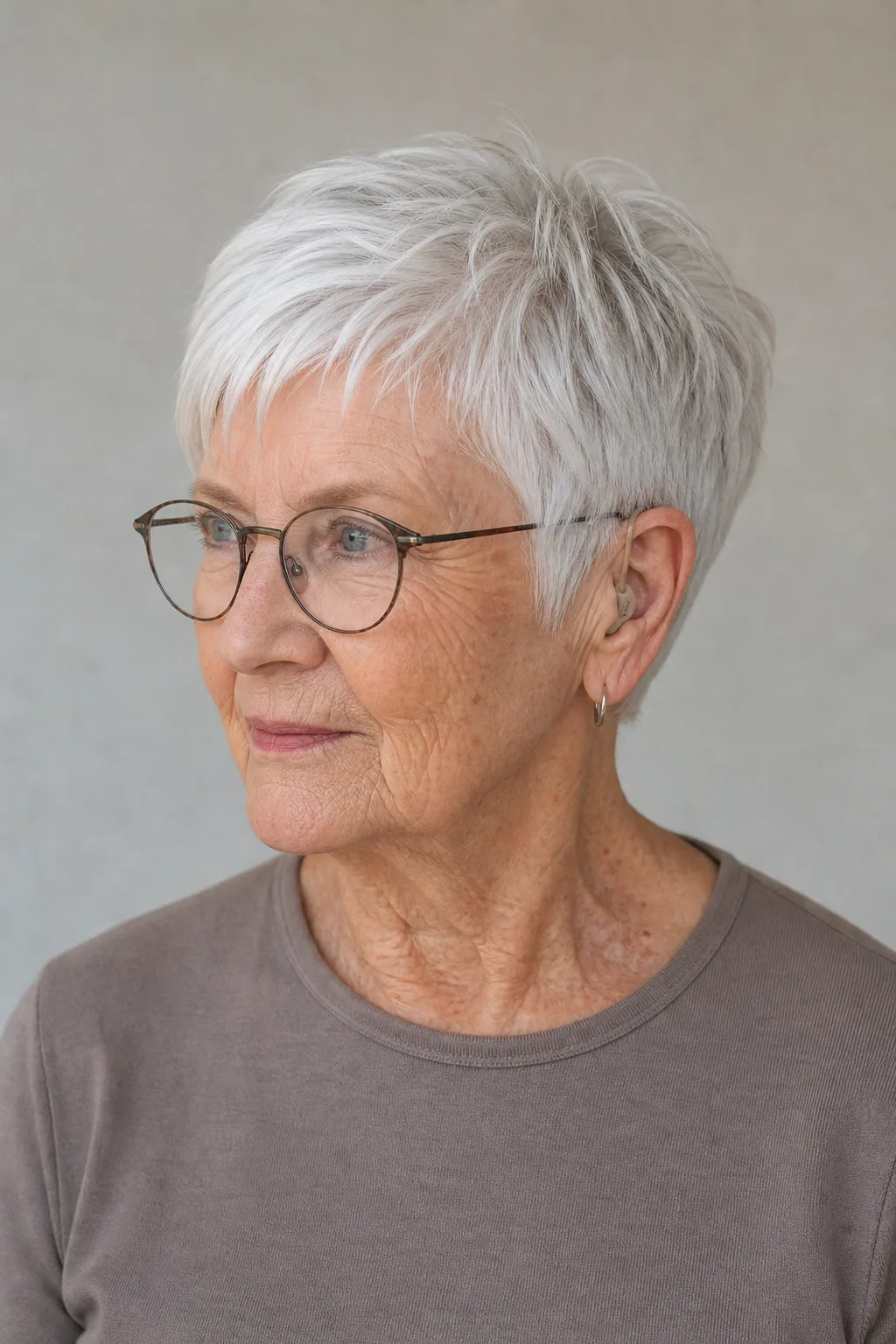
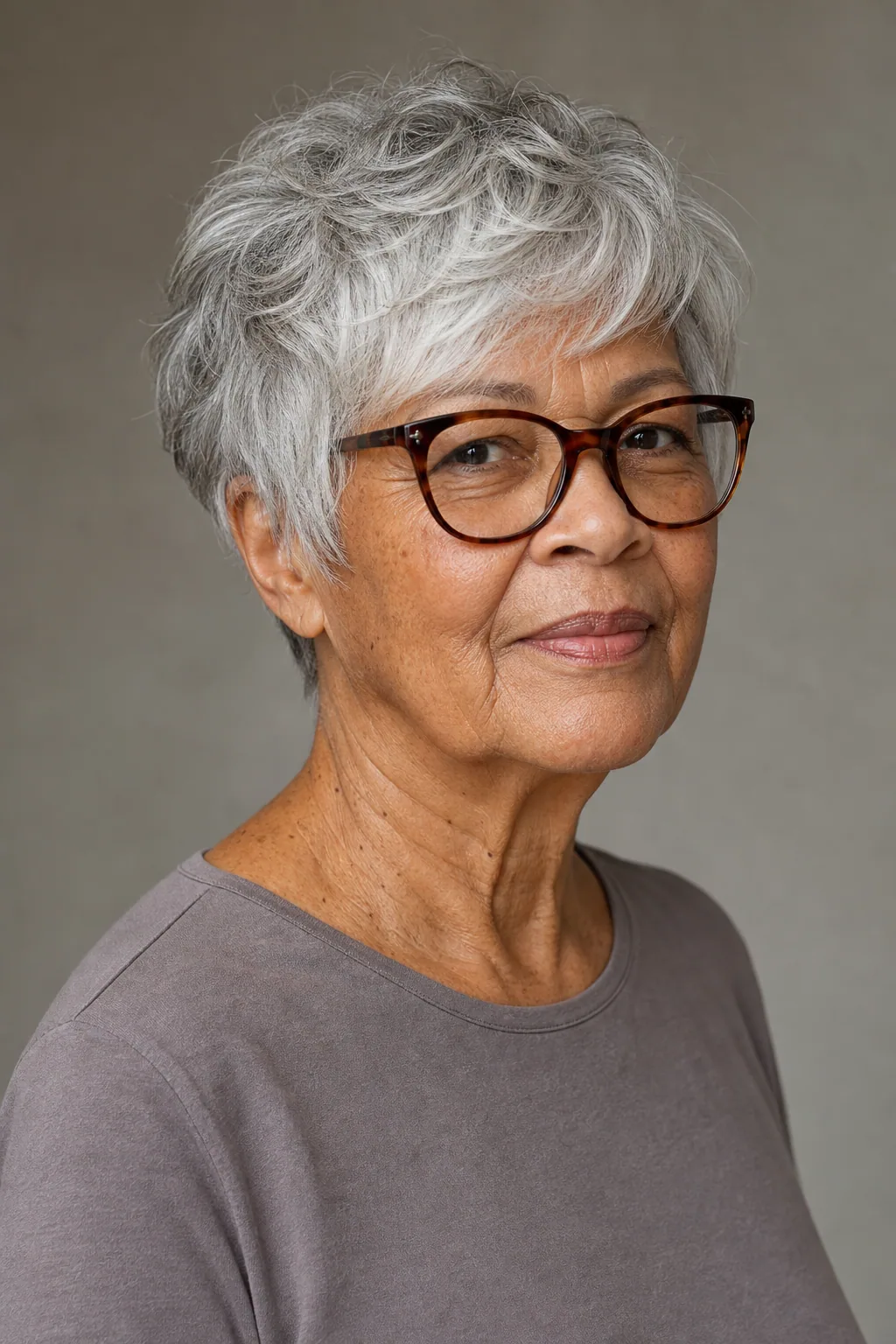
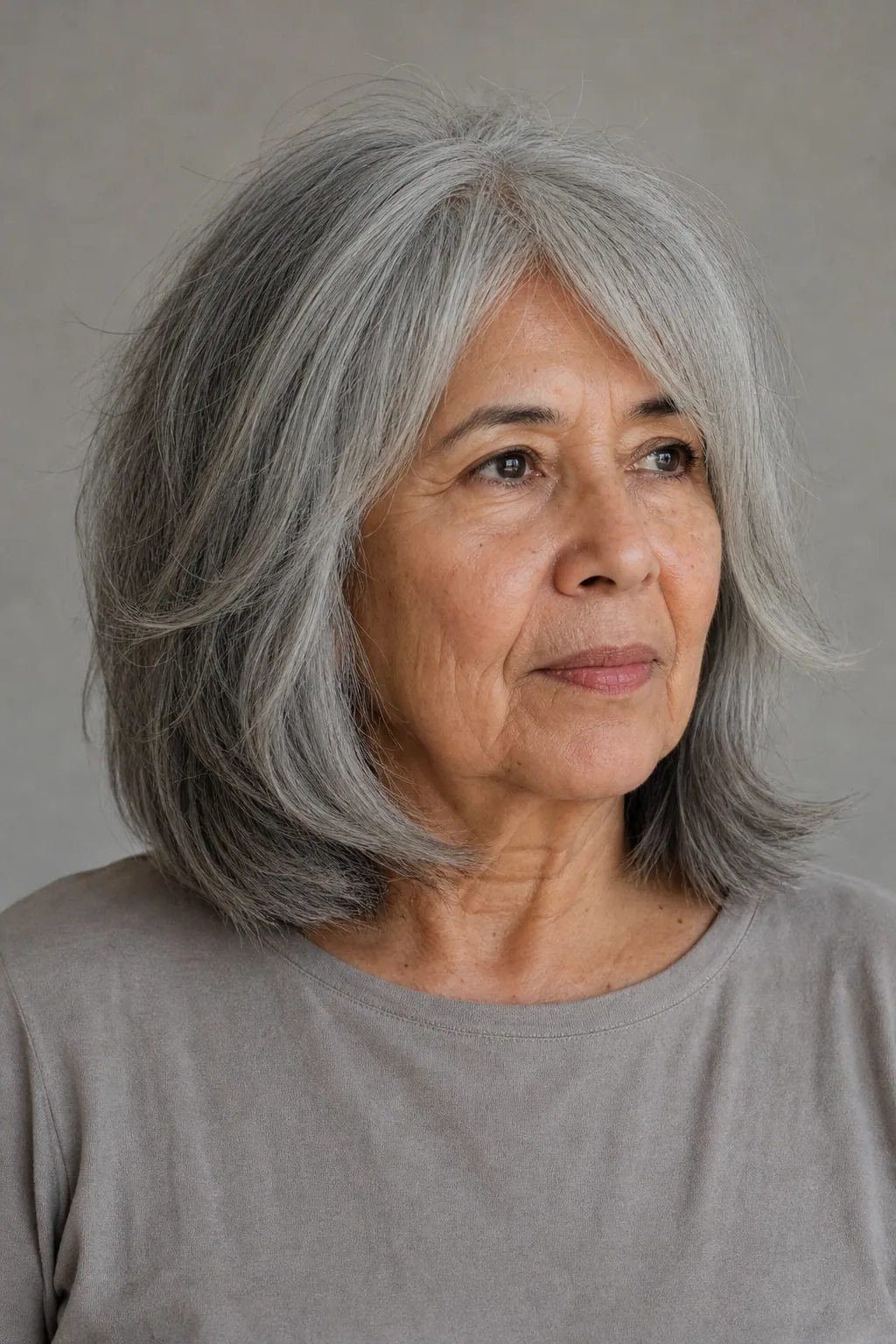
Hairstyle images in this guide are AI-generated illustrations, not photos of real clients or results. See our image standards.
What Changes at 70: Your Routine Decides the Cut
At 70, how you dry and style your hair decides the cut more than your face shape does. A cut that needs a round brush, both hands above your head or a trim every four weeks won't stay flattering for long.
Before choosing a style, answer four questions:
Can it air-dry? If not, can a hairdryer and your fingers finish it in under ten minutes?
Can you style it from the front? If lifting your arms for long is tiring, the back has to look after itself.
Does it clear your glasses and hearing aids? Both sit on top of the ear, where hair catches.
Will it last six to eight weeks? Some short cuts need a trim every four to six.
The hair is changing too: more of it is white, which can be coarser or finer than before, and density is usually lower. A cut changes how full hair looks, not how much there is, so these cuts use shape to make the most of what you have.
Hair Cuts for Women Over 70 at a Glance
Match the cut to your routine first, then to your face. These are typical ranges on hair of average density; curly and very fine hair can fall outside them.
#
Cut
Routine need
Trim every
Styling time a day
1
Short layered crop
Air-dry
5–7 weeks
2–5 min
2
Curly crop, cut dry
Air-dry
6–10 weeks
3–5 min
3
Soft pixie with a fringe
Air-dry
4–6 weeks
2–5 min
4
Rounded chin-length bob
Dryer only
6–8 weeks
5–10 min
5
Feathered short cut
Dryer only
5–7 weeks
5–8 min
6
Crop with a tapered nape
Dryer or air-dry
6–8 weeks
3–5 min
7
Short back, longer top
Style from the front
5–7 weeks
3–6 min
8
Side-part short bob
Style from the front
6–8 weeks
5–8 min
9
Ear-clearing pixie
Glasses, hearing aids
4–6 weeks
2–4 min
10
Bixie over the ears
Glasses, hearing aids
6–8 weeks
4–8 min
11
Shoulder-length clip-up
Put up fast
8–12 weeks
1 min clipped, 10–15 down
12
Tapered natural cut
Wash-and-go
5–8 weeks
3–5 min
Why Most of These Cuts Are Short
Short hair dries faster, clears the ears and needs less reaching, which is why ten of these twelve cuts sit at chin length or shorter. Short isn't automatically easier: the shortest pixies need the most trims, and short hair with no lift at the crown looks flat by lunchtime. Softness and a little height on top are what make it work.
Air-Dry Cuts
These three dry into shape on their own: towel-dry, add one light product with your fingers and leave them.
1. Short Layered Crop With Point-Cut Ends
Layers run all over at two to three inches, and the ends are point cut: the stylist snips vertically into the tips so they break up softly instead of sitting in a hard line, which lets it dry well without a brush. It works best on fine to medium hair that is straight or slightly wavy.
2. Wash-and-Go Curly Crop, Cut Dry
If your hair turned wavier or curlier as it went gray, ask for it to be cut dry, curl by curl, so the stylist sees where each curl actually sits. Cut wet, white curls can spring up uneven. Scrunch in a curl cream while wet, then hands off until it's dry.
3. Soft Pixie With a Wispy Fringe
A short pixie with a fringe (bangs) point cut thin enough to see the forehead through it. If you wear glasses, ask for the fringe to stop just above the top rim so it never rests on the lenses. The trade-off is trims: a pixie loses its shape in four to six weeks.
Cuts That Need Only a Dryer
No round brush and no hot tools. The shape is cut in, so the dryer only has to dry.
4. Chin-Length Bob With Rounded Graduation
Graduation means stacking shorter layers at the back to build shape; rounded graduation curves that stack so the ends turn under on their own when you dry it with the nozzle pointing down. Ask for the weight line, where the outline is heaviest, at or just below the chin.
5. Feathered Short Cut
Compared with the layered crop, a feathered cut has longer layers angled back from the face. Push the hair back with your fingers as you dry it and it lifts at the temples. It flatters oval and long faces; on a very round face the swept-back sides add width.
6. Short Crop With a Tapered Nape
The hair at the back of the neck is cut gradually shorter toward the hairline, so the cut still looks deliberate at week seven or eight. Ask for a soft taper (scissors over a comb) or a close one (clippers). A scissor taper usually sits better on coarse white hair, which can stand up when clipped very short.
Cuts You Can Style From the Front
If holding your arms above your shoulders for long is tiring or sore, these two put all the styling where you can see it in the mirror.
7. Short Back With a Longer Top
Ask for "short, graduated back and sides that sit close to the head, with two to three inches left on top and at the front." The back then needs nothing; a little mousse and your fingers lift the top while your elbows stay low.
8. Short Bob With a Deep Side Part
A part started above the arch of one eyebrow lifts the hair on the fuller side and puts a soft diagonal across the forehead, which breaks up a round or square face. Only the front needs a minute with the dryer.
Cuts That Clear Glasses and Hearing Aids
Glasses arms and behind-the-ear hearing aids both sit on top of the ear, so the hair there must either clear the ear or be light enough to fall over it without catching. Hair resting on a hearing aid's microphone can also cause rustling or whistling.
9. Ear-Clearing Pixie
The sides are cut around the ear, so nothing rests on your frames or hearing aid. Ask for "an ear-out pixie with a soft, point-cut edge around the ear," not a hard line. Plan on a trim every four to six weeks, because hair grows down over the ear first.
10. Bixie With Soft Coverage Over the Ears
A bixie is a long pixie with some bob-length weight, and here the sides fall over the top of the ear. Choose it if you'd rather your hearing aids stayed out of sight. Ask for the hair over the ears to be lightly point cut so it lies flat instead of bulking up.
Longer and Medium-Length Hairstyles for Women Over 70
Length still works at 70 when the ends look full and the hair can go up in seconds. Both cuts below keep the ends full and the drying time short.
11. Shoulder-Length Cut That Clips Up in Seconds
Long layers start below the chin and the length just touches the shoulders: long enough for a claw clip, short enough to dry quickly. Keep the ends blunt (cut straight across), because heavy layering here makes thinner ends look sparse. Trims stretch to eight to twelve weeks.
12. Tapered Natural Cut for Coily Gray Hair
A tapered cut keeps the sides and nape close on coily hair and leaves more length on top, so the shape holds without daily work. Wash, smooth in a leave-in conditioner and a curl cream, and let it dry. Ask for the taper to follow your natural hairline, softer wherever your edges are thinner.
Choose for the hair you have today, which may not be the hair you had at 50.Fine means each strand is narrow; thin means there are fewer strands. Gray is a mix of pigmented and white strands, white has no pigment left, and silver is the bright, cool look either can have. For an earlier stage, see haircuts for women over 50 by hair type.
Fine Hair Needs Fewer, Higher Layers
A few point-cut layers at the crown (1, 4 and 7) lift fine hair. Too many leave the ends wispy.
Thin Hair Needs Weight at the Perimeter
Keep the outline solid and avoid very short pixies that show the scalp; the side-part bob (8) and the bixie (10) keep weight where it counts. If hair loss is sudden or patchy, see a board-certified dermatologist before changing the cut.
White or Coarse Gray Hair Needs Clean Edges
Coarse white hair can be wiry and stand away from the head. Soft but defined edges (1, 6 and 9) keep it looking intentional, and a light cream tames flyaways.
Curly and Coily Hair Needs Cutting for Today's Pattern
Texture often shifts as hair grays. Ask for a dry cut (2) or a tapered natural cut (12), and skip thinning shears on the ends, which leave curls frizzy.
What to Ask Your Stylist
Describe your routine before you describe the cut. It's the surest way to get the cut you want rather than the default.
Your morning: "I air-dry most days, I don't use a round brush, and I want six to eight weeks between trims."
What's hard: "Lifting my arms to the back of my head is tiring, so the back needs to work on its own."
What you wear: keep your glasses and hearing aids on so the stylist can check the sides with them in place.
The salon words: point-cut ends, rounded graduation, a tapered nape, the weight line at the chin, an ear-out or over-the-ear side.
The finish: "Please dry it the way I will at home, so I can see how it really falls."
Maintenance and Styling
Keep the routine to one product, one tool and a trim you can actually book.
Products by category: light mousse for fine hair, light styling cream for coarse or white hair, curl cream for curls and coils, and a purple shampoo every week or so if white hair yellows.
Tools: a hairdryer with a concentrator nozzle (the narrow attachment that aims the airflow), a paddle brush, a diffuser for curls, and 1.5-inch self-grip rollers at the front for extra lift.
Grow-out: a pixie grows down over the ears first, so plan to move to the bixie (10) rather than letting it grow shapeless. A tapered nape (6) grows out most neatly.
Frequently Asked Questions
What is the best hair length for a 70 year old woman?
Chin length or shorter is easiest for most women over 70, because it dries fast and clears glasses and hearing aids. If your ends are still full, shoulder length works too. The test: can you dry it in under ten minutes and put it up when you need to?
What is the most popular haircut for women over 70?
The short layered cut and the chin-length bob are the most requested, because both finish with a hairdryer and your fingers. Popular isn't the same as right for you: on curly or coily hair, a cut shaped dry around your curl pattern will behave better.
What is the most flattering haircut for older women?
One with lift at the crown and softness around the face, at whatever length your hair supports. Flat, heavy hair at the jaw drags the face down. Ask your stylist where your hair goes flattest by lunchtime and build the cut around that.
What are some low-maintenance short hairstyles for women over 70?
The short layered crop, the tapered-nape crop and the short back with a longer top each take two to six minutes a day. Low maintenance means few minutes a day or many weeks between trims, rarely both, so choose by how often you can book.
Should a 70-year-old woman wear her hair long?
She can, if the ends are thick enough to look full and she's happy to dry it or wear it up. Long hair that has thinned at the ends looks sparse. If you love your length, a blunt trim every eight to twelve weeks keeps the ends full.
Which hairstyles look youthful over 70?
Cuts that lift at the crown and move around the face make any face look fresher, at 70 or at 40. The feathered cut, the soft pixie and the rounded bob do this through shape, not by hiding anything. White or grey hair also looks brighter with clean, regularly trimmed edges. For the same principle at 50, see youthful hairstyles over 50.
Can I get a haircut if leaning back at the shampoo sink is uncomfortable?
Yes. Many stylists will cut dry, or dampen the hair with a spray bottle while you sit upright. Mention it when you book so the salon can plan for it.
Results vary with hair type, density, texture and face shape. This guide is educational and is not a substitute for an in-person consultation with a licensed stylist.
 Grace