How to Choose a Haircut for Your Face Shape After 50
By Melissa Timperley, Salon Owner & Hairdressing Educator · Reviewed by Coral Pleas · Updated November 2026 · 10 min read
To choose a haircut for your face shape after 50, measure your face as it is now, then pick a cut by where its weight line sits against your jaw and cheekbones. The jaw and cheeks soften with time, so the label you were given at 30 can steer you wrong. Where the cut puts width and where it puts lift matters more than whether you call yourself oval or round.
Below: how to determine your face shape with a mirror or a tape measure, the principle behind every good choice, a section for each of six shapes, the features that matter more after 50, a face shape × cut table and the exact salon words. For galleries by age, see haircuts for women over 50 and hairstyles for women over 60.
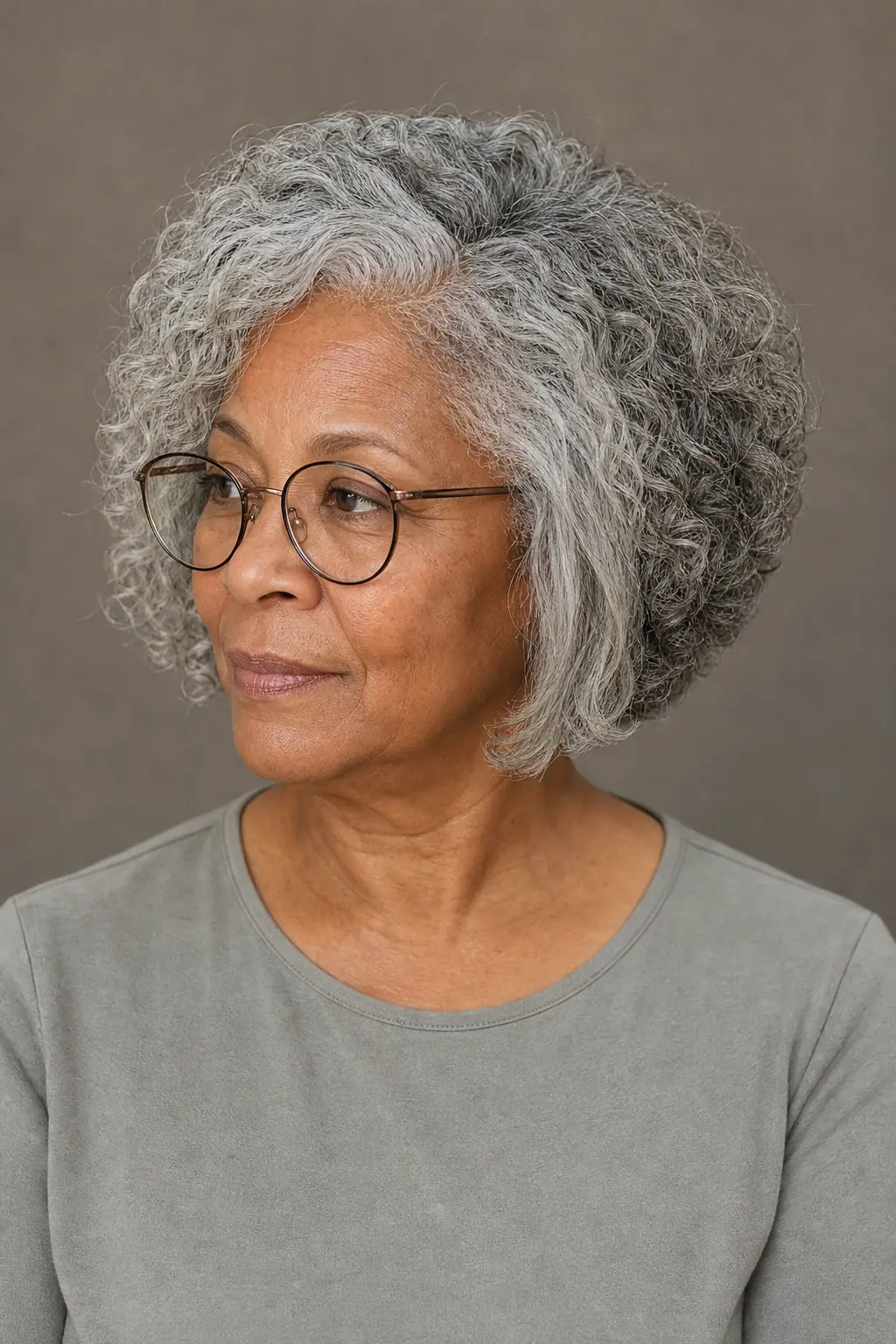
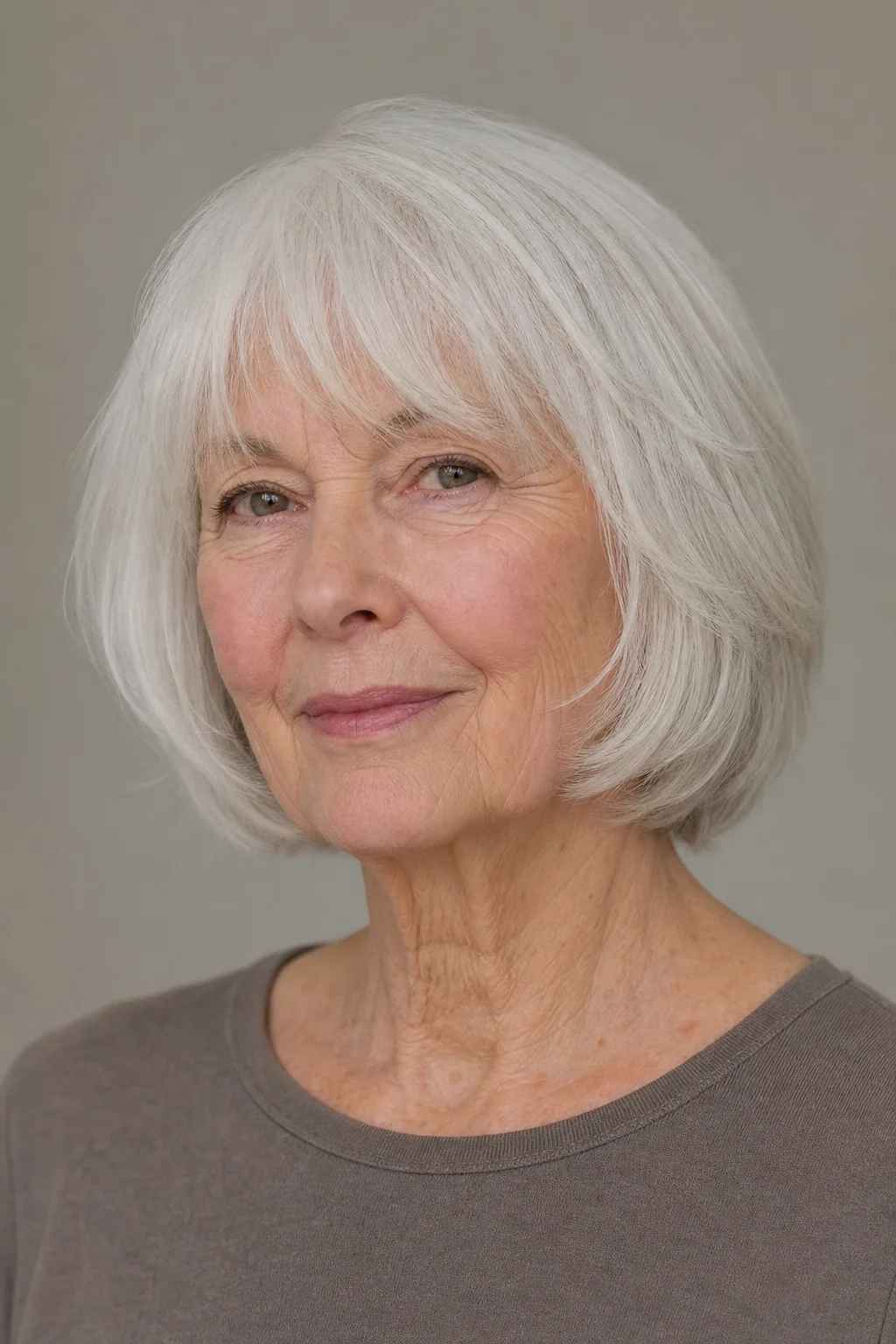
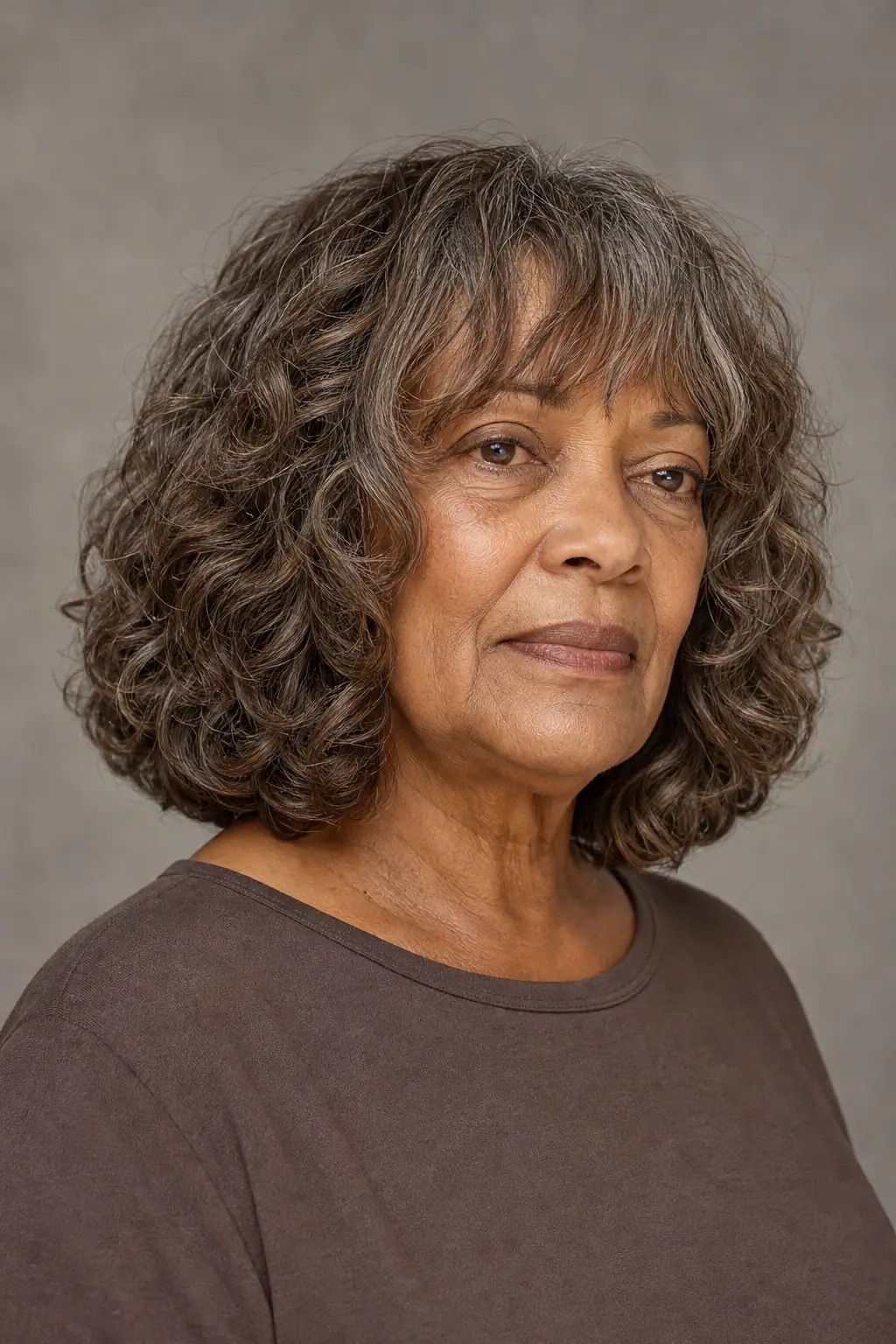
Hairstyle images in this guide are AI-generated illustrations, not photos of real clients or results. See our image standards.
How to Determine Your Face Shape Now
You can find your face shape in five minutes with a mirror and a washable marker, or with a soft tape measure. Pull your hair right back, stand in daylight and look straight ahead. Then match what you find to a shape below.
The Mirror Method Needs Only a Washable Marker
Clip all your hair off your face, including at the temples.
Stand an arm's length from the mirror with your chin level.
Close one eye and trace your outline on the glass with a dry-erase marker or an old lipstick.
Step back and study the drawing. Note where it is widest, whether the jaw has corners or a curve, and whether it is longer than it is wide.
The Tape-Measure Method Compares Four Measurements
Forehead: across the widest part, halfway between brows and hairline.
Cheekbones: from the outer point of one cheekbone to the other.
Jawline: from the chin tip to the point below the ear where the jaw turns up, doubled.
Face length: from the center of the hairline to the chin tip.
The widest measurement, and how the length compares with it, tells you the shape.
The Jaw and Cheeks Soften After 50, So Measure Again
The bones change little, but the soft tissue over them does. The jawline loses some edge, fullness settles lower on the cheeks, the temples can look hollower and a thinning hairline makes the forehead read higher. Many faces now measure wider at the bottom, so an oval may read rounder and a square may lose its corners. Measure again rather than relying on what a stylist told you years ago.
The Core Principle: Weight Line, Width and Lift
Every haircut puts width where its weight line sits and lift where it has height. The weight line is the level where the hair is heaviest and the outline widest, usually a bob's perimeter or the point where layers stop. Put it where you want width, and keep it away from where you don't.
Three questions settle most choices:
Where is my face widest now? Keep the weight line away from that level, or soften it with layers.
Where do I want width? Narrow areas, such as a slim chin or a narrow forehead, can take fullness.
Should the face look longer or shorter? Height at the crown lengthens. Width at the sides and a fringe shorten.
After 50 the jaw is the level that matters most. A blunt line ending exactly at a softened jaw draws a stripe across it and widens it. Moving that line an inch or two below the jaw, or breaking it up with forward-falling layers, usually does more than any change of length.
Haircuts for Each Face Shape
Use your re-measured shape as the starting point, then adjust for density and texture. Each section says where to put width and lift and what to avoid. Thin hair changes the advice more than shape does, so read the caveats before you book.
Oval Faces Can Wear Most Lengths, So Choose by Hair Type
An oval face is a little longer than it is wide, with a gently rounded jaw. Almost any length balances it, so your hair makes the decision. A collarbone-length cut with long layers starting below the chin keeps movement without thinning the ends. If the jaw has softened, keep the perimeter off it.
Round Faces Need Height at the Crown and a Weight Line Below the Jaw
A round face is widest at the cheeks, so the cut puts height at the crown and a line past the jaw instead of width at cheekbone level. A side part and longer pieces falling forward at the cheek help. For more options, see our haircuts for round faces over 50 and 60.
Square Faces Soften With Layers That Break Up the Jaw Corners
A square face has forehead, cheekbones and jaw of similar width, with an angular jaw. Layers that start at the jaw and are point cut (snipped into at an angle so the edge is soft, not blunt) blur the corners, and a side part helps. Avoid a one-length line at the jaw. After 50 the corners often soften on their own, so you may need less disguise than before. For where the movement should land, see youthful hairstyles over 50.
Long or Oblong Faces Need Width at the Cheekbones and Less Height on Top
A long face is clearly longer than it is wide. Add width at the sides and stop adding height: a chin-to-collarbone cut with volume at cheekbone level and a soft fringe that shortens the forehead. Avoid crown height and very long one-length hair, which pull the face longer.
Heart Faces Need Fullness at the Jaw and Lightness at the Temples
A heart face is widest at the forehead and narrows to a slim chin. A chin-to-jaw-length cut that is full at the ends balances it, and a side-swept fringe softens the forehead. This is the one shape that welcomes a weight line at the jaw. Avoid volume at the temples.
Diamond Faces Need Softness at the Cheekbones and Fullness at the Forehead and Chin
A diamond face has wide cheekbones with a narrower forehead and jaw. Fill the narrow points with a fringe and fullness from the chin down, and let layers fall forward over the cheekbones. Avoid volume at cheekbone level and hair slicked back at the temples.
Features That Matter More After 50
A soft jawline, a high forehead or thinning temples, glasses and neck length can matter more than the overall shape. Any of them can overrule the advice above.
A Soft Jawline or Double Chin Calls for a Weight Line Below the Chin
A weight line below the chin, from a cut ending just above the collarbone with longer pieces falling forward over the jaw, draws the eye down. Keep the nape tapered and add some lift at the crown. For versions built around a double chin, see our haircuts for round faces over 50 and 60.
A High Forehead or Thinning Temples Needs a Soft Fringe, Not a Scraped-Back Hairline
A long, wispy or side-swept fringe shortens a high forehead without a heavy line. If the temples have thinned, leave length there instead of cutting short face-framing pieces, which show more scalp. A cut changes how full hair looks, not how much there is. If the loss is sudden or patchy, see a dermatologist.
Glasses Add a Horizontal Line, So Bangs and Side Lengths Must Clear the Frames
Bangs should end just above or just below the top rim, never on it. Side pieces should clear the arms so the frames don't push hair out. Bold frames pair best with a cleaner cut, while fine frames can take more texture around the face.
Neck Length Decides Where a Short Cut Should End
A long neck carries a short nape, a pixie or a chin-length bob easily. A shorter neck looks longer with a close, tapered nape, or with hair ending clearly below the shoulders. A perimeter sitting right at the base of a short neck shortens it further.
Face Shape and Haircut Table
The best cut for each face shape, the detail that makes it work after 50, and what to avoid.
Face shape
Best cut
Key detail after 50
Avoid
Oval
Collarbone-length cut with long layers
Keep the perimeter off a softened jaw
Heavy blunt line at the jaw
Round
Graduated or layered cut that falls past the chin
Lift at the crown, side part, longer pieces forward
Blunt chin-length bob, width at the cheeks
Square
Jaw-to-shoulder cut with point-cut layers
Soft, textured ends that blur the jaw corners
One-length line at the jaw, center part
Long / oblong
Chin-to-collarbone cut with a soft fringe
Width at cheekbone level, little crown height
Height on top, long straight one-length
Heart
Chin-to-jaw-length cut, full at the ends
Side-swept fringe, fullness at the chin
Volume at the temples, very short cuts
Diamond
Chin-length or longer with a fringe
Fullness at the forehead and chin, layers over the cheekbones
Volume at the cheekbones, slicked-back sides
Face-Shape Myths That Lead to the Wrong Cut
Two face-shape shortcuts keep women in the wrong cut for years.
Myth: Round faces can't wear short hair. Reality: a short cut works on a round face when it has height at the crown and soft, forward-falling pieces at the cheeks. What fails is short and flat, which makes the widest part of the face the widest part of the haircut.
Myth: Your face shape is fixed for life. Reality: the bones stay much the same, but softening at the jaw and cheeks changes how the outline reads. Measure again whenever a favorite cut stops working.
What to Ask Your Stylist
Say where you want width and where you want lift, not just a length. Bring two or three photos of women with your hair type. These sentences cover the common cases:
"My jaw has softened, so please keep the weight line below my chin, not on it."
"I'd like lift at the crown, with graduation at the back (shorter layers stacked at the nape so the top sits higher)."
"Please point cut the ends around my face so they're soft, not a blunt line."
"I wear glasses. Can the bangs sit just above the frames and the sides clear the arms?"
"My temples are thinner. Please leave length there rather than cutting short pieces."
Ask how long styling will take (most of these shapes need 5–15 minutes) and how often it needs a trim. A graduated bob usually needs one every 5–7 weeks, a pixie every 4–6 weeks and a layered cut past the shoulders every 8–12 weeks.
Frequently Asked Questions
How do I know my face shape without measuring?
Pull your hair back and trace your outline on a mirror with a washable marker. Note where the drawing is widest and whether the jaw has corners or a curve. If you're torn between two shapes, choose by your widest point, which matters most for the cut.
What haircut is best for my face shape if I'm over 60?
Measure again first, then keep the weight line away from your widest point. Most faces over 60 do well with some lift at the crown and softness at the jaw. Our guide to hairstyles for women over 70 shows easy cuts for fine and gray hair built the same way.
Can I wear short hair with a round face after 50?
Yes, if the cut has height at the crown and soft pieces at the cheeks, with graduation at the back and a side part. Short and flat at cheek level is the version to avoid. For more options, see our haircuts for round faces over 50 and 60.
What is the best haircut for a double chin?
One whose weight line sits around the collarbone, with longer pieces falling forward over the jaw. Avoid blunt chin-length bobs, which end exactly where you least want width. For versions built around a double chin, see our haircuts for round faces over 50 and 60.
Does your face shape change with age?
The bones change little, but softening at the jaw and cheeks can make a face read rounder or less angular. A cut that suited you at 40 may not suit you now. Take a photo with your hair pulled back every few years to compare.
Should I get bangs if I wear glasses?
Yes, if they end just above or just below the top of the frames, never on the rim. Long, wispy bangs are easier than heavy blunt ones. Wear your glasses to the appointment so your stylist can cut around them.
Related Reads
Results vary with hair type, density, texture and face shape. This guide is educational and is not a substitute for an in-person consultation with a licensed stylist.
 Grace