Haircuts for Women Over 50: 14 Cuts by Hair Type and Face
By Coral Pleas, Founder of Cutting Loose Salon · Reviewed by Melissa Timperley · Updated November 2026 · 12 min read
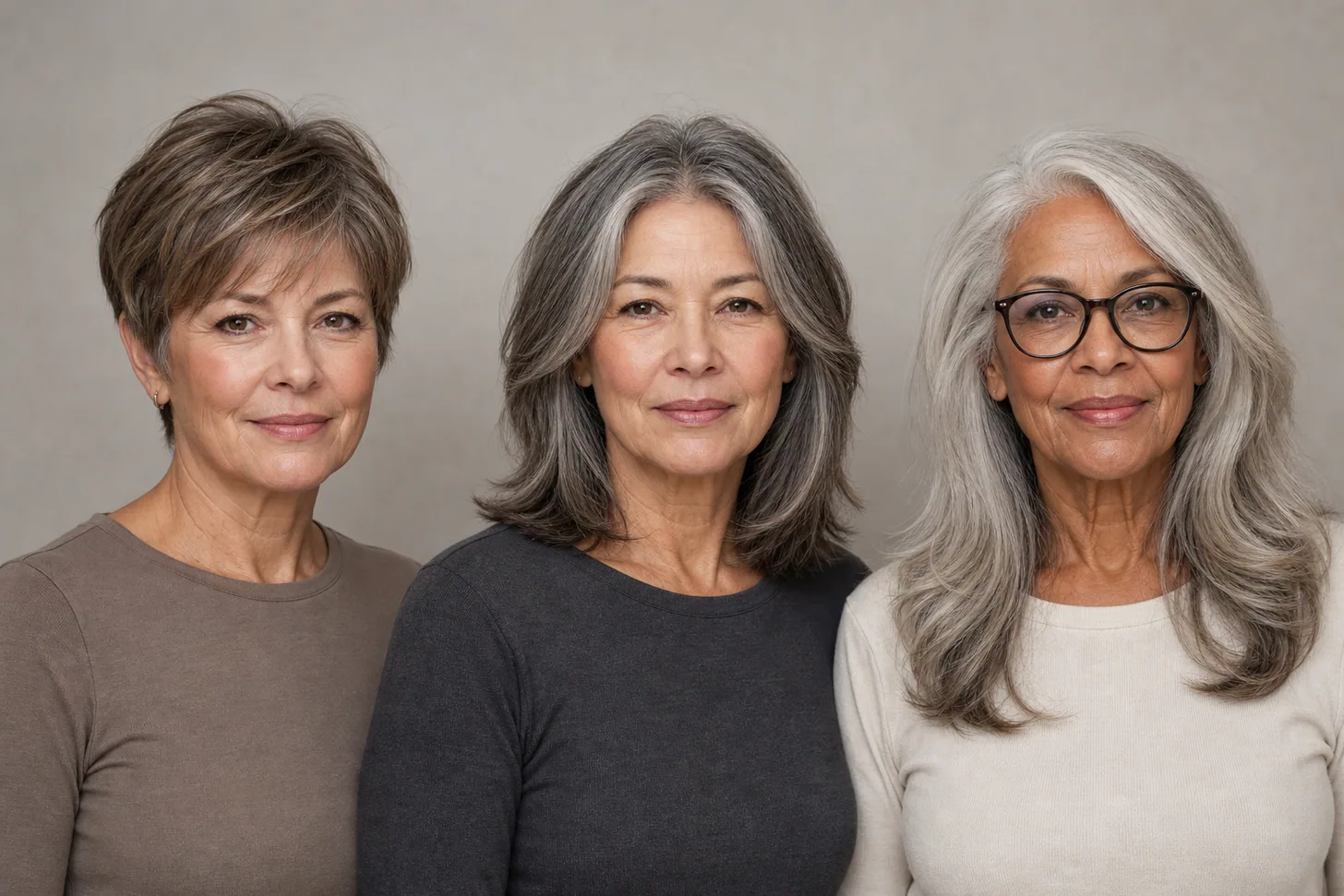
The best haircuts for women over 50 put lift at the crown and keep weight where your hair is still dense, whatever the length. Around 50, density often starts to drop at the part, the crown and the temples, while the lengths stay healthy. That is why a cut that worked at 40 can suddenly look flat on top and heavy at the bottom. Choose a cut by where it places weight and lift, and short, medium and long hairstyles can all work.
Below are 14 haircuts for women over 50, grouped by length, plus a group for wavy, curly and coily hair. Each says who it suits and what to ask for. After the gallery: a face-shape table, a hair-type guide, the exact salon words, a maintenance table and who should skip which cut. If you're a decade further on, the guide to hairstyles for women over 60 picks up where this one ends.
Hairstyle images in this guide are AI-generated illustrations, not photos of real clients or results. See our image standards.
What Changes in Your Hair at 50, and What a Cut Can Do
At 50, the problem is usually where your hair is thinning, not how long it is. The changes tend to arrive together, and each one points to a different fix in the cut:
Density drops at the part, crown and temples. Density means how many hairs grow per patch of scalp. The ends can look thick while the top looks sparse.
Strands get finer. Fine describes the width of each strand. Thin describes how many strands there are. Fine hair collapses under heavy layers.
Gray grows in coarser. Gray and white strands are often wirier and frizz at razor-cut ends.
Texture shifts. A wave can appear or vanish, so a cut built for your old texture stops behaving.
The jawline softens. A heavy line of hair sitting right at the jaw drags the eye down.
A cut changes how full hair looks, not how much hair there is. It can lift the crown, frame the face and make the ends look thicker. If your hair is shedding suddenly or coming out in patches, see a board-certified dermatologist before you change the cut.
Short Hairstyles for Women Over 50
Short works after 50 when it has height at the crown and softness around the face. Flat, helmet-shaped short hair is what makes women say a cut "just made me look practical." All four cuts below build lift on top. They differ in how much hair they leave around the ears and nape.
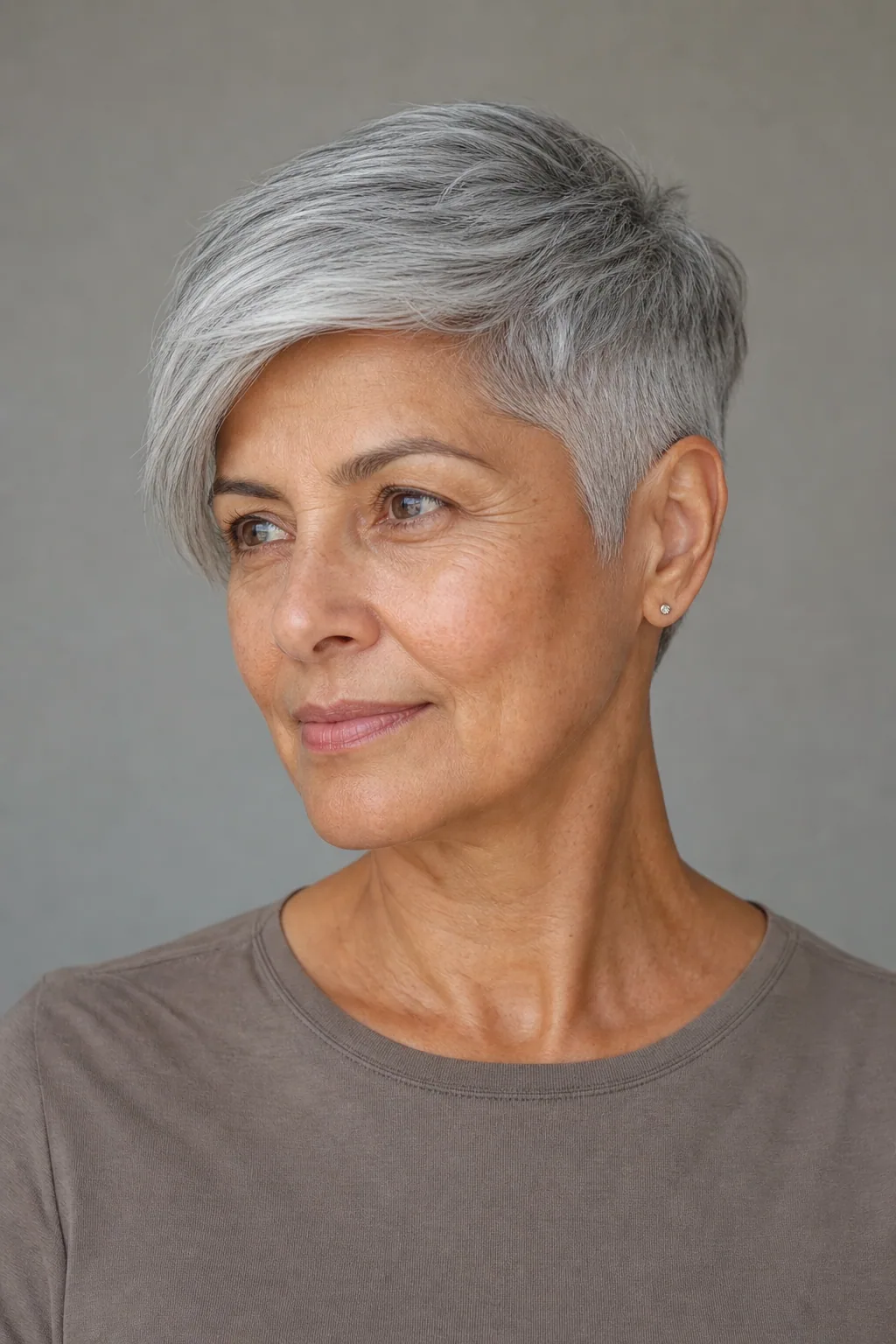
1. Textured Pixie With a Longer Top
The sides and nape are cut close, and the top is left long enough to push up or sweep aside. The top is point cut: the stylist snips vertically into the ends so the pieces separate instead of lying flat. Ask for "a textured pixie with the top left long and point cut, not razored," and plan on a trim every four to six weeks.
2. Bixie With Bob Weight Over the Ears
A bixie is a long pixie that keeps some bob-length weight over the ears and at the nape. It suits women who want short hair but worry a full pixie will look severe or show scalp at the back. It also grows out more easily, into a short bob rather than a mullet.
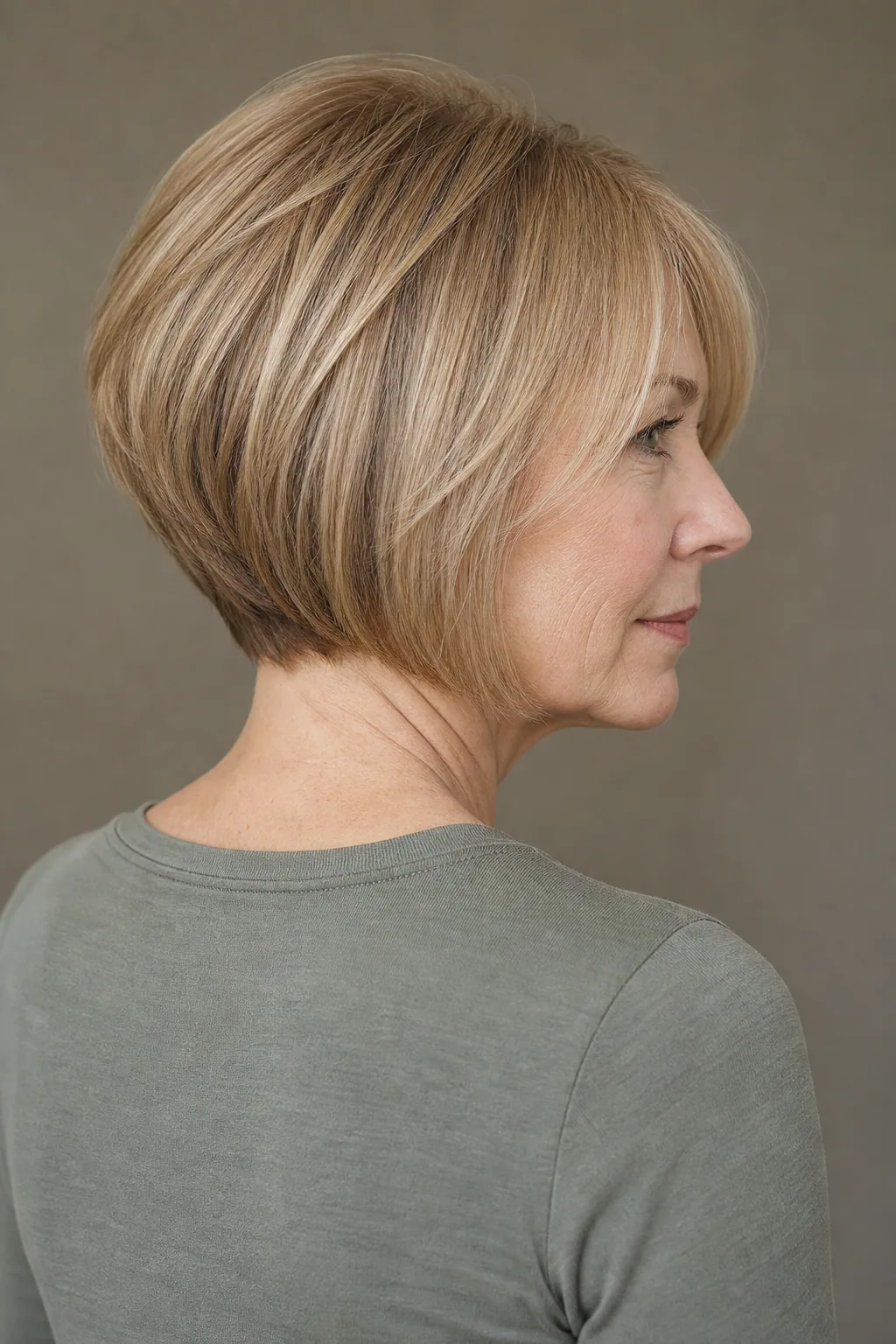
3. Graduated Bob With Lift at the Crown
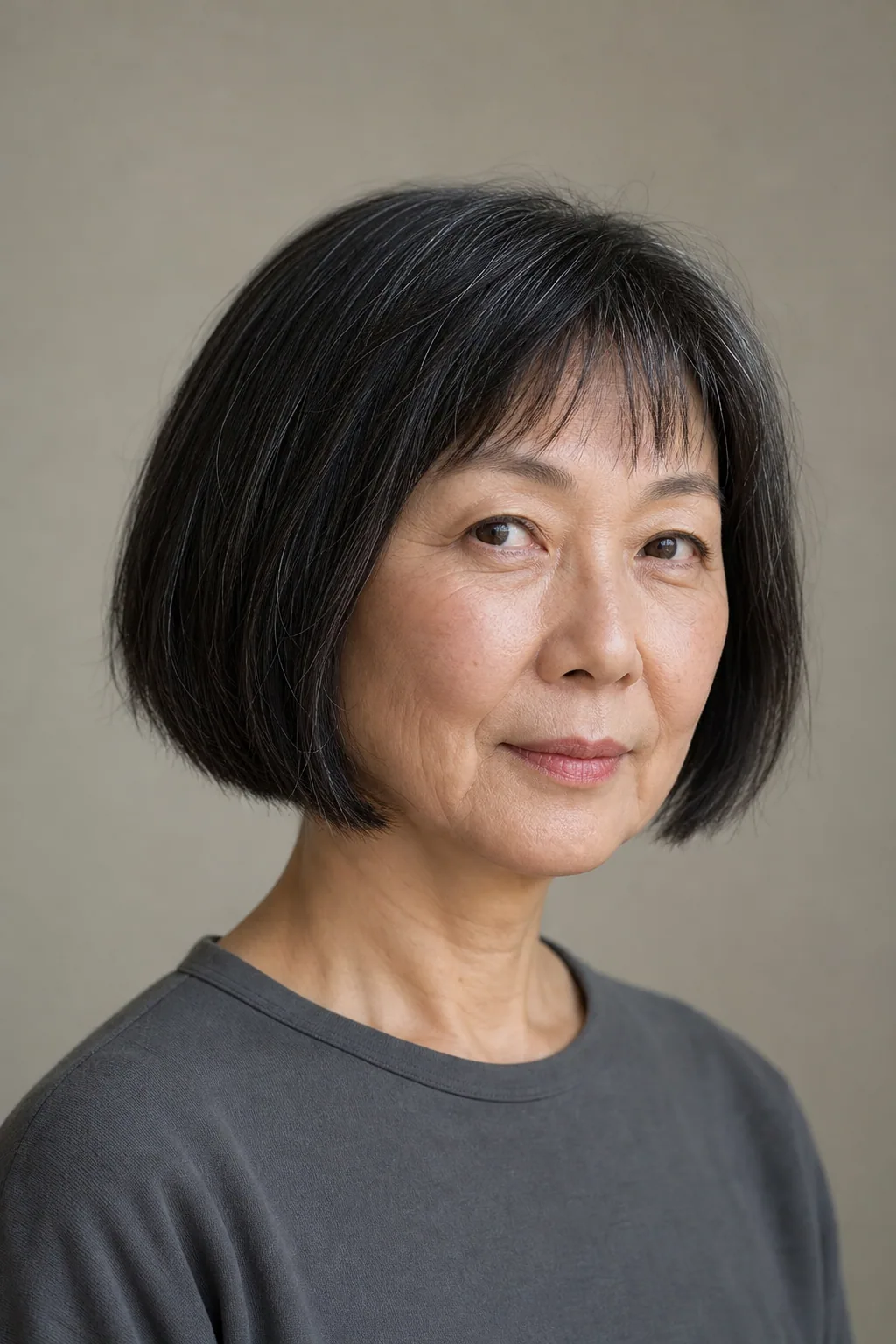
Graduation means cutting the back at an angle so the shorter hairs underneath support the longer ones on top, which stacks the hair and lifts the crown. It is the bob for fine, straight hair that goes flat at the back by lunchtime. Keep the graduation soft. A strong, tight stack can look dated, especially on silver hair.
4. Chin-Length French-Style Bob
A blunt bob between the cheekbone and the chin, often with a wispy fringe, meant to be air-dried and a little undone. It needs density. On medium or thick hair it swings. On thin hair the short blunt line shows every gap.
Medium-Length Hairstyles for Women Over 50
Medium length, from the jaw to just below the collarbone, is the most forgiving range at 50. It is long enough to tie back and short enough to keep its body. What matters is the weight line, where the hair's bulk sits at the perimeter, and whether it flatters your jaw.
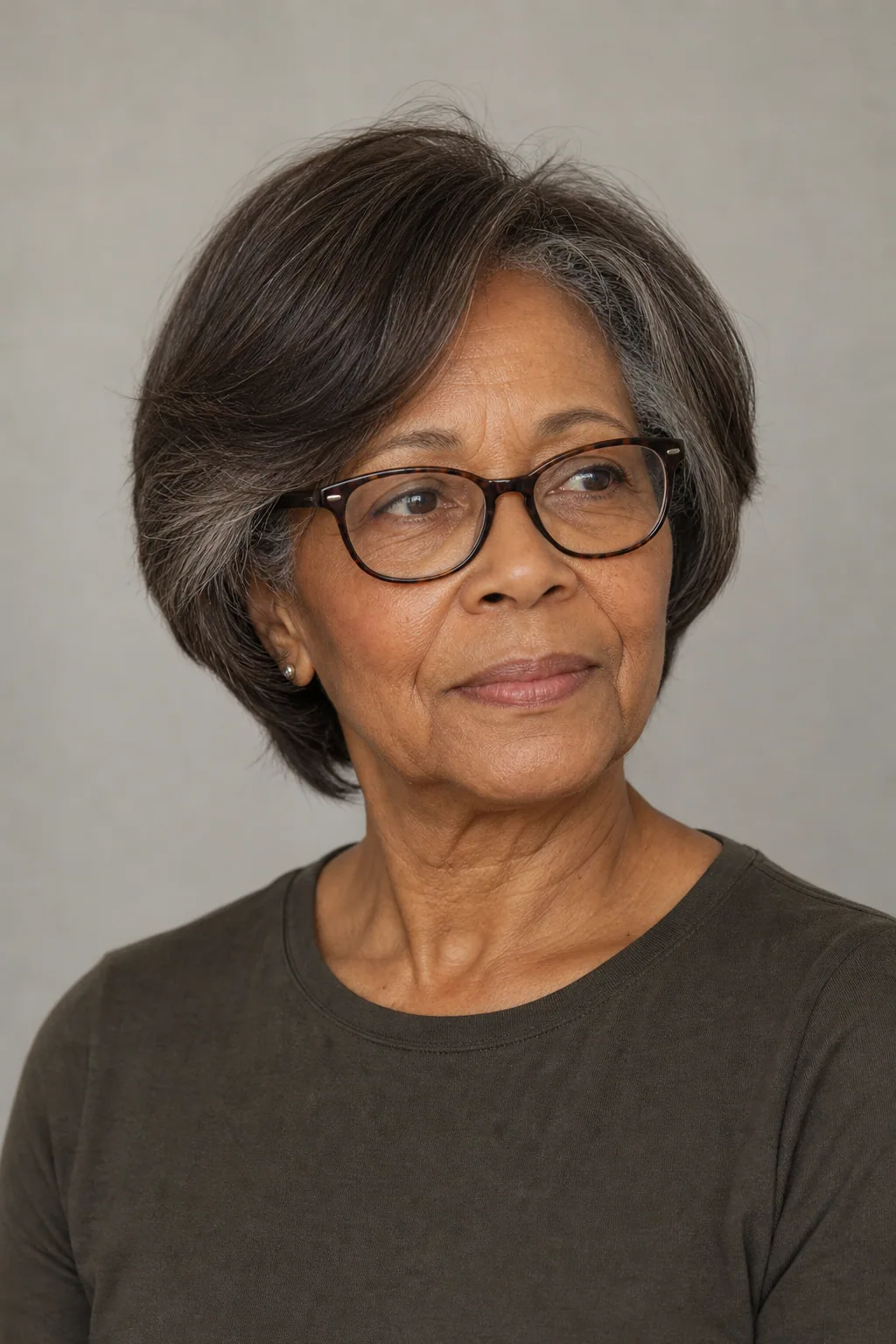
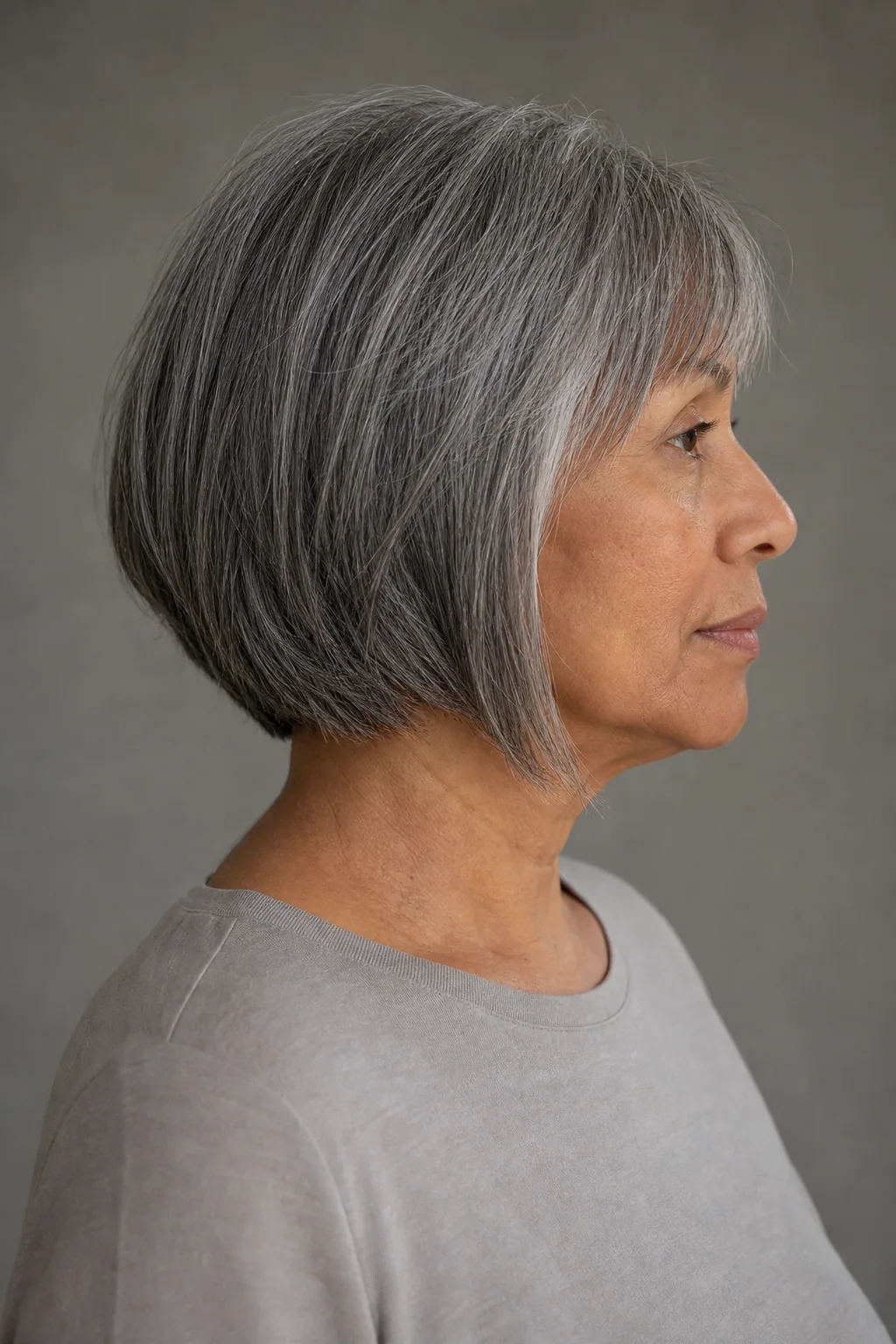
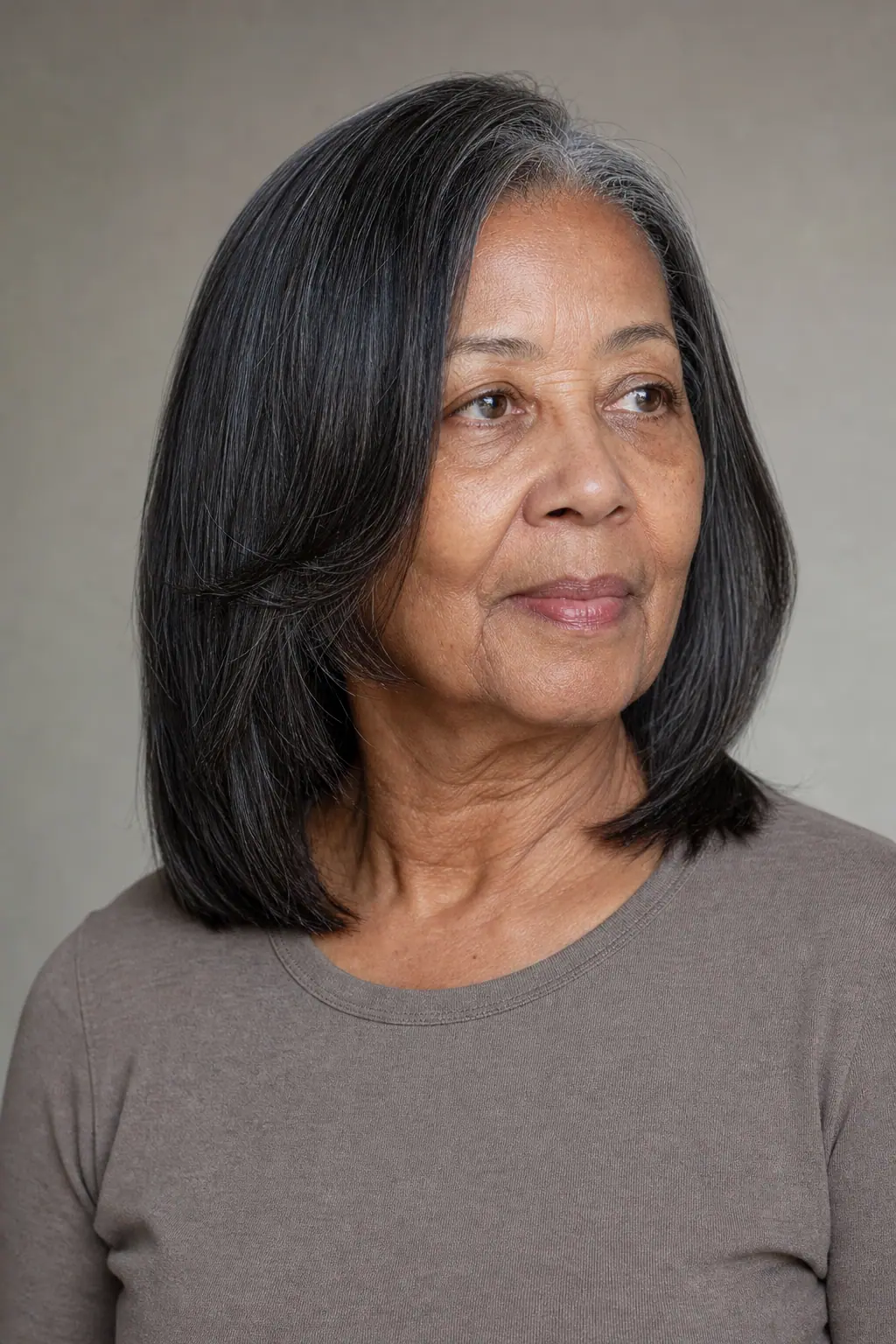
5. Angled Bob for Salt-and-Pepper Hair
The back sits a little shorter than the front, and the line angles forward to just below the jaw, with no tight stacking at the nape. A clean line makes mixed gray look intentional rather than in-between. An occasional gloss keeps it from looking dull.
6. Collarbone Lob With Point-Cut Ends
A long bob (lob) that grazes the collarbone, with the ends point cut so they bend softly instead of flipping. It is the easiest cut here to air-dry, tuck or clip up. On wavy hair, scrunch in mousse and leave it.
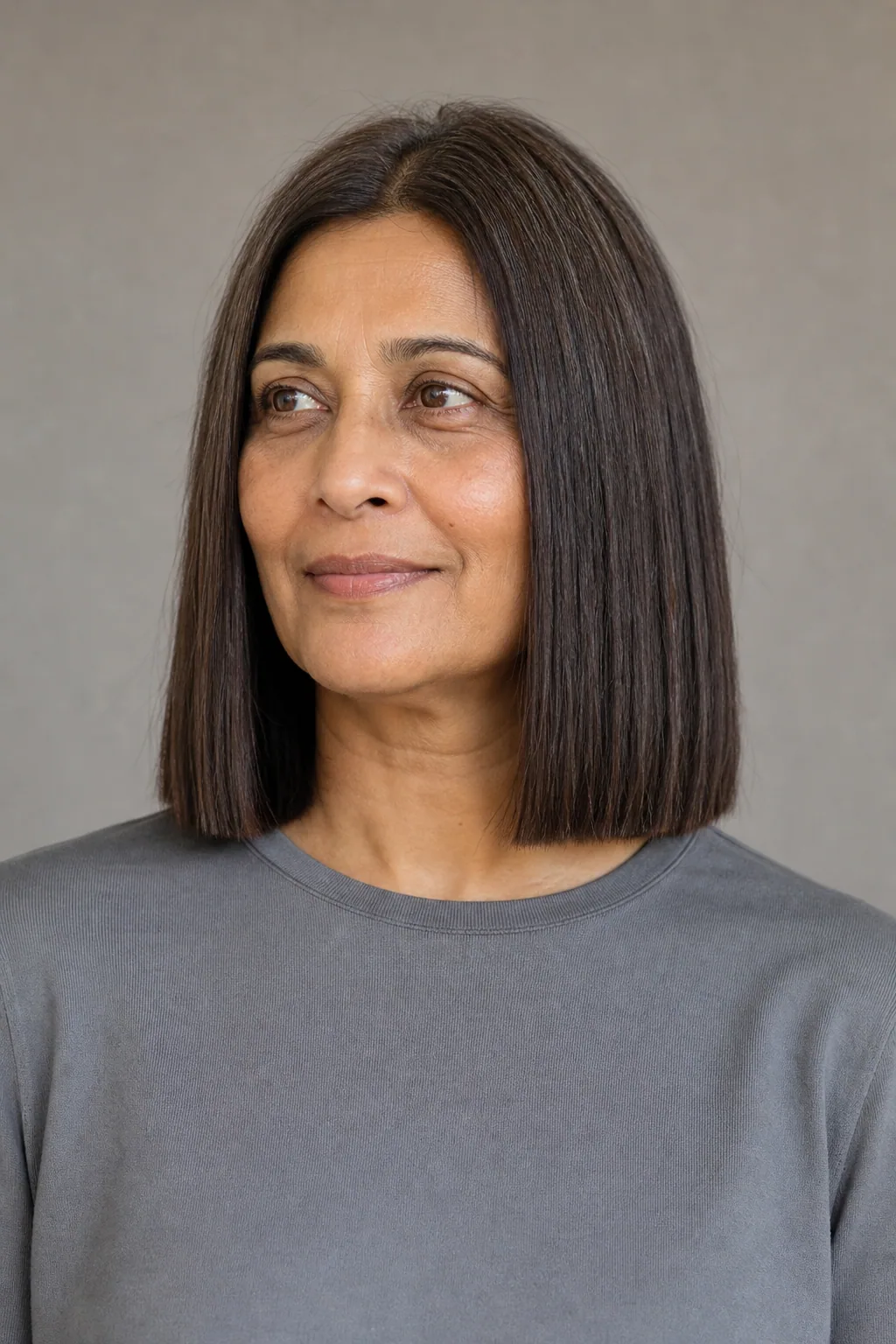
7. Blunt Collarbone Cut for Fine Hair
A one-length cut with no visible layers, so every strand ends in the same place and the ends look as thick as possible. Fine hair often looks fuller with fewer layers, not more. If your strands are fine but you still have plenty of them, this is the cut. Ask your stylist not to thin out the ends.
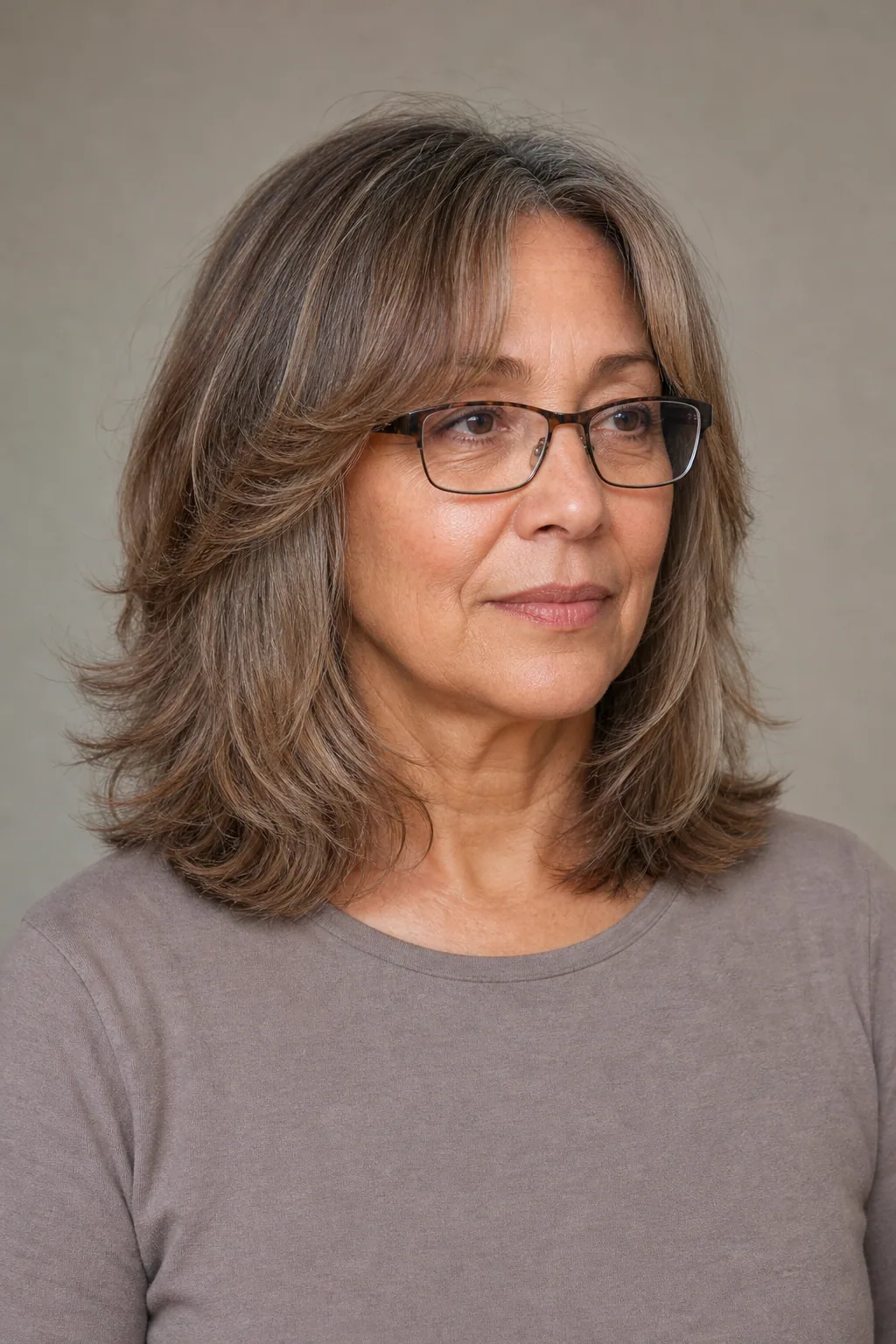
8. Shoulder-Length Layers With Curtain Bangs
Curtain bangs are parted in the middle and cut shortest at the center, growing longer toward the cheekbones. Over shoulder-length layers they soften a high forehead. With glasses, ask for bangs that clear the top of your frames. Skip them if you have a strong cowlick at the front hairline.
9. Face-Framing Layers That Start at the Cheekbone
The back stays one length, and only the front is layered, beginning at the cheekbone rather than at the chin. Starting higher lifts the face and draws attention up from a softening jaw. Ask for "face-framing layers starting at the cheekbone, with the back left one length." It is the smallest change on this list, and a good first step if you're nervous.
Long Hairstyles for Women Over 50
Long hair after 50 works when the ends are still dense. Hold your ends up to the light. If the last few inches are see-through, taking them off makes the whole length look thicker. If they're solid, there's no reason to cut short.
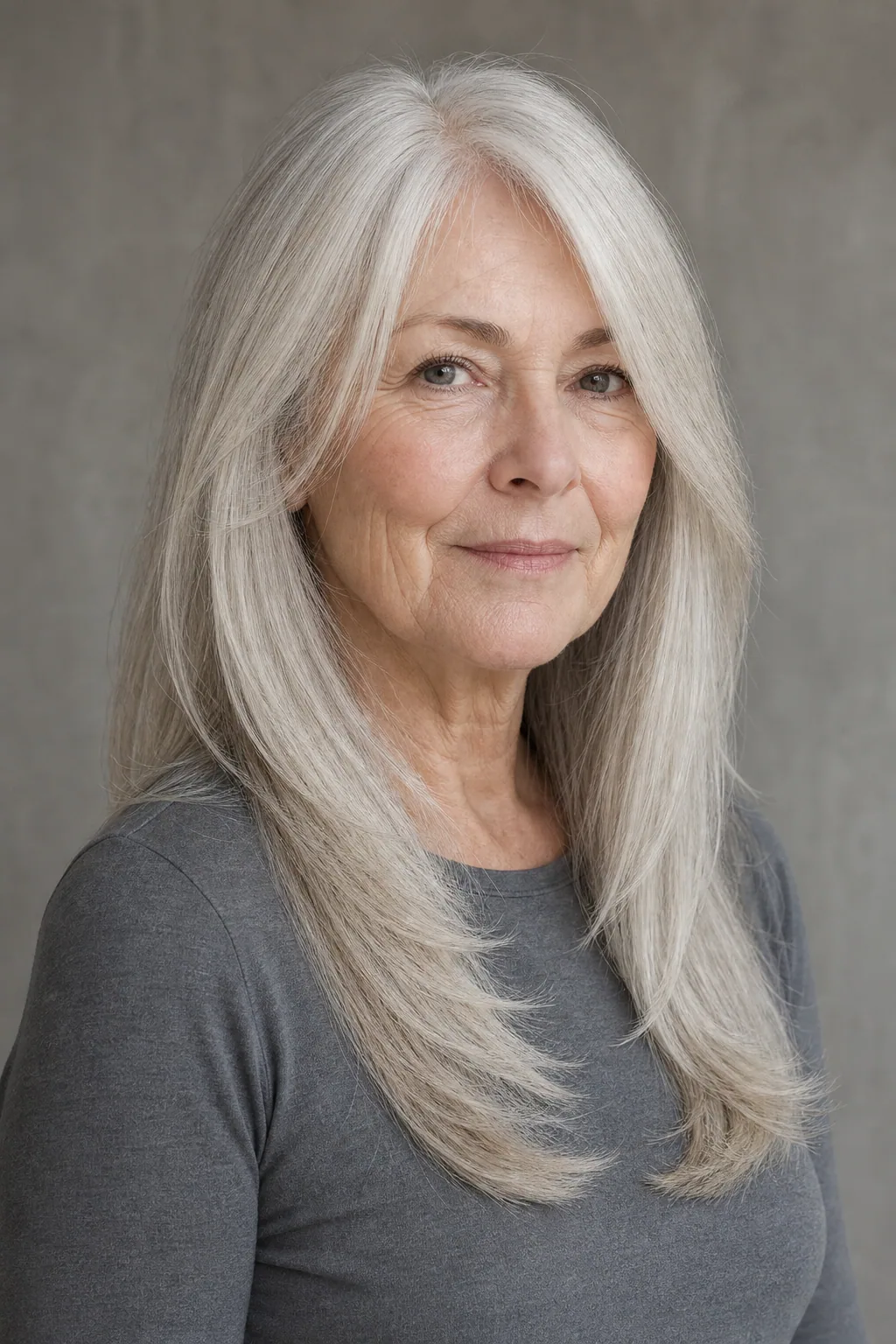
10. Long Layers With the Weight Kept in the Ends
Long, soft layers start below the shoulder, with a few internal layers (shorter pieces hidden underneath the top layer) that lift the crown without thinning the perimeter. Heavy ends keep long hair from looking stringy, and it needs a trim only every 10 to 12 weeks.
11. Long Hair With Long Curtain Bangs
These bangs fall to the cheekbone or below and blend into the side layers, so they can be swept aside or tucked behind the ears. They break up a long curtain of hair and soften the temples, where density often drops first. A slightly overgrown long fringe still looks finished, so they forgive a late trim.
Wavy, Curly and Coily Hair Over 50
If your texture has changed in your 50s, cut for the hair you have now, not the hair you had. Wave, curl and coil spring up as they dry, so the cut has to allow for where each curl lands.
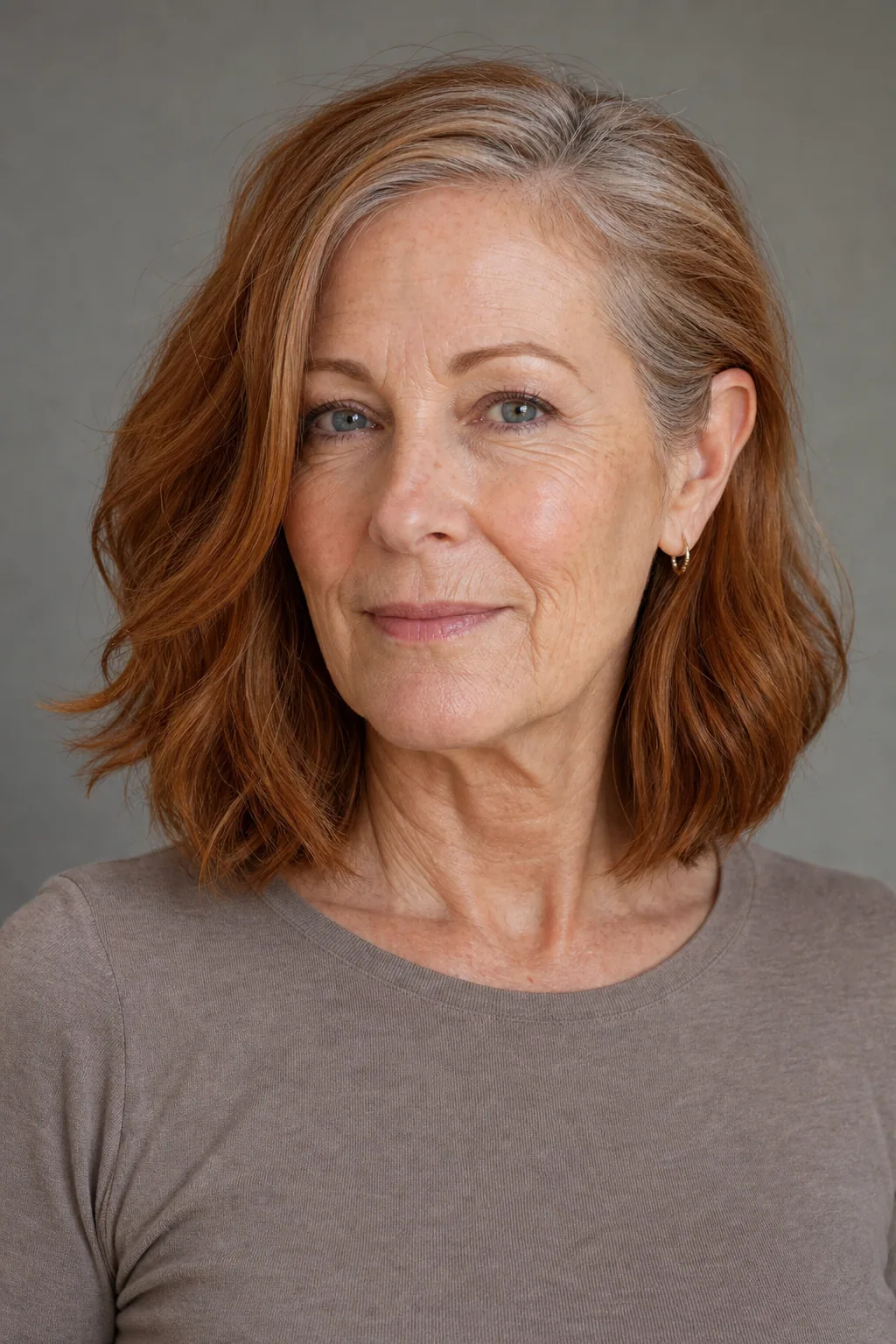
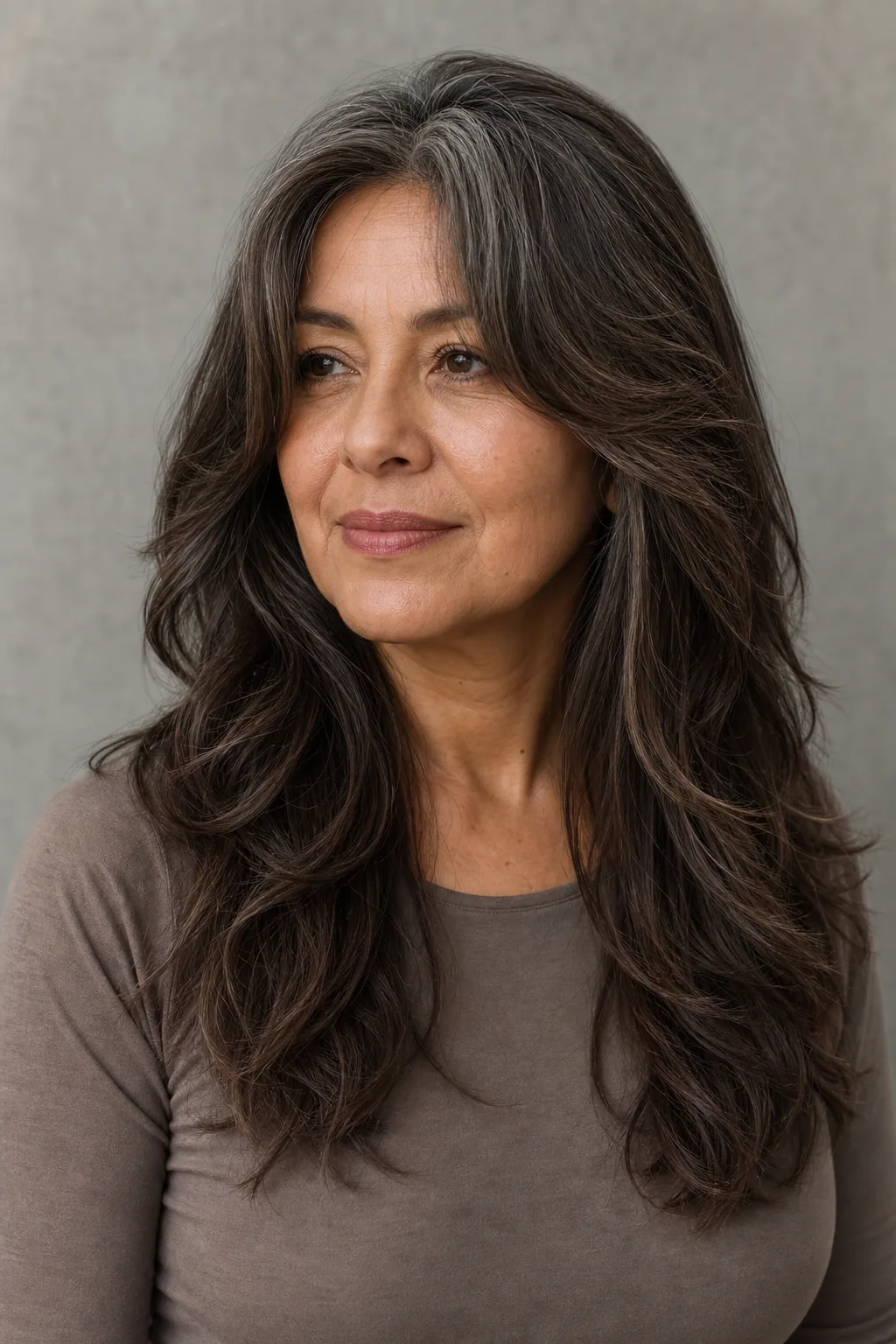
12. Soft Shag for Wavy Hair
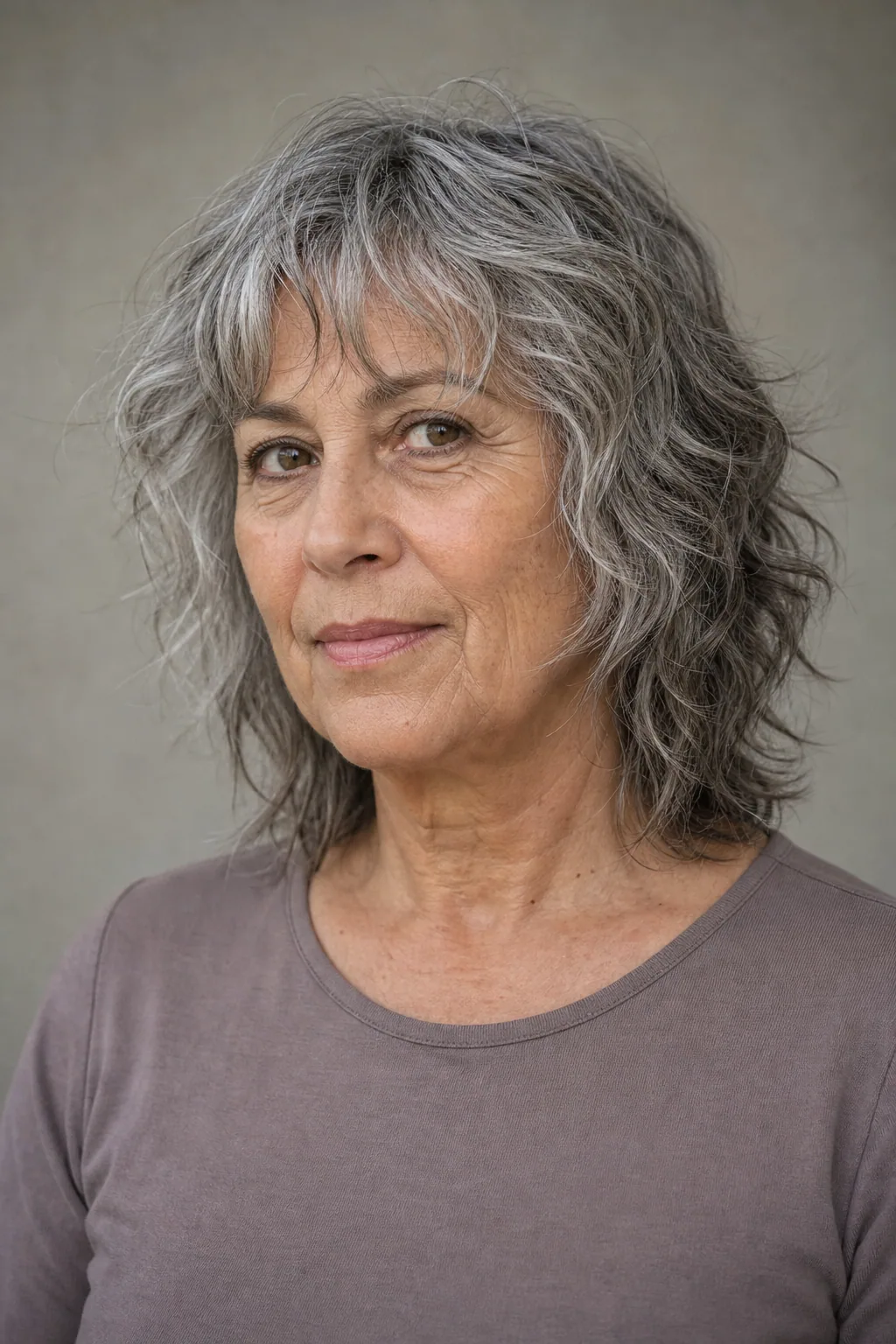
A shag is layered all over, with shorter layers at the crown and longer ones toward the ends, so waves have room to move. Ask for a soft shag, not a choppy one. Razored ends frizz on gray and coarse hair, and point cutting separates the waves more cleanly.
13. Curly Layered Cut, Cut Dry
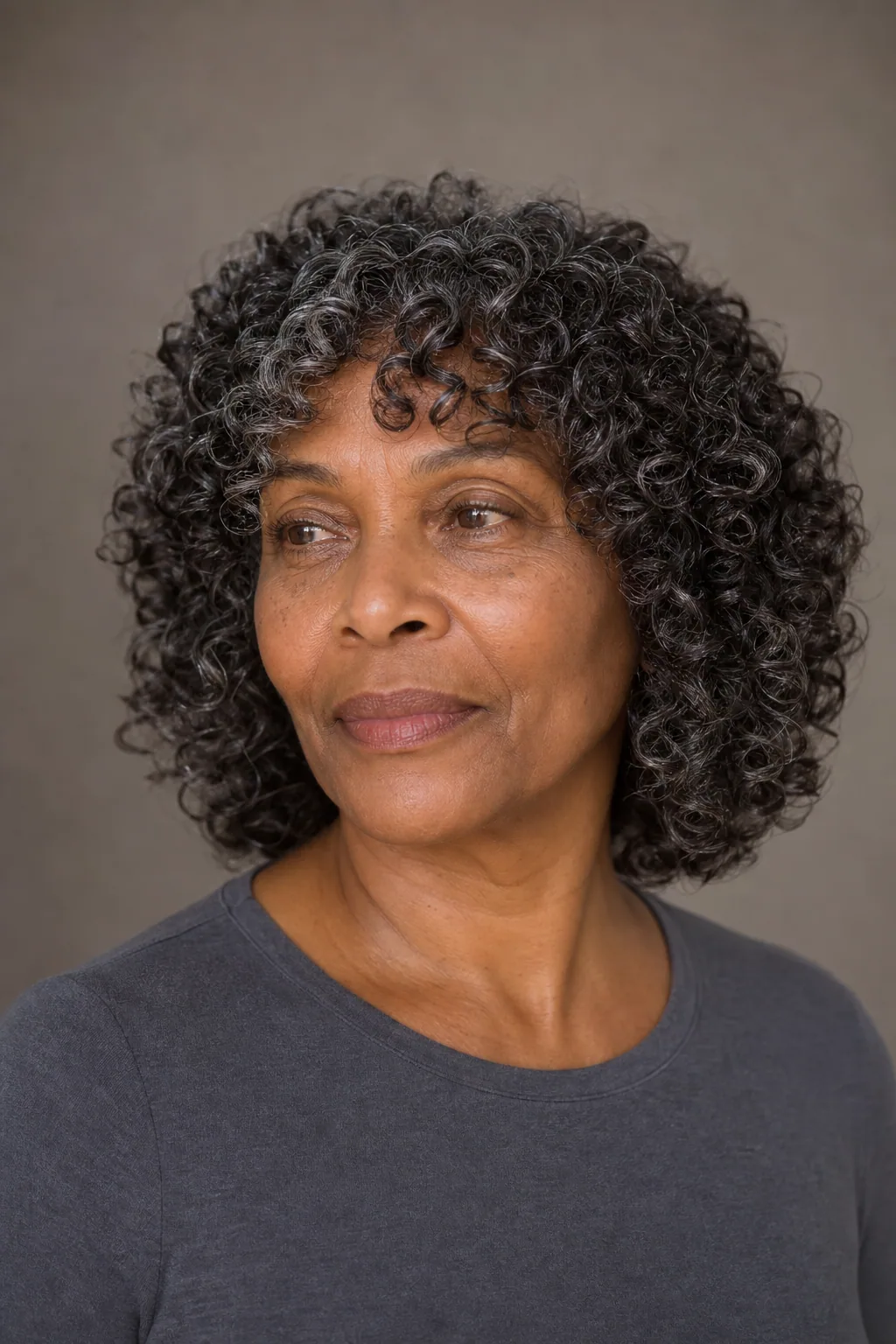
The stylist cuts dry, curl by curl, so she sees where each curl sits before taking length. That prevents the triangle shape (flat on top, wide at the bottom) a standard wet cut can leave. Ask for "a dry curl-by-curl cut with layers to take bulk off the bottom and lift the crown."
14. Short Tapered Natural Cut for Coily Hair
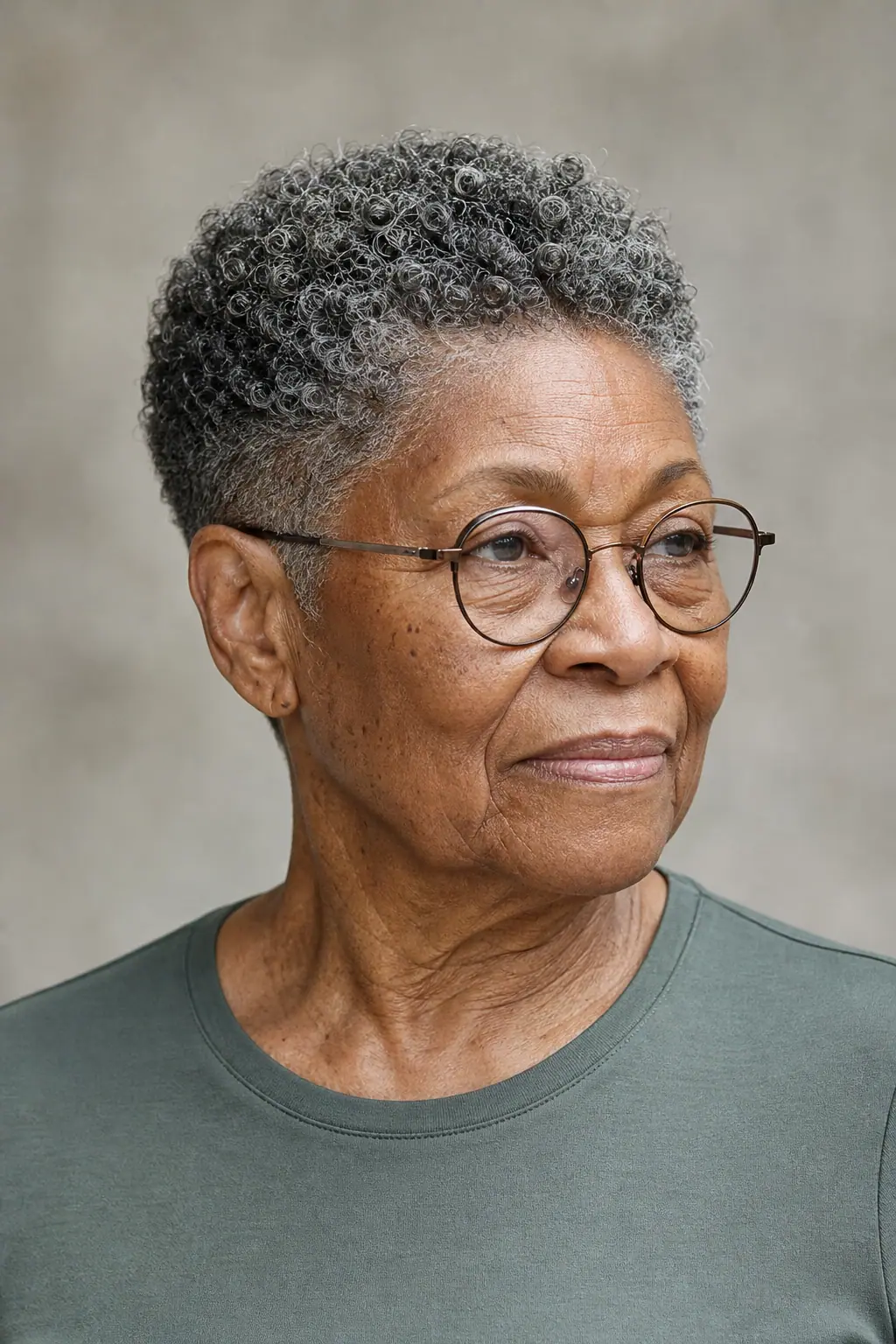
A taper is cut close at the nape and sides and gradually longer on top, so the shape comes from the cut, not from tension. It suits coily hair that has thinned at the edges, because it needs no tight braids, buns or ponytails to look neat. Plan a touch-up every four to six weeks.
Width at the sides, length no longer than the collarbone
2, 7, 8
Long, straight hair with no layers
Soft jawline
Layers starting at the cheekbone, weight line below the jaw
6, 9, 10
A weight line sitting right on the jaw
Choose by Hair Type
Match the cut to your hair's density and texture first, and to the photo you like second. A cut that looks full on thick hair can look sparse on thin hair.
Thin hair (low density). The best haircuts for women over 50 with thin hair keep a solid perimeter and add only a few layers. Try cuts 2, 3 or 9.
Fine hair (narrow strands). Fewer, well-placed layers and lift at the roots. Try cuts 3 or 7.
Thick or coarse hair. Ask for weight removed from inside the cut (internal layers), not by thinning the ends. Try cuts 4 or 10.
Wavy hair. Layers let a wave form instead of weighing it down. Try cuts 6 or 12.
Curly and coily hair. Choose a stylist who cuts dry or works with tapers. Try cuts 13 or 14.
Gray, silver or salt-and-pepper hair. Clean lines and smooth ends keep gray from looking frizzy. Try cuts 1 or 5.
What to Ask Your Stylist
Bring a photo, but also describe where you want lift and where you want weight. Start with what has changed ("my crown has thinned," "my hair turned wavy after 50"), then use these words.
For lift without losing length: "Please keep the length, but add a few internal layers at the crown so it doesn't sit flat."
For fine hair: "Please keep the ends blunt and don't thin them out. I'd rather have fewer layers."
For face-framing: "Can the layers around my face start at the cheekbone, not the chin?"
For gray hair: "Please point cut the ends rather than razor them, because my gray frizzes."
For curls: "Can you cut it dry so we can see where each curl sits?"
Low-Maintenance Haircuts for Women Over 50: The Maintenance Table
Low maintenance means either few minutes a day or many weeks between trims, and it is rarely both. Short cuts style fast but need frequent trims. Long cuts last longer between appointments but take longer to dry.
Cut
Trim every
Styling minutes
Products (by category)
Grow-out
1. Textured pixie
4–6 weeks
5–10
Texture paste, root-lift spray
Awkward for 2–3 months; go via a bixie
2. Bixie
5–7 weeks
5–10
Light mousse, texture spray
Easy, into a short bob
3. Graduated bob
5–7 weeks
10–15 (round brush)
Volumizing mousse, heat protectant
Stack evens out in 3–4 months
4. French-style bob
6–8 weeks (fringe 3–4)
5–10 (air-dry)
Texture spray, light cream
Easy, into a lob
5. Angled bob
6–8 weeks
10–15
Smoothing cream, occasional gloss
Angle softens; trim level
6. Collarbone lob
8–10 weeks
5–15
Air-dry cream or light mousse
Very easy
7. Blunt collarbone cut
8–10 weeks
10
Root mousse, light oil on the ends
Very easy
8. Layers with curtain bangs
8–10 weeks (bangs 3–5)
10–15
Root-lift spray, heat protectant
Bangs become face-framing
9. Cheekbone face-framing
8–12 weeks
5–10
Light mousse
Grows into long layers
10. Long layers
10–12 weeks
10–20
Leave-in conditioner, heat protectant
Easy
11. Long curtain bangs
10–12 weeks (bangs 4–6)
10–20
Leave-in conditioner, root-lift spray
Easy; tuck them back
12. Soft shag
8–10 weeks
5–10 (diffuse or air-dry)
Curl cream or mousse, anti-frizz serum
Forgiving
13. Curly dry cut
10–12 weeks
10–20 (diffuse)
Curl cream, gel
Holds its shape
14. Tapered natural cut
4–6 weeks
5–10
Leave-in conditioner, curl cream, light oil
Edges blur after about 6 weeks
The short version: the right haircut for a woman over 50 is the one that puts lift where her hair has thinned and keeps weight where it hasn't. Start there, and length becomes a matter of taste.
Frequently Asked Questions
What is the most flattering hair length for over 50?
A length between the chin and the collarbone suits the widest range of faces and densities after 50. It keeps weight at the ends and is short enough for lift at the crown. If your ends are still dense, longer hair works just as well.
What haircut makes an older woman look younger?
No cut changes your age, but cuts that lift the crown and add movement around the face make it read fresher. Look for height on top, layers that start at the cheekbone and soft rather than blunt ends near the jaw. Flat, heavy hair that drags downward has the opposite effect. We go deeper in youthful hairstyles over 50.
What are the most flattering hairstyles for women over 50?
The most flattering hairstyles for women over 50 have lift at the crown, softness around the face and a weight line that sits above or below the jaw rather than on it. That can be a bixie, a collarbone lob or long layers. Pick by your density and texture, then by your face shape.
What hairstyles work for women over 50 with glasses?
Choose height on top and side pieces that fall in front of or behind the frame arms, not on them. A bixie, an angled bob or long layers swept back all work with glasses.
Is it okay to keep long hair after 50?
Yes. Length has nothing to do with age, only with how thick and healthy your ends are. If you love it long, keep the weight in the ends and add a few layers around the face so it doesn't pull your features down.
Should I change my haircut when my hair turns gray?
Often, yes, because gray tends to be coarser and frizzier at the ends. Cuts with clean lines and point-cut ends show gray at its smoothest. If your hair is mostly white and fine, the guide to hairstyles for women over 70 covers cuts built for that stage.
Results vary with hair type, density, texture and face shape. This guide is educational and is not a substitute for an in-person consultation with a licensed stylist.
 Grace