Hairstyles for Women Over 60: 14 Cuts That Lift and Frame
By Coral Pleas, Founder of Cutting Loose Salon · Reviewed by Melissa Timperley · Updated November 2026 · 12 min read
The best hairstyles for women over 60 each answer one of three changes: gray that grows in coarser, thinner hair at the crown and part, and a jawline that has softened. Choose the cut for the change you see in the mirror, not for a length: a stacked bob for a flat crown, a blunt bob for wiry gray, a weight line moved off the jaw for a softer jaw.
Below are 14 haircuts for women over 60, grouped by the change each one solves, then picks by face shape and hair type, the salon words, honest trim times and who should skip what. If you're in your 50s, start with our haircuts for women over 50, where the question is mostly weight placement. If you're past 70, the hairstyles for women over 70 page puts the daily routine first.
Hairstyle images in this guide are AI-generated illustrations, not photos of real clients or results. See our image standards.
What Changes in Your Hair at 60, and What a Cut Can Do
At 60 the cut has to handle three things at once: more gray, lower density at the crown and part, and a softer jaw. Work out which one is driving the problem, because each needs a different fix. A cut changes how full your hair looks, not how much there is.
Change at 60
What it does to a cut
What to ask for
More gray
Gray often feels coarser and drier and frays at razored ends. Frizz shows more on silver.
Scissor-cut ends, a clean outline, no razor; a smoothing cream or gloss
Lower density at the crown and part
The part widens, the crown goes flat by midday, and long ends look see-through
Graduation at the back for lift, a solid perimeter, length on top, no thinning shears
A softer jaw
A line of hair that ends right at the jaw frames it
The weight line above or below the jaw, layers or a fringe that start at the cheekbone
None of these cuts hide anything. They put the shape where your hair needs it now.
Cuts for Lower Density at the Crown and Part
When the crown flattens and the part widens, the fix is a shape that builds lift and keeps the outline full. Short hairstyles for women over 60 lead this group because short hair is lighter and lifts more easily, but each of these four keeps length where the hair is thinnest.
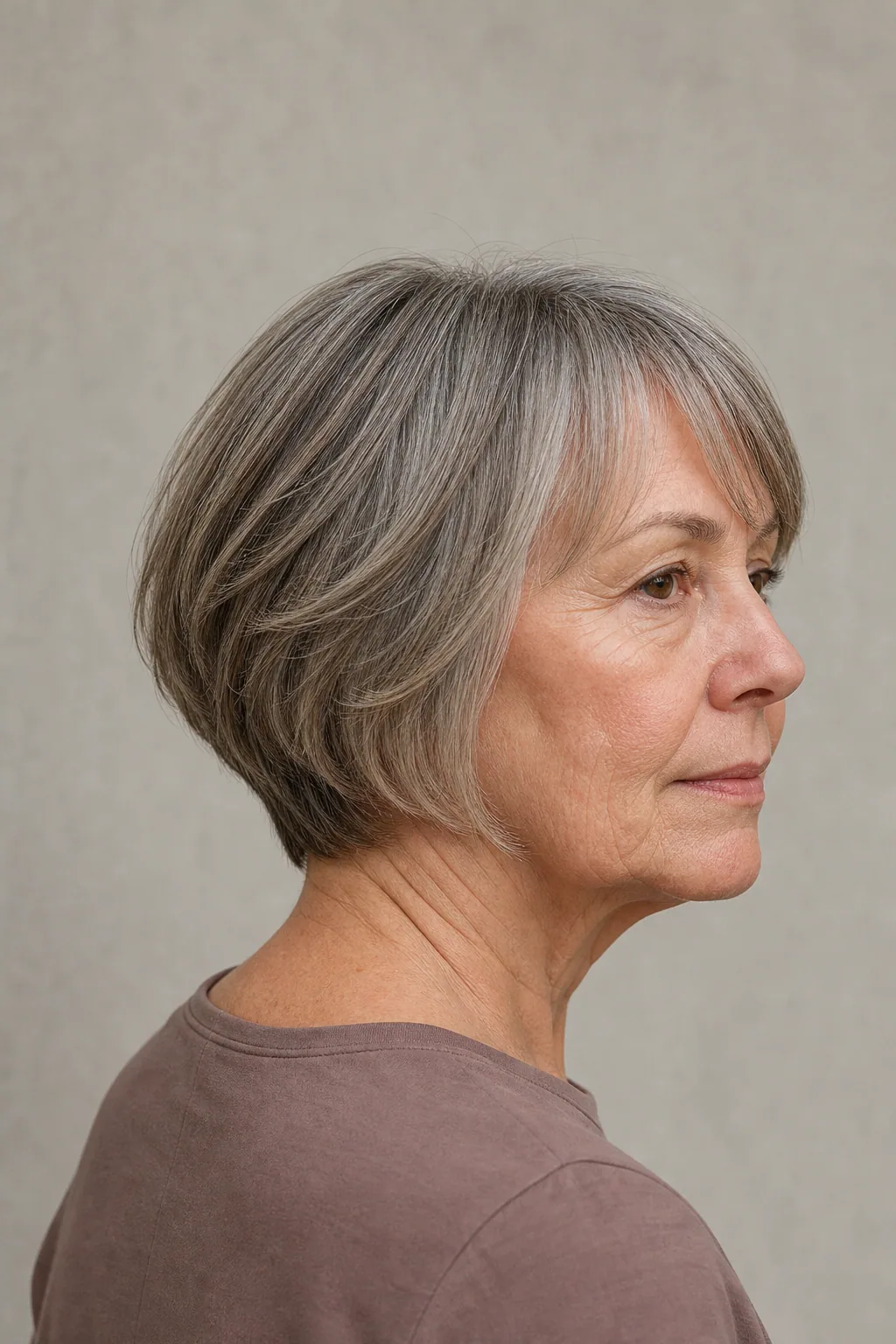
1. Stacked Short Bob With Lift at the Crown
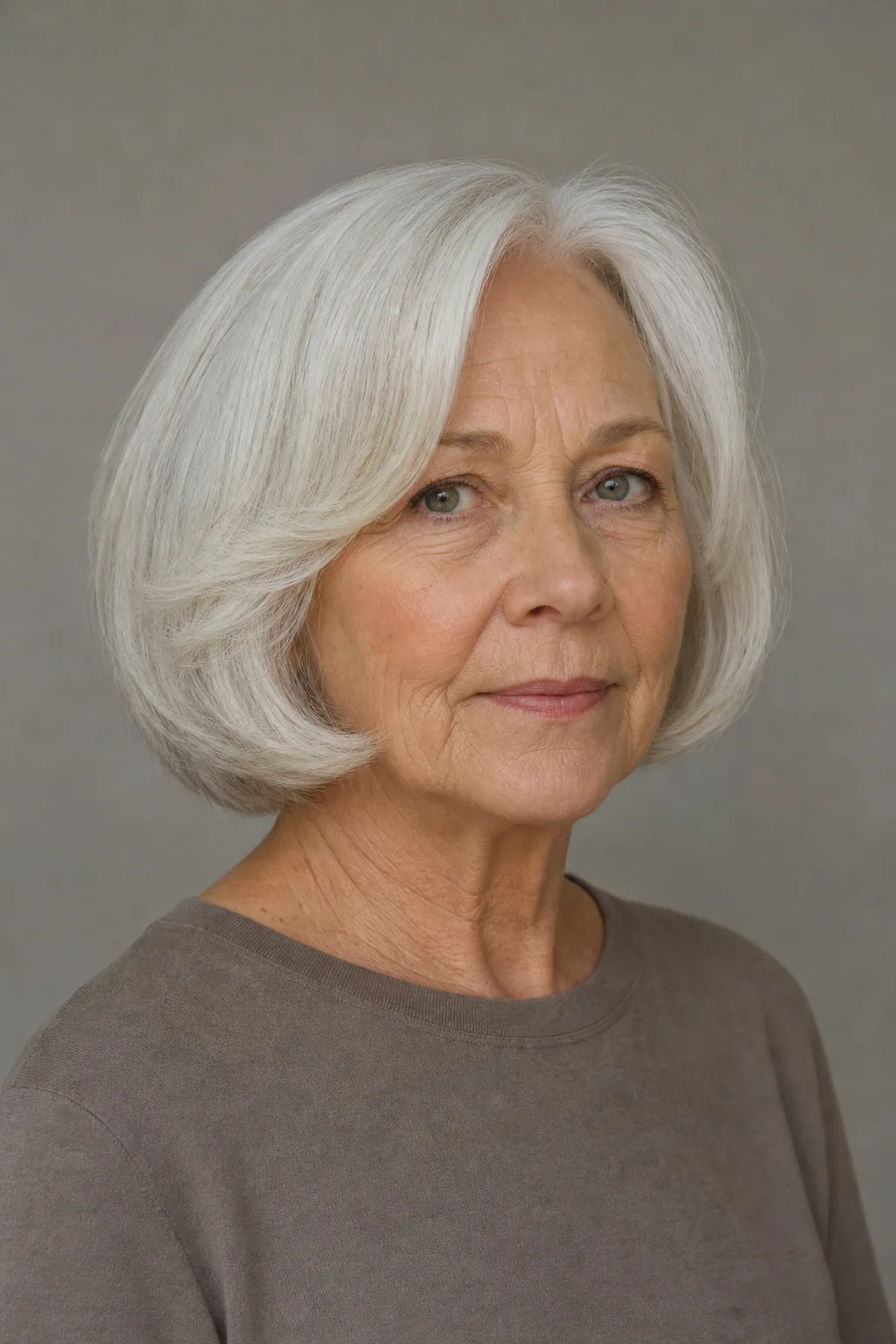
This is a shorter, rounder bob than the one most women wear at 50. The nape is graduated (stacked short layers) so the back carries its own height, and the front drops only to just below the cheekbone, so no weight sits at a softening jawline. It works when the crown has lost density but the sides are still full. Ask for "a short graduated bob, soft stacking at the nape, the front just below the cheekbone, no hard wedge."
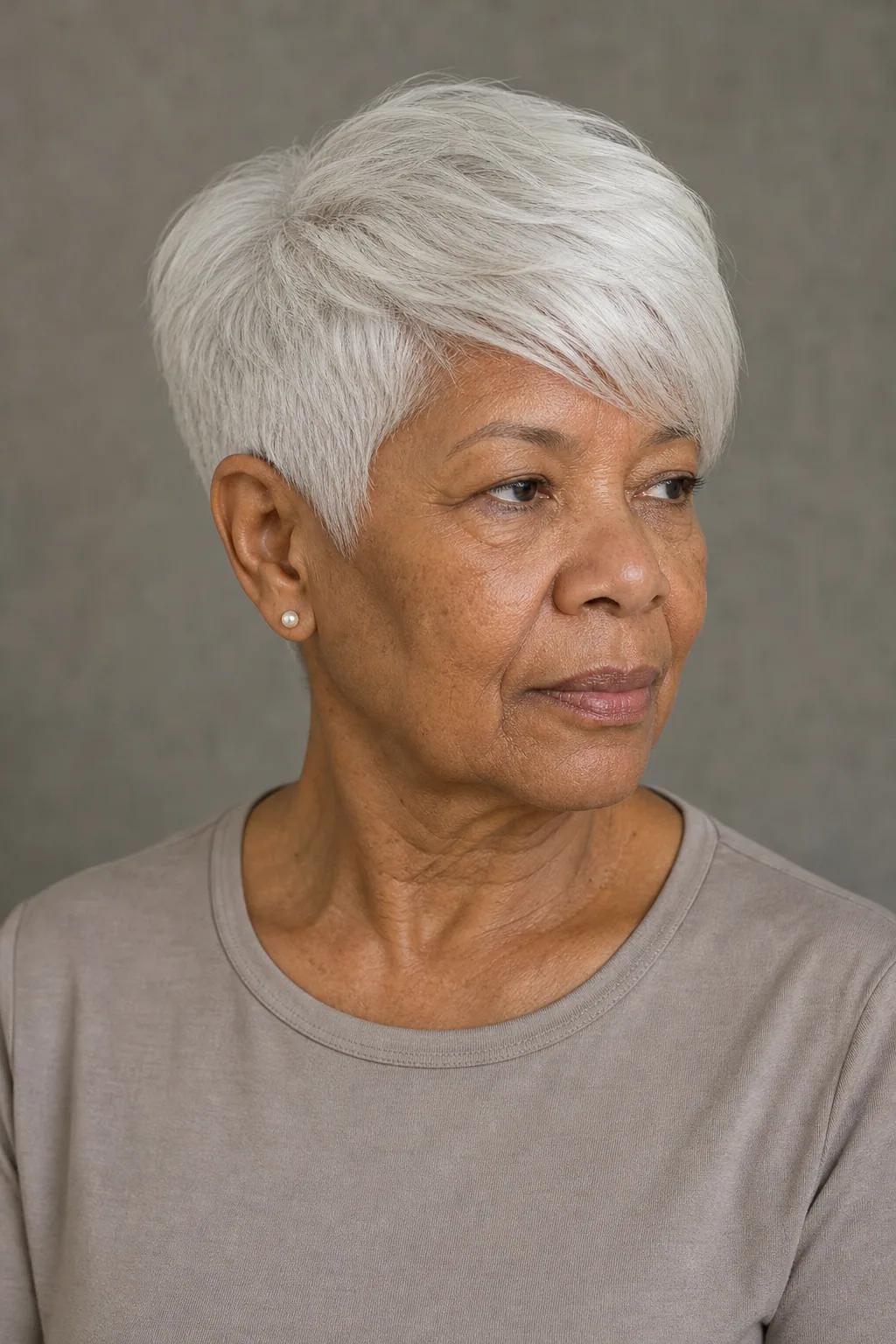
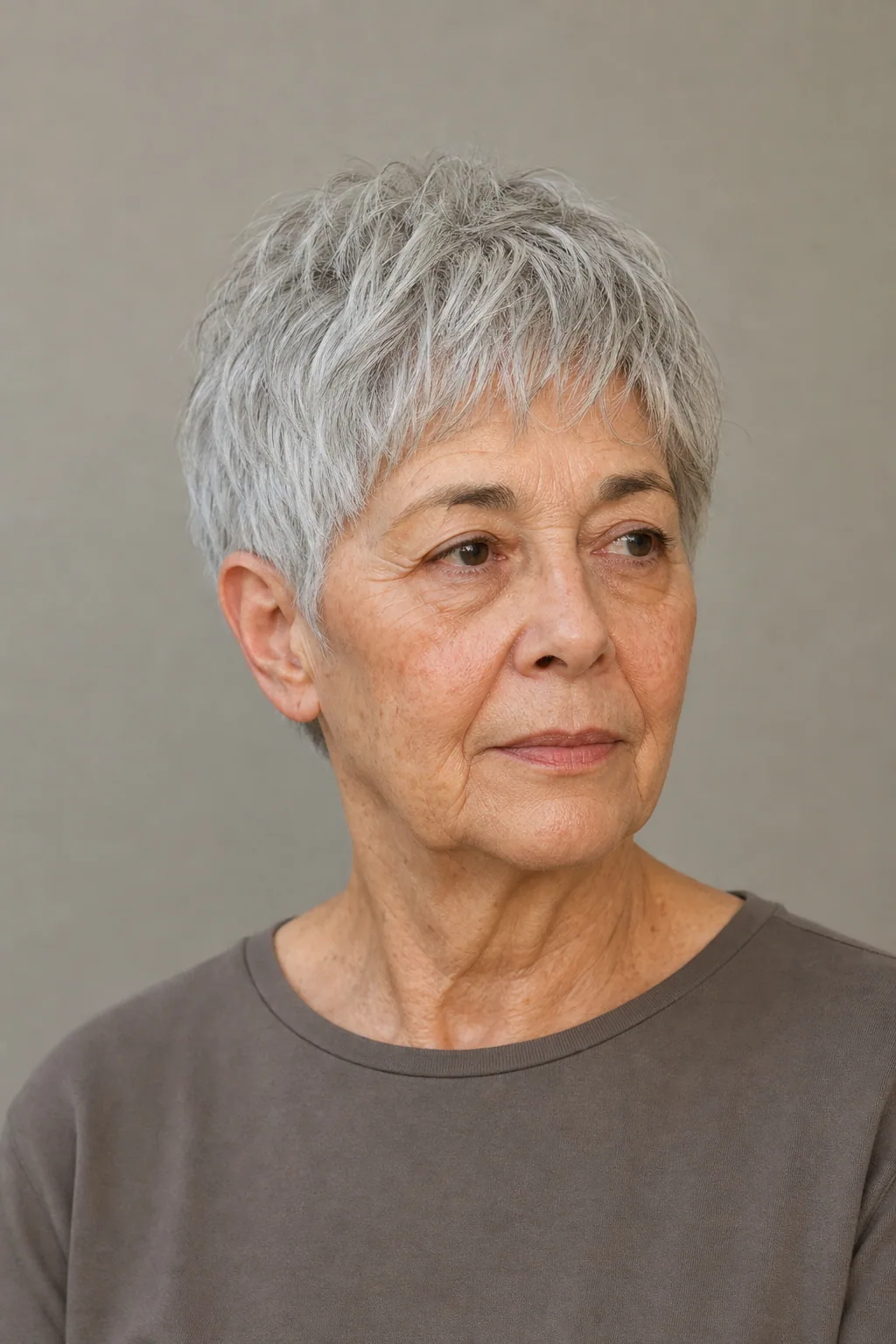
2. Pixie With a Long, Sweeping Fringe
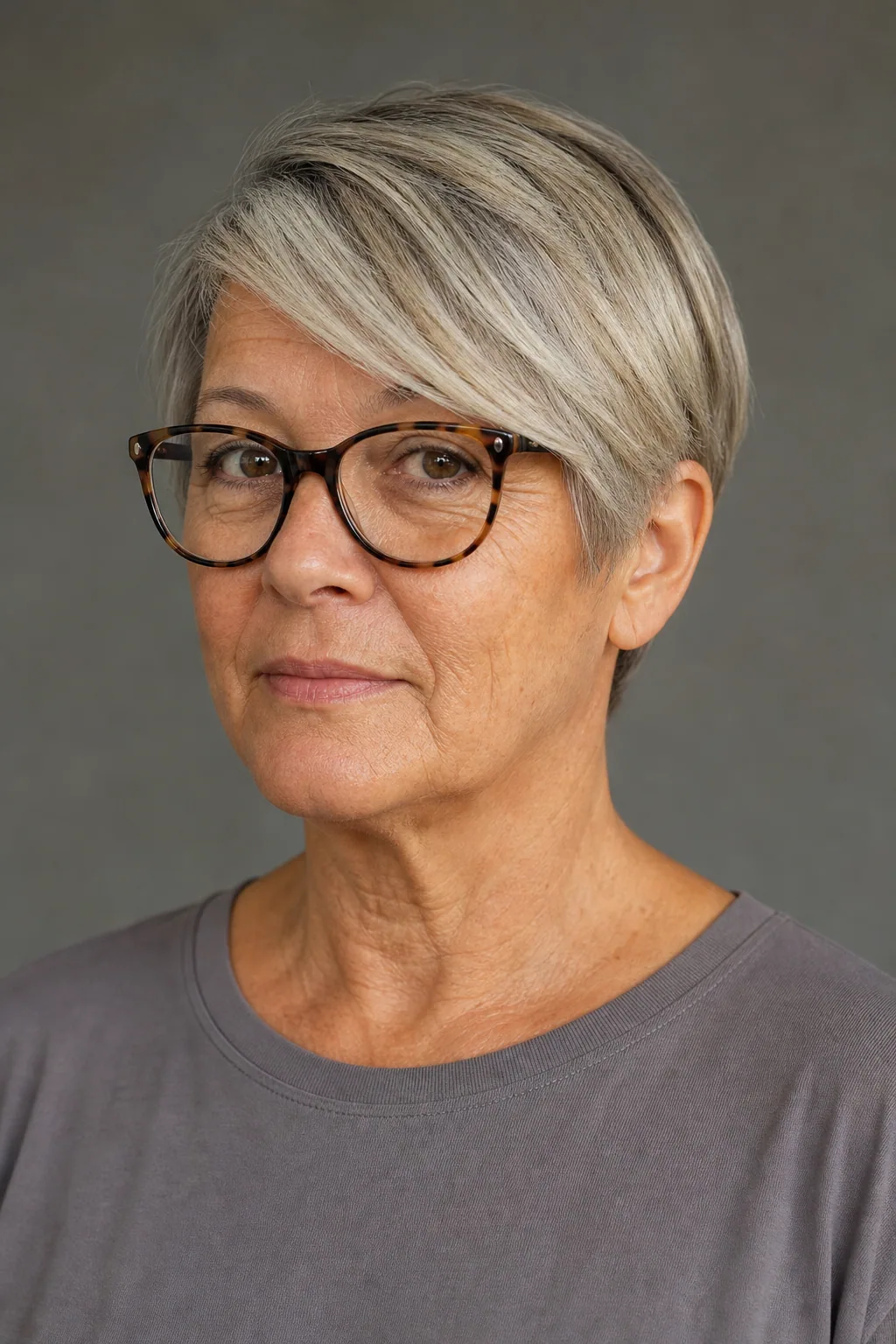
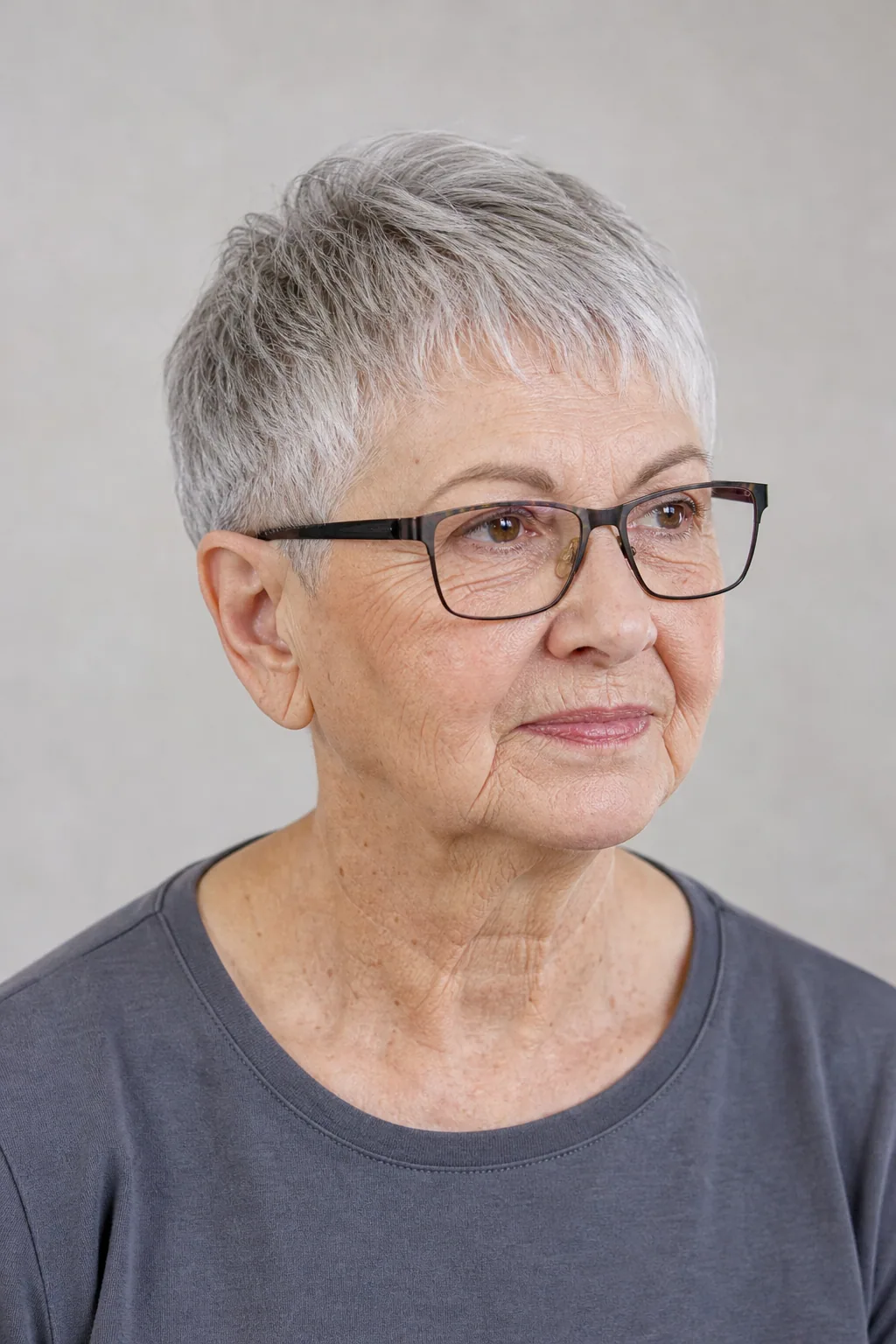
Density often drops first at the front hairline and along the part. This pixie keeps the top and fringe long enough to sweep across the forehead, so that hair falls over the thinner spots, while the sides and nape stay short.
3. Chin-Length Bob With Ghost Layers
Ghost layers are cut into the hair underneath the top section, so they add movement without leaving visible steps on the surface. It's the cut for anyone who hears "let's take a little weight off" and wants to say no. The salon words: "a chin-length bob with a solid perimeter and ghost layers underneath, no thinning shears."
4. Wash-and-Wear Layered Crop
Short, even layers all over, point cut (the scissors snip vertically into the ends instead of straight across), so it dries with texture rather than a hard line. Wash, scrunch in a little mousse and let it air-dry in 5–10 minutes. The trade-off is the trim: every 4–6 weeks, or the shape goes.
Cuts for Coarser Gray Texture
Gray often grows in wirier and drier than the hair it replaces, so the cut has to control frizz with clean lines and scissor-cut ends. These three work with the new texture, from straight to wavy to coily.
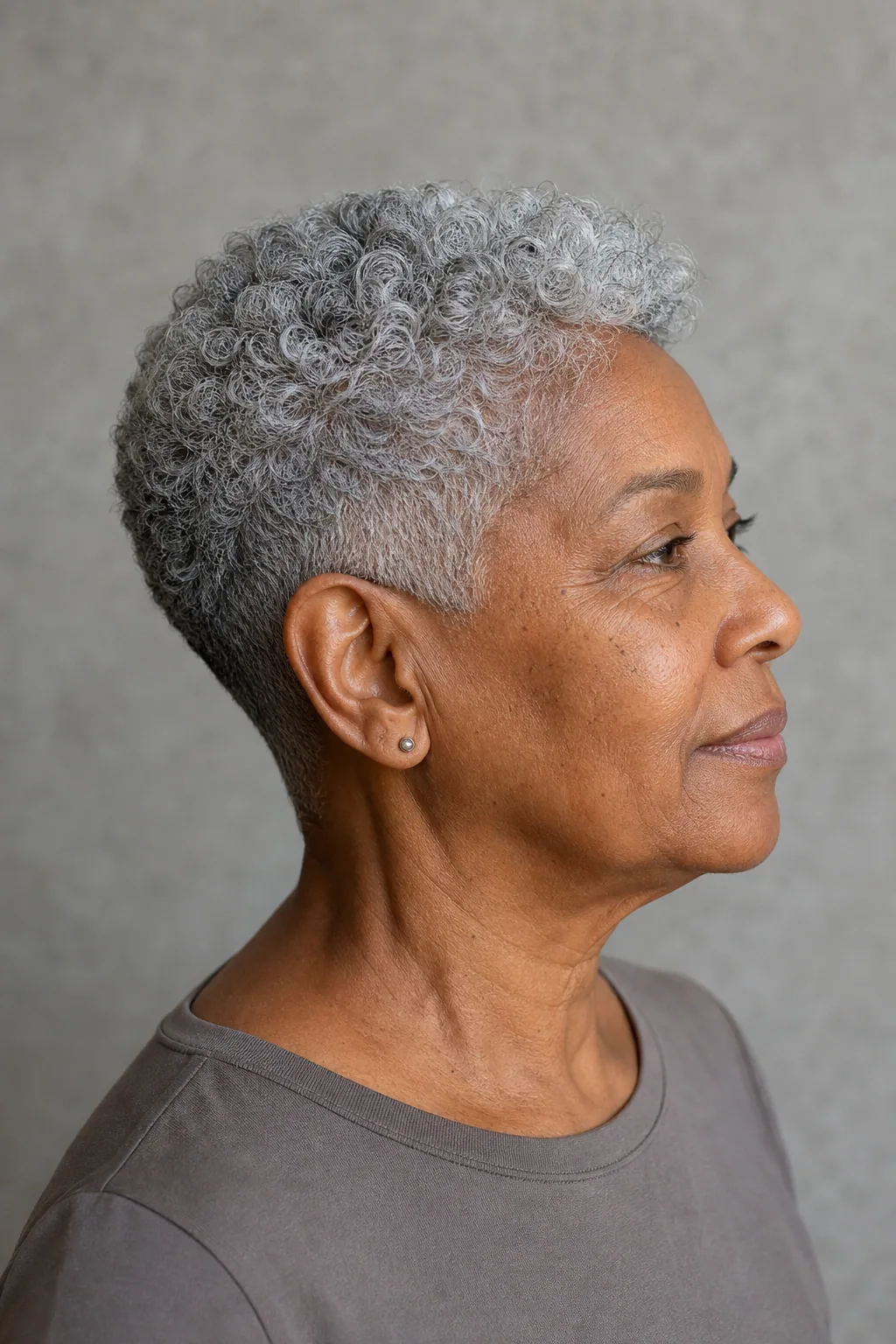
5. Soft Silver Crop With a Clean Tapered Nape
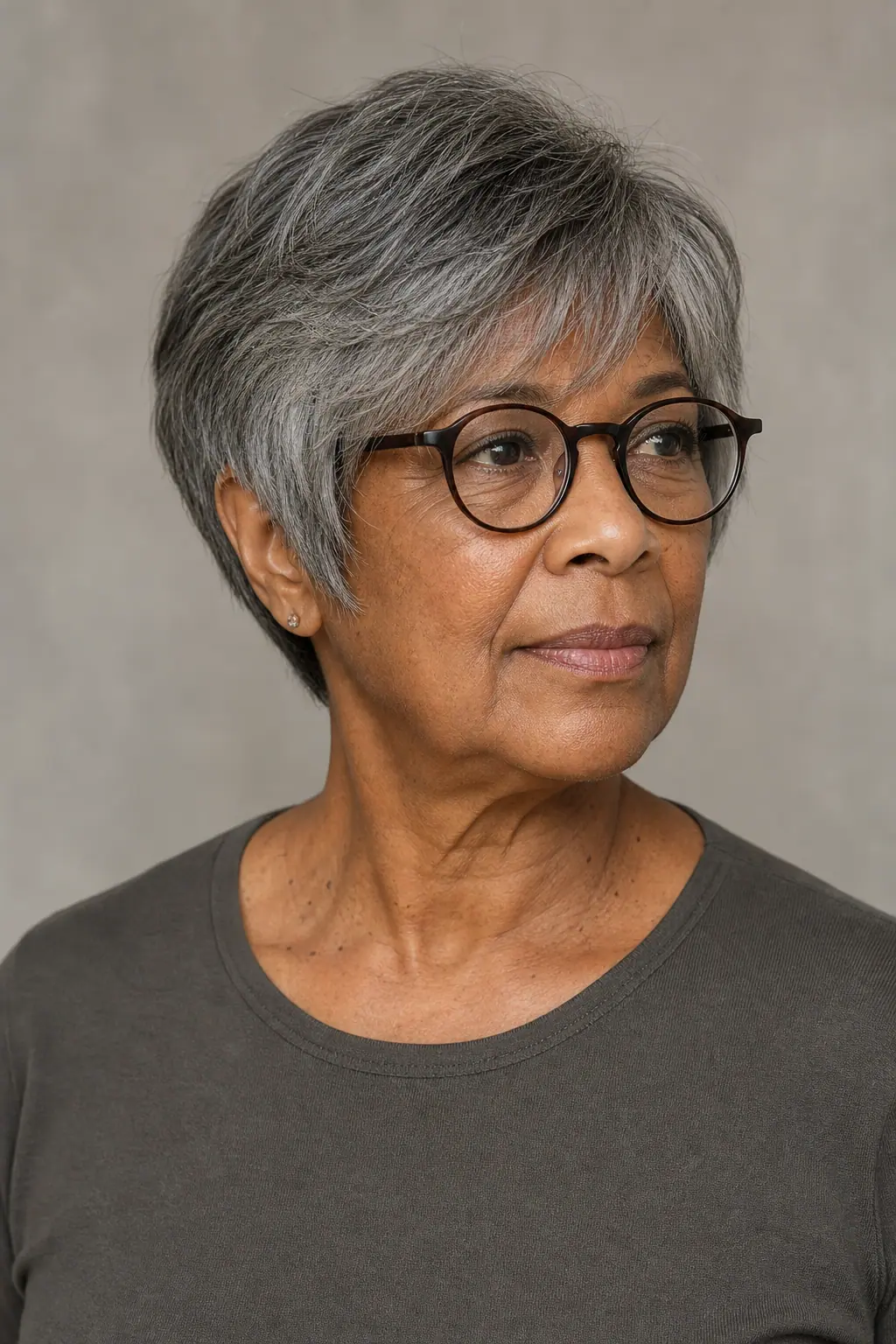
Where entry 4 is all texture, this one is about clean edges. The nape and the hair around the ears are tapered, cut gradually shorter toward the hairline with scissor-over-comb or clippers, while the top stays soft and a little longer. Precise edges make silver look intentional, and a short crop is the fastest way to cut out old color.
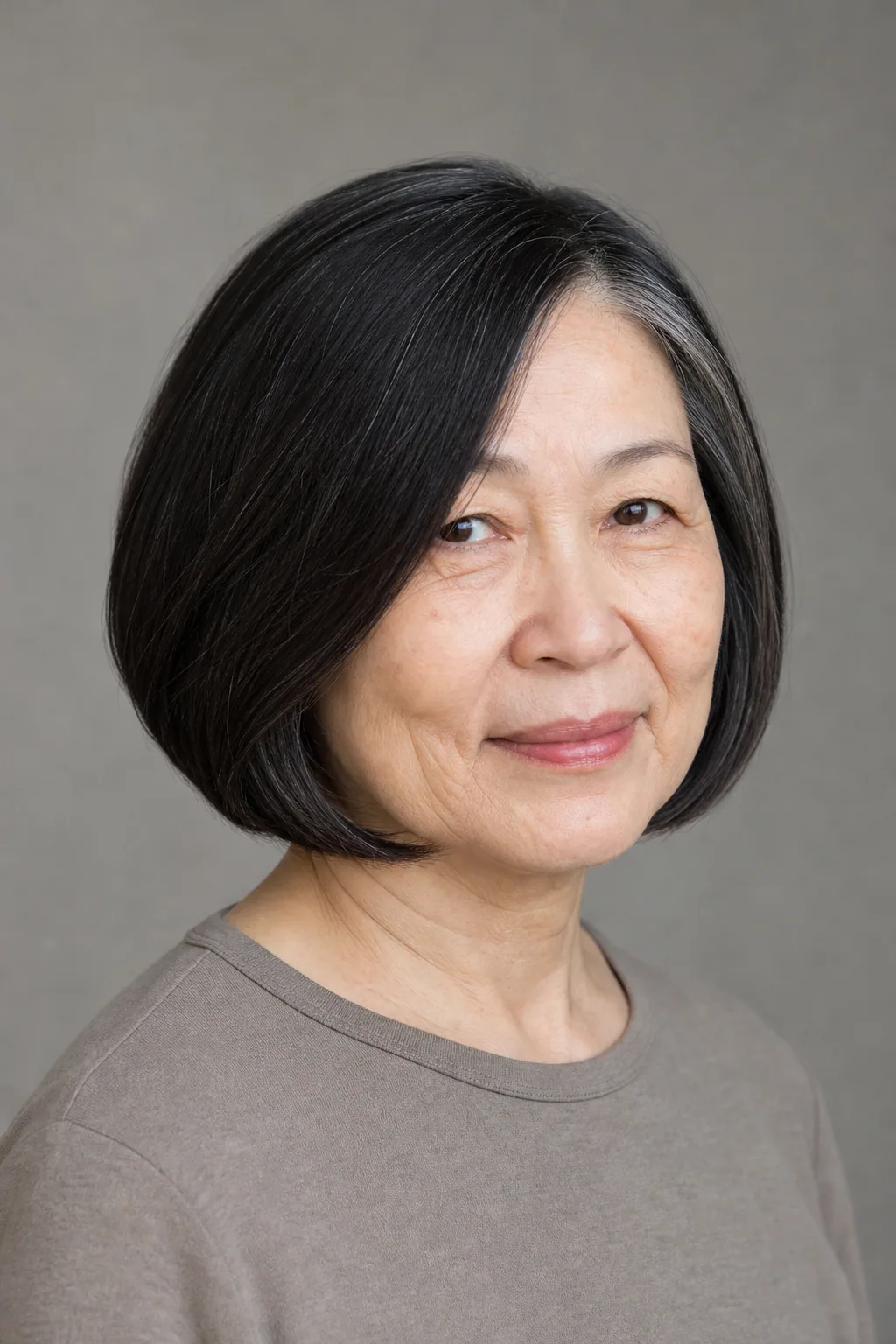
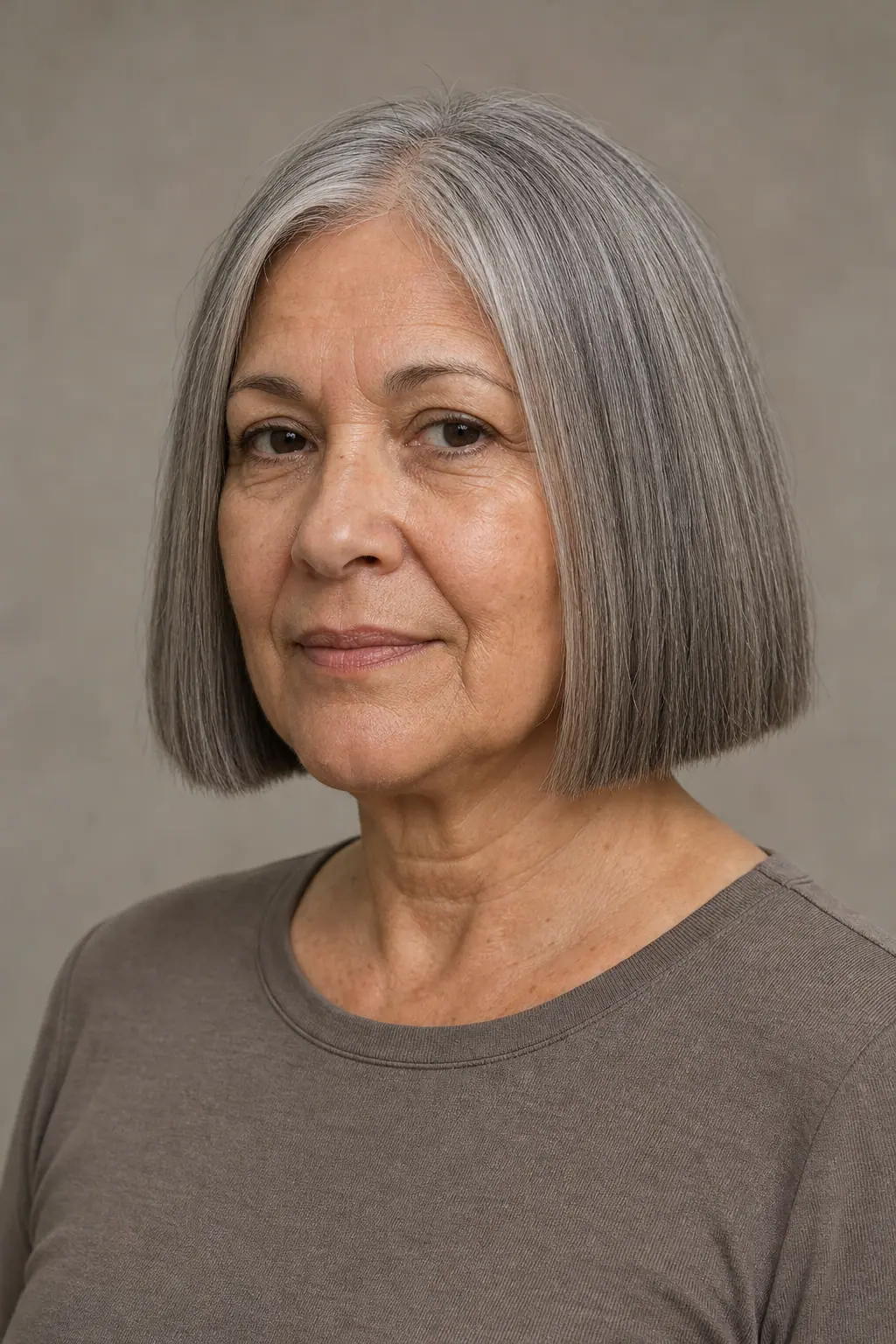
6. Blunt Jaw-Length Bob for Coarse Gray Hair
A blunt cut is one length, cut straight across, with no layers. On coarse gray that solid edge weighs the hair down and stops the ends fluffing out. It's also easier to style than a layered bob: smoothing cream and a 5–10 minute blow-dry. If your jaw has softened, ask for the length an inch below the jaw rather than right on it (see entry 8).
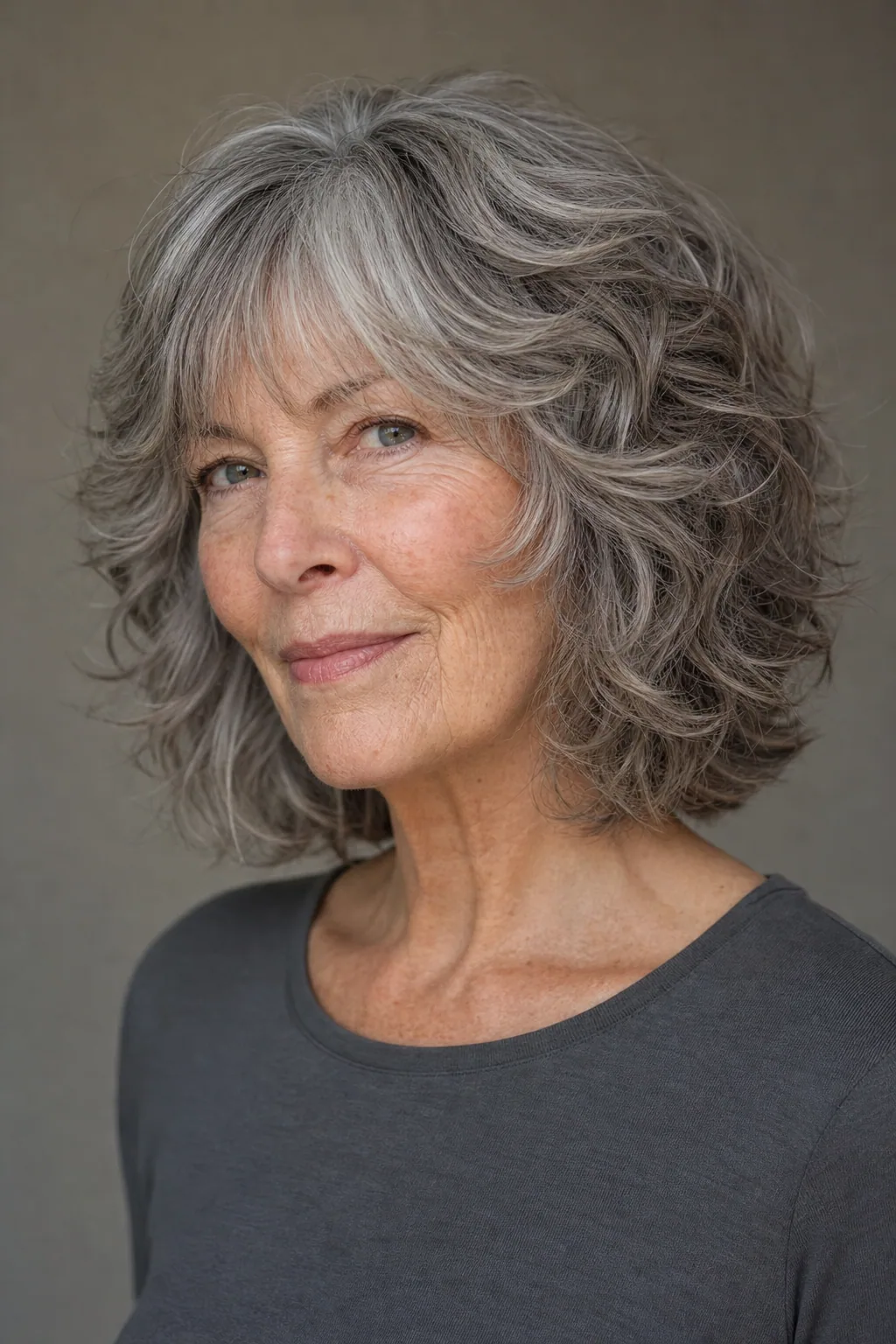
7. Soft Shag for Wavy Gray Hair
Hair often turns wavier or rougher as the gray comes in. A soft shag has layers around the crown and face that let the wave form, cut with scissors rather than a razor. Diffuse on low with a curl cream, or air-dry. Ask for "a soft, scissor-cut shag, the shortest layer at the cheekbone, with weight left in the ends."
Cuts for a Softer Jawline
As the jaw softens, move the cut's weight line off it and put the shape higher, at the cheekbones and eyes. A line above or below it, or a diagonal fringe, sends the eye upward.
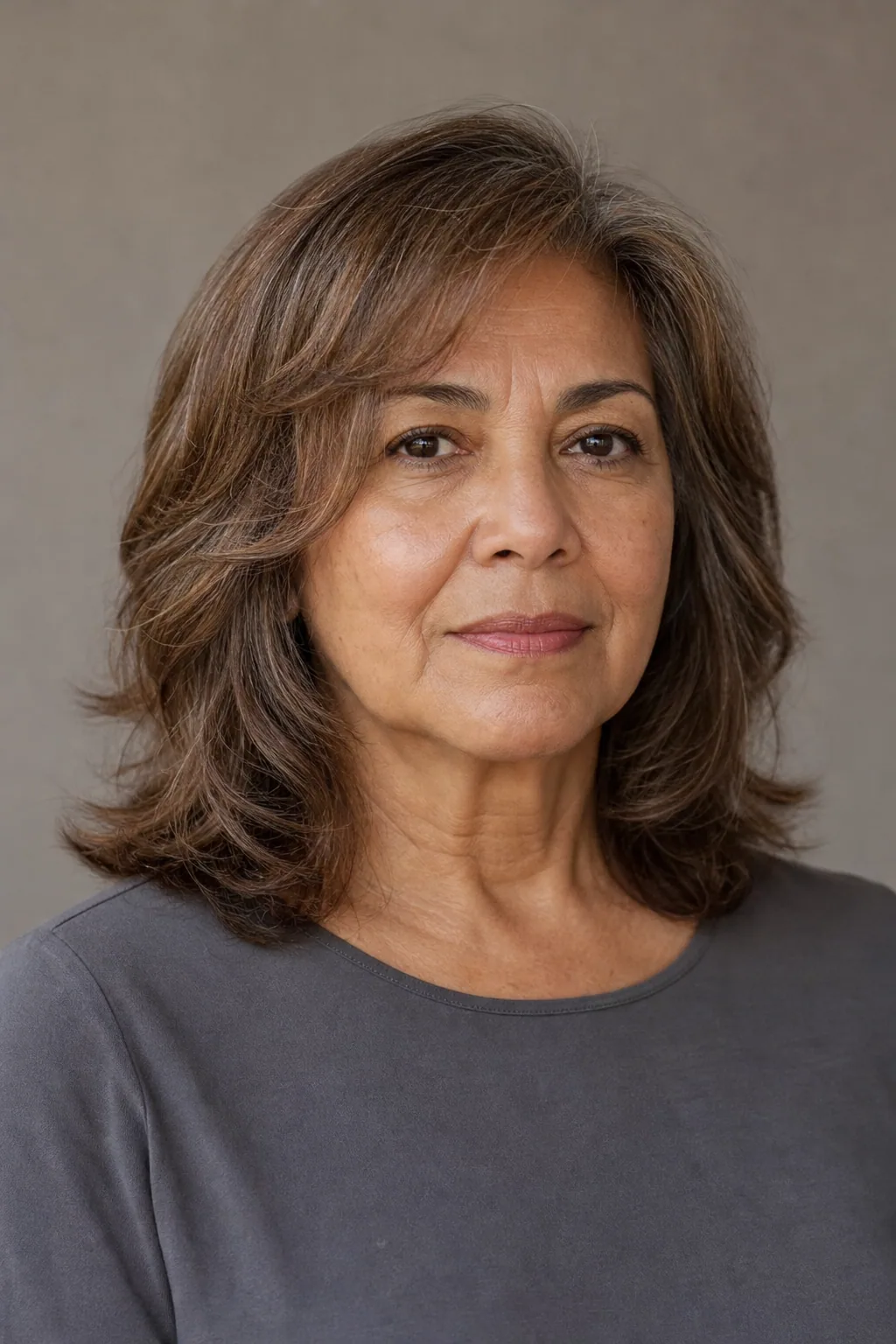
8. Collarbone Cut With the Weight Below the Jaw
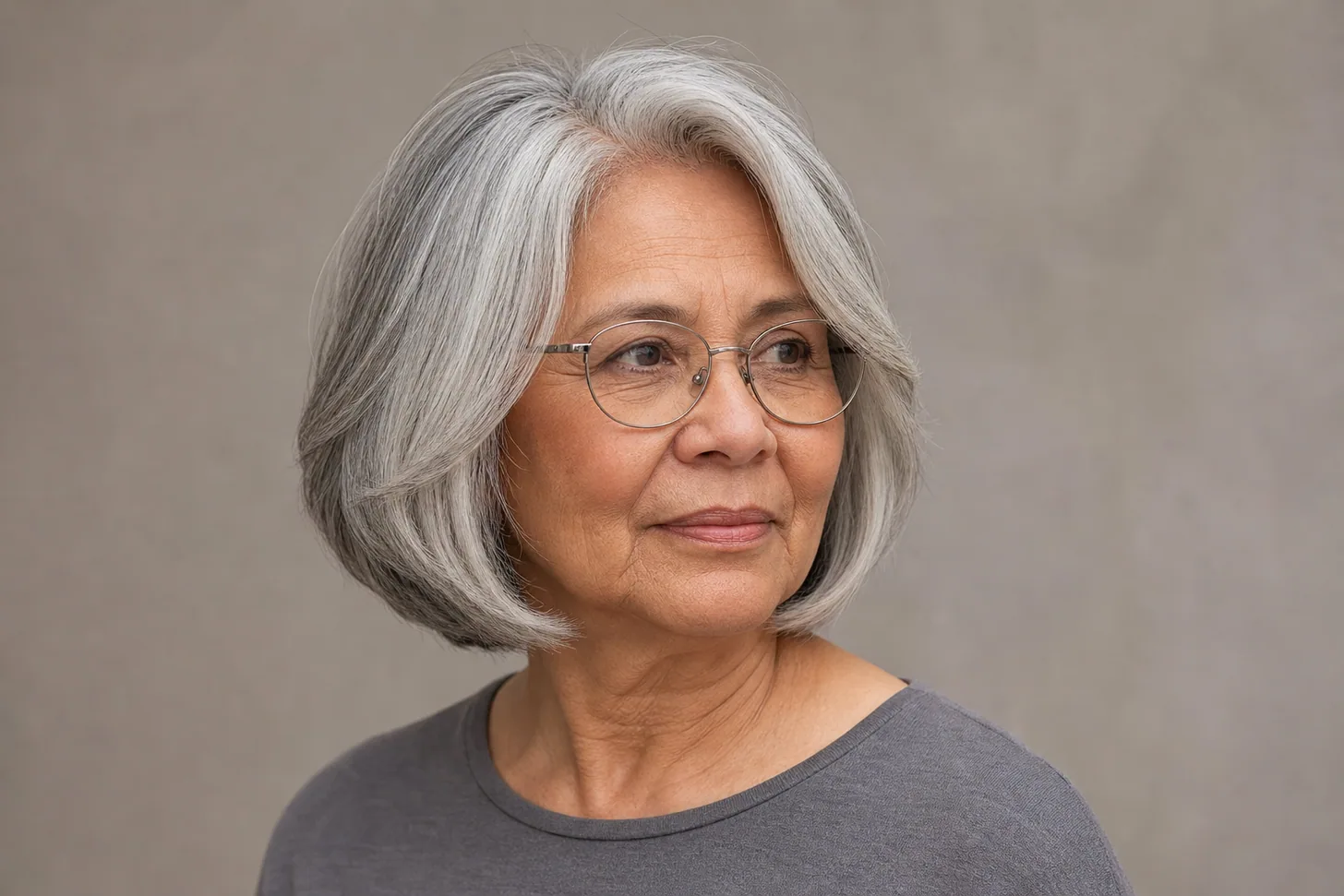
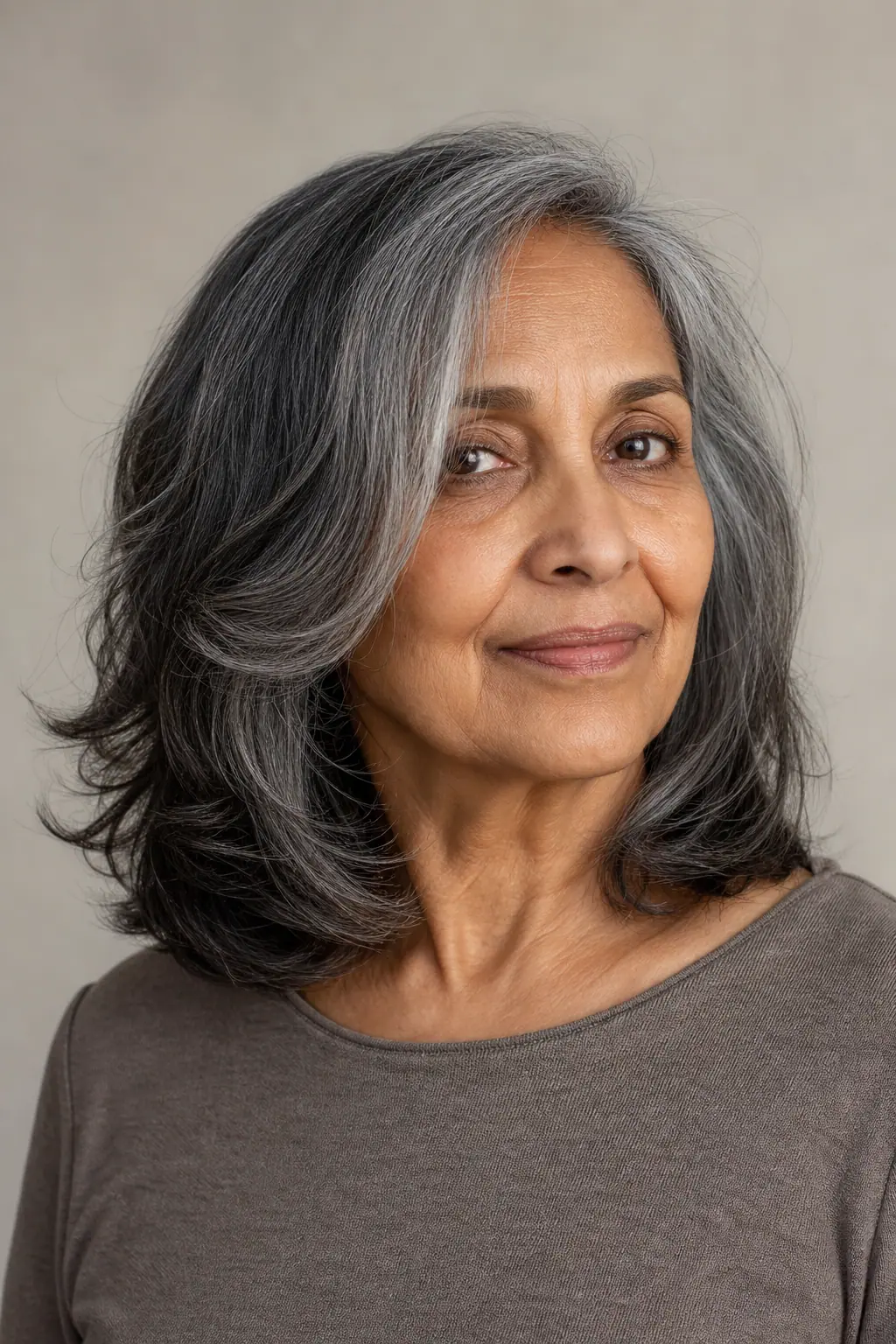
The fullest part of the cut sits at the collarbone, with long layers from the chin, so the eye goes to the cheekbones and neckline. Of the medium length hairstyles for women over 60, this is the simplest, and it suits medium to thick density. Ask for "the weight line at the collarbone, with long face-framing layers starting at the chin."
9. Ear-Length Cut With a Side-Swept Fringe
A side-swept fringe cuts a diagonal across the forehead, and a diagonal lifts the eye up and away from the jaw. With the sides at ear length, the jaw stays open instead of boxed in. Have the fringe cut in the direction your hairline grows. Fight a cowlick and it will win by noon.
10. Layered Bob With Volume at the Cheekbone
Face-framing layers start at the cheekbone, and a round brush puts the volume there, so the widest point of the cut sits high on the face. The length lands just below the jaw. It moves more than the blunt bob in entry 6 but takes longer to style, about 10–15 minutes. Best on fine to medium hair with enough density at the ends to carry layers.
Cuts That Work With Glasses and Need Little Styling
Glasses add a horizontal line at the brow and arms over the ears, so a cut either clears them cleanly or covers them softly. Hairstyles for women over 60 with glasses should leave room for hearing aids too.
11. Bixie With Longer Sides
A bixie is a cross between a bob and a pixie: pixie-short at the nape and crown, with bob-like length at the sides and on top. At 60, keep the sides at the bottom of the ear or below, so the hair falls over glasses arms and hearing aids instead of pushing out around them. It grows out into a short bob without the awkward stage a pixie has.
12. Tapered Pixie That Clears Your Frames
The opposite approach to entry 11. Instead of covering the arms, the hair is tapered close above and behind the ears, so your frames sit cleanly with nothing to snag. The fringe is cut to sit above the top rim, never on it. It's the fastest cut here to wash and dry, around 5 minutes, and the most demanding to keep: a trim every 4–6 weeks.
Longer Hairstyles for Women Over 60
Length works at 60 when the ends are still about as thick as the hair near the roots. If they are, there's no reason to cut short.
13. In-Between Layered Cut Just Below the Collarbone
Long enough to tie back, short enough to keep its body. The layers are long and few, starting around the chin, so the ends stay full. It suits medium to thick hair, grows out more forgivingly than anything else here and needs trims every 8–10 weeks.
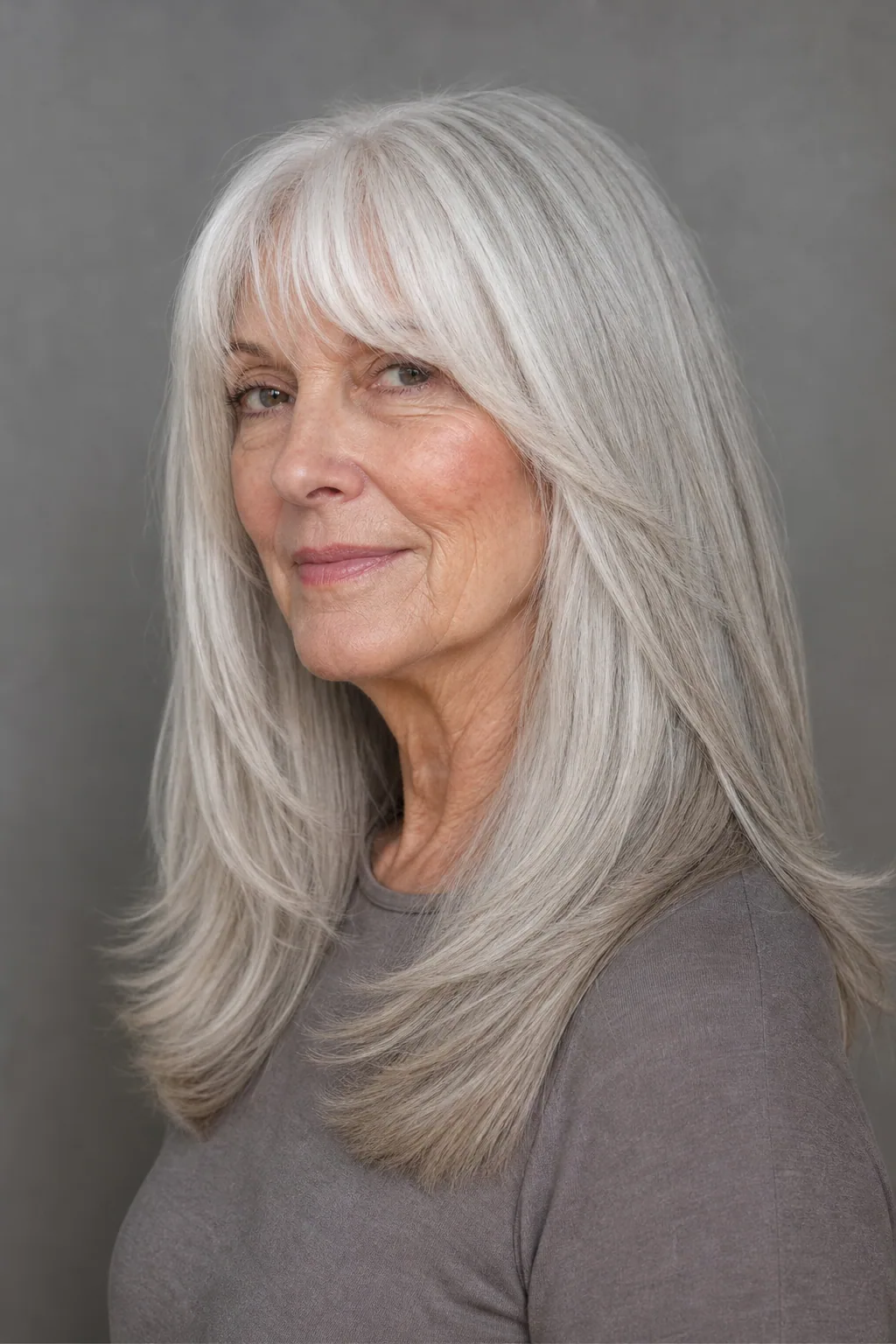
14. Long Silver Layers Kept Healthy With a Gloss
Long gray hair looks deliberate when the ends are healthy and the color is clear. A gloss is a salon treatment, a sheer or clear coat applied after washing, that adds shine and can soften a yellow cast. Pair it with trims every 8–12 weeks to take off split and see-through ends.
Choose by Face Shape
Your face shape points you to a few of the cuts above, but at 60 the softer jaw often matters more than the label. For the full method, see how to choose a haircut for your face shape.
Face shape
Good picks here
Key detail
Avoid
Oval
5, 6, 13
Choose by hair type; most lengths work
Long one-length hair with thinned ends
Round
2, 10, 11
Height at the crown and length that passes the chin lengthen the face
A chin-length blunt bob with a center part
Square
7, 9, 10
Soft, layered edges near the jaw take off the corners
A blunt line that ends at the jaw
Heart
3, 8, 13
Fullness at or below the chin balances a wider forehead
Lots of height and width at the temples
Long
3, 6, 9
Width at the cheekbone and a fringe shorten the face
Long, flat hair with a center part
Softer jaw (any shape)
8, 9, 10
Weight line above or below the jaw
Any line that sits on the jaw
For hairstyles for over 60 with a round face, the rule is height and a line below the jaw, not width at the cheeks. Our guide to haircuts for round faces over 50 and 60 goes further.
Choose by Hair Type
Match the cut to two different things: strand thickness (fine or coarse) and density (how many hairs there are).
Fine hair (narrow strands, any density): fewer layers, placed higher. Entries 1, 3 and 10.
Thin hair (low density, scalp shows at the part or crown): a solid perimeter, length on top, no razor or thinning shears. Entries 2, 3 and 11. If the loss is sudden or patchy, see a board-certified dermatologist.
Thick or coarse hair: weight taken out inside the haircut, not at the ends. Entries 6, 8 and 13.
Wavy or curly hair: cut for the pattern you have now. Entries 7 and 8, ideally cut dry.
Mostly gray, silver or white: clean lines and scissor-cut ends. Entries 5, 6 and 14.
What to Ask Your Stylist
Bring the words, not just a photo: the length, where the weight line sits, how the layers are cut and what not to do. The same picture can produce two different cuts. Say these out loud:
"I want the weight line at the collarbone / below my jaw / at the cheekbone, not on my jaw."
"Please keep the perimeter solid. No thinning shears and no razor on the ends."
"I need lift at the crown. Can you build it in with graduation rather than layering it out?"
"I air-dry most days. Cut it so it works without a round brush."
"I wear glasses (and hearing aids). The fringe should sit above the rim, and the sides should clear the arms or cover them."
"How often will this need a trim, and how will it grow out?"
Maintenance and Styling Reality
Short cuts take the fewest minutes a day and need the most trims, and longer cuts are the other way around. Pick the trade-off that fits your week.
Cut (entries)
Trim every
Daily styling
Products and tools
Grow-out
Pixies and crops (2, 4, 5, 12)
4–6 weeks
5–10 minutes
Mousse or a light paste
Awkward over the ears; a bixie bridges it
Bixie and ear-length cut (9, 11)
5–7 weeks
5–10 minutes
Texture spray
Grows into a short bob
Stacked and layered bobs (1, 3, 10)
6–8 weeks
10–15 minutes
Root-lift spray, 1.5–2-inch round brush
Loses lift at the back first
Blunt bob (6)
6–8 weeks
5–10 minutes
Smoothing cream; 1-inch flat iron optional
Grows evenly
Soft shag (7)
8–10 weeks
5–15 minutes
Curl cream, diffuser on low
Grows out softly
Collarbone and in-between cuts (8, 13)
8–10 weeks
10–20 minutes
Heat protectant, round brush
Very forgiving
Long silver layers (14)
8–12 weeks
15–25 minutes
Moisture conditioner, purple shampoo, gloss
Not applicable
Frequently Asked Questions
What is the most popular haircut for women over 60?
There's no reliable count, but the bob, cut somewhere between the chin and the collarbone, is the cut most salons and galleries for older women start with. It works on most densities and grows out easily. If your hair is fine, ask for a solid outline rather than lots of layers, so the ends stay full.
What haircut makes you look 10 years younger?
No haircut changes your age, but some make a face read fresher. Lift at the crown, movement at the cheekbones and soft lines near the jaw do most of the work. The quickest change is often moving the weight line off the jaw. The 50s version, with 14 cuts, is in youthful hairstyles over 50.
What is the most flattering hair length for an over-60 woman?
The most flattering length is the one your density can carry. For many women in their 60s that is between the chin and the collarbone, where the ends stay full. If your ends are still thick, longer works too, with regular trims.
Should a 70-year-old woman wear her hair long?
She can, if the ends are still full and caring for it is easy. At 70 the daily routine matters more than the length, which we cover in our guide to hairstyles for women over 70. If long hair has become a daily struggle, a collarbone cut keeps the option of a ponytail.
What hairstyles work for women over 60 with thin hair?
Cuts with a solid outline and some lift, such as a chin bob with ghost layers or a pixie that keeps length on top. Avoid heavy layering and razored ends. Ask for a deep side part, which covers more scalp than a center part.
Can you wear bangs over 60?
Yes. Wispy or side-swept bangs soften most faces, while heavy blunt bangs need a trim every 3–5 weeks. If you wear glasses, have the fringe cut to sit just above or just below the top rim of your frames, never on it.
What is the best hairstyle for an over-60 round face?
Look for height at the crown and a line that passes the chin, not width at the cheeks. A layered bob that ends just below the jaw, or a pixie with a long side fringe, lengthens the face. Skip a chin-length blunt bob with a center part, which adds width.
Results vary with hair type, density, texture and face shape. This guide is educational and is not a substitute for an in-person consultation with a licensed stylist.
 Grace