Mother of the Bride Hairstyles: Updos and Down Styles for Every Length
By Sharon Blain OAM, Global Hairdressing Educator · Reviewed by Coral Pleas · Updated November 2026 · 13 min read
The best mother of the bride hairstyle is planned around your dress neckline and a 12-hour day, not around a photo. The neckline decides whether your hair goes up, half up or down. The length of the day decides how it is built: a secure base, the right pins, nothing that pulls or gives you a headache, and a shape that survives hugs, dancing and humidity.
Below are 14 mother of the bride hairstyles for short, medium and long hair, in updos, half-up and down styles, with the salon words to bring to your trial. For hair that is fine, thinning or gray, there is a section of its own, and after it a timeline for when to book, what to bring to the trial and how to work with the bride. If you want the cut underneath, start with our guide to haircuts for women over 50.
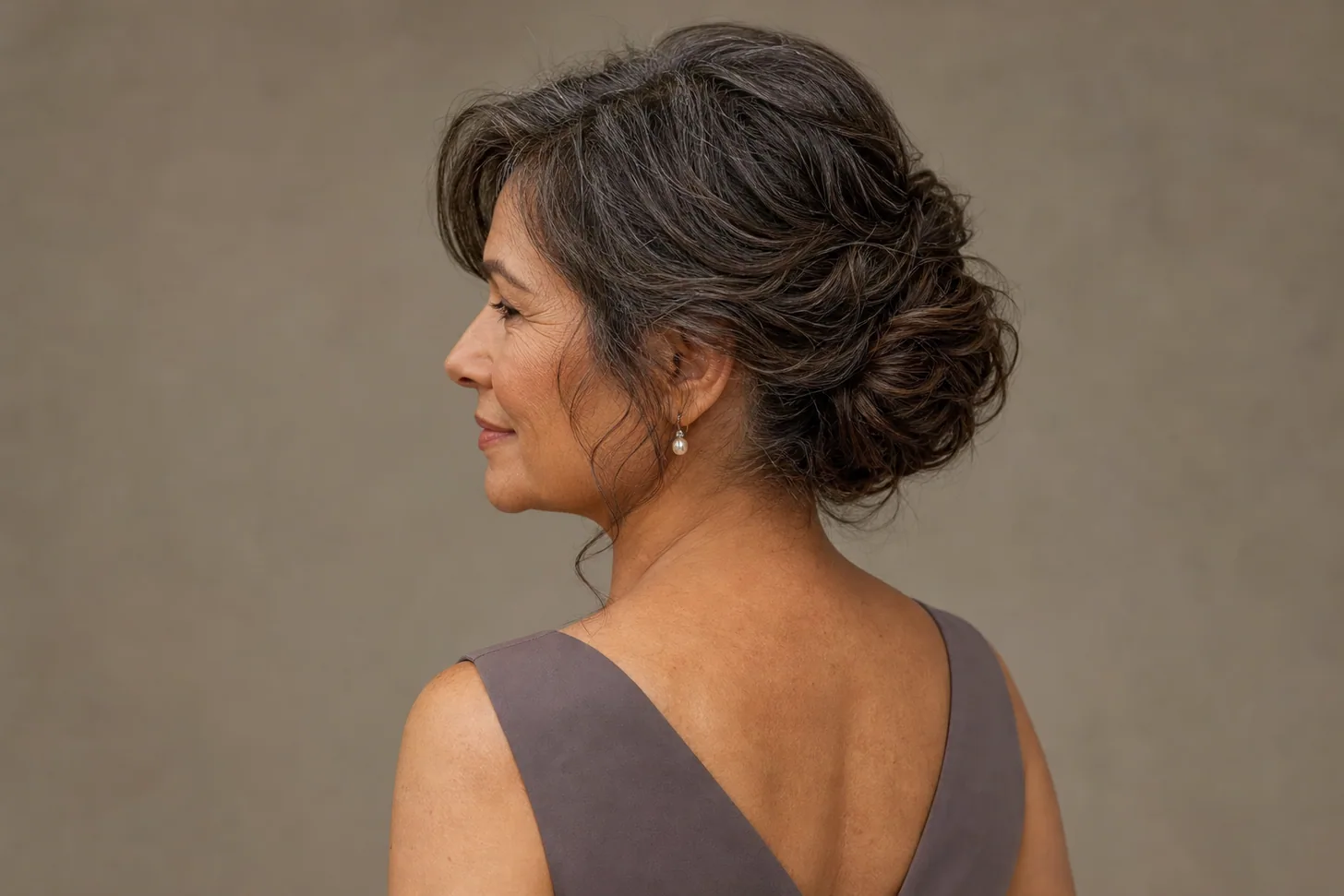
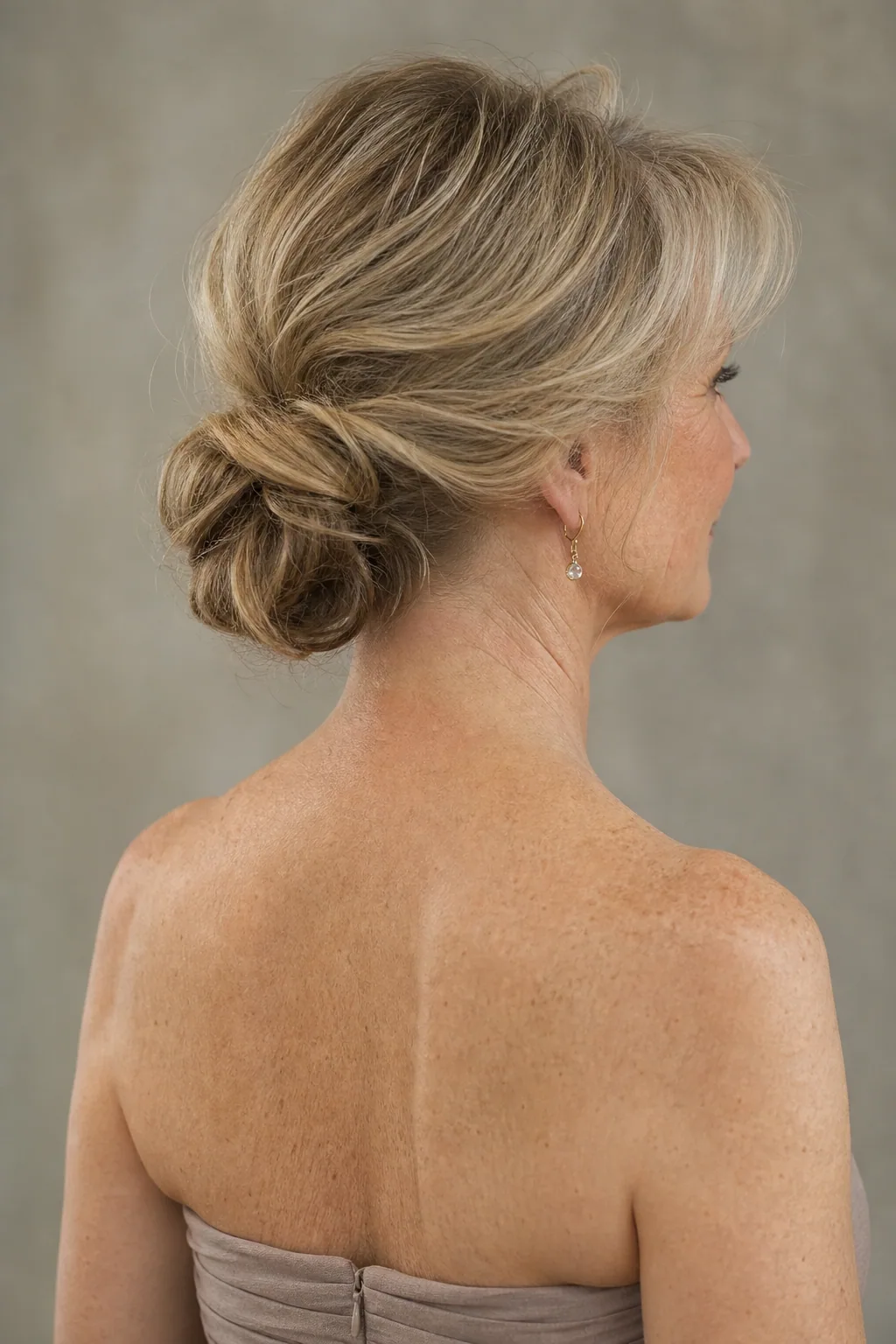
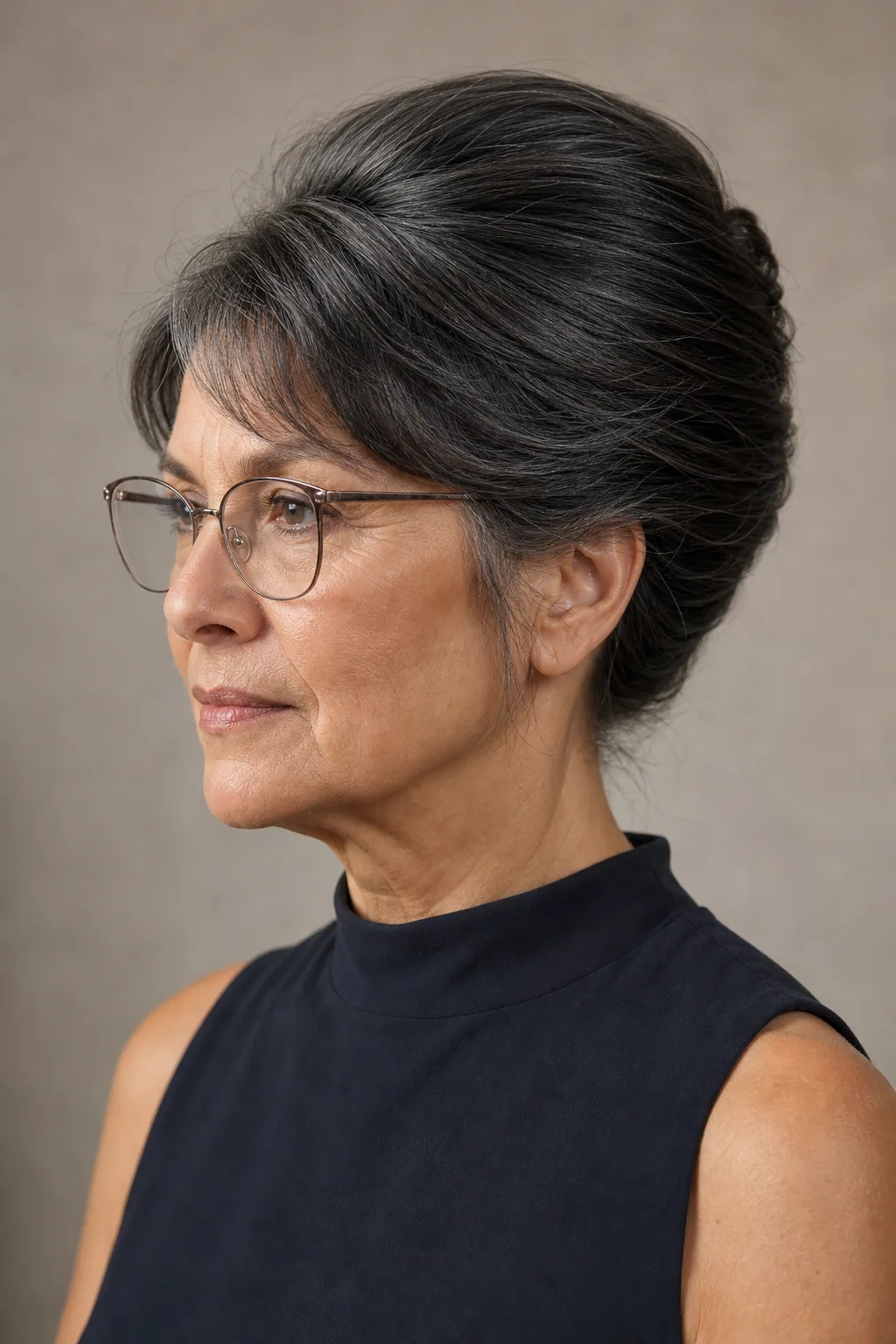
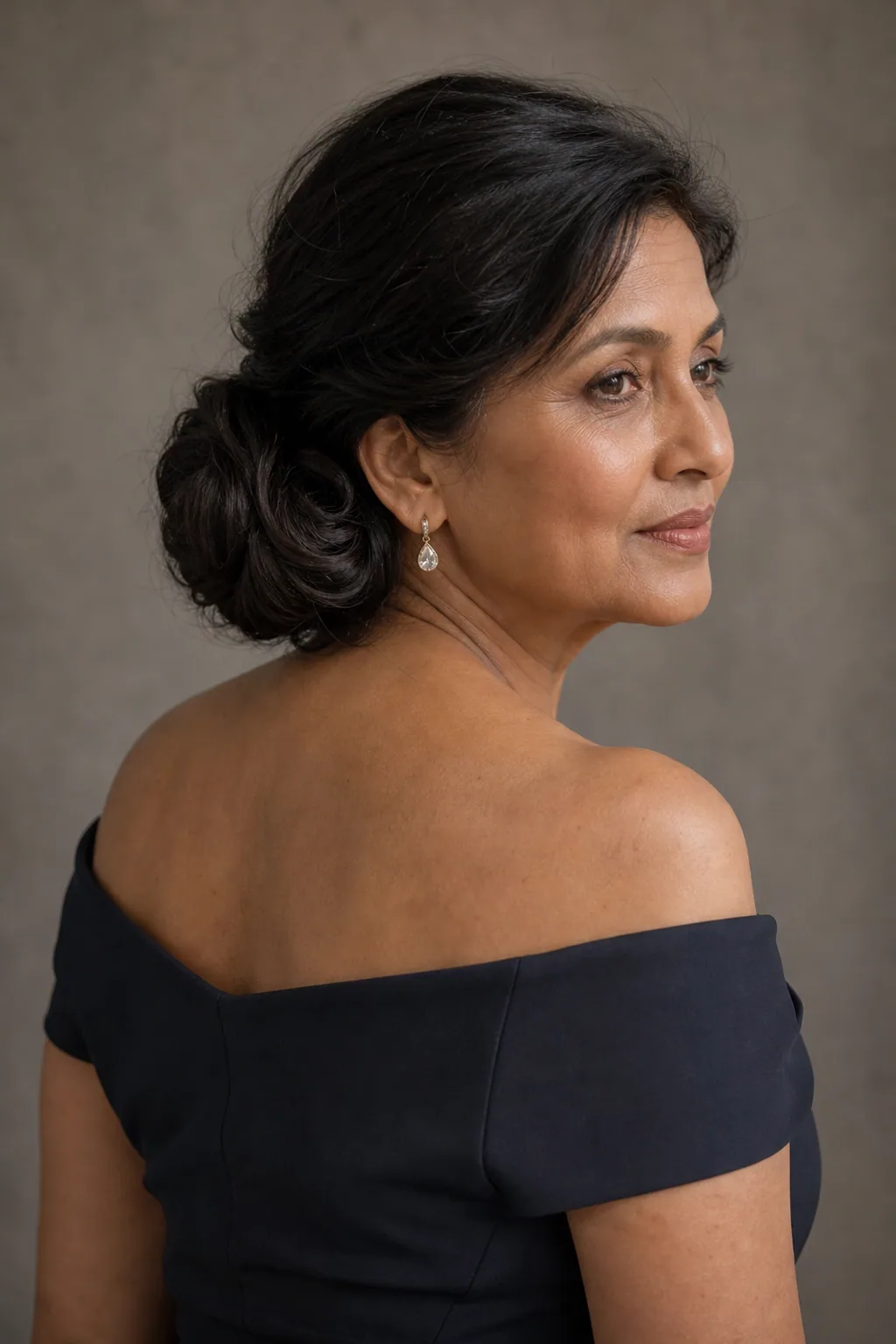
Hairstyle images in this guide are AI-generated illustrations, not photos of real clients or results. See our image standards.
Start With the Dress Neckline
The neckline decides the shape of the hairstyle: updos suit strapless, high and halter necklines, and down styles suit V-necks and sleeves, while off-shoulder and cowl necks need hair placed to one side or lifted away. Hair that fights the neckline gets caught on straps, bunches in a collar or hides the very line the dress was chosen for. Settle the dress first, then the hair.
Neckline
Best shape
Why
Entries to look at
Strapless
Up or half up
The neck and shoulders are the feature, and loose hair catches on the bodice and tugs when you hug
1, 2, 7
V-neck
Any; up shows the V, soft waves frame it
The V draws the eye down, so keep the sides of the hair close to the face
1, 8, 10
High neck or halter
Up, or a sleek low style
Hair down bunches against the collar and covers the detail
2, 4, 11, 14
Off-shoulder or bardot
Low and to one side, or waves swept to one shoulder
The shoulder line is the feature, and hair across both shoulders hides it
3, 10
Sleeves or a jacket
Half up, low chignon or a polished down style
A collar pushes hair up, so keep length off it or fully past it
1, 7, 9, 12
Cowl or draped neckline
Up or half up
Loose hair gets lost in the drape and flattens it
5, 6, 8
Your jewelry counts too. Earrings need to show, so pin hair behind the ear on that side, and a statement necklace is easier to wear with an updo than with hair falling around it. If you are choosing between two shapes, try the hair on the day you try the dress, or take a photo of the neckline to your trial. For help with which shape flatters your face, see how to choose a haircut for your face shape.
Plan for a 12-Hour Day
A wedding hairstyle has to last about 12 hours, so build it for comfort and hold first and for looks second. A style that is perfect at 10 a.m. and has slid by the speeches is a poor plan. These are the points that decide whether it lasts.
A secure base. An updo is held by an anchor, not by the pins on top. Hair is first gathered or twisted into a firm base, and the visible shape is built over it. Ask your stylist how many anchor points the style has.
The right pins. Bobby pins grip flat sections, and U-shaped hairpins hold a bun or twist without crushing it. Pins that match your hair color disappear. Pins go in crossed, in an X, so they lock against each other instead of sliding.
The weight of the hair. Heavy hair pinned in one place pulls on the scalp, and that is where headaches start. Spread the weight over several anchor points, or choose a lower, lighter style. Tell your stylist at the trial if anything pulls, and again after an hour of wearing it.
Glasses and hearing aids. Both sit behind the ear, so leave that area clear and flat. Wear your glasses to the trial, and ask for the style to be set around them.
The back of your head. Most of the ceremony is seen from behind. Ask for photos of the back and both sides at the trial, and judge the style from there, not only in the mirror.
Humidity and weather. Smooth, flat styles frizz fastest in damp air. A light smoothing serum on the ends and a flexible-hold spray last longer than a stiff one. In wind or outdoors, a low, secure shape holds better than a high, loose one.
Hats and fascinators. The headpiece goes on after the style is finished, and it needs something to attach to. Bring it to the trial so the hair is built around it.
Updos for the Mother of the Bride
An updo shows off a neckline and stays put all day when it is low, anchored and not too smooth. Low styles sit below the crown, so they pull less and look good from behind, and a little texture holds better than a polished finish.
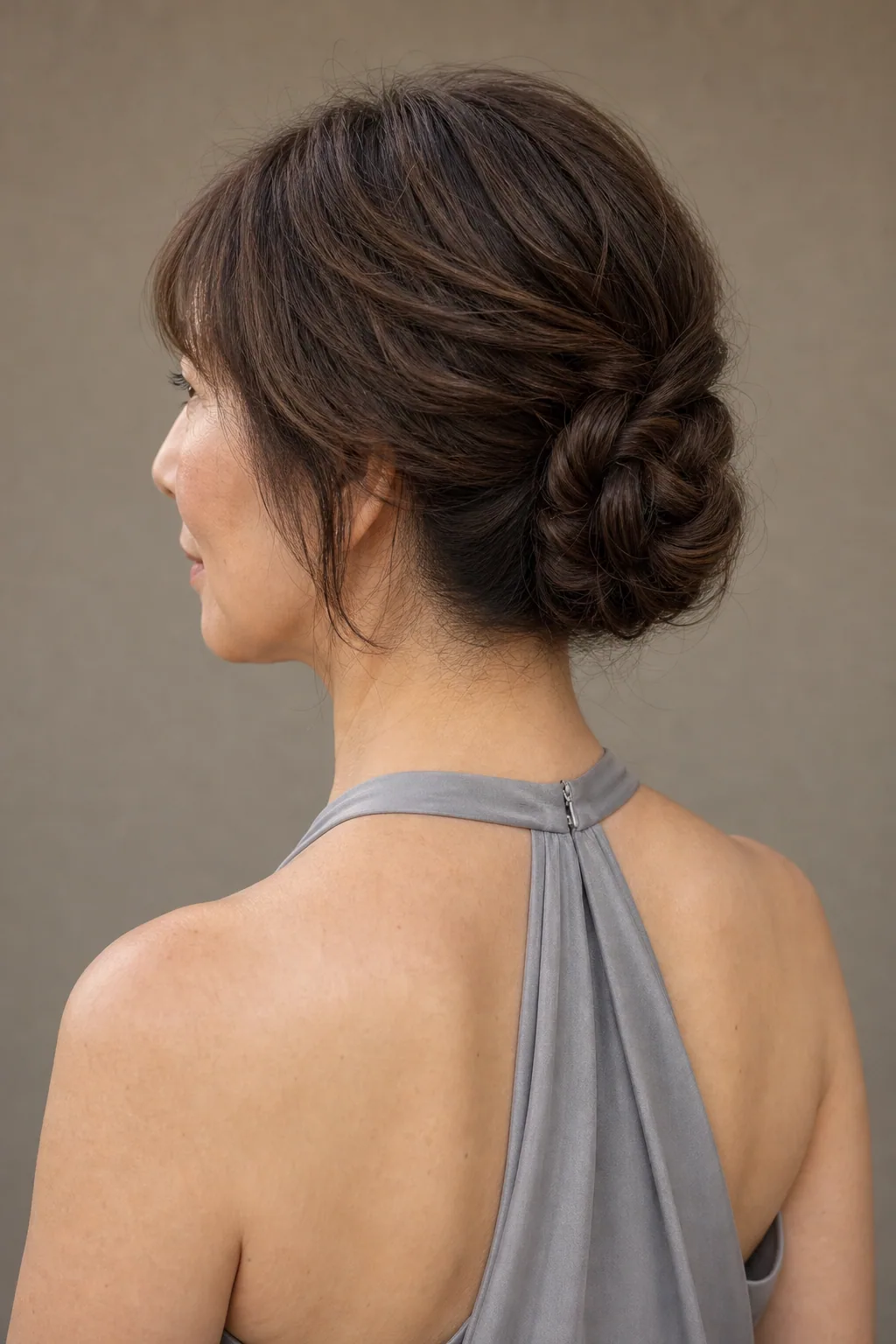
1. Low Textured Chignon
A chignon is a bun twisted and pinned at the nape. Placed low, it sits below the crown, so it pulls less and shows well from behind. It is built with a little texture, from second-day hair or a texture spray, so the pins grip. It suits strapless, V-neck and sleeved dresses. Ask for "a low, soft chignon with texture, pinned in two places."
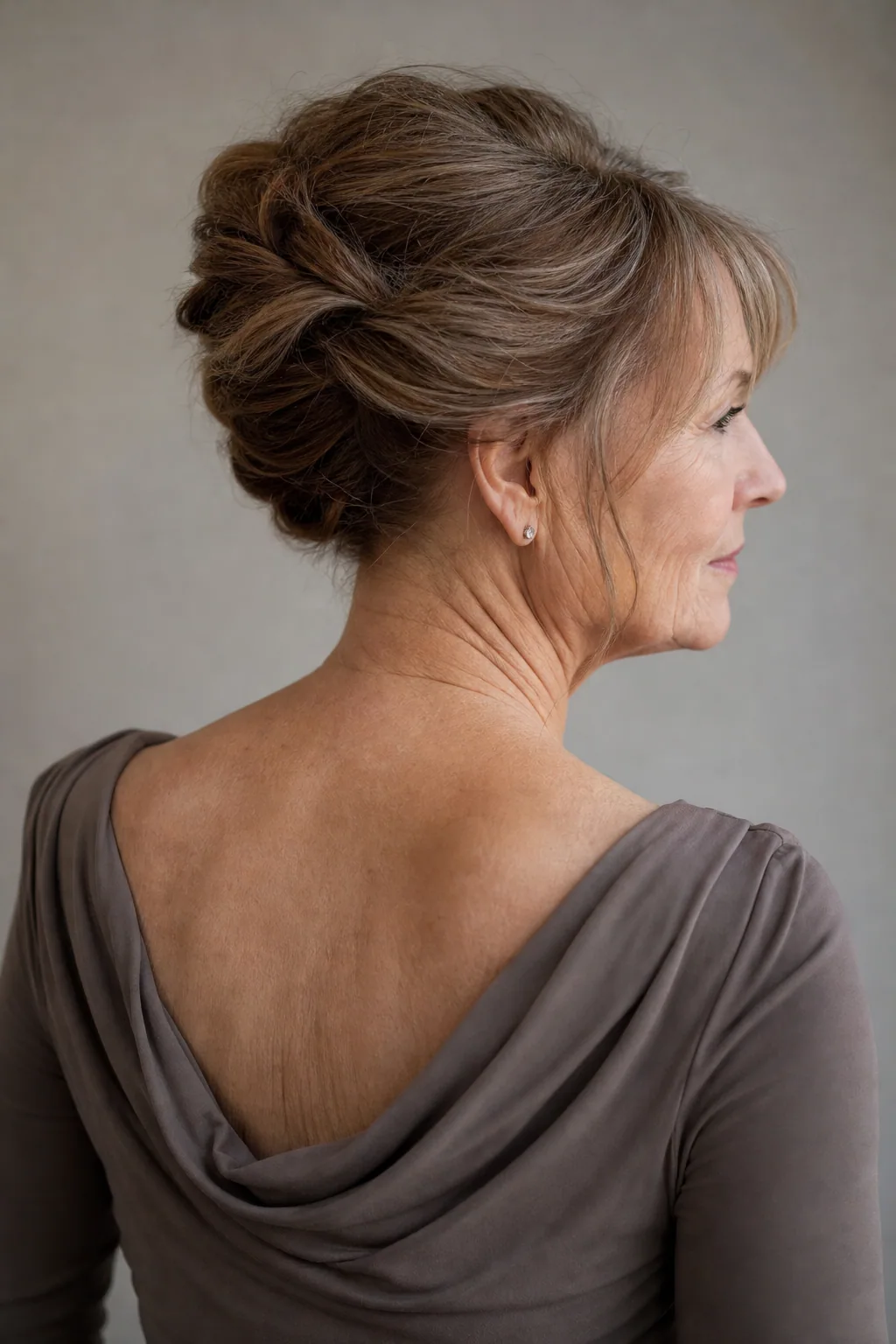
2. Classic French Twist
The hair is rolled up the back of the head and pinned along a vertical seam, with the ends tucked inside. It is formal and neat, and it clears the ears, which helps with glasses and earrings. It suits high necks and halters, and it needs hair of about collar length or longer. Ask for "a French twist with a soft crown, not scraped back, and the seam pinned flat."
3. Side Chignon for Off-Shoulder Necklines
Off-shoulder and bardot necklines show the shoulder line, and a chignon placed at one side of the nape fills the empty side without covering it. The other side is tucked behind the ear so an earring shows. Pin it so it sits close to the head, not hanging, because it will brush the neckline when you turn. Ask for "a low chignon set to one side, tucked behind the ear on the other."
4. Braided Low Bun for Medium-Length Hair
Medium-length hair, around the collarbone, rarely holds a smooth bun, because there is not enough length to wrap. A loose braid solves it: the hair is braided, coiled and pinned, and the braid gives the ends something to grip. It also forgives layers that would stick out of a twist. It works well with glasses, since the sides can be left flat. Ask for "a loose braid coiled into a low bun."
5. Soft Twisted Updo for Fine Hair
Fine hair holds an updo better with a base than with volume. A little backcombing at the base, or a small hair pad, gives the twists something to sit on, and the sections are then pulled open slightly so the shape looks fuller. A flexible spray is enough, and a stiff one flattens fine hair. It sits well with cowl necks. Ask for "twists built over a small base, loose rather than tight."
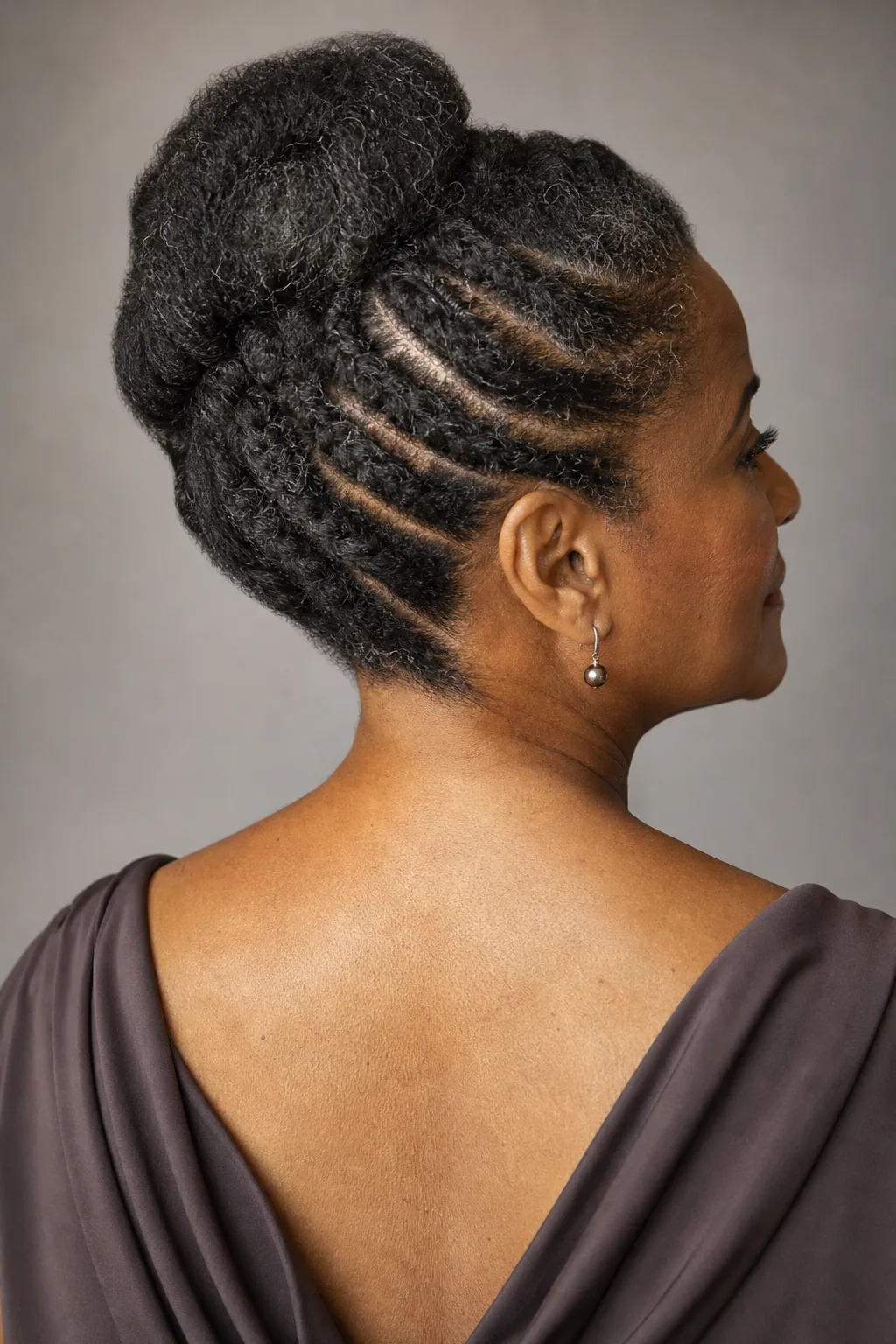
6. Sculpted Updo for Coily Hair
Coily hair holds a shape without much help, so this style works with the texture instead of straightening it. The hair is set in twists or sections and pinned into a rounded shape at the back or crown, with the pattern left visible. It handles humidity better than a smooth style does. Choose a stylist who works with coily texture, and book the trial early. Ask for "a rounded updo that keeps my curl pattern, with the hold set to last the day."
Half-Up Styles
A half-up style keeps hair off the face and the top secure while the length is left loose. It gives you the polish of an updo with less weight on the pins, so it is a good choice if updos give you a headache.
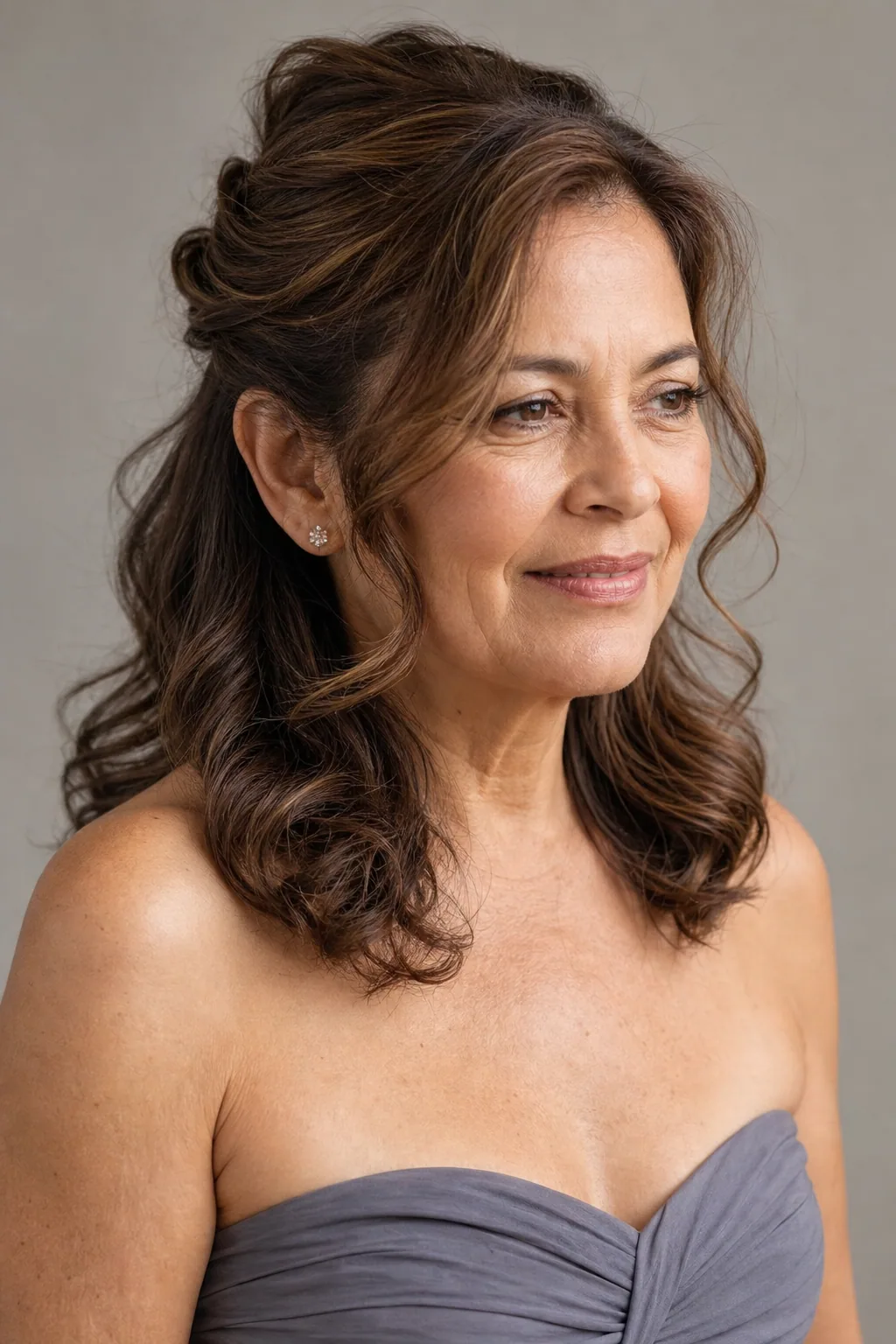
7. Half-Up Twist With Soft Waves
The top section is twisted back and pinned, and the lower hair is curled into loose waves. It keeps your hair off your face for photos and handles hugs well, since the loose hair is only the length, not the shape. It suits strapless and V-necks. The waves are best set with a large barrel, around 1¼ inches, and brushed out. Ask for "a half-up twist with soft, brushed-out waves."
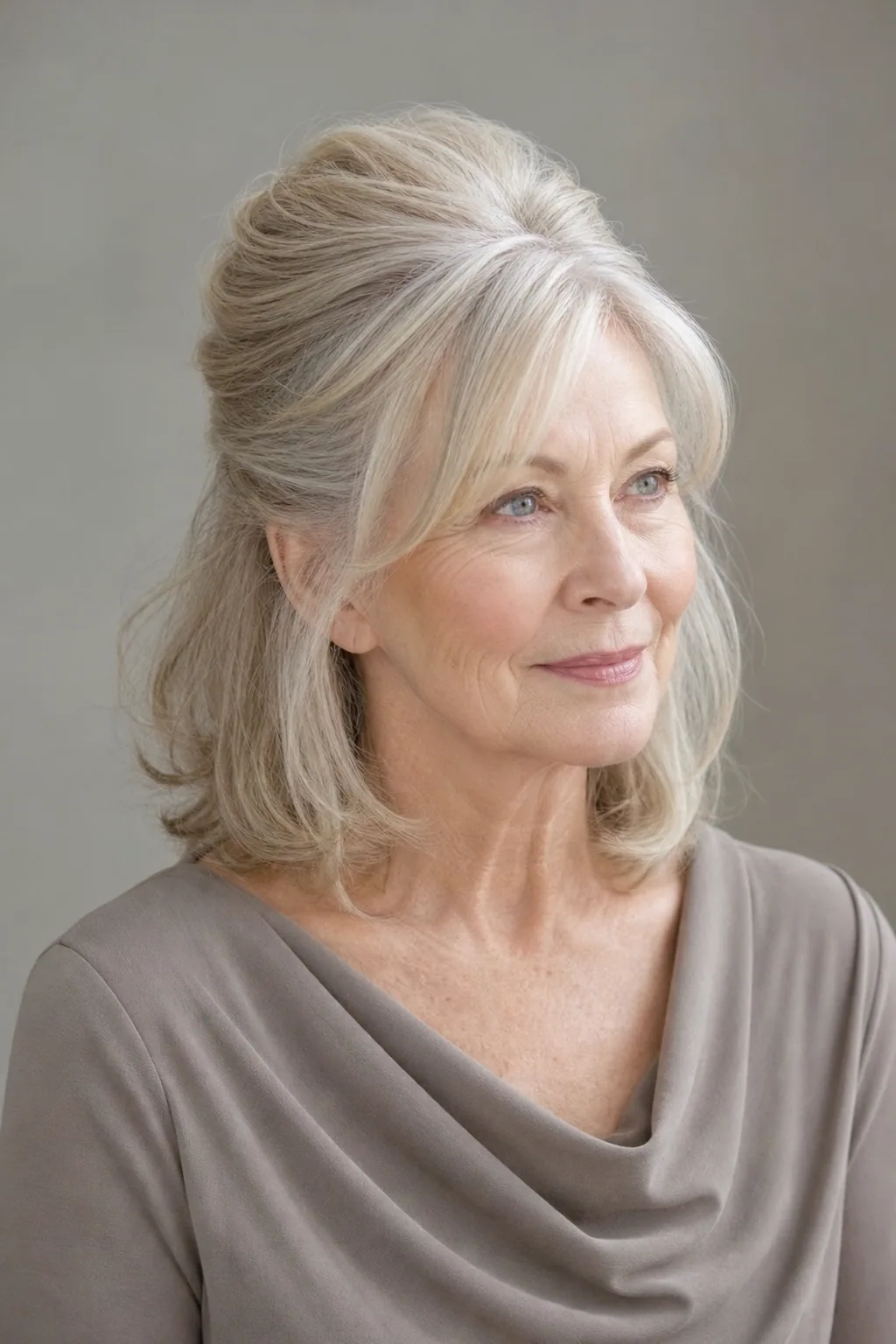
8. Half-Up Style With Volume at the Crown
Lift at the crown is built with backcombing at the roots of the top section, which is then smoothed over and pinned underneath so no pin shows. It gives fine or flat hair height without a full updo. It balances a cowl neck or a wider jaw, and it keeps the temples soft. Backcomb lightly, as heavy backcombing is hard to brush out afterward. Ask for "lift at the crown, pinned underneath, with the sides left soft."
Down Styles
A down style works when the hair is cut to hold it, the ends are finished well and a pin or comb keeps one side off the face. Down hair photographs softly, but it gives the least hold, so it suits dry weather and a shorter day.
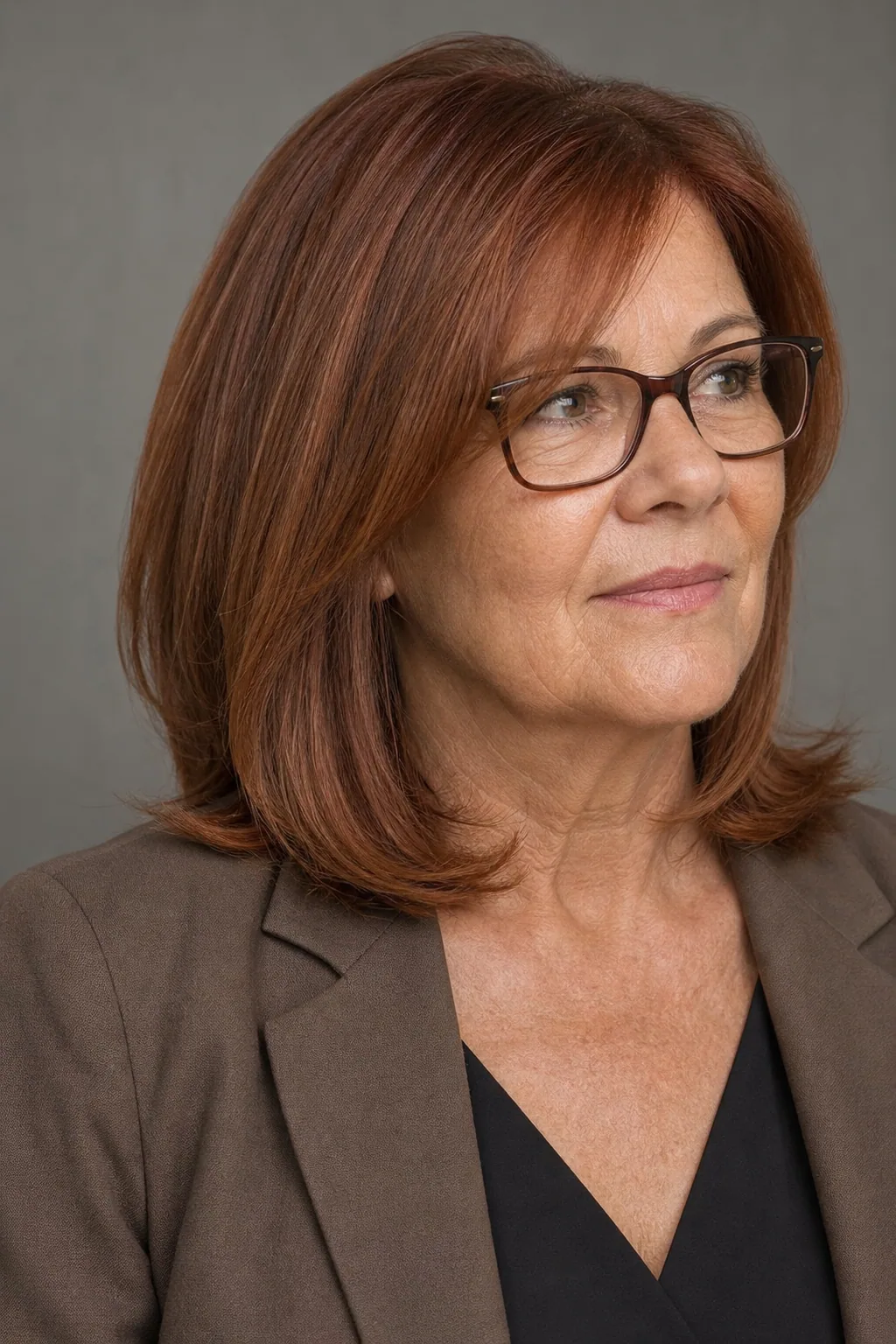
9. Polished Blow-Dry With a Soft Bend for Shoulder-Length Hair
A smooth blow-dry, with the ends given a soft bend, a slight curve inward or outward from a large round brush, so they don't flick up on a collar. Shoulder-length hair is the length most likely to catch on a jacket, so the bend is set to clear it. It suits sleeved dresses and jackets. Ask for "a smooth blow-dry with a soft bend at the ends, and a light hold."
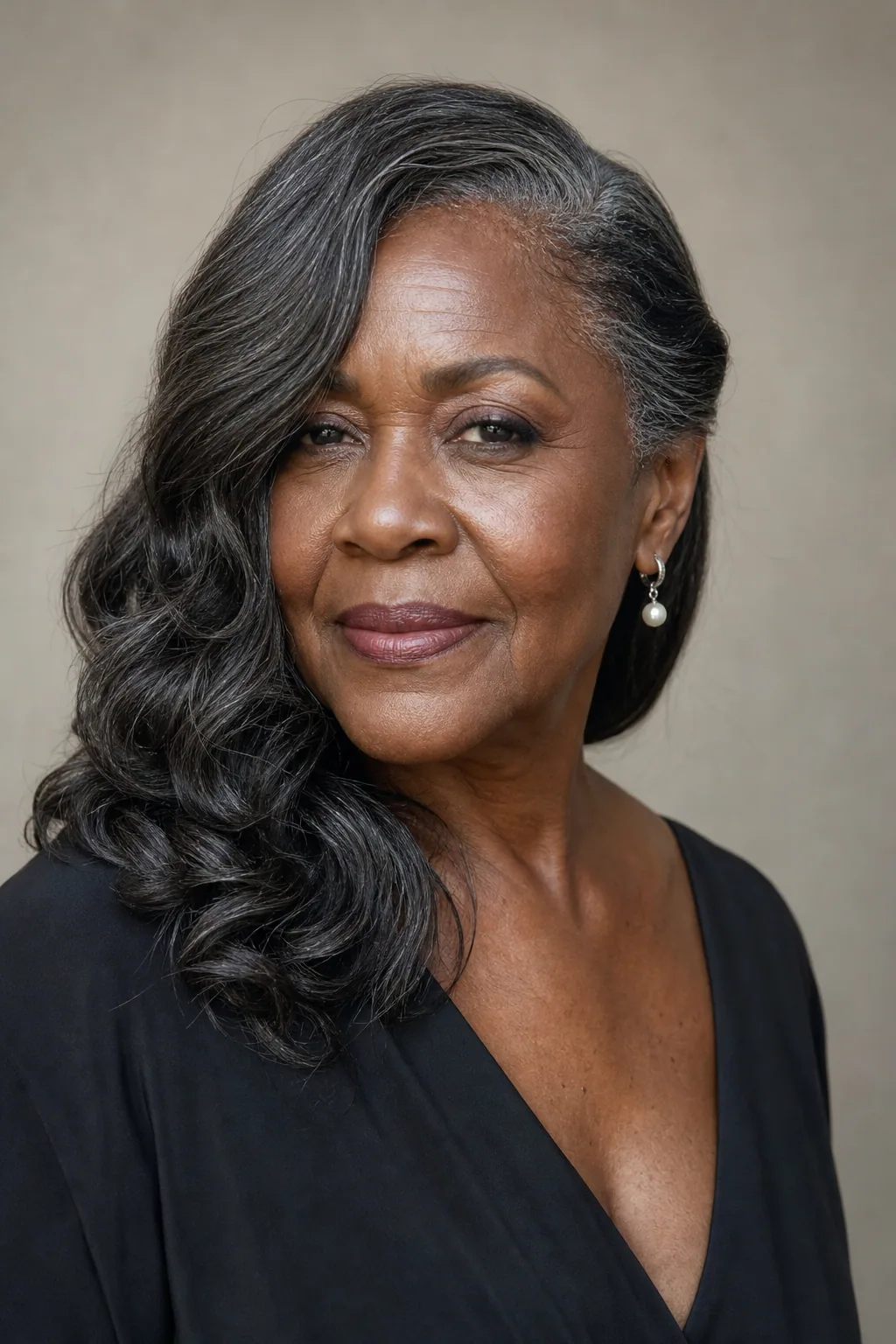
10. Side-Swept Waves for a Formal Wedding
A deep side part, with the hair swept over one shoulder in loose waves, shows off one side of the neckline and the earring on the other. Pin the hair behind the ear on the earring side, with a small comb or a flat pin, so it stays put during the day. It suits V-necks and off-shoulder necklines. Ask for "side-swept waves, pinned behind the ear on the other side."
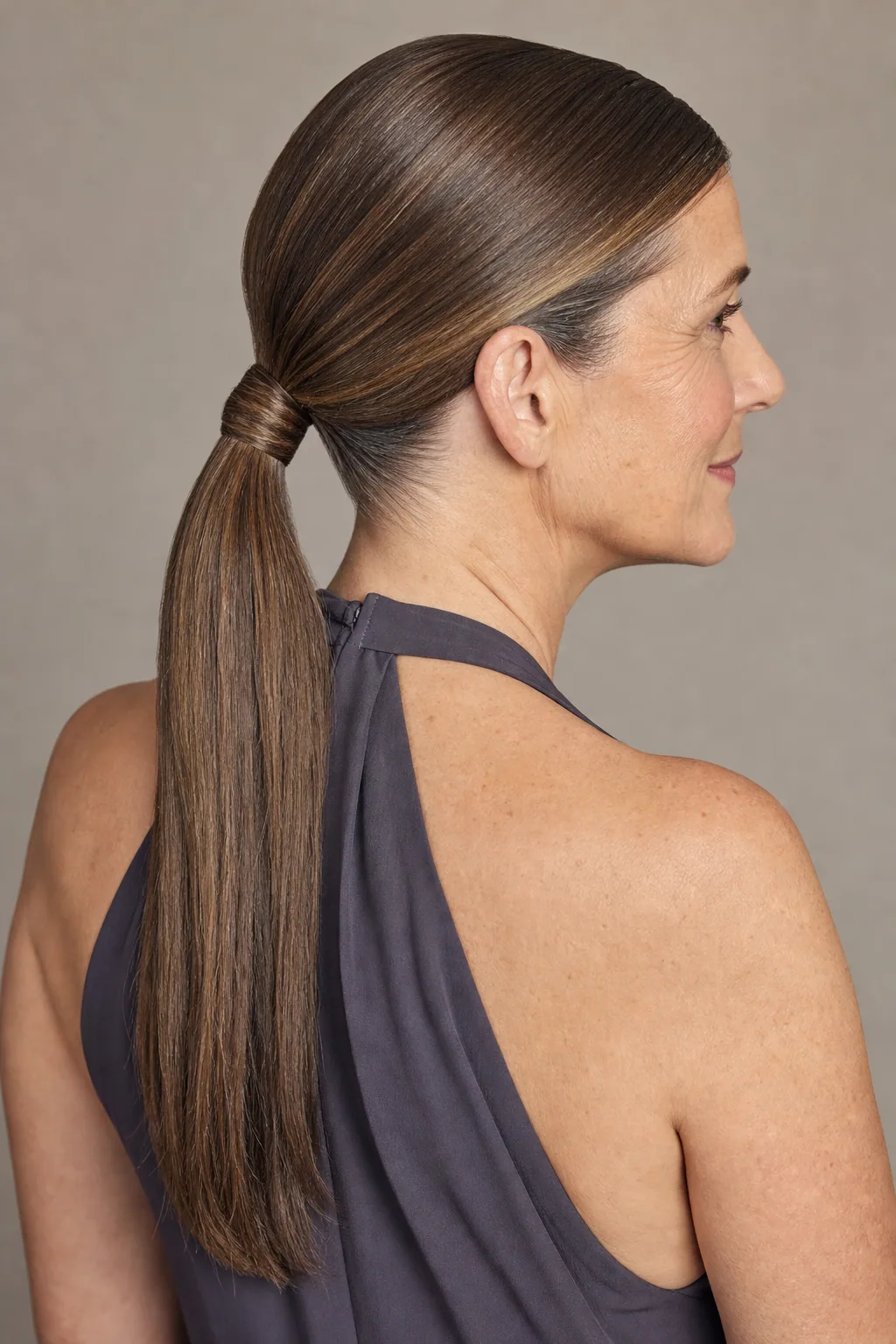
11. Sleek Low Ponytail With a Wrapped Base
The ponytail is gathered at the nape, and a thin section of hair is wrapped around the elastic and pinned, so no band shows. It is the quickest style to wear, it suits halter and high necks, and it carries a hat or fascinator well. For long hair, keep the elastic loose enough that it doesn't pull at the temples. Ask for "a low ponytail with the base wrapped and pinned."
Short Hair and Bobs
Short hair is styled, not built: the options are shape, texture and a finishing accessory. Everything here is about styling the hair you have on the day, not about choosing a new cut. If you are deciding on a short cut as well, see our guide to short haircuts for women over 60.
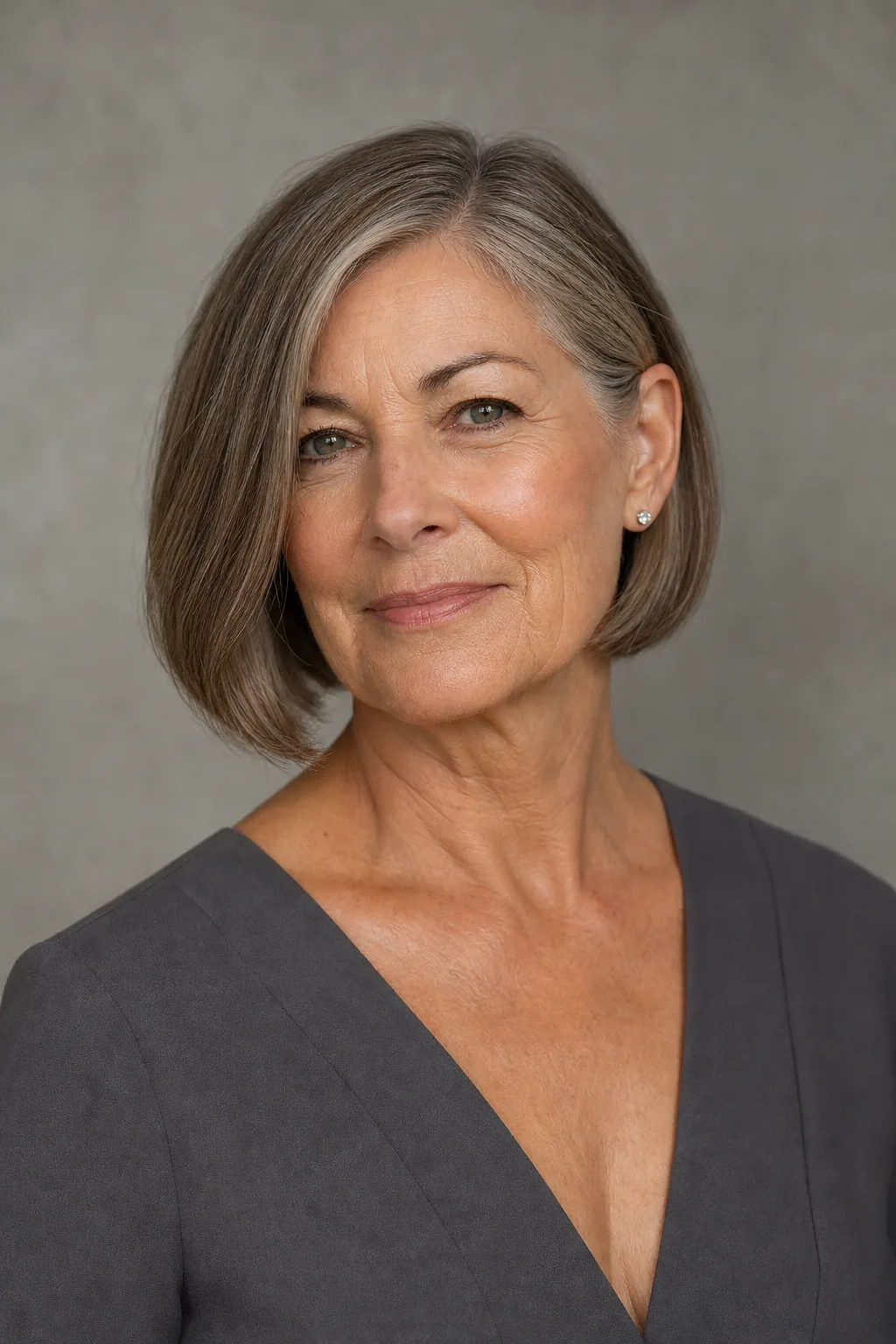
12. Bob Styled With a Deep Side Part and a Bend
A bob at jaw or chin length is blow-dried with a deep side part, and the ends are given a soft bend with a round brush. One side is tucked behind the ear with a small pin or clip. The deep part covers more scalp and gives lift at the crown. It suits sleeved dresses and high necks. Ask for "a deep side part, with the ends bent and one side pinned back."
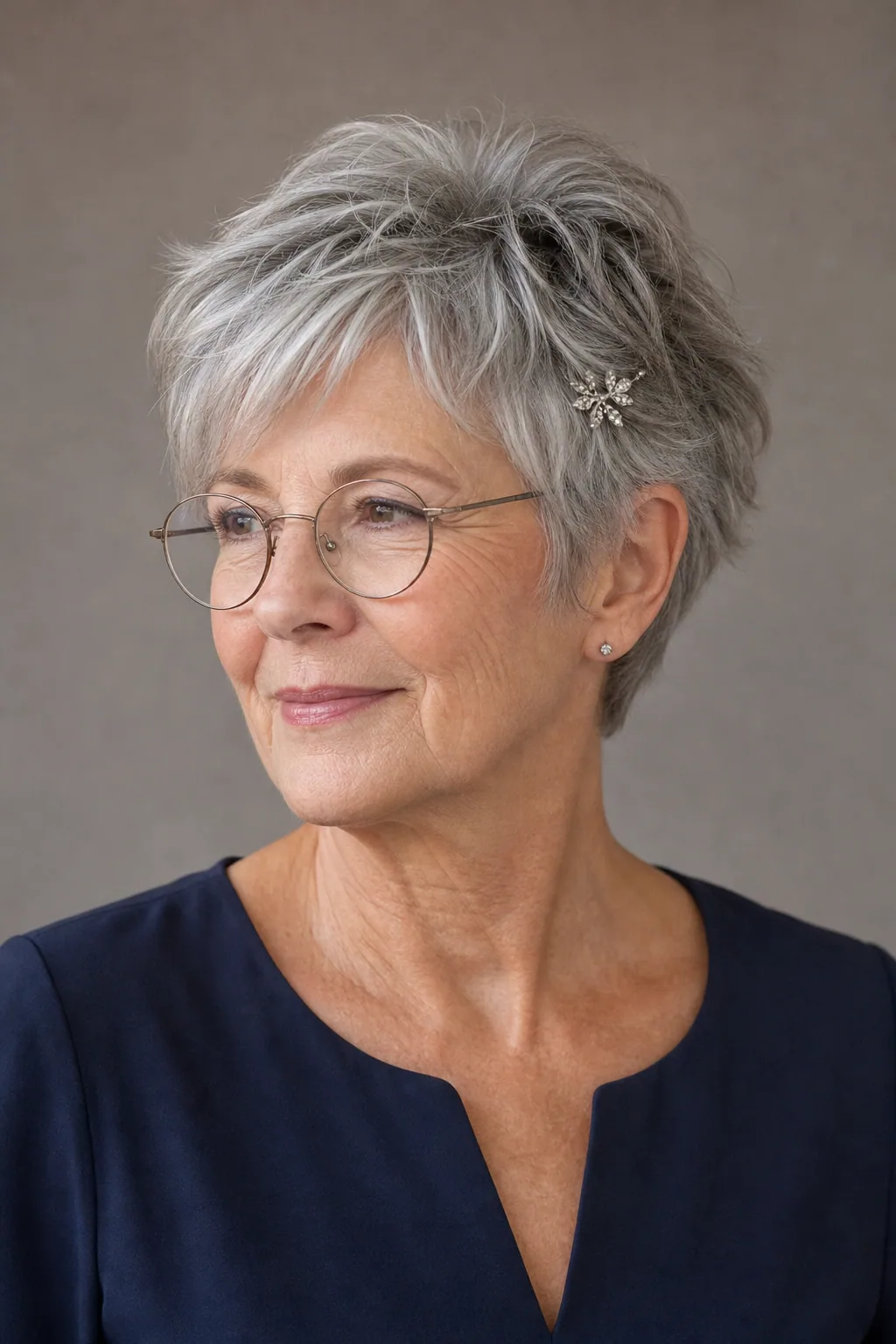
13. Short Hair Polished With Texture and a Jeweled Pin
Short hair is finished with a little texture paste or cream worked through, so the pieces separate and catch the light, and a small jeweled pin or comb is added above one ear. It gives a short cut a formal finish without extra length. Keep the pin small, as short hair can't carry a large one, and put it on the side away from your glasses arm. Ask for "texture through the top and a place for one small pin."
Gray and Silver Hair
Gray and silver hair looks best for a formal day when it is smooth and shiny, because silver reflects light and shows every flyaway. The goal is polish rather than a change of color.
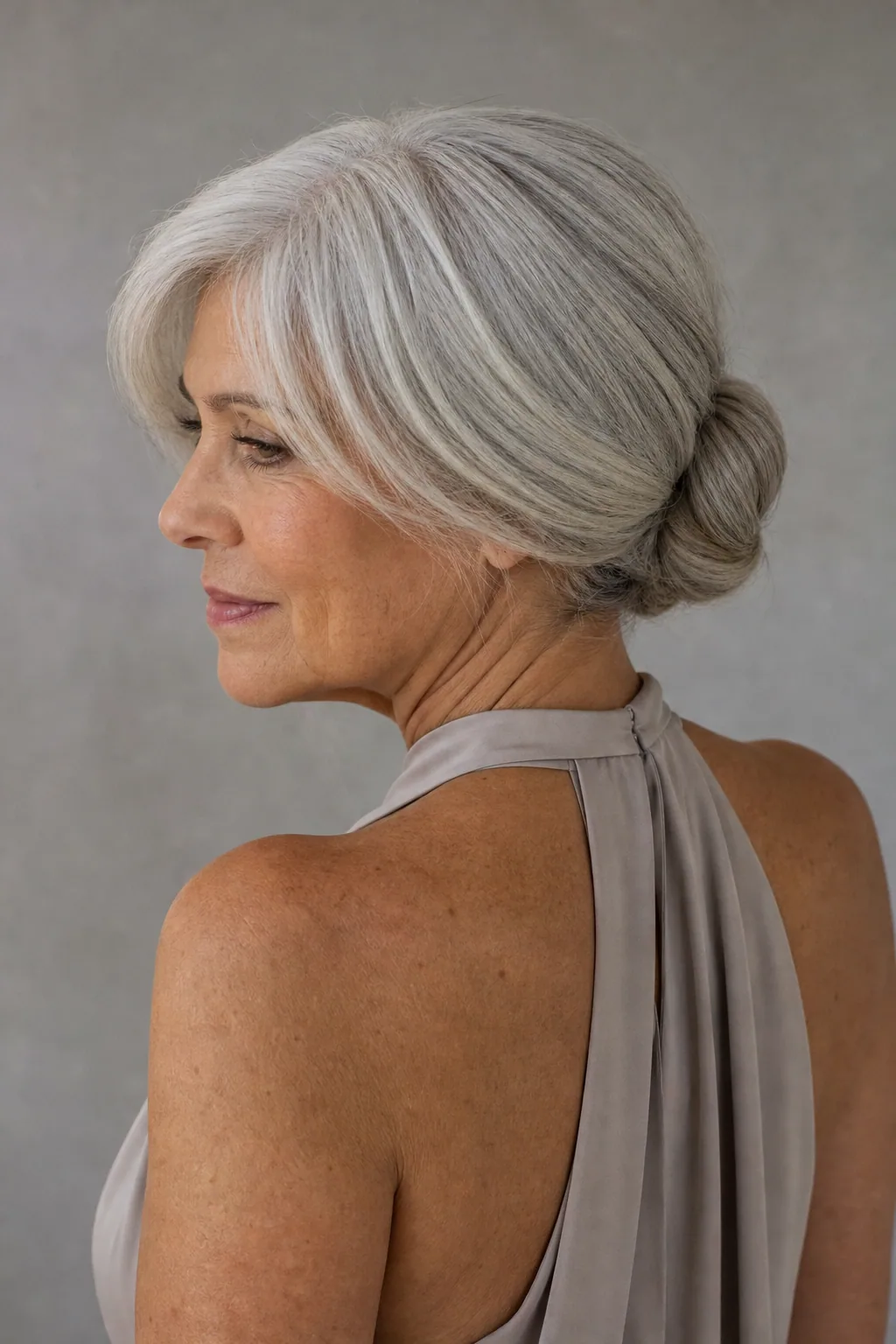
14. Smooth Low Bun for Long Silver Hair
Long silver hair is brushed smooth and gathered into a low bun at the nape, with a small amount of shine serum on the surface. Smooth silver looks luminous, and a low bun sits well with a halter or high neck. Don't pull the hair back so tightly that the hairline thins at the temples. Leave a few soft pieces at the front. Ask for "a smooth low bun with shine, and the front left soft."
Mother of the Bride Hairstyles Over 50: Fine, Thinning and Gray Hair
For hair that is fine, thinner or gray after 50, the aim is to add support and shine at the base of the style rather than to add more hair. A hairstyle changes how full hair looks, not how much there is, so the tools are placement and support.
Padding and donuts. A small pad or a foam ring under a chignon adds height and holds the shape, so the style doesn't depend on the weight of your own hair. Choose one in your hair color.
Backcombing at the base. Light backcombing at the base of a twist gives the pins something to grip. Brush it out gently the next day.
Texture spray. A dry texture spray adds grip and body to fine hair, where a smoothing cream makes it slide.
A slightly higher placement. For flat or thin hair at the crown, set the style a little higher than you would on thick hair, so the lift sits on top.
Shine for silver. A smoothing serum on the ends and a light shine spray finish give silver and gray hair the polish it needs for photographs.
Don't scrape back a thinner hairline. Pulling hair tightly off the face shows the hairline and can strain it. Leave some softness at the temples, as in entries 8 and 14.
Color is a separate question. If you are thinking of a gloss to lift dull gray before the wedding, that is a colorist's decision, and it is best made a week or two beforehand. To plan a color change around the date, see our guide to blending gray into dark hair, or how to go gray if you are growing out dye. If you notice sudden or patchy hair loss, see a board-certified dermatologist.
When to Book: Your Hair Timeline Before the Wedding
Book your stylist as soon as the date is set, and have the trial four weeks to three months before the wedding. That window leaves time to change your mind and to book a second trial if you need one, while the trial is still close enough for your hair to be roughly the same length.
When
What to do
As soon as the date is set
Book your stylist for the day. Ask whether they travel to the venue or whether you go to them
3 months to 4 weeks before
Hair trial, in the same week as the dress fitting if you can. Take photos from all sides
2–3 weeks before
Color, if you are changing it. This leaves time for a correction
1–2 weeks before
Trim, if you need one. Not the week of, and never the day before
1–2 weeks before
A gloss or toner, if your colorist recommends one
Night before or morning of
Wash as your stylist advises. Many stylists prefer second-day texture for an updo
If you are growing out gray or changing color on the way to the wedding, tell your stylist and colorist the date at the start.
What to Bring to Your Hair Trial
Bring the dress, or a photo of it and a fabric swatch, along with everything that goes in or on your hair. The trial is the only chance to test the whole look together, and the more you bring, the fewer surprises on the day.
A photo of the dress, or the dress itself, showing the neckline and the back.
A fabric swatch, if the dress is not with you.
Your earrings and necklace, to check that the hair clears them.
Your headpiece, fascinator or hat, if you are wearing one.
Your glasses, and your hearing aids, if you wear them.
Two or three photos of your own hair on days you liked it.
A photo of the bride's look, so you can keep the formality in step.
A phone, to take photos from the front, both sides and the back.
Wear a top with a similar neckline to the dress, or a robe that exposes the neck. Ask your stylist to write down the products and the pins they used, since it is easy to forget them by the wedding day.
Coordinating With the Bride and the Wedding Party
Match the formality of the bride's look, and choose a style that is different from hers. If she wears her hair up and polished, an updo in the same spirit is fine, and a down style still looks calm beside it. If she is wearing a headpiece or a veil, ask what sort so you can plan around it.
Don't compete. Avoid the exact style or a bigger version of hers. A softer, lower style is the safe choice.
Share your plan. A text with a photo of the trial is enough, and it saves a surprise on the day.
Get ready with the bridal party, or separately. Either is fine. If the bridal party is booked as a group, ask for your own slot so you aren't rushed, and ask where you will be in the order.
Timing on the day. Ask the stylist how long your style takes, and book the slot so you are finished before the photographs begin, with a buffer for the unexpected.
If your son is the one getting married, the plan is similar but quieter, and the same timeline applies.
Your Wedding-Day Hair Kit
Carry a small kit so you can fix the style yourself without asking anyone. Keep it in your bag or hand it to a friend you trust.
Pins: a handful of bobby pins and U-shaped hairpins in your hair color, and the pin or comb from the trial.
Spray: a mini flexible-hold spray, and a small bottle of shine serum.
Comb: a small comb or a brush with a tail, for tucking and smoothing.
Elastics: clear elastics, in case a band slips.
Blotting: a tissue or blotting paper for oil at the roots, and a small mirror.
Comfort: a small headache remedy if you take one, and a small pack of tissues for happy tears.
Frequently Asked Questions
Should the mother of the bride wear her hair up or down?
Let the dress neckline decide: up for strapless, high-neck and halter dresses, and down or half up for V-necks and sleeves. Think about the length of the day, too, because down hair gives the least hold. If you can't decide, a half-up style is the safest compromise.
What is the best hairstyle for a mother of the bride over 50?
A low chignon or a half-up style with lift at the crown suits most hair after 50, because both sit securely and add height where it is needed. Choose by hair type: a base or pad for fine hair, and a smooth, shiny finish for gray. Avoid scraping fine hair back so tightly that the hairline shows.
How far before the wedding should I do a hair trial?
Plan the trial for four to twelve weeks before the wedding, so there is time to change the plan and your hair is close to its day-of length. Book a second trial if the first doesn't feel right. Take photos from the back, sides and front.
Can I wear a fascinator or hat with an updo?
Yes, if the style is built around it. A low chignon or ponytail carries a headpiece well, while a high updo can be flattened by a large hat. Bring the headpiece to your trial, and have it pinned to a secure section of hair.
How do I make an updo last all day?
Build the style on a firm base, use pins crossed in an X and keep the shape low. Second-day hair holds better than freshly washed, and a flexible-hold spray at the end helps. Take a few pins and a mini spray with you for repairs.
What can I do with short hair for my daughter's wedding?
Style it, don't cut it: a deep side part and a soft bend for a bob, or texture and a small jeweled pin for a pixie. Leave the cut alone in the weeks before the wedding. Book a trim one to two weeks beforehand.
Should the mother of the bride have her hair done with the bridal party?
It is your choice, and either works. If you join the group, ask for your own time slot so you aren't rushed. If you go separately, make sure you are finished before the photographs start.
Results vary with hair type, density, texture and the style of your dress. This guide is educational and is not a substitute for an in-person consultation with a licensed stylist.
 Grace