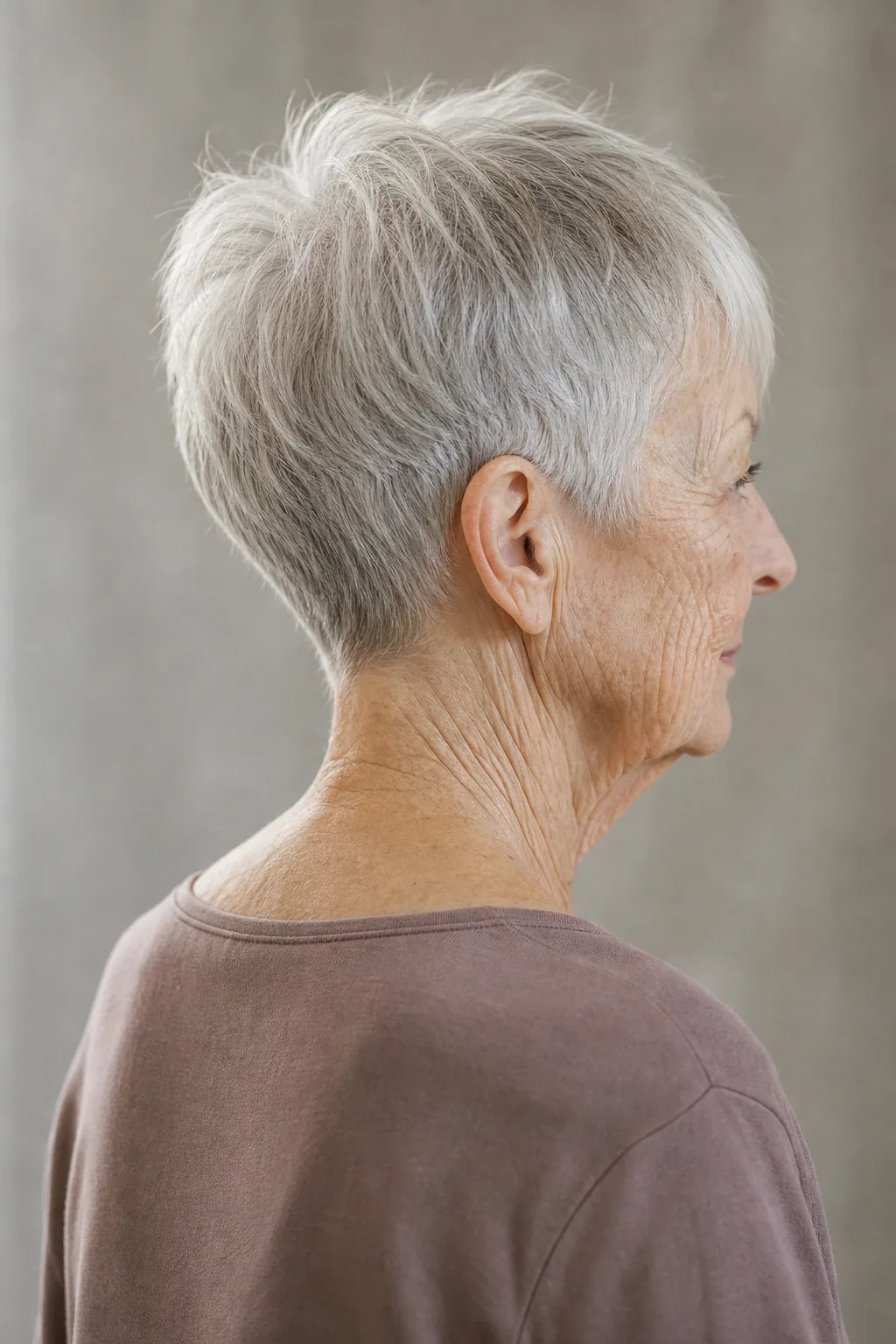
Short Haircuts for Women Over 70: 14 Easy, Low-Maintenance Cuts
By Jules Peacocke, Founder of Lily Jackson Hair + Makeup · Reviewed by Coral Pleas · Updated November 2026 · 12 min read
The best short haircuts for women over 70 give white and silver hair a clear outline, clean edges and a little height, because short hair needs shape more than it needs color. A good short cut makes white hair look chosen rather than left: it keeps the edges tidy where hair frizzes, and it lifts the crown where hair lies flat. Most of the 14 cuts below take 2–10 minutes a day.
This page groups the cuts by what they do for short white, silver and salt-and-pepper hair: very short crops, cuts that finish growing out color, shapes that polish white hair, and cuts for texture and contrast. After them come picks by face shape and hair type, the words to use at the salon, how to keep white hair bright, and who should skip a very short cut. If you'd rather choose by daily routine, start with our guide to hairstyles for women over 70.
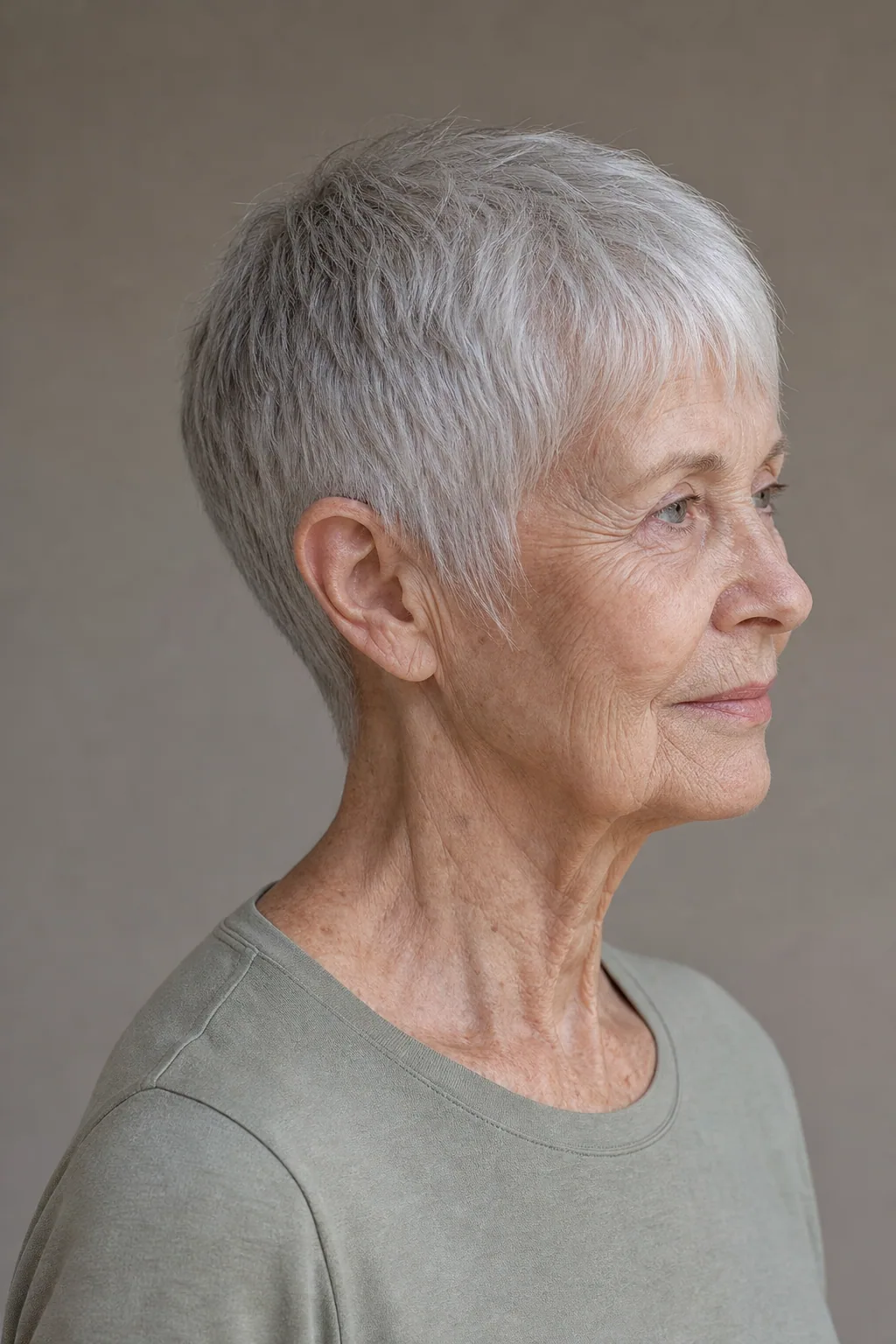
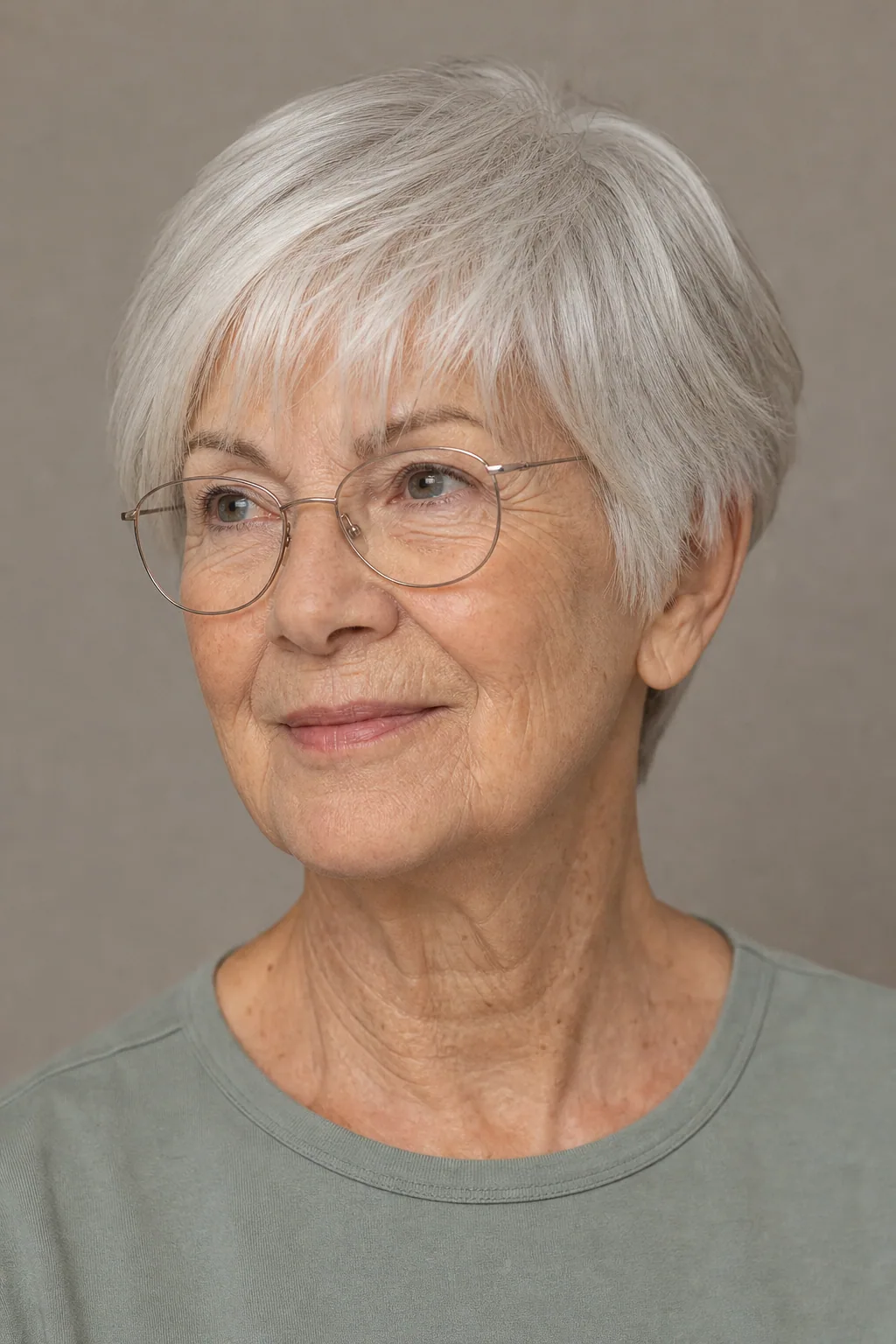
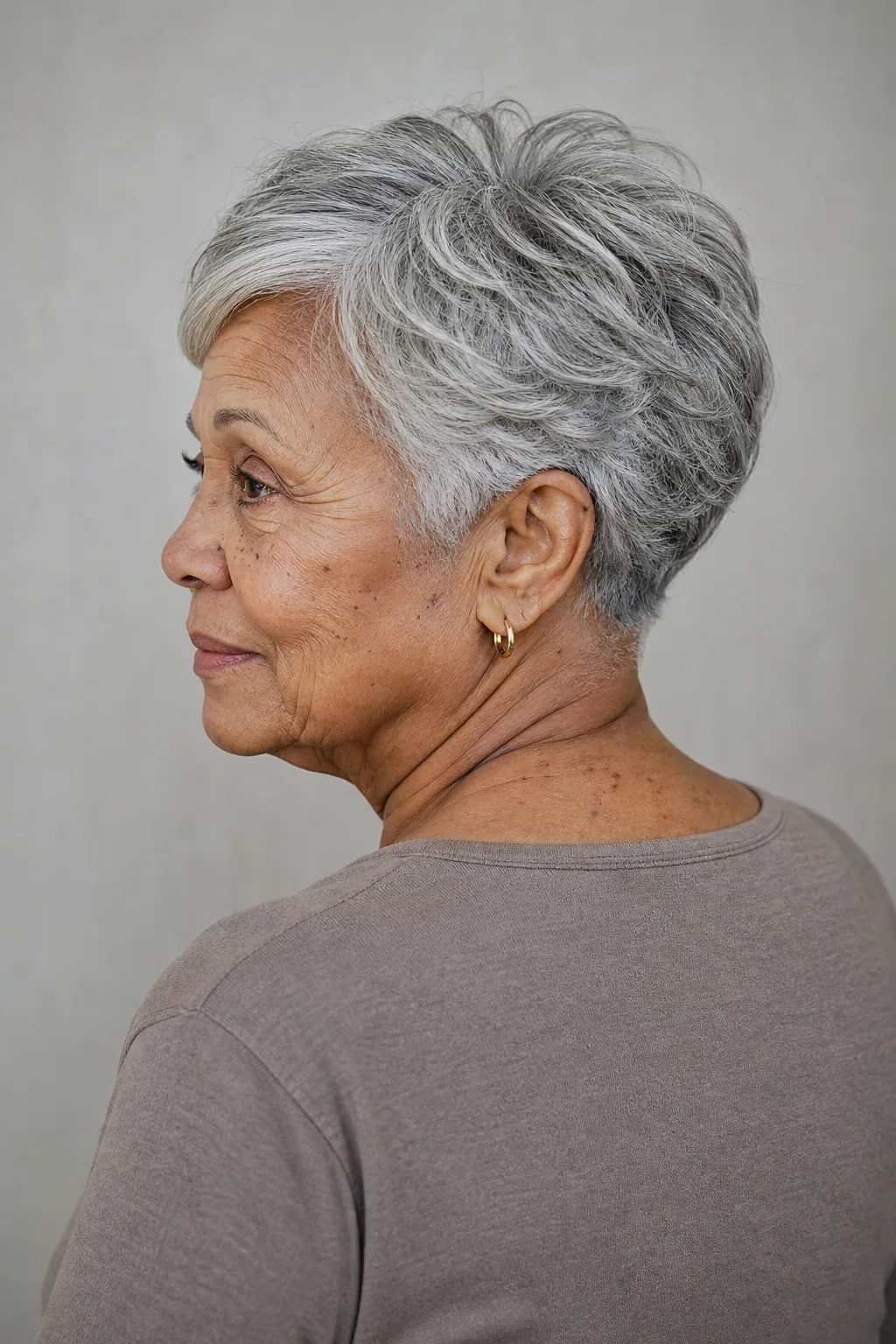
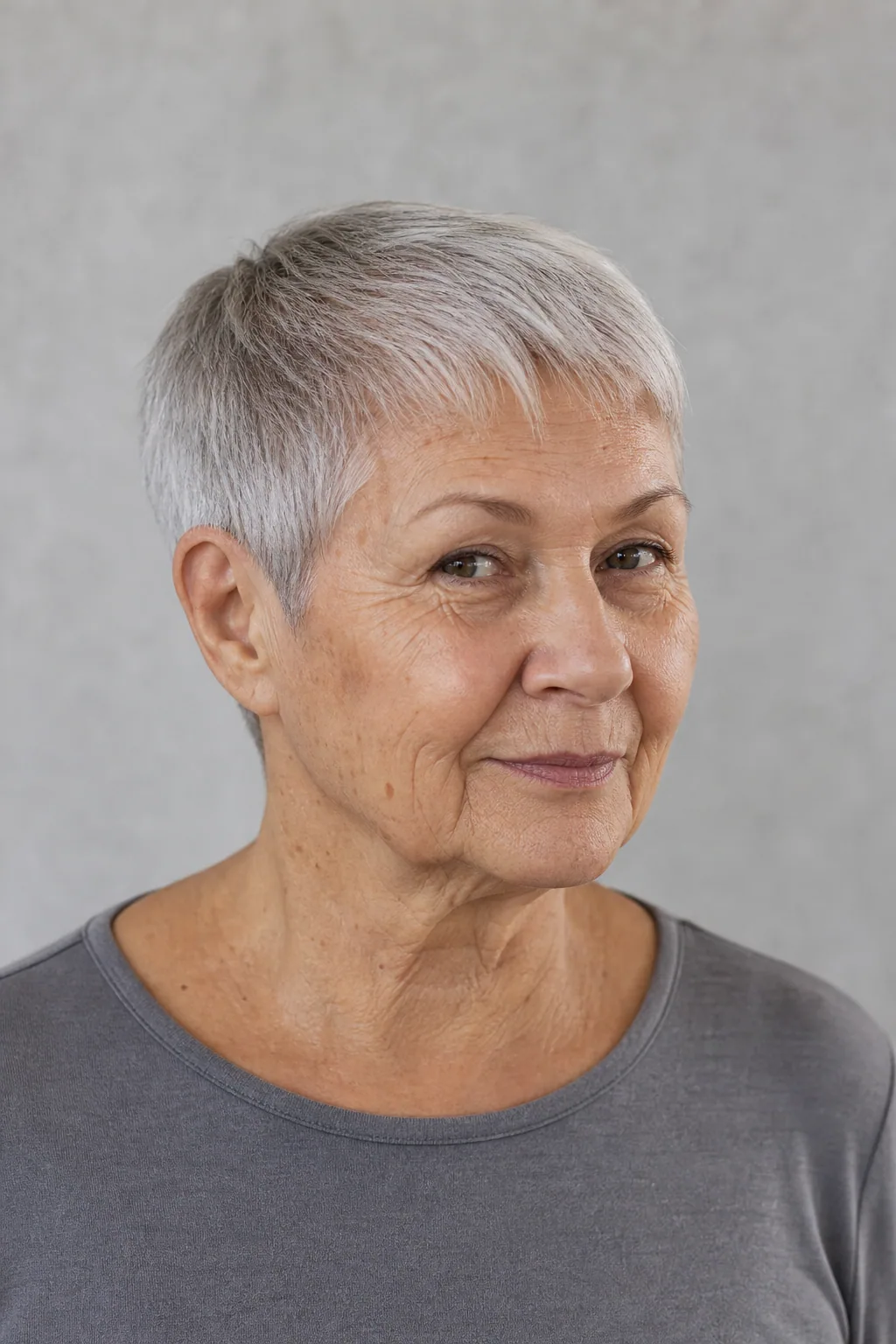
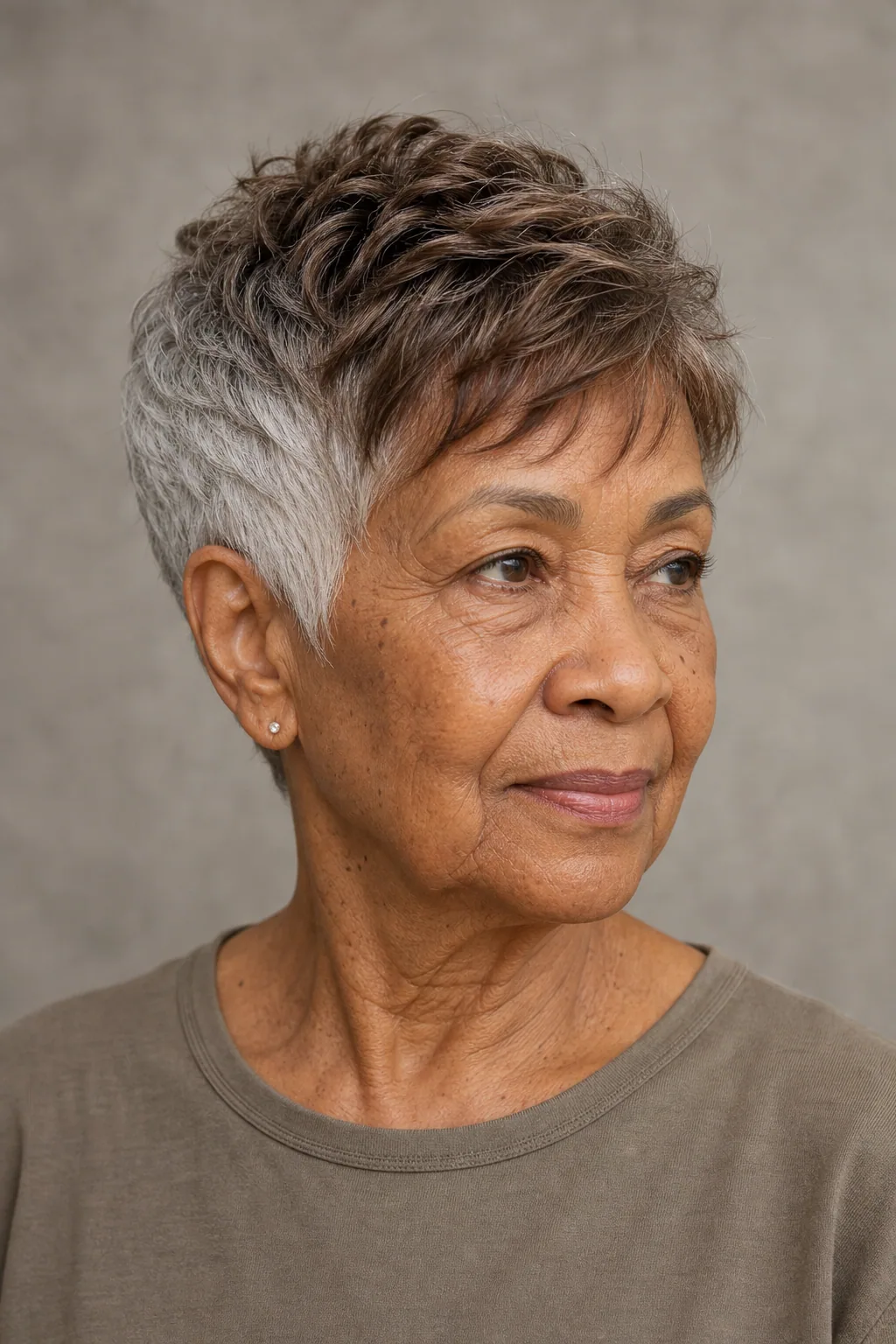
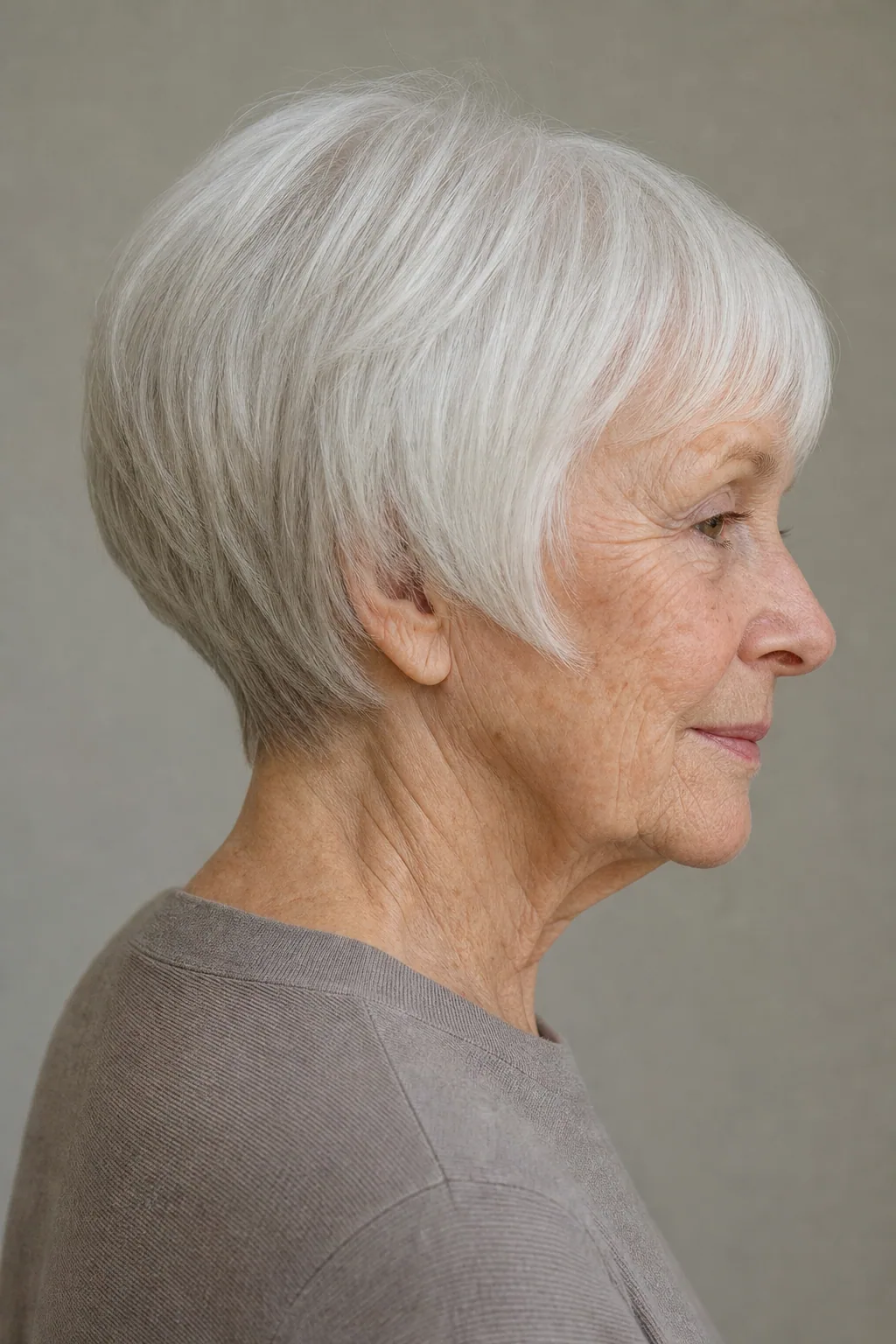
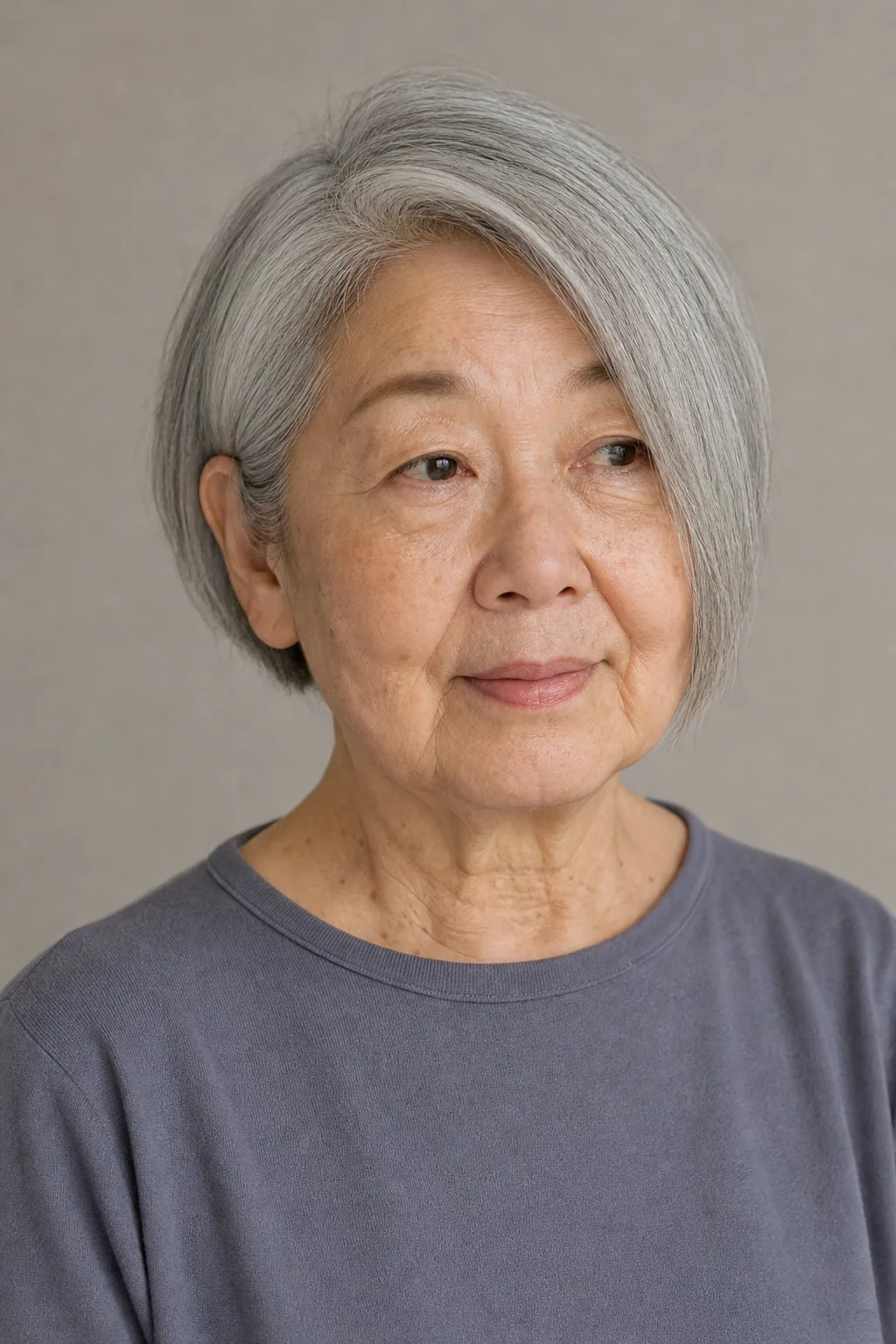
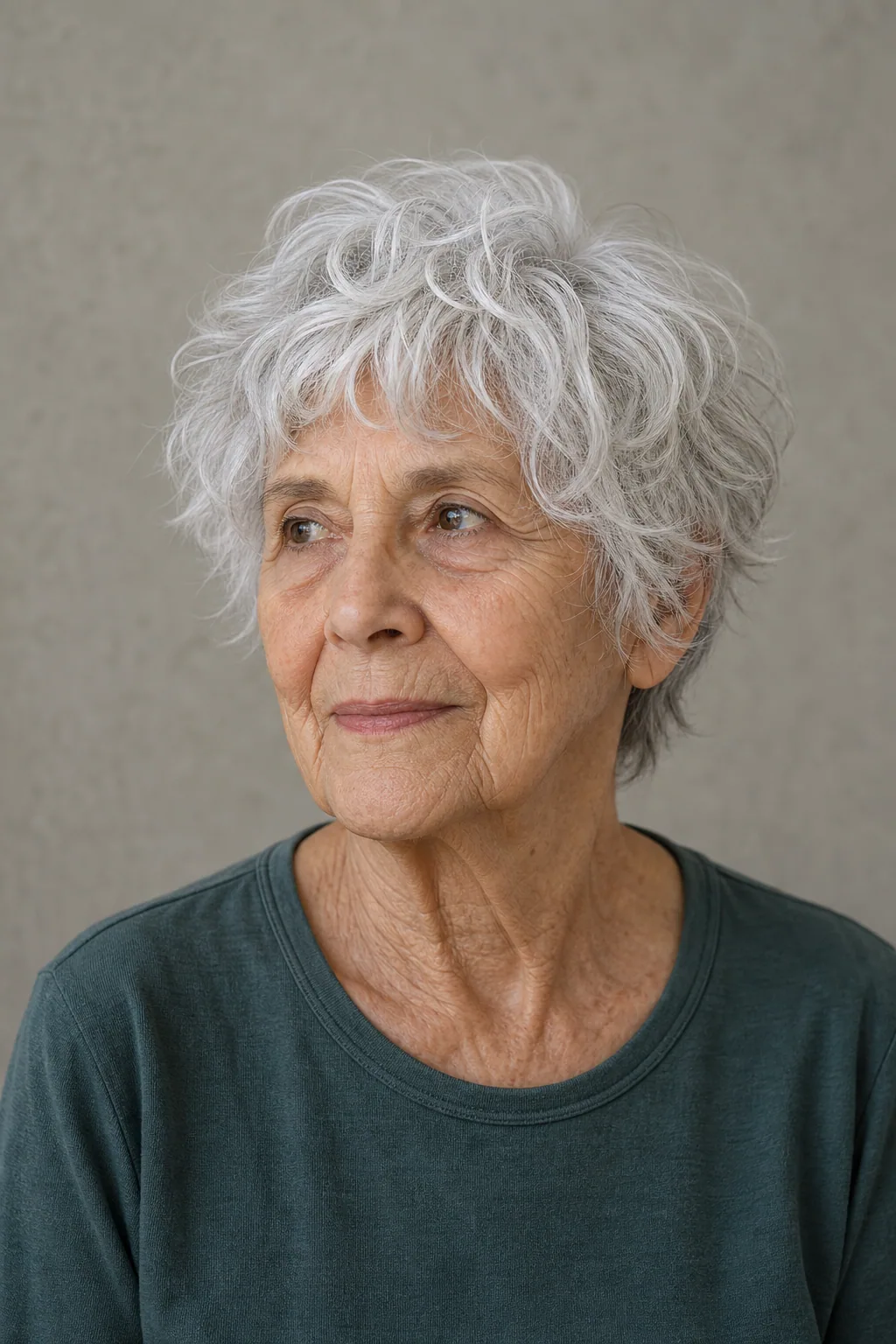
Hairstyle images in this guide are AI-generated illustrations, not photos of real clients or results. See our image standards.
Why Short White Hair Needs Shape More Than Color
White hair often changes texture, frizzes at the ends and shows every uneven edge, so a short cut has to supply the shape that color used to. Keep three words apart. Gray is a mix of pigmented and white strands. White has no pigment left. Silver is the bright, cool look that gray or white hair can have when it is healthy and clean. All three behave differently from the hair you had at 50, and a cut changes how full hair looks, not how much there is.
What white or silver hair does
What it does to a short cut
What to ask for
Grows in coarser or wirier
Stands up when cut very short and won't lie flat at the nape or sides
A scissor taper rather than clippers; a little more length on top to weigh it down
Grows in finer, with lower density
Looks flat and shows the scalp at the crown and part
Short layers at the crown for height, a solid perimeter, no thinning shears
Frizzes at the ends
Frayed ends turn a soft shape into a fuzzy one
Scissor-cut ends or a blunt edge, no razor, and a light cream to finish
Shows every uneven edge
A grown-out line over the ears or at the nape reads as neglect
A defined outline and a clean nape, kept up with a tidy-up between cuts
Loses contrast and shine
A flat, matte shape looks dull; yellow tones show on a pale head
A shape with movement, plus the care in the bright-hair section below
None of this is about hiding anything. It is about giving short hair an outline that looks decided.
Very Short, Pixie, Crop or Short Bob: Which Length
Pick the length by how many minutes you want in the morning and how often you will book a trim, because the shorter the cut, the sooner it needs one. If you'd rather start from your routine, see hairstyles for women over 70, which sorts 12 cuts by how you dry and style them. This page is about the short end of that range; if you're in your 60s, our short haircuts for women over 60 and hairstyles for women over 60 cover the rungs below. The ranges below are typical for hair of average density.
Length
Trim every
Daily minutes
Suits
Grow-out
Very short (about 1 inch all over; entries 1, 4)
3–5 weeks
1–2
Any texture; a good head shape; no time for styling
Quick and even, but the shape goes fast
Pixie (entries 5, 14)
4–6 weeks
2–5
Fine to medium hair; those who like a defined shape
Awkward over the ears; a bixie bridges it
Short crop and wedge (entries 2, 3, 6, 7, 8, 12, 13)
5–7 weeks
3–8
Most densities; wavy and curly hair
Softens well; loses the nape first
Ear-length bob (entries 9, 10)
5–8 weeks
5–10
Straight to wavy hair; fuller sides
Even, with a short in-between stage
Collar-length (entry 11)
7–10 weeks
5–10
Hair with full ends; those not ready to cut shorter
Very forgiving
If your hair is thinning, a very short crop is not automatically the lightest option. It can show the scalp, and the entry on crown height (3) or the wedge (6) often serve better.
Very Short Cuts
Cuts of about one to three inches put all the interest in the shape of the head and the outline, so they work best when the edges are crisp. These three are the shortest here.
1. Very Short Silver Crop, About an Inch All Over
The whole head is cut to roughly an inch, with a touch more on top, so the shape comes from the head rather than from styling. The stylist works with scissor-over-comb: lifting the hair with a comb and cutting what rises above it, which blends more softly than a clipper guard. It suits any texture and anyone who wants to wash and go in a minute. Ask for "an inch all over, a little more on top, scissor-over-comb at the nape."
2. Short Brushed-Forward Cut With a Soft Fringe
Where a feathered cut sweeps back from the face, this one is cut to fall forward: layers of two to three inches that brush from the crown toward the forehead and end in a soft fringe (bangs). Brushed-forward hair covers a higher front hairline and gives a flat crown its own movement. It works best on straight to slightly wavy hair. Ask for "forward-falling layers and a point-cut fringe that stops at the brow."
3. Short Cut With Height at the Crown for Thinning Hair
The layers through the crown are cut shorter than the ones around them, so the hair stands up from the scalp and holds the top up. The sides stay close and the outline stays solid, which keeps the weight where there is most hair. This builds height, not density. Ask for "short layers through the crown, a solid perimeter, no thinning shears," and move your part an inch off center to cover more scalp.
Cuts That Finish Growing Out Color
If you're growing out dyed hair, a short cut gets rid of the colored length in one or two visits, and the outline stops the regrowth looking like a line. These two suit women who have decided to go gray; for the slower route on darker hair, see how gray blending for dark hair keeps length while it fades in.
4. The Big-Chop Crop That Cuts Out the Last of the Color
The hair is cut to about an inch or an inch and a half, below the regrowth line, so everything left is your own silver. The trade-off is honest: you see the whole change at once, and the first week can feel exposed. A clean outline carries it, and the next trim keeps it neat. Ask your stylist to "cut just below the regrowth line and keep a soft shape on top."
5. Transition Pixie for the Last Few Inches of Dye
When only a few inches of color remain, a pixie takes off most of it and leaves a little at the top and fringe, where it can be trimmed away over the next two visits. The stylist point cuts the length where the color meets silver, so the change reads as a soft blend, not a stripe. It keeps a recognizable shape through the whole stretch. Ask for "a pixie that takes off the dyed length in two trims."
Shapes for White and Silver Hair
These six are about the outline: a curve, an angle, a blunt line or a fringe that gives white hair a deliberate edge. Each one uses the cut itself to make hair look polished.
6. Rounded Wedge With Fullness at the Back
A wedge is cut short and stacked at the nape and longer toward the front. Here the stack is rounded, so the back curves out behind the crown and the sides slope to the earlobe. That builds fullness where fine hair goes flat. Point cut the edges and the shape stays soft instead of looking like a 1970s helmet. Ask for "a rounded wedge, stacked at the back, short at the nape, sides to the earlobe."
7. Short Asymmetric Cut With One Longer Side
One side falls to the earlobe, the other to the cheekbone, so the line is off-center instead of matched. The angle softens a round or very symmetrical face, and it gives a deep side part a reason to be there. It needs a trim every five to six weeks, or the angle blurs. Ask for "a gentle asymmetry, about an inch between the sides," not a steep slope.
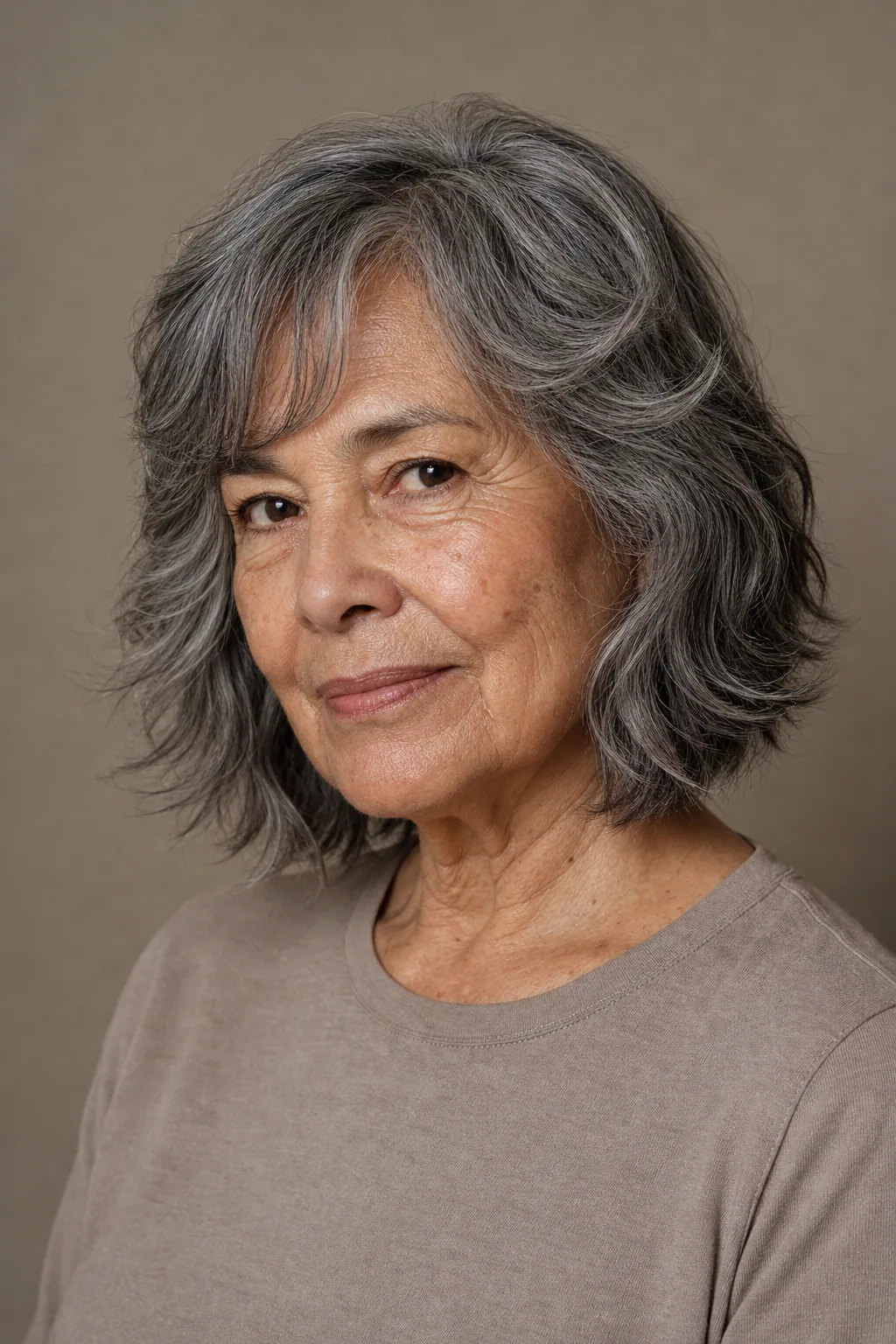
8. Soft Short Shag for Wavy White Hair
A short shag has choppy, connected layers all over, shortest at the crown. On wavy white hair, which tends to be drier, those layers let the waves clump and move rather than frizz. Work in a little curl cream while damp, scrunch, and air-dry. Ask for "a short, scissor-cut shag," and have the stylist look at the wave dry or damp before cutting.
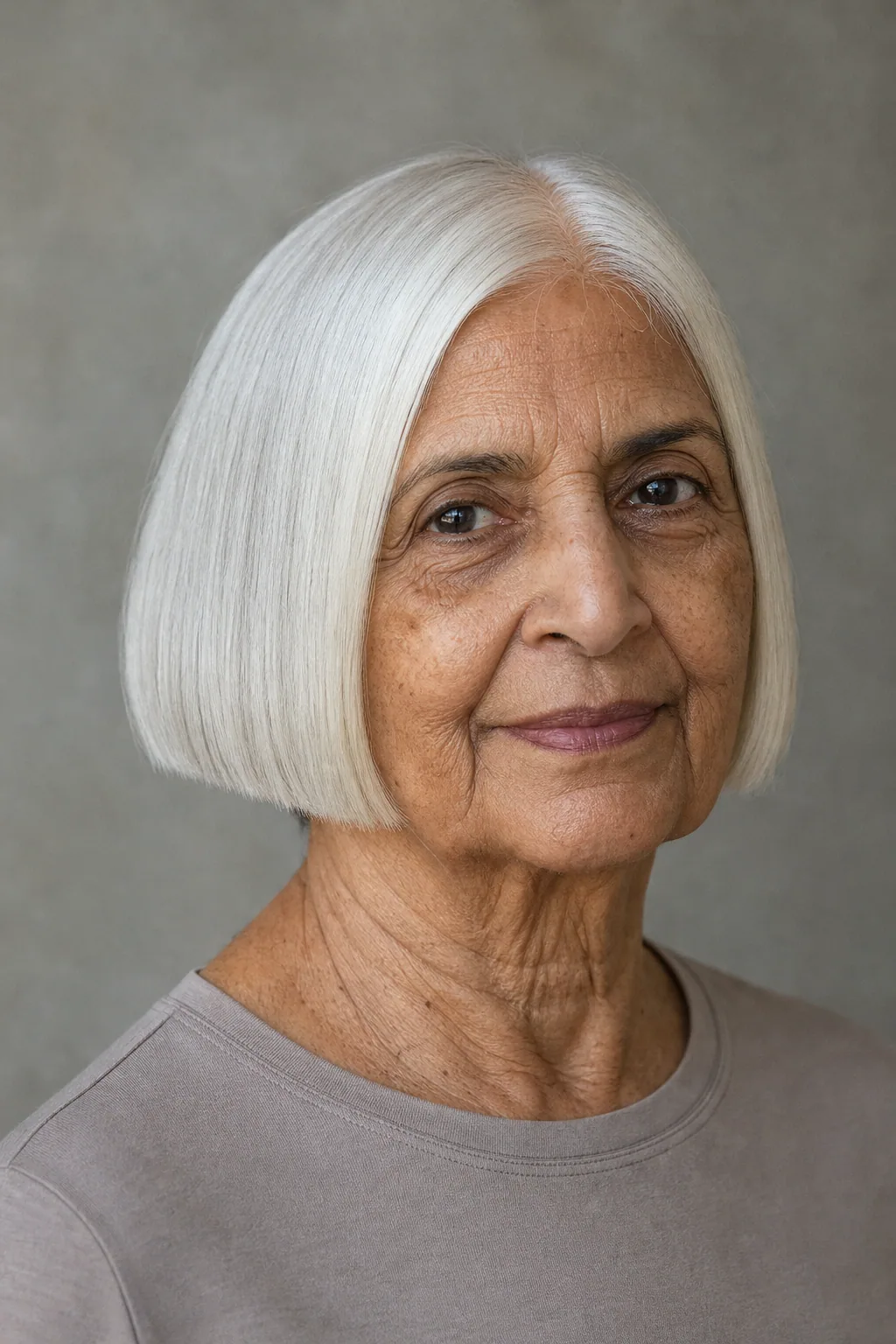
9. Ear-Length Blunt Bob for Straight White Hair
A blunt edge is one length cut straight across, with no graduation and no layers. A flat, cut edge catches light, which gives straight white hair its shine, and a razor or thinning shears would fray it. Dry with a paddle brush and finish with a drop of smoothing serum in about 5–8 minutes. A blunt line shows growth quickly, so plan on a trim every five to seven weeks.
10. Short Bob With a Curtain Fringe Tucked Behind One Ear
A curtain fringe parts in the middle of the forehead and sweeps to each side. Cut it long enough to tuck behind one ear and the other side falls free at the cheekbone, framing the eye and softening a high forehead. Because it tucks, it never goes through an awkward stage as it grows. Ask for "a jaw-length bob with a curtain fringe long enough to tuck."
11. Collar-Length Short Cut With Soft Layers
This is the longest of the short cuts, ending at the collar or just above the shoulders, with soft layers beginning at the chin. Unlike a shoulder-length cut meant to clip up, it holds its shape unclipped and still dries quickly. Choose it if the ends are full and you aren't ready to go shorter. Ask for "the length at the collar, long layers from the chin, ends lightly point cut."
Cuts for Texture and Contrast
Coarse curls, salt-and-pepper mixes and fine silver each need a cut designed for how they look, not just how they behave. The last three work with the hair's own character.
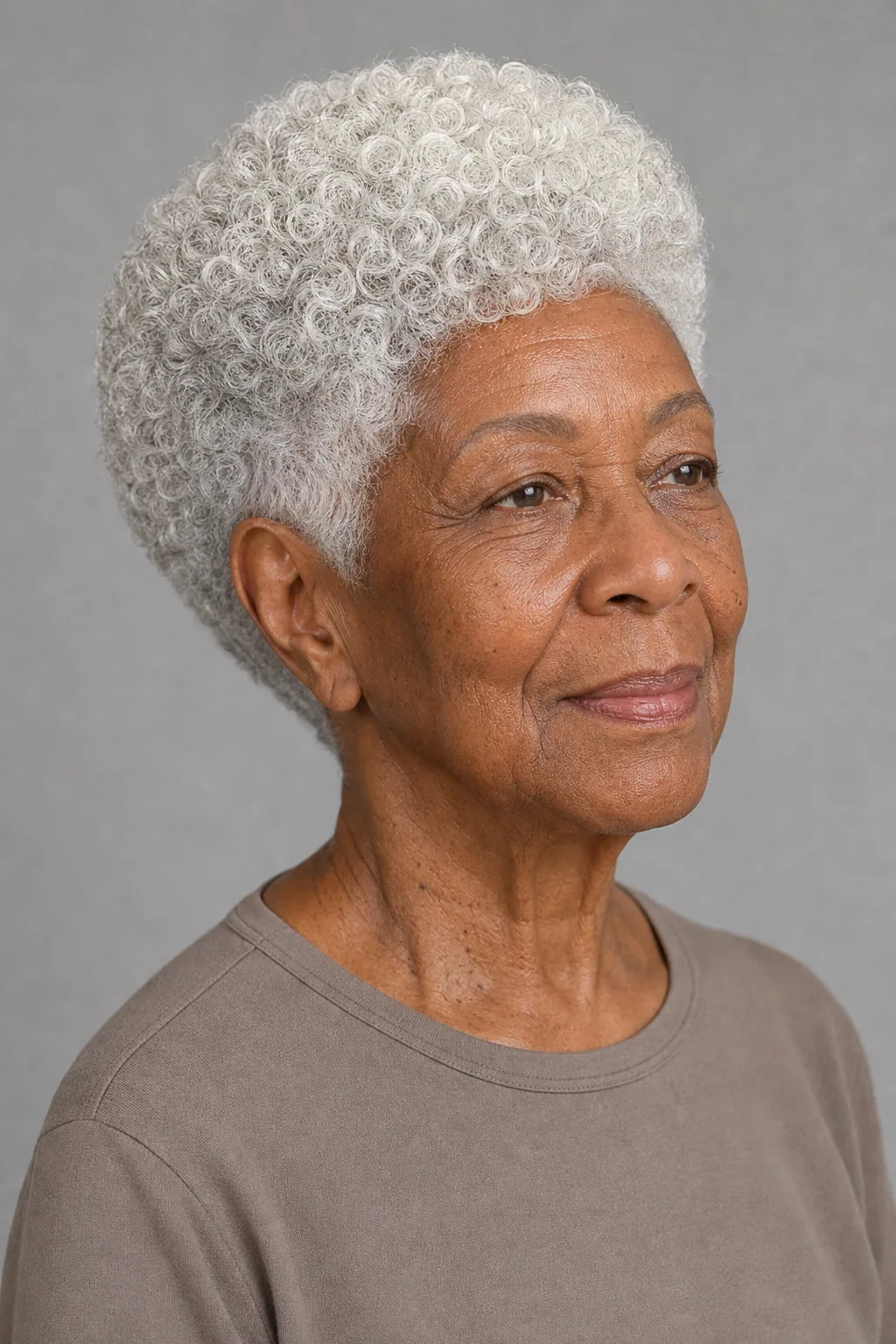
12. Rounded Short Shape for Coarse White Curls
On coarse curls the outline matters more than the layers. This cut is sculpted into a rounded shape, longest at the crown and top and closer at the sides and nape, so the curls form a dome rather than a triangle that widens at the ears. The stylist checks the shape with the curls in their natural, dry state. Ask for "a round shape, closer at the sides and nape, weight kept on top."
13. Short Layered Cut That Shows Off Salt-and-Pepper Contrast
Salt-and-pepper hair gets its look from dark and white strands moving against each other. Visible, varied layers, longer on top and shorter underneath, let both tones show; a single smooth length hides the mix. Keep product light, since heavy styling cream flattens the contrast. Ask for "point-cut layers, nothing slicked down, so the dark and white strands show."
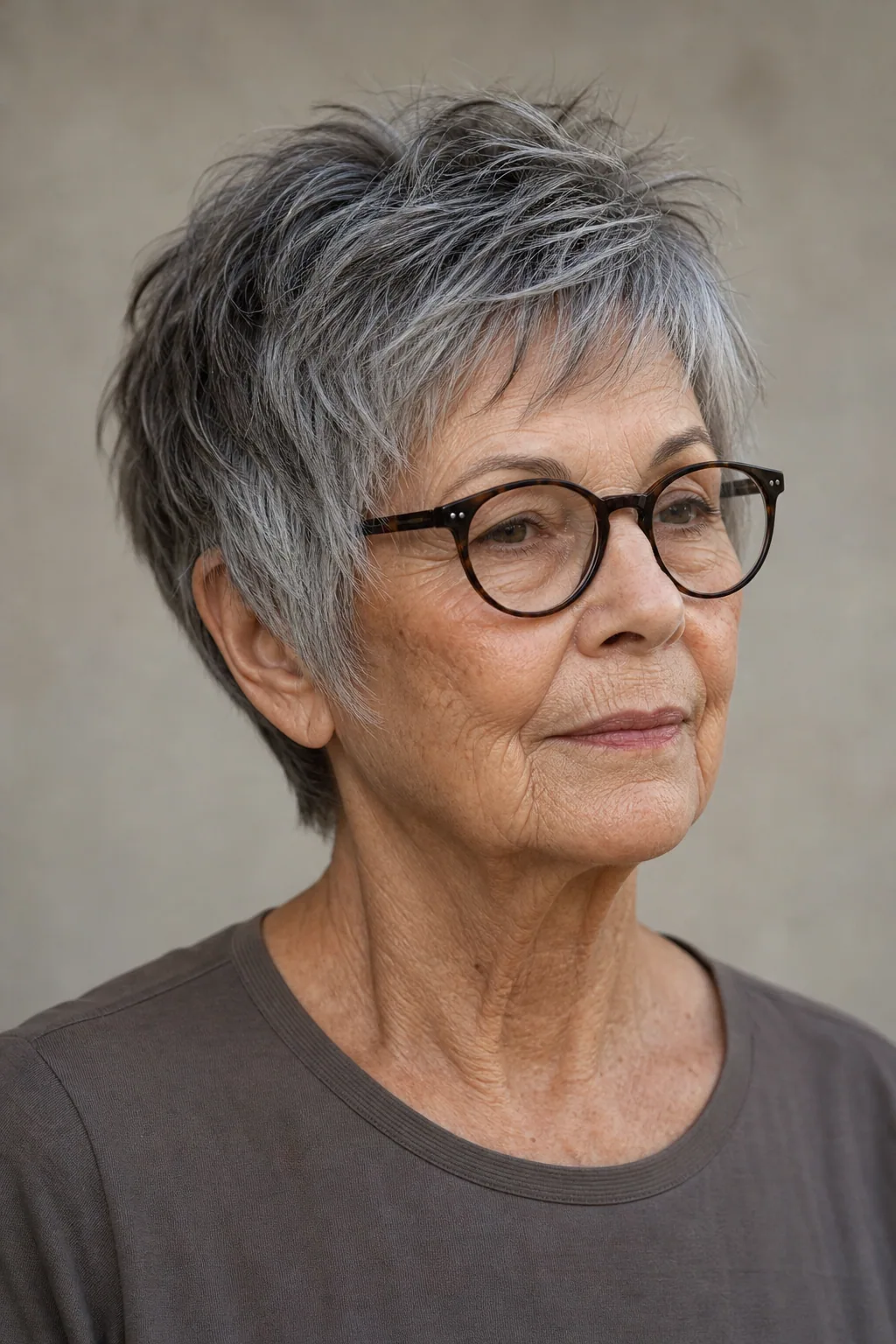
14. Feathered Pixie With a Clean Nape for Fine Silver Hair
Fine silver hair sits close to the head, so the outline does the work. The nape is cleaned along your natural hairline, and the top is left an inch and a half to two inches long and feathered: cut at a slight angle so the ends overlap softly instead of sitting in blocks. A pea-sized amount of light mousse at the roots is all it needs. Ask for "a clean nape that follows my hairline and a feathered top, nothing heavy," and book a trim every four to six weeks.
Choose by Face Shape
Face shape is the second filter after hair type and routine, and at 70 the best use of it is to place height and softness where your face is widest. For the full method, see how to choose a haircut for your face shape.
Face shape
Good picks here
Key detail
Go easy on
Round
3, 7, 10
Height at the crown and an off-center line lengthen the face
Width at the cheeks; a chin-length blunt line
Square
2, 8, 11
Soft, forward or layered edges soften the jaw
A hard line at the jaw
Long
6, 9, 11
Width at the sides and fullness at the back shorten the face
Height on top
Heart
6, 9, 11
Fullness at ear or chin level balances a wider forehead
Very short, tight sides
Oval
Any
Choose by hair type and routine
Nothing in particular
Choose by Hair Type
Match the cut to two things: how thick each strand is (fine or coarse) and how many strands there are (density). One line on health: sudden or patchy loss is a reason to see a board-certified dermatologist before changing the cut.
Fine silver hair: an outline that stays solid and clean, with soft edges rather than blunt ones. Entries 3, 6 and 14.
Thin hair (low density): height at the crown and a solid perimeter, not a very short crop that shows the scalp. Entries 3, 6 and 11.
Coarse white hair: a scissor taper and a little length on top so it lies down. Entries 1, 9 and 12.
Curly or wavy white hair: shape for the pattern you have now, ideally checked dry. Entries 8 and 12.
Salt-and-pepper: layers that keep both tones visible. Entries 13 and 2.
What to Ask Your Stylist
Bring words, not just a photo: the length, where the weight sits, how the ends are cut and what not to do. Say these out loud:
"I want the shape to have a clear outline, with clean edges at the nape and over the ears."
"Please scissor-cut the ends, with no razor and no thinning shears, because my hair frizzes."
"I'm growing out color. Please cut just below the regrowth line and plan the shape so the rest comes off in a trim or two."
"I want height at the crown but no blow-dry. Please cut it so it works with my fingers and a little product."
"How often will this need a trim, and how will it grow out?"
Keep your glasses and hearing aids on during the consultation so the stylist can see the sides with them in place; the over-70 routine guide covers why.
Keeping Short White Hair Bright and Neat
Short white hair stays bright with clean ends, a little toning and a tidy nape, not with a long routine. The aim is to keep the cut looking as it did the day you left the chair.
Trims: every 4–6 weeks for pixies and crops, 5–8 for bobs and shags, 7–10 for the collar-length cut.
Purple shampoo: a violet-toned shampoo cancels yellow in white hair. Use it once every one to two weeks and leave it on for one to three minutes. White hair grabs pigment, so if it starts to look lilac, drop to once every two to three weeks.
Gloss: a salon gloss, a sheer coat applied after washing, adds shine and tones brassy or yellow strands. It fades, so ask how often your hair needs one.
Light cream for flyaways: a pea-sized amount of smoothing cream, warmed between your palms, then run through the ends of coarse or frizzy white hair.
Clean-up between cuts: a short cut loses its nape and the area over the ears first. Many salons will tidy these for a few minutes between full cuts, and a small detail trimmer with a guard can keep the nape neat at home.
Tools: a hairdryer with a concentrator nozzle, a 1-inch round brush or a small paddle brush for the top, and a diffuser for curls.
Frequently Asked Questions
What is the easiest short haircut for a 70 year old woman?
A short, scissor-cut crop with soft layers and a clean nape is the easiest for most women over 70. It dries in a few minutes, clears glasses and doesn't need a round brush. The catch is the trim: book one every five to seven weeks.
Does short gray hair make you look older?
No. Length doesn't age a face. What reads as tired is a shape that has grown out, ragged edges or a yellow cast on white hair. A clear outline and regular trims keep short gray hair looking fresh at any age.
What is the best very short haircut for fine hair over 70?
A feathered pixie with a clean nape and an inch and a half to two inches on top, like entry 14. Fine hair sits close to the head, so a clean outline does the work. Keep the top soft and use a light mousse rather than a heavy cream.
How do I stop short white hair looking yellow?
Use a violet-toned shampoo every one to two weeks and rinse well, because yellow comes from product build-up, heat and daylight. If your hair turns lilac, use it less often. A salon gloss every few visits also helps, and sun protection keeps white hair from yellowing.
Can I go gray with a short haircut?
Yes. A crop or transition pixie cuts out the dyed length in one or two trims, so you don't live with a stripe of regrowth. Tell your stylist you're growing out color, and ask them to plan the shape so the colored ends come off in the next trim or two.
How often should short hair be cut at 70?
Every four to six weeks for a pixie or very short crop, and five to eight weeks for a bob or short shag. A very short cut loses its shape fastest, so book your next visit before you leave. A nape and ear tidy between cuts can stretch the gap.
What short haircut works with glasses over 70?
Choose one that either clears or covers the arms. Taper the hair above and behind the ears so frames sit cleanly, or leave enough length at the sides to fall over them. Have the fringe sit just above the top rim, never on it.
Results vary with hair type, density, texture and face shape. This guide is educational and is not a substitute for an in-person consultation with a licensed stylist.
 Grace