Haircuts for Round Faces Over 50 and 60: 13 Cuts, Including for a Double Chin
By Melissa Timperley, Salon Owner & Hairdressing Educator · Reviewed by Coral Pleas · Updated November 2026 · 12 min read
The best haircuts for a round face over 50 and 60 build height at the crown and carry the weight line past the jaw, so the eye travels up and down the face instead of across the cheeks. A cut cannot change the shape of your face. It changes where the eye lands, and a tall top with a perimeter that falls below the jaw lands it on length, not width.
Below are 13 cuts for round faces in the 50s and 60s, grouped by length, with versions for thin hair, curls, glasses and a soft jaw or double chin, plus the salon words, trim times and the cuts to skip. For the full method of choosing by face shape, see how to choose a haircut for your face shape, and for every length of cut at this age, haircuts for women over 50.
Hairstyle images in this guide are AI-generated illustrations, not photos of real clients or results. See our image standards.
Is Your Face Round? Measure Before You Book
A round face is about as wide across the cheekbones as it is long, with a softly curved jaw and no corners. Pull your hair back, stand square to a mirror and measure four things with a soft tape or a piece of string: across the forehead at the hairline, across the cheekbones at the widest point, across the jaw from angle to angle, and the length from hairline to chin.
If the cheekbone width is within about an inch of the length, and the forehead and jaw are both narrower than the cheeks, your face is round. If the length is clearly more than the width, you are closer to oval or long. The jaw and cheeks soften after 50, so a face that measured oval at 35 can measure round now; re-measure rather than trusting an old label.
The Rule: Height on Top, a Line Past the Jaw
A round face needs two things from a cut: lift at the crown, and a perimeter that ends below the widest part of the face or well above it, never at it. Guides disagree on this. Some say keep hair above the chin and others say below it, and both are right about one thing: the line must not stop at the cheekbone or the chin, where the face is already widest. Short cuts work by taking width off the sides and putting it on top. Longer cuts work by sending the line past the jaw, so the eye follows it down.
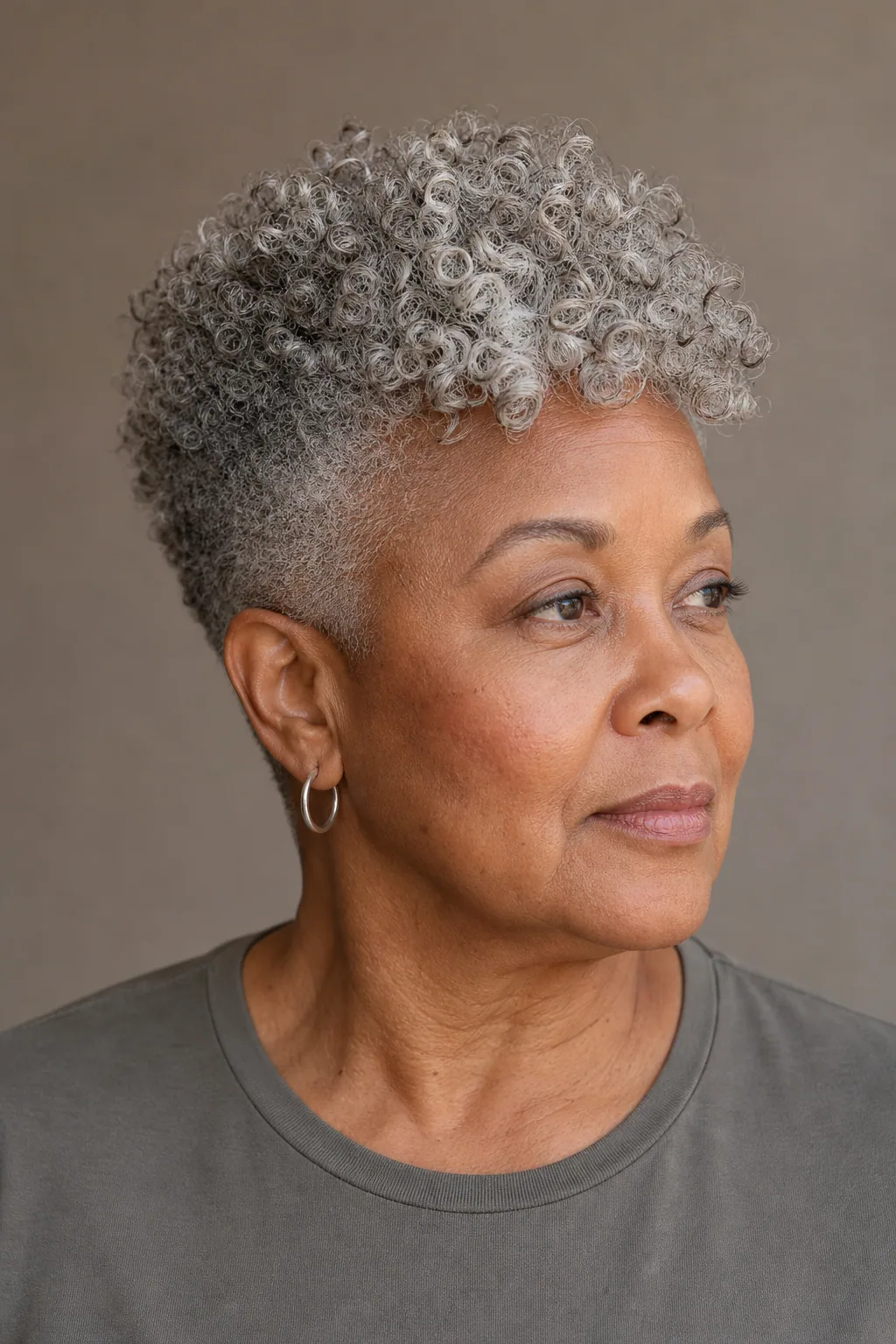
Where the perimeter ends
Effect on a round face
Verdict
At the cheekbone
Adds width where the face is widest
Skip, unless the sides are tapered close and the top is tall
At the chin
Stops the eye at the widest line; the face reads as a circle
Skip a blunt version; an inch longer works (entry 4)
Just below the jaw
Passes the widest point and starts to draw the eye down
Good, with crown lift and a side part
At the collarbone
Lengthens the face and narrows toward the neck
Best all-round line, especially with forward pieces (entry 11)
At the shoulder
Lengthens; can drag fine hair flat
Good with layers starting at the chin (entries 5, 6)
Past the shoulder
Lengthens; the sides hang straight
Good only with a lifted root and a deep part (entry 7)
Where the weight sits matters as much as where the length ends. Weight at the ears or cheekbone, in a bell shape, widens the face at any length. Weight below the jaw, or on top, lengthens it.
What Changes Between 50 and 60
Between 50 and 60, three things shift: the jaw softens, the crown thins and frames grow larger, and each one moves what to ask for. The rule above stays the same, but the cut that does it changes.
Area
In your 50s
In your 60s
What to ask for
Jaw
Starts to soften; a face that was oval may read round
Fuller at the jaw line, a softer outline
A line that passes the jaw by one to two inches
Crown
Often still dense; height comes from layers and product
Often thinner; height needs to be cut in, not just styled
Short layers over the crown, a longer top brushed up and over
Sides
Hold density; can bulk out over the ears
Finer at the temples
Weight removed from inside, not thinned on the ends
The honest constraint: a cut changes how full hair looks, not how much there is. Height at a thin crown comes from a shape cut to stand, and from a few minutes with a root-lift spray, not from adding hair.
Short Cuts for a Round Face Over 50
A short cut suits a round face when the width comes off the sides and goes on top. Short and flat at cheek level is the version that does not work. These three are the same idea, a tall top and narrow sides, with a different focus: the crown, the front and the part.
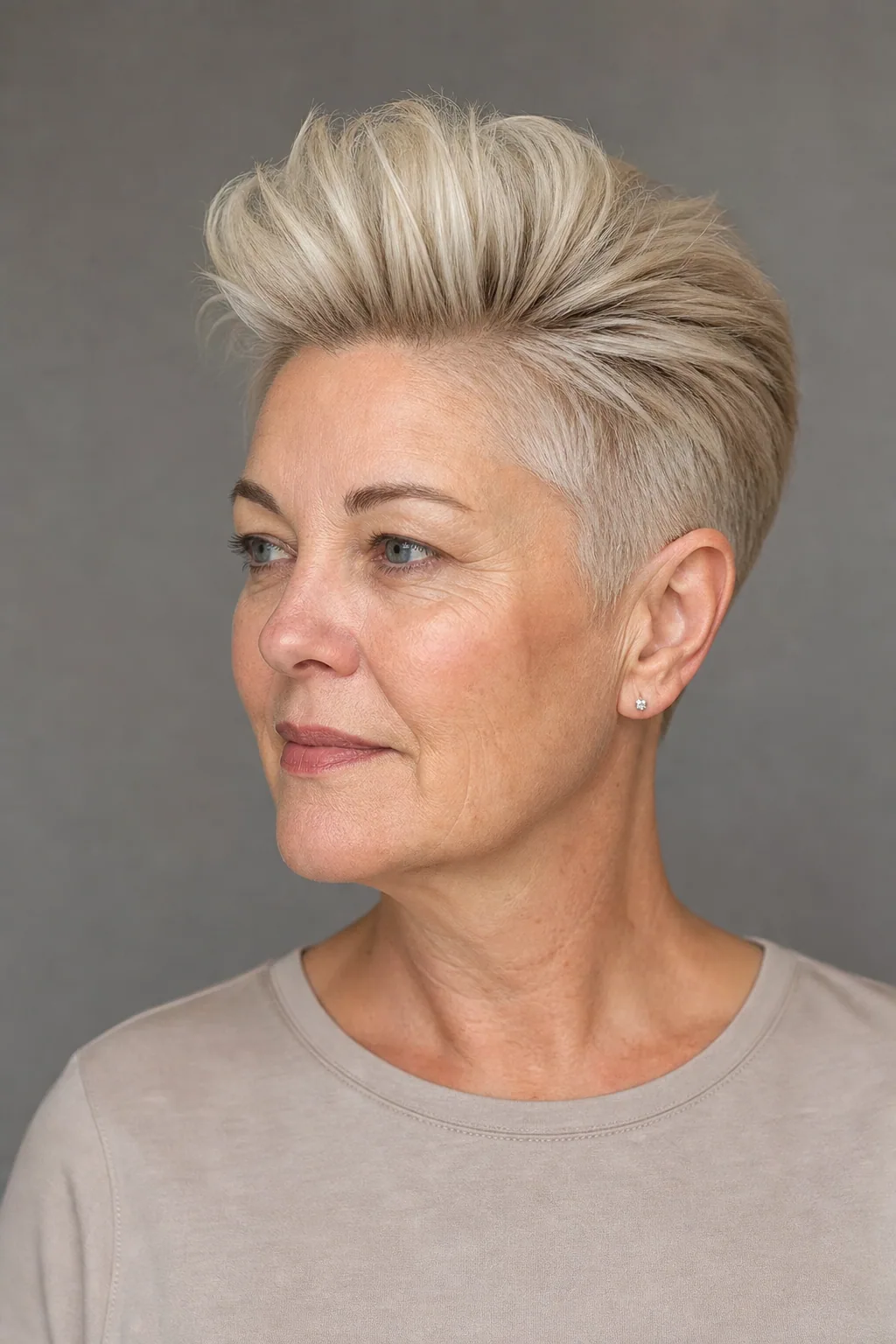
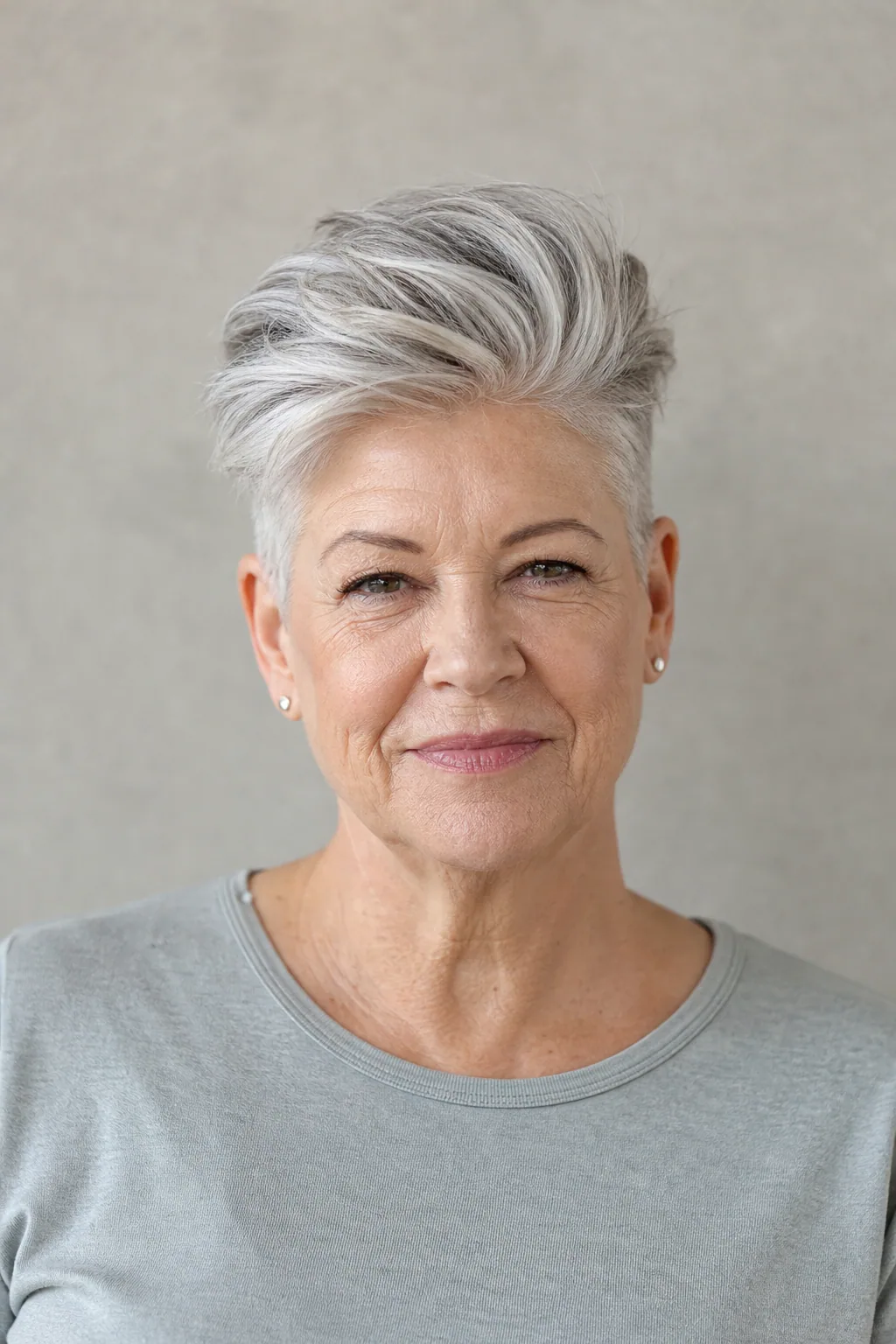
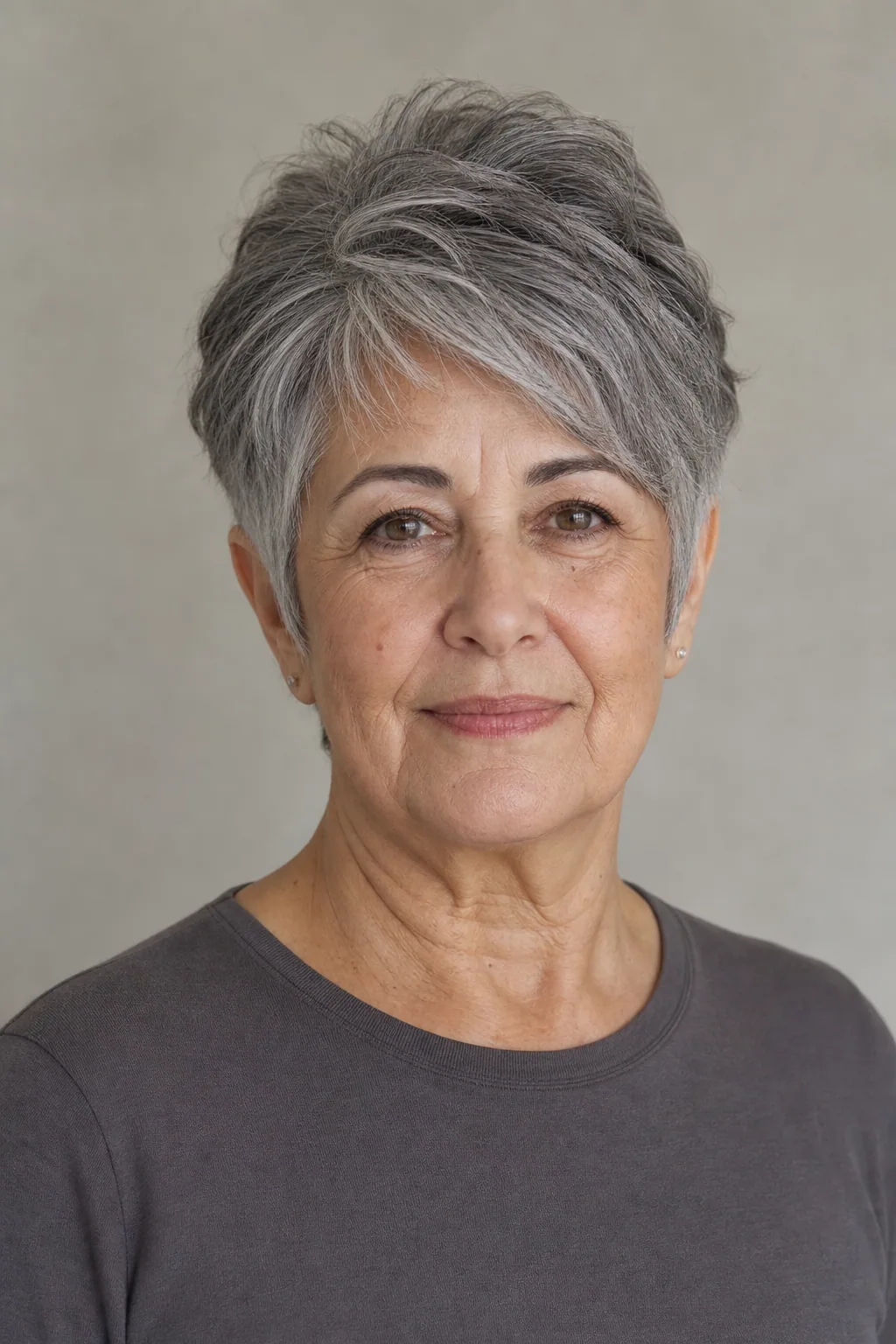
1. Tall-Crown Pixie With the Sides Kept Close
The top is cut two to three inches longer than the sides and lifted at the root, so the outline is tall and narrow instead of round. The sides and nape are tapered close, with nothing left sitting at the cheekbone. It suits medium-density straight or slightly wavy hair. Ask for "height on top, sides tapered close, nothing at the cheekbone."
2. Tapered-Nape Short Cut With Pieces Forward at the Cheek
Point cutting means snipping upward into the ends so they break into soft separate pieces. Here it is used on the pieces in front of the ear, which fall forward and end at the corner of the jaw, never at the cheekbone, where they would add width. The nape is tapered so the outline narrows toward the neck. It suits fine to medium hair that lies flat at the temples. Ask for "pieces in front of the ear that end at the jaw."
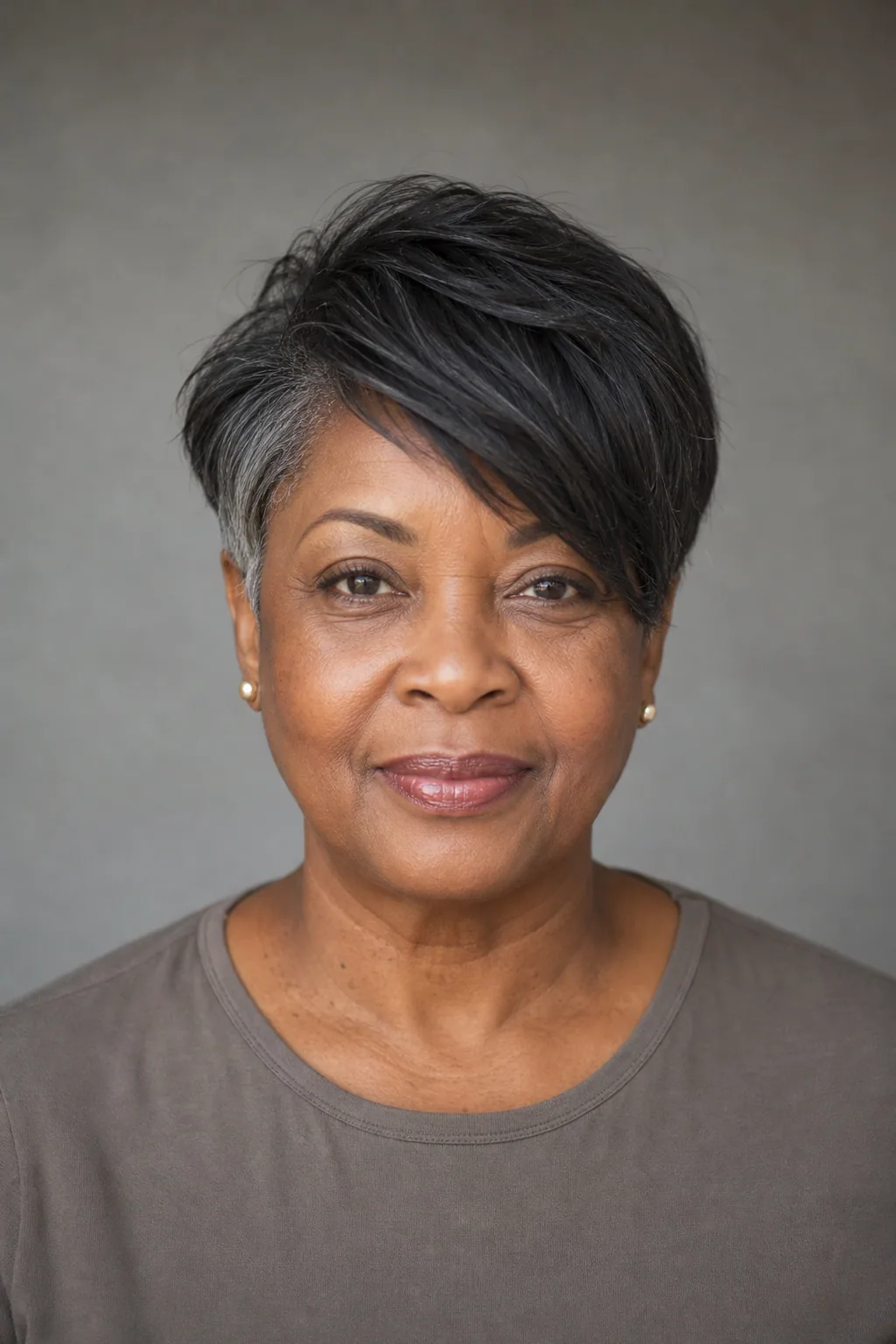
3. Deep-Part Short Layers Kept Narrow at the Sides
A deep side part draws a diagonal across the face, which breaks the circle of a round outline, and the short layers on top lift away from it. The sides are cut in close above the ear, and weight is taken out from underneath so thick or coarse hair does not push sideways. Plan on a trim every 4–6 weeks, because the sides widen first. Ask for "shorter layers over the crown, the bulk taken out of the sides."
Medium Cuts for a Round Face Over 50
Medium lengths do the most for a round face because the line can be placed exactly where it should sit: just past the jaw. The three below put it at an inch below the chin, at the shoulder and just past the jaw with the bulk removed.
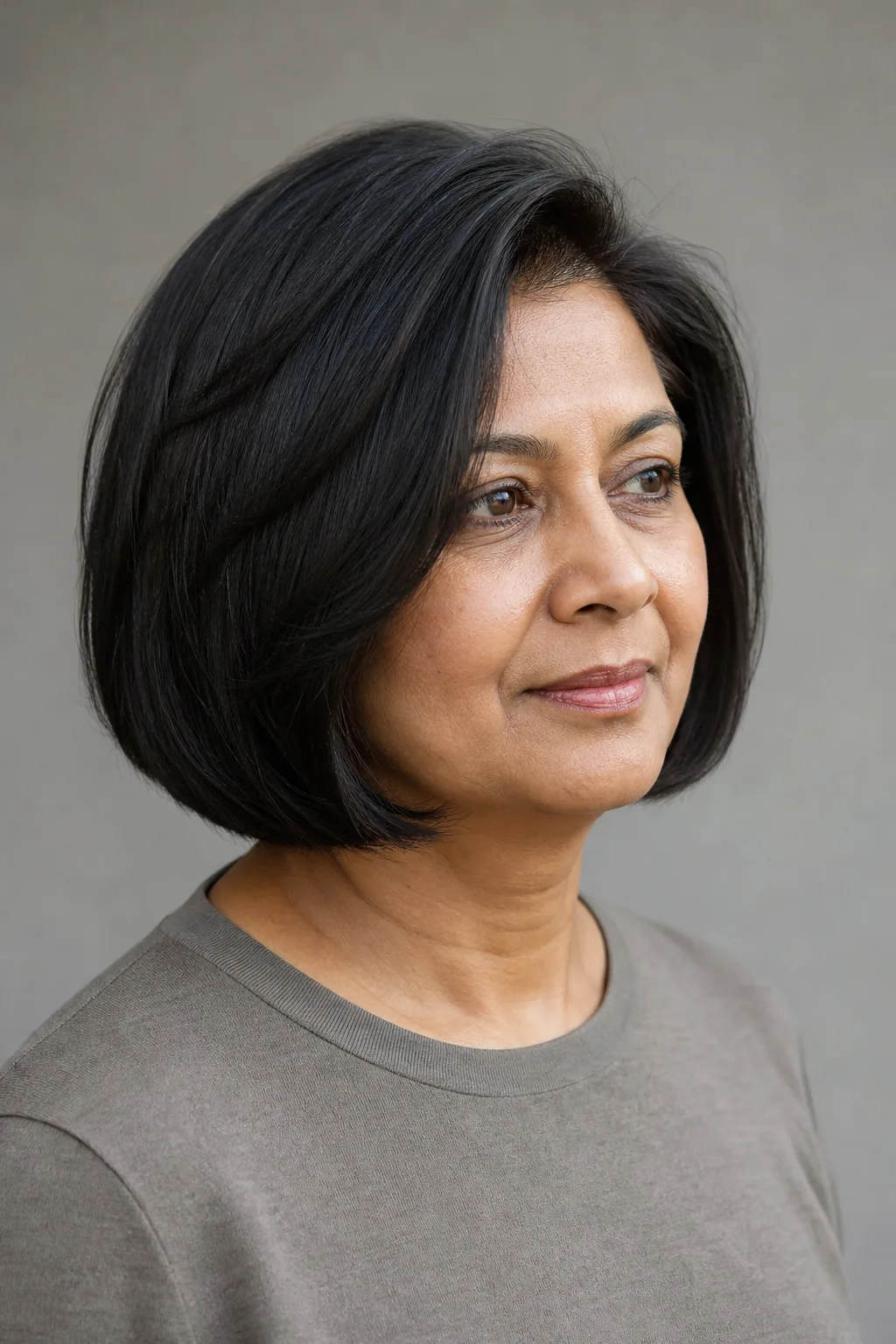
4. Inch-Below-the-Chin Bob With Lift at the Crown
The blunt chin bob is the classic miss for a round face, and moving the line down one inch changes the verdict. The perimeter sits an inch below the chin, so it passes the widest point instead of stopping on it, and a few short layers at the crown add the height. It suits straight to wavy hair of medium density. Ask for "an inch past the chin, not at the chin, with crown layers and a deep side part."
5. Shoulder-Skimming Cut With the First Layer at the Chin
The shortest layer begins at the chin, so nothing adds bulk at the cheekbone, and the layers run down to the shoulder, which leaves the ends fuller than layers that start higher. That makes it a good cut for hair that feels thin at the ends. Keep the layers long and soft rather than stepped. Ask for "the first layer at my chin, none at the cheekbone."
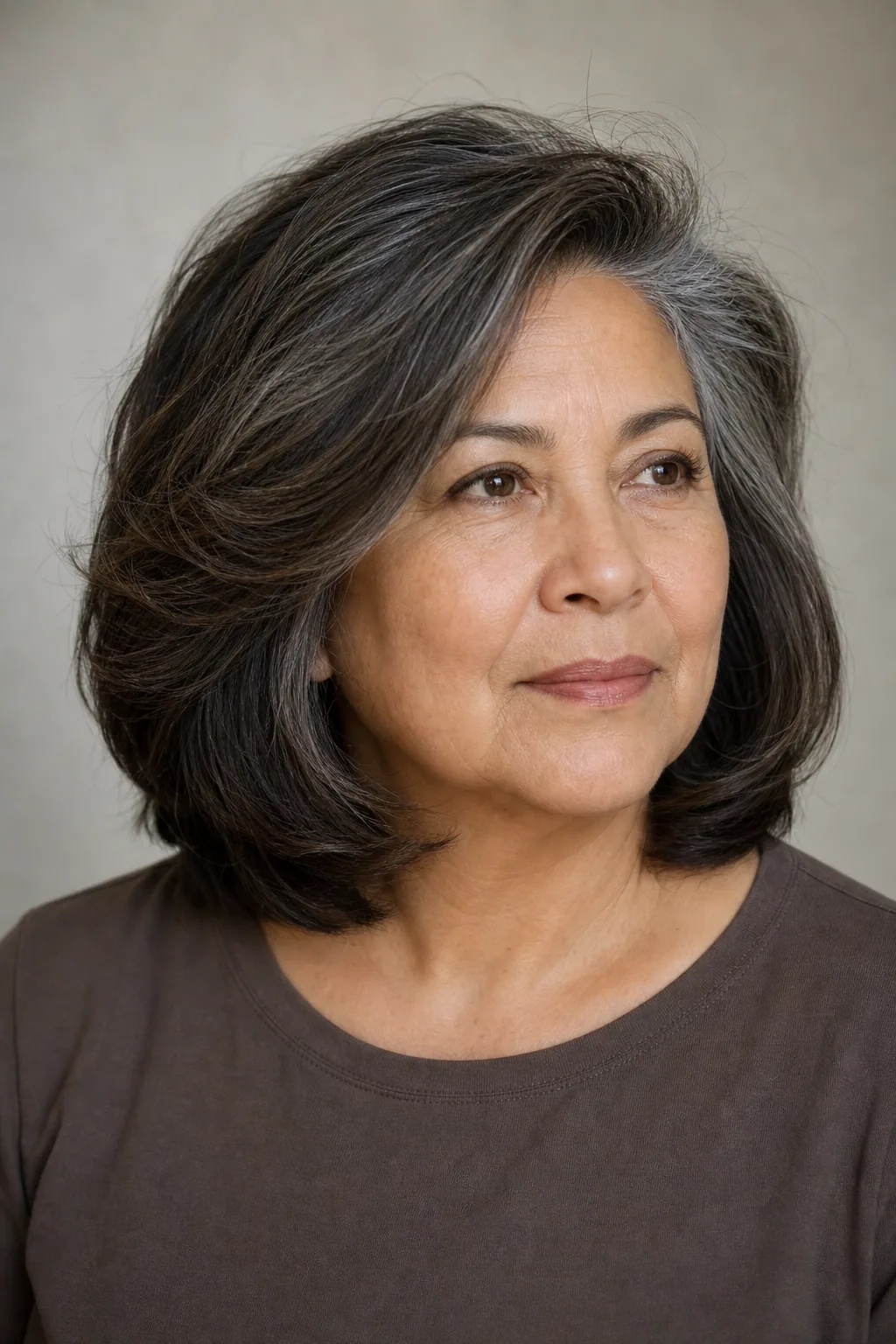
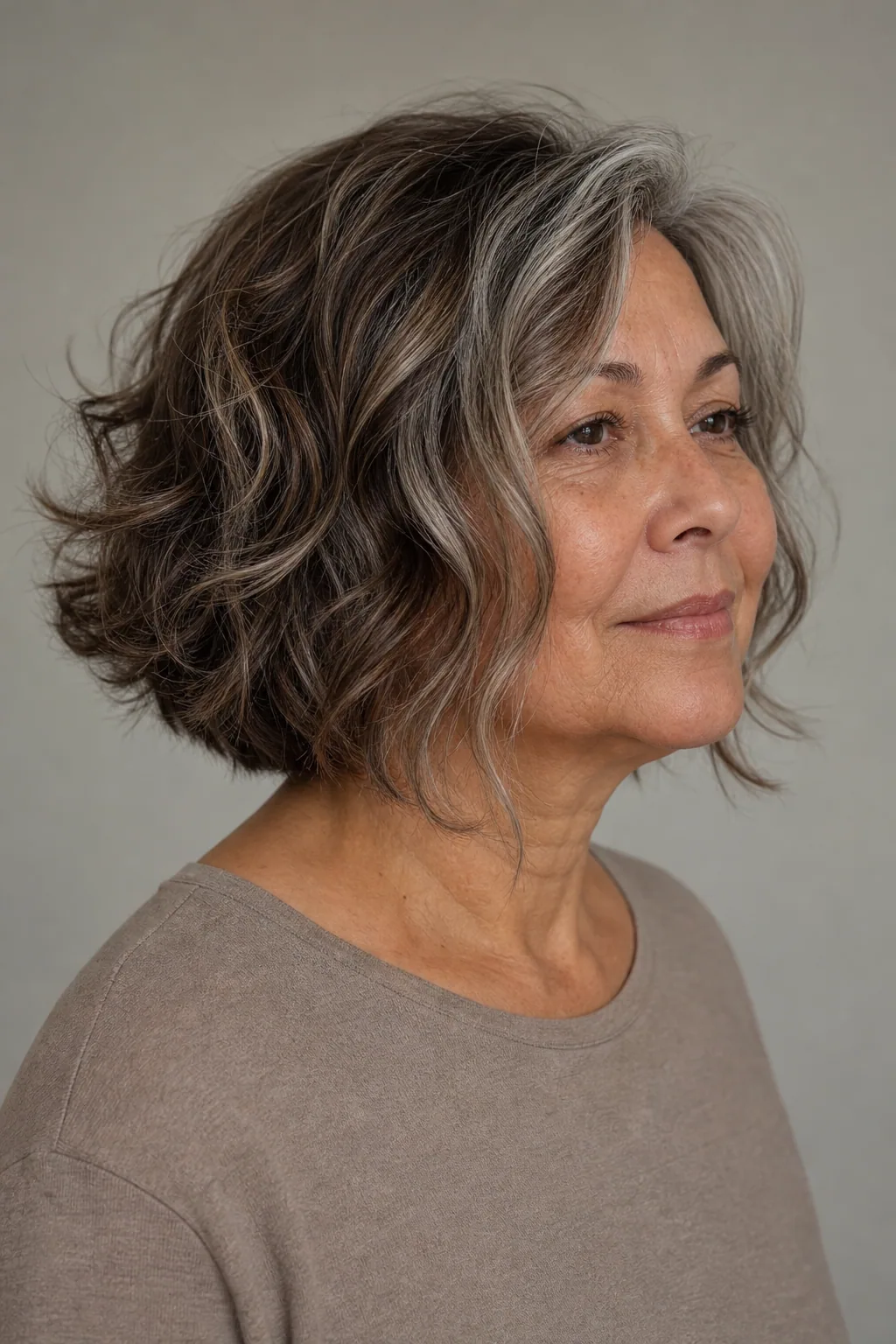
6. Past-the-Jaw Medium Cut With the Bulk Removed From Inside
For thick hair the problem is the bell: weight that sits out at the sides and widens the face. The stylist removes the bulk from inside with short layers cut beneath the top layer, so the outline stays smooth and the perimeter stays past the jaw. Blow-dry the roots up at the crown with a 2-inch round brush and leave the ends straight. Ask for "weight taken out from underneath, the perimeter left long."
Long Hair for a Round Face Over 50
Long hair lengthens a round face only if it does not hang flat at the sides. The cut matters less than the lift at the root and the placement of the part.
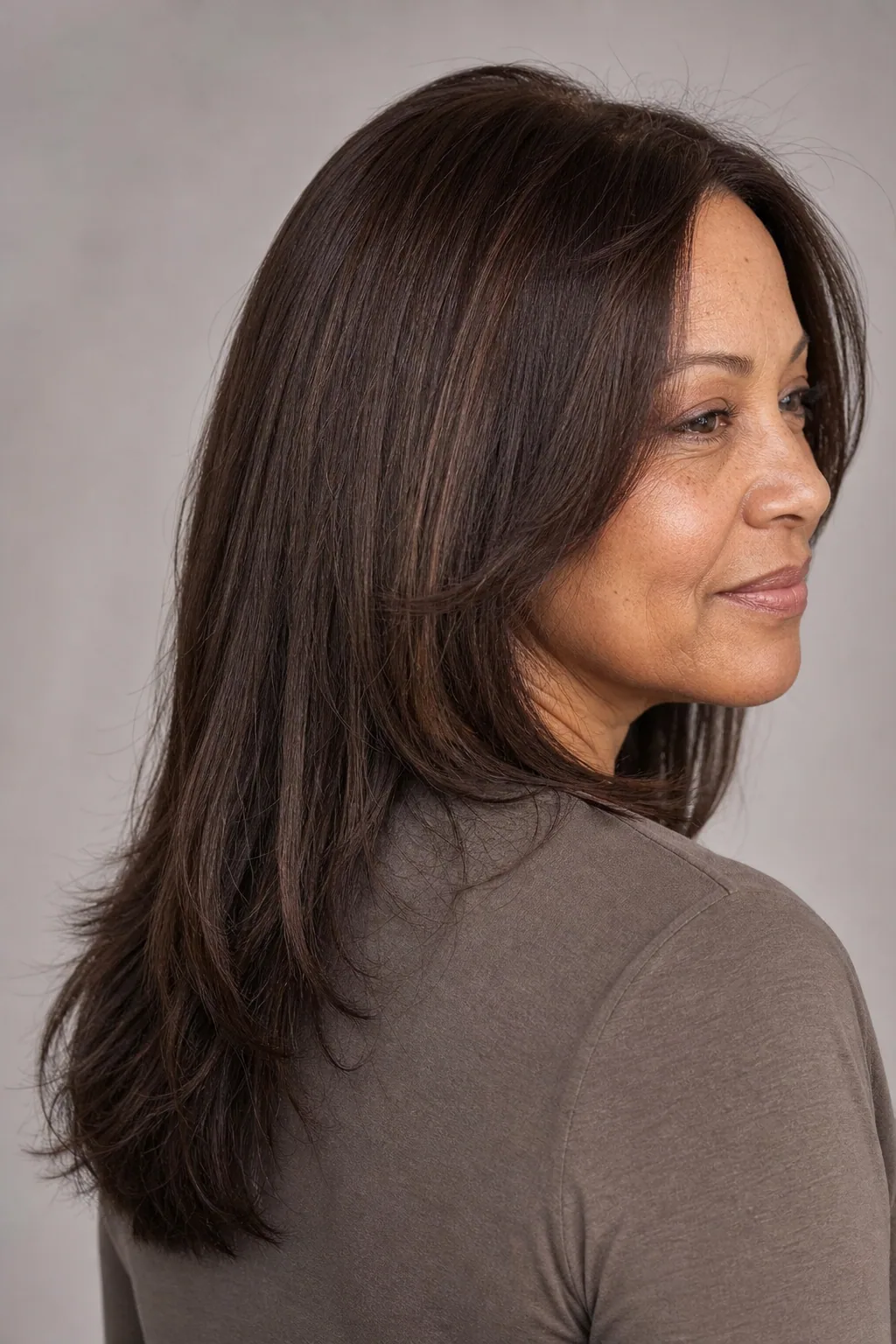
7. Long Hair With a Lifted Root and an Off-Center Part
Hair that falls straight from a center part frames the face with two vertical walls and puts all the width at the cheek. Moving the part off-center and drying the roots up and away from the scalp puts the height back on top. Long layers starting at the chin keep movement without thinning the ends. Allow 8–10 minutes to dry the roots. Ask for "layers that start at the chin and a part about an inch off center."
Cuts for a Round Face Over 60 and Thinning Hair
At 60 the crown is often thinner, so height has to be cut in, not just styled. A one-length top lies flat on a thin crown. These three put the length where hair still covers and the lift where it flattens, in straight, fine and curly hair. If your thinning is sudden or patchy, see a board-certified dermatologist.
8. Thin-Hair Short Cut With a Longer Top Brushed Up and Over
The top is left about three inches long, layered so it stands, and brushed up and over a lifted root. The sides are cut short and close, and the nape is tapered, so the outline is narrow while the crown reads fuller. It suits fine, thinning hair. Ask for "a longer top over a short, close side, layered to stand."
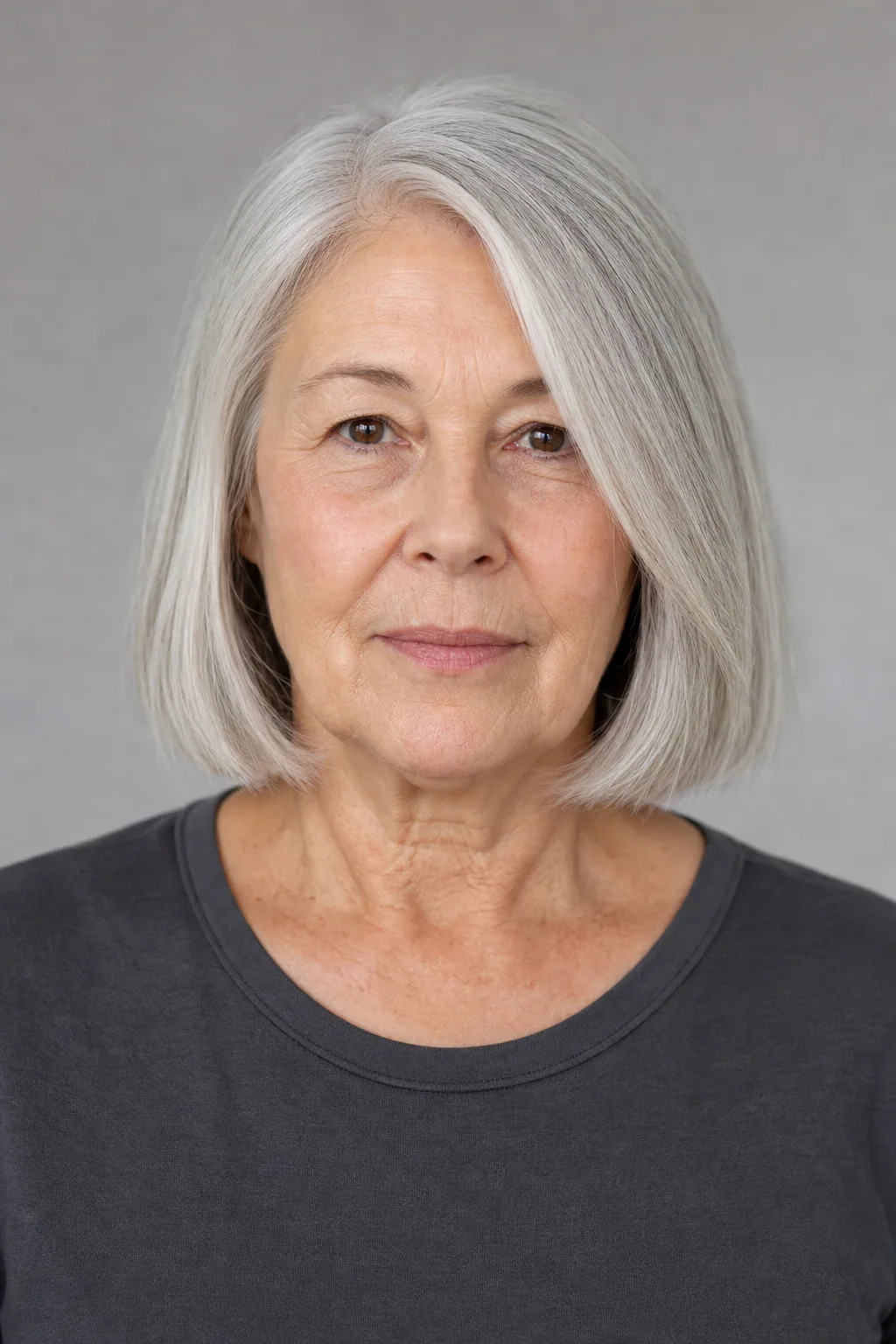
9. One-Length Cut Two Inches Past the Jaw With a Lifted Part
A blunt, one-length line keeps thin ends looking dense, and placing it two inches below the jaw puts it clear of the widest point. Only two or three face-framing pieces are layered, in front, so the body of the cut stays solid. Lift the part with a root spray and a few seconds of cool air to set it. It suits fine, straight hair. Ask for "a solid line, two inches past the jaw, with just two or three pieces at the front."
10. Tall Curly Shape With the Width Taken Off the Sides
Curls expand sideways, and a round shape on a round face stacks width on width. The stylist cuts dry, curl by curl, keeps the length on top so the curl stands up, and cuts the sides closer to the head. The nape stays a little longer so the outline still passes the jaw. It suits wavy to coily hair. Use a curl cream and a diffuser on low, and trim every 8 weeks. Ask for "volume on top, not at the cheek."
Cuts for a Soft Jaw or Double Chin
A soft jaw or double chin changes where the line should sit: either clear of the jaw or well above it, never at it. The effect is to draw the eye up or down, and both work by moving attention to the top of the head or to the length of the hair. Choose by hair length: a longer cut for medium to long hair, a short cut for those who prefer it.
11. Cut Ending Above the Collarbone With Front Pieces Falling Over the Jaw
The back and sides end just above the collarbone, and the front pieces are cut about two inches longer so they cross the jaw and frame the neck. The nape is tapered so the outline narrows toward the neck, and the crown has a little lift. It suits medium hair, wavy or straight. Ask for "front pieces two inches longer than the back, falling past the jaw."
12. Close-Tapered-Nape Short Cut With Volume Held on Top
A short cut can work with a soft jaw if the line stays well above it. The sides finish at the top of the ear or just below, never at the chin, the nape is tapered close so the neck shows a clean narrow line, and the volume sits on top. It suits medium-density hair and anyone who dislikes a heavy perimeter at the neck. Ask for "volume on top, a close nape, sides that stop above the jaw."
Round Face and Glasses
Glasses add a horizontal line across a round face, so the cut should add a vertical one. Keep the fringe above the top rim or sweeping clear of it, and let the sides fall past the arms instead of stopping at the cheekbone. For frame-by-frame rules, see our guide to hairstyles over 50 with glasses.
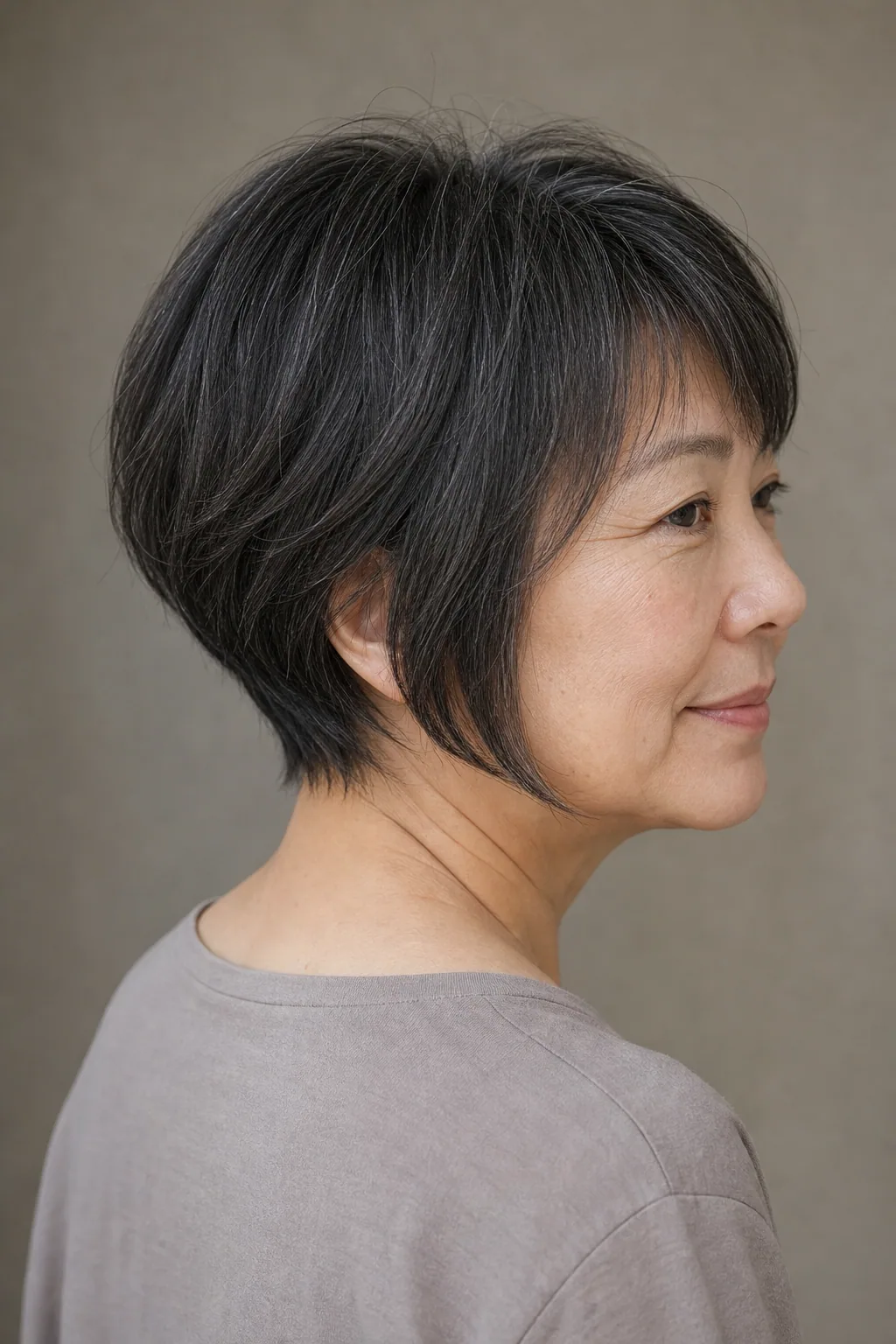
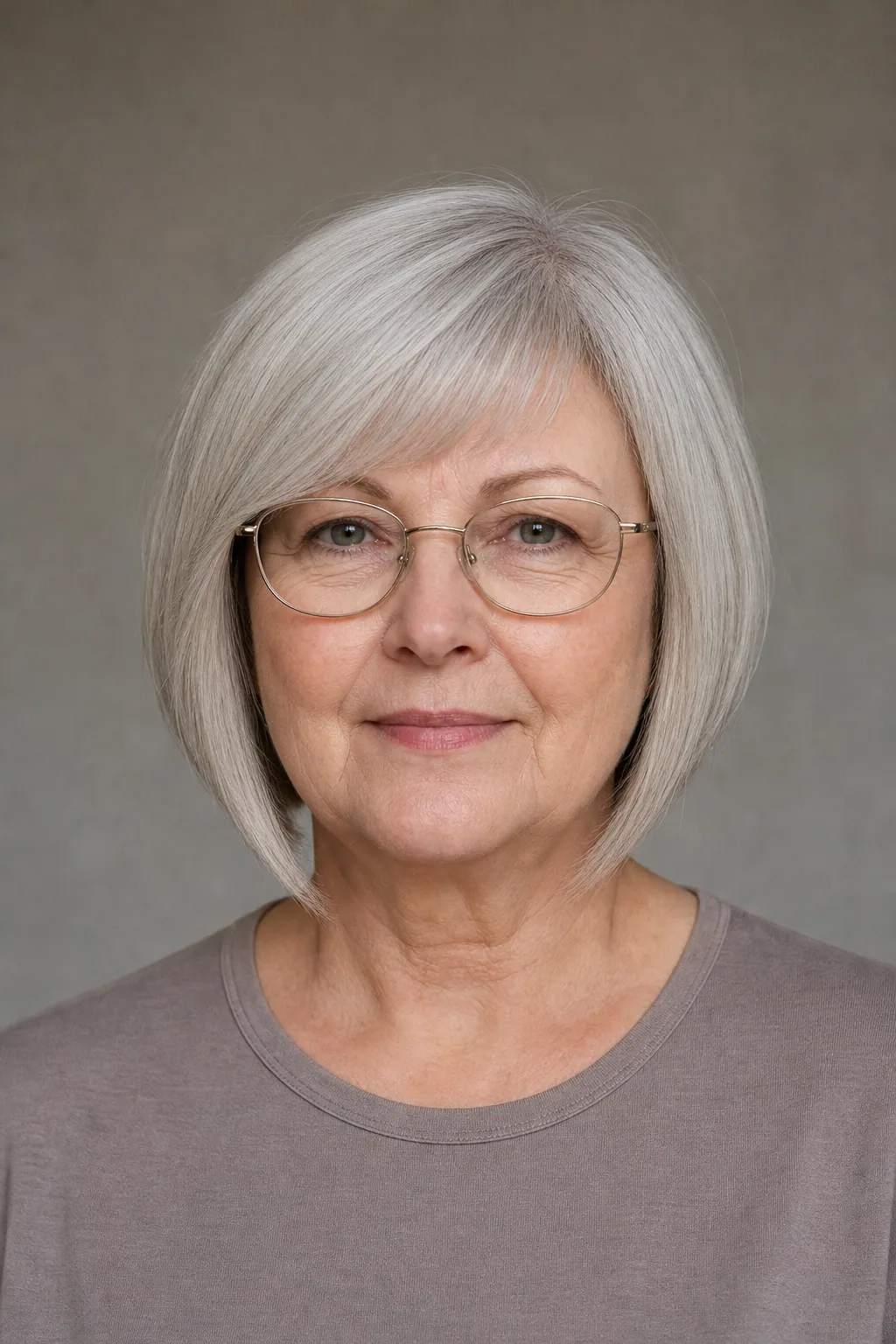
13. Sloped Bob With a Fringe Above the Rim and Sides Past the Jaw
The back is cut shorter than the front, so the line slopes forward and the front pieces fall past the jaw. A side-swept fringe stops above the top of the frames, so it does not brush the lens, and the lift at the crown balances the width of the frames. It suits thin or medium-weight frames and straight hair. Ask for "a fringe that stops above my frames and sides that pass the jaw."
Parts, Fringes and Volume
Three small adjustments do much of the work on any of these cuts: where the part sits, how the fringe is cut and where the volume goes. Each one can be changed without changing the length. For where any cut reads fresh, from the crown to the jaw, see our guide to youthful hairstyles over 50.
A deep side part, not a center part. A part at the arch of the brow or beyond draws a diagonal across the face. A center part with full sides draws two vertical walls at the cheeks. If your cowlick pushes the part the other way, ask your stylist to cut around it.
A fringe that sweeps, not one that stops. A long side fringe that ends at the cheekbone and sweeps off the face lengthens it. A straight, blunt fringe adds a horizontal line across the forehead.
Volume at the crown, not at the ears. Work a root-lift spray into damp roots at the top, dry them upward with the dryer, and keep the sides smooth. Fullness at the ears and cheeks widens the face at any length.
Choose by Hair Type
Match the cut to two things: strand thickness (fine or coarse) and density (how many hairs there are).
Fine hair: a solid line and layers kept to the front. Entries 5, 9 and 13.
Thin hair at the crown: length on top, short layers, a lifted part. Entries 1, 8 and 9.
Thick or coarse hair: weight removed from inside, not from the ends. Entries 3, 6 and 11.
Wavy or curly hair: cut dry, with the curl pattern leading and the volume on top. Entry 10.
Gray, silver or white hair: a clean line with scissor-cut ends makes any of these look deliberate. Entries 2, 4 and 12. For more length options at 60, see our haircuts for women over 60.
What to Ask Your Stylist
Bring photos that show the back and the side as well as the front, and say where the line should end. "Layers" alone can mean anything, so use these:
"Height at the crown, but keep the sides close above the ear."
"The perimeter an inch or two past my jaw, not at my chin."
"A deep side part, and cut around my cowlick."
"Point-cut the front pieces so they end at the corner of my jaw, not at my cheekbone."
"If my hair is thick, take the weight out from inside. No thinning shears on the ends."
"Show me how to dry the roots up, and what to use at the crown."
Maintenance and Styling Reality
The cuts that give a round face its height need more attention at the crown and the nape than the length. Pick the trade-off that fits your week.
Cut (entries)
Trim every
Daily styling
Products and tools
Note
Short cuts (1, 2, 3)
4–6 weeks
3–6 minutes
Paste or root-lift spray; fingers
The sides widen first, so keep the trim date
Chin-to-shoulder cuts (4, 5, 6)
6–8 weeks
5–10 minutes
Root-lift spray; 2-inch round brush
The line should stay past the chin
Long hair (7)
8–10 weeks
8–10 minutes
Root-lift spray; dryer with nozzle
Dry the roots first
Thin-hair cuts (8, 9)
5–7 weeks
4–8 minutes
Root-lift spray; flat brush
The top loses height first
Curly shape (10)
8 weeks
8–10 minutes
Curl cream; diffuser on low
Cut dry; shape on top
Soft jaw cuts (11, 12)
6–8 weeks
5–8 minutes
Light cream; small round brush
Keep the nape tapered
Glasses bob (13)
6–8 weeks (fringe 3–4)
5–8 minutes
Smoothing cream; flat brush
Fringe checked against the frames
Frequently Asked Questions
Should a round face have bangs after 50?
Yes, if the fringe is long and swept to one side, ending at or below the cheekbone, because the diagonal lengthens the face. A short, blunt fringe adds a horizontal line across the forehead. If you wear glasses, keep it above the rim.
Is a bob good for a round face over 60?
Yes, when it ends an inch or two below the chin and has lift at the crown, because the line passes the widest point. A bob that ends at the chin does the opposite. If your hair is fine, choose a solid, one-length line over heavy layers.
Which part is best for a round face?
A deep side part, at the arch of the brow or just beyond. It draws a diagonal across the face and gives the crown room to lift. If you have a strong cowlick, ask your stylist to check the part with your hair dry.
Does a pixie make a round face look rounder?
Only if the sides are left full at the cheekbone and the top is short. Keep the sides tapered close, leave two to three inches on top and lift the crown, and the outline becomes tall and narrow instead of round.
Do layers make a round face look wider?
They can if they start at the cheekbone, because they add volume where the face is widest. Layers that begin at the chin or lower, or sit on top, add length instead. Ask for "the first layer at my chin, none at the cheekbone."
Can curly hair work with a round face?
Yes, if the volume sits on top and the sides are cut closer to the head. Curl at cheek level stacks width on width. Ask for a cut shaped dry, and keep the nape long enough that the outline passes the jaw.
Can I wear my hair up with a round face?
Yes, if the style sits high and loose, with pieces left falling at the front. A smooth, low style pulled tight adds nothing at the crown. Leave two or three pieces forward at the jaw to soften the edge.
Results vary with hair type, density, texture and face shape. This guide is educational and is not a substitute for an in-person consultation with a licensed stylist.
 Grace