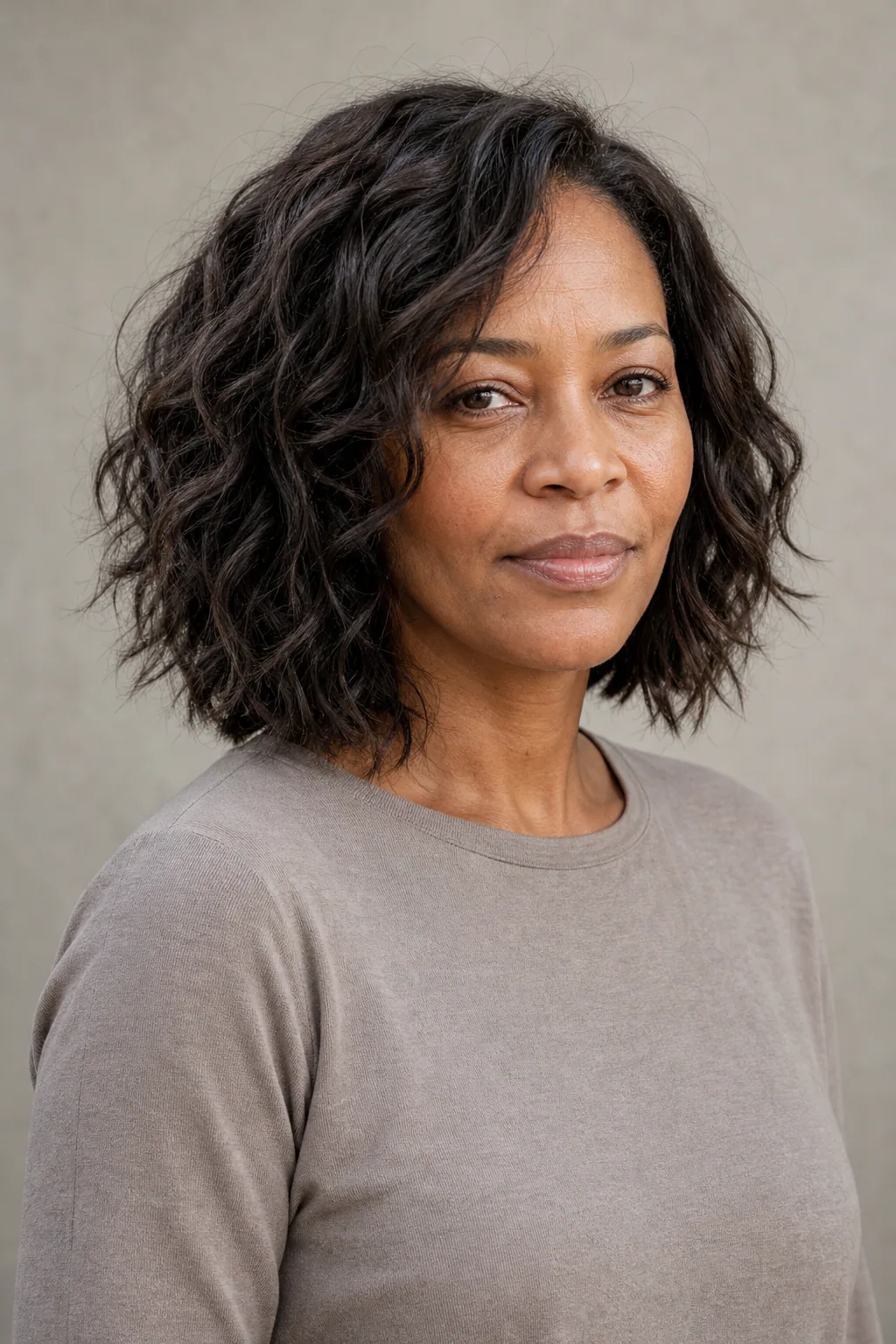
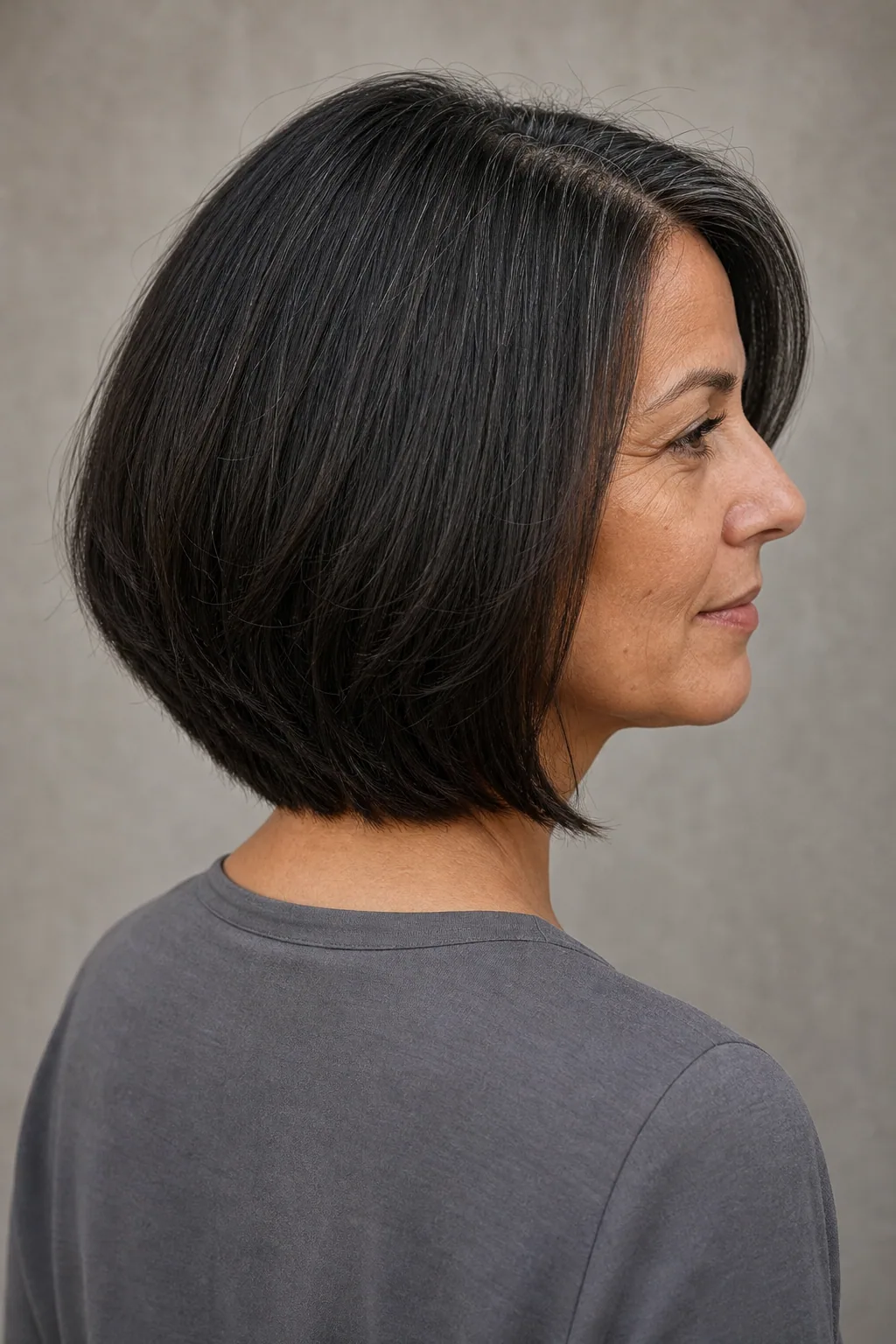
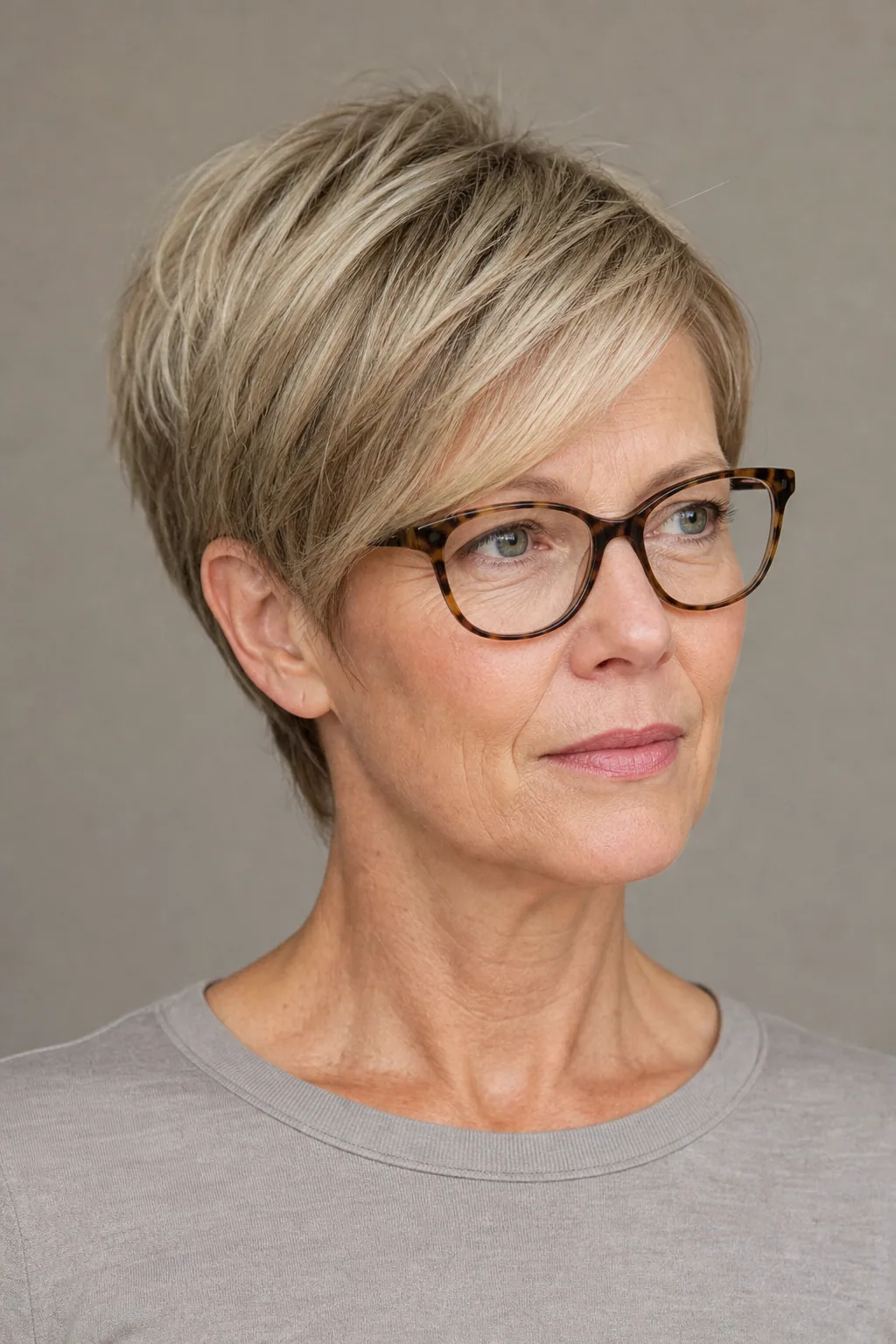
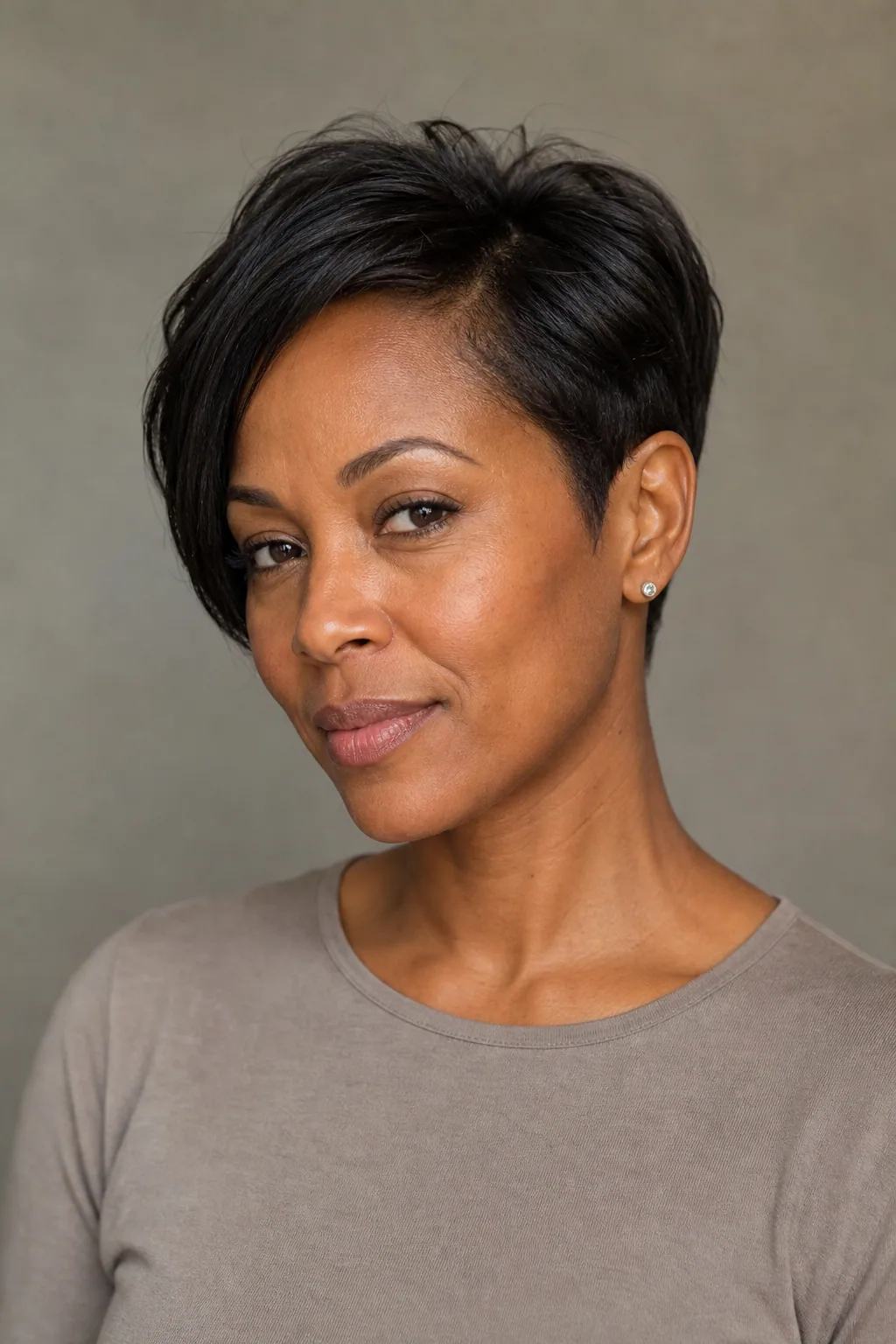
Haircuts for Women Over 40: 12 Cuts for the First Changes
By Melissa Timperley, Salon Owner & Hairdressing Educator · Reviewed by Coral Pleas · Updated November 2026 · 13 min read
The best haircuts for women over 40 are recuts: cuts made for the hair you have now, not the hair you had when you chose your style 10 or 15 years ago. For many women, texture starts to shift in the 40s. The first wiry grays turn up at the part and temples, strands get slightly finer, a wave appears or drops out, and there is a little less density at the temples and along the part. Most women are still wearing the old cut, and that mismatch is why styling takes longer and the cut looks tired.
Below are 12 hairstyles for women over 40, grouped by length, with who each suits, the exact salon words and the trade-offs. After the gallery: a face-shape table, a hair-type guide, how to cut around your first grays, a maintenance table and who should skip which cut. If your hair is further along, our guide to haircuts for women over 50 picks up where this one ends, when density shifts toward the crown and part.
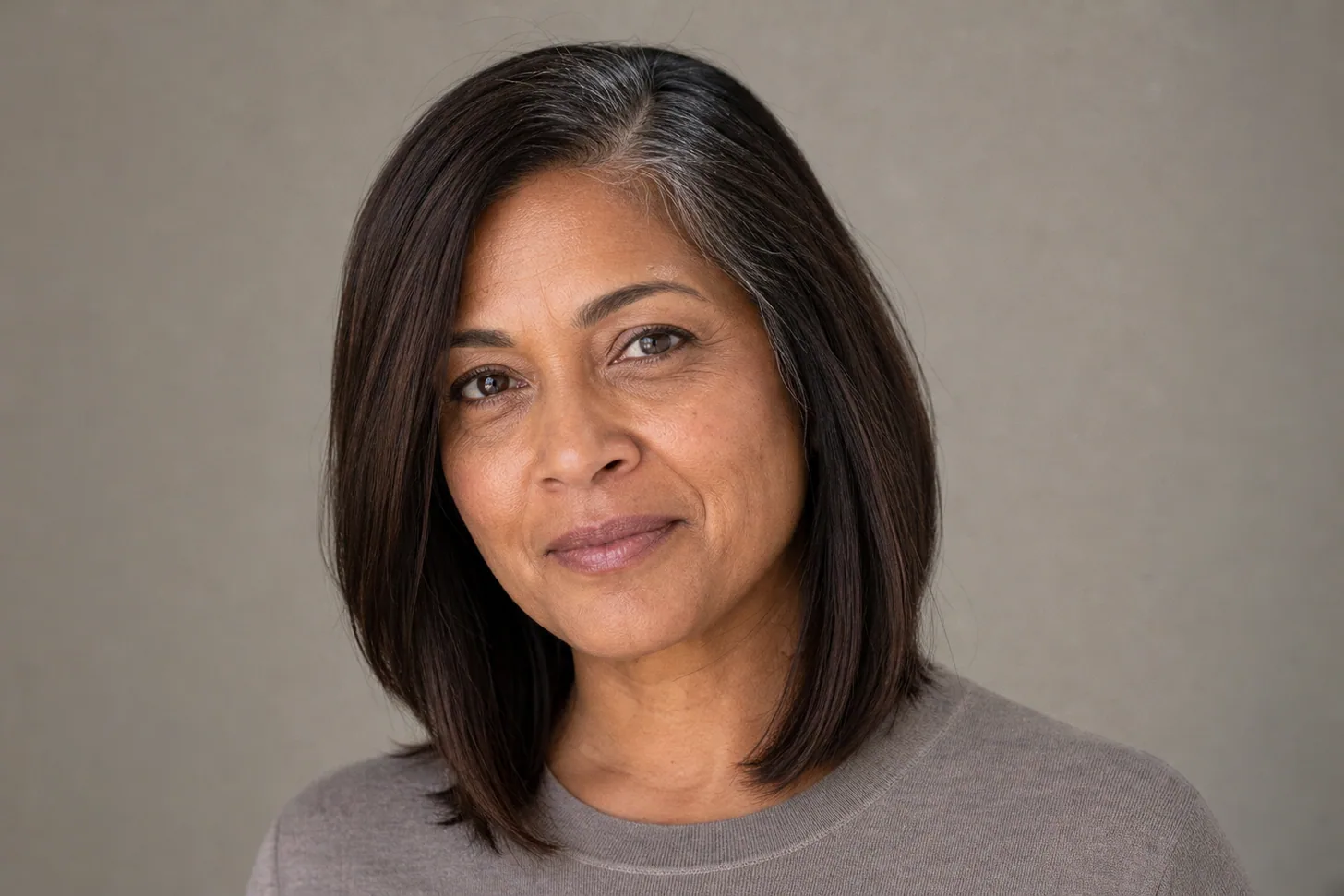
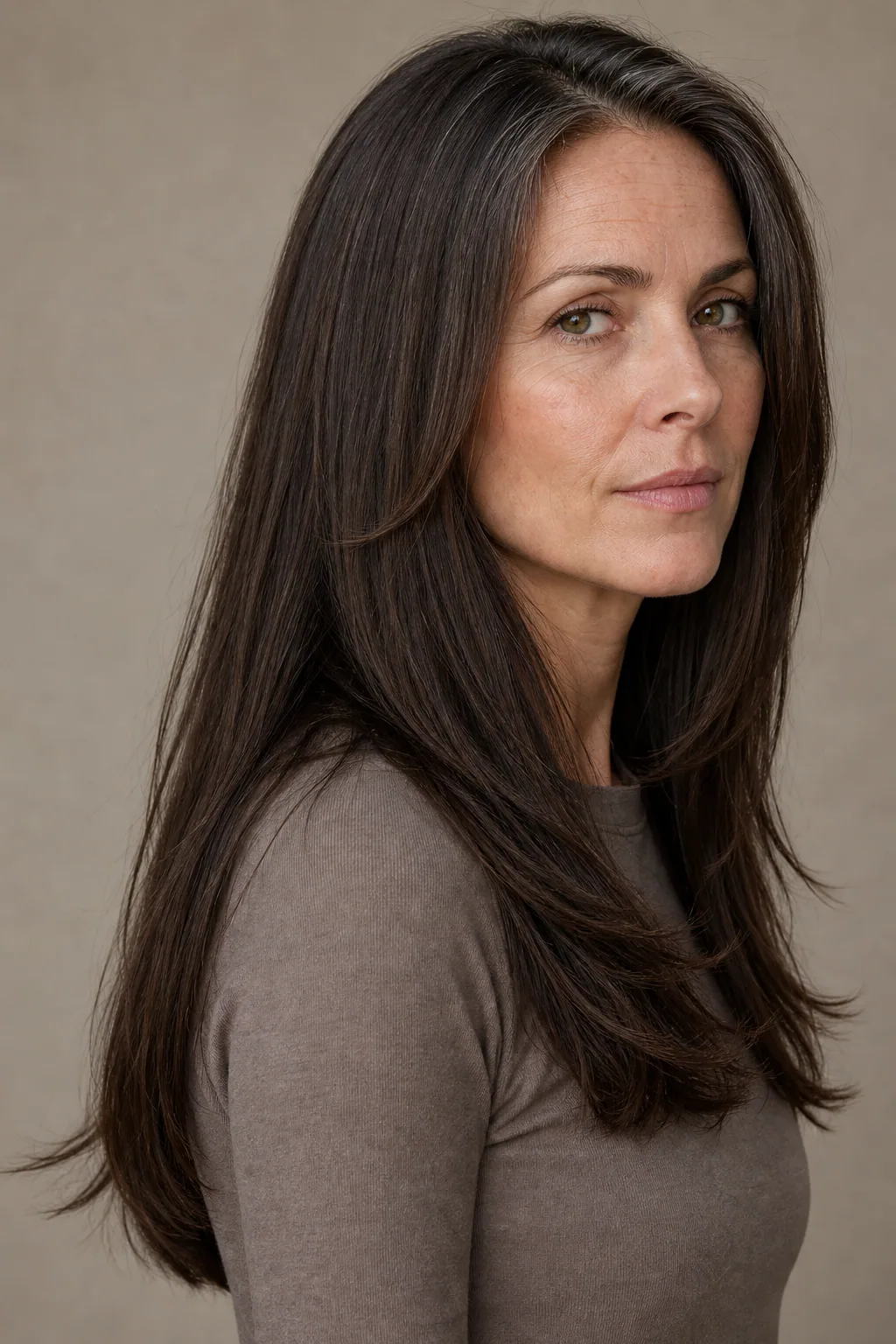
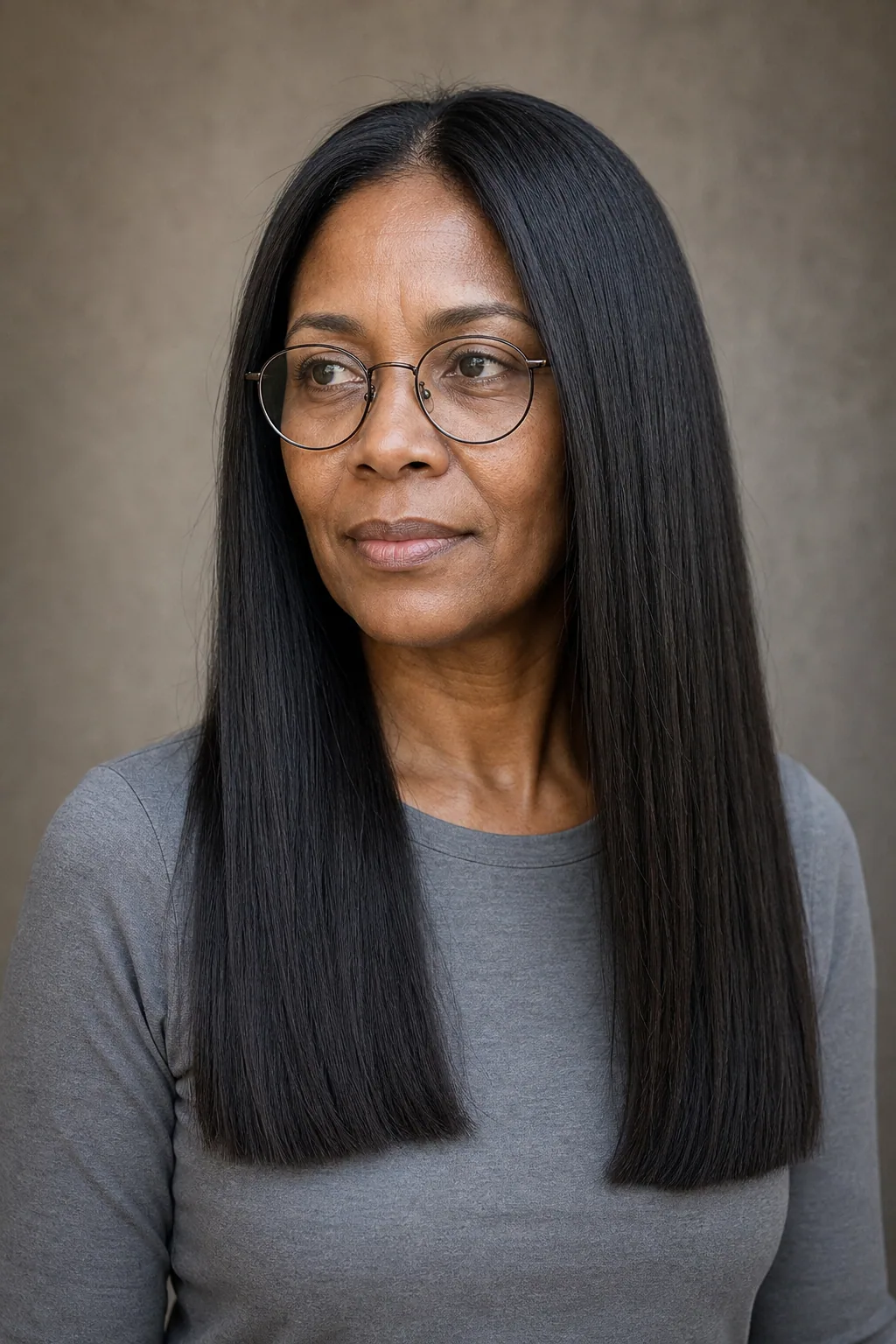
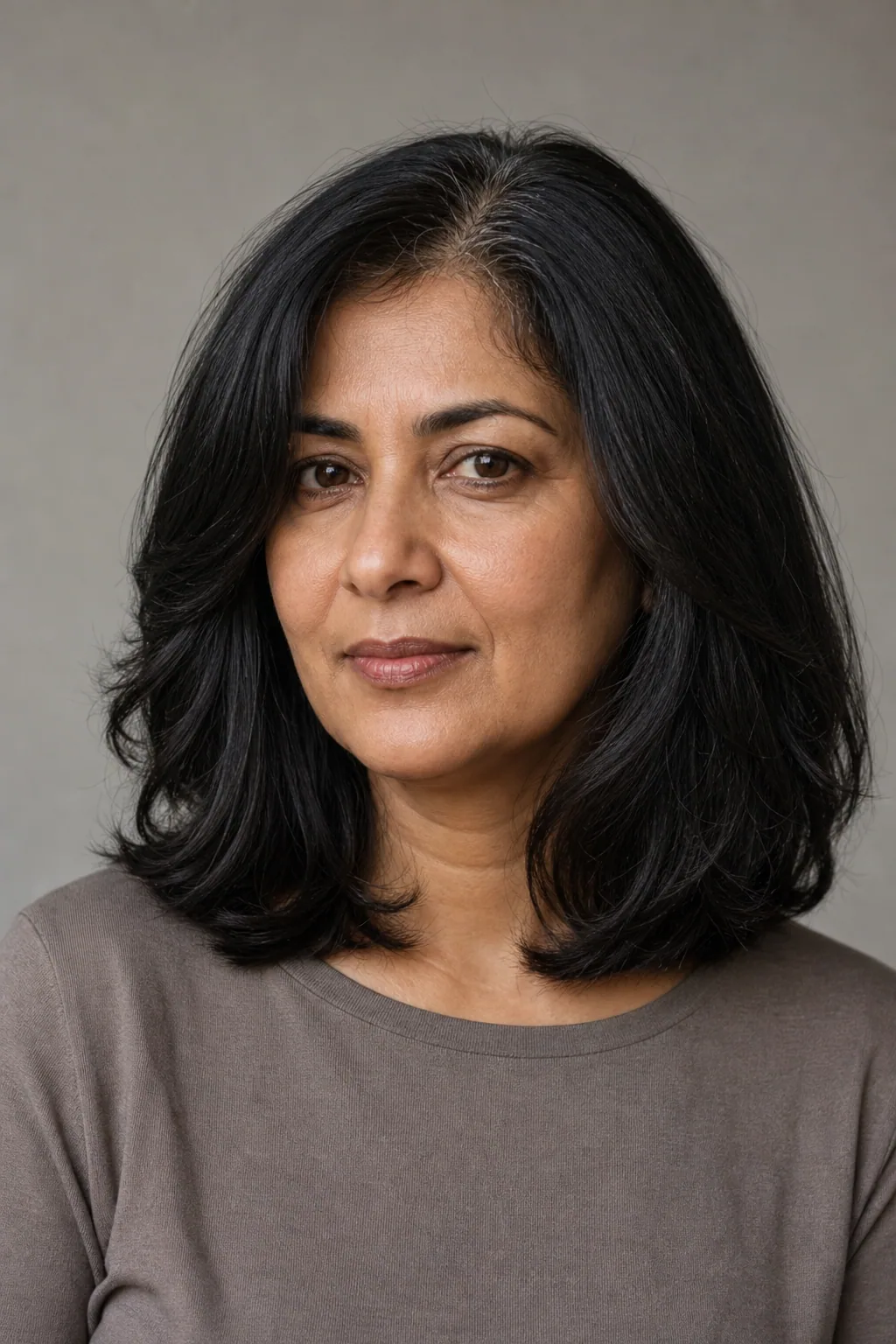
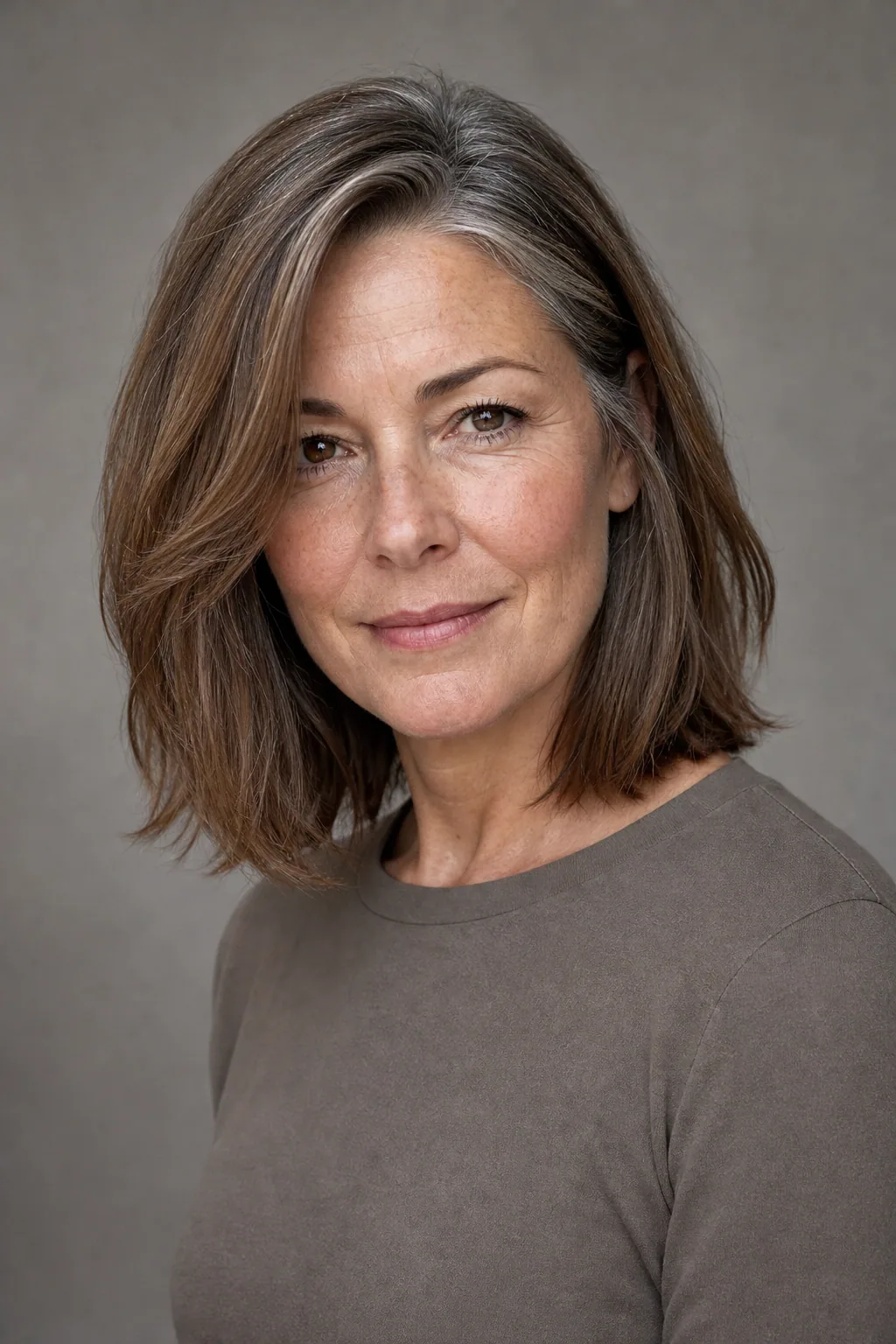
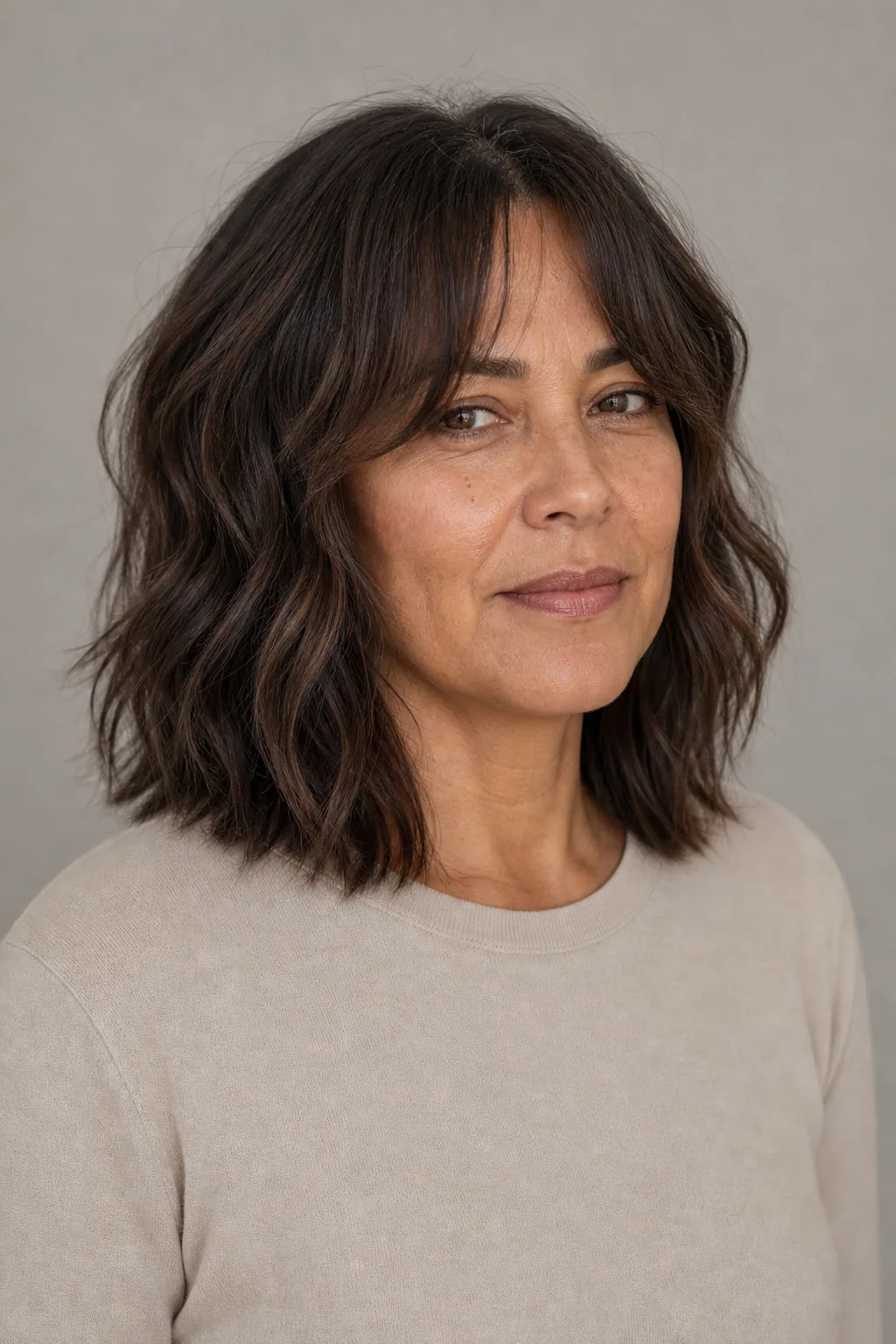
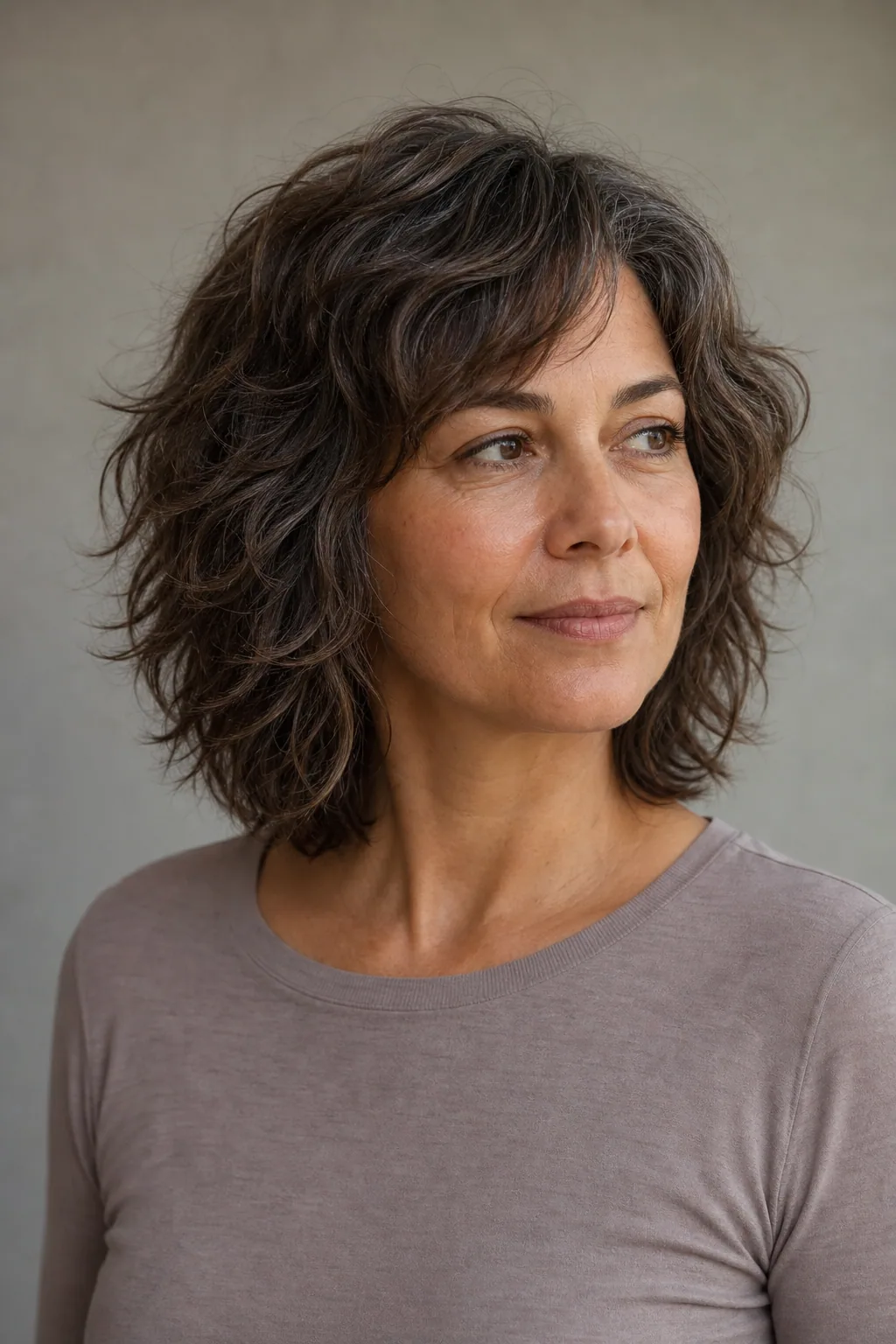
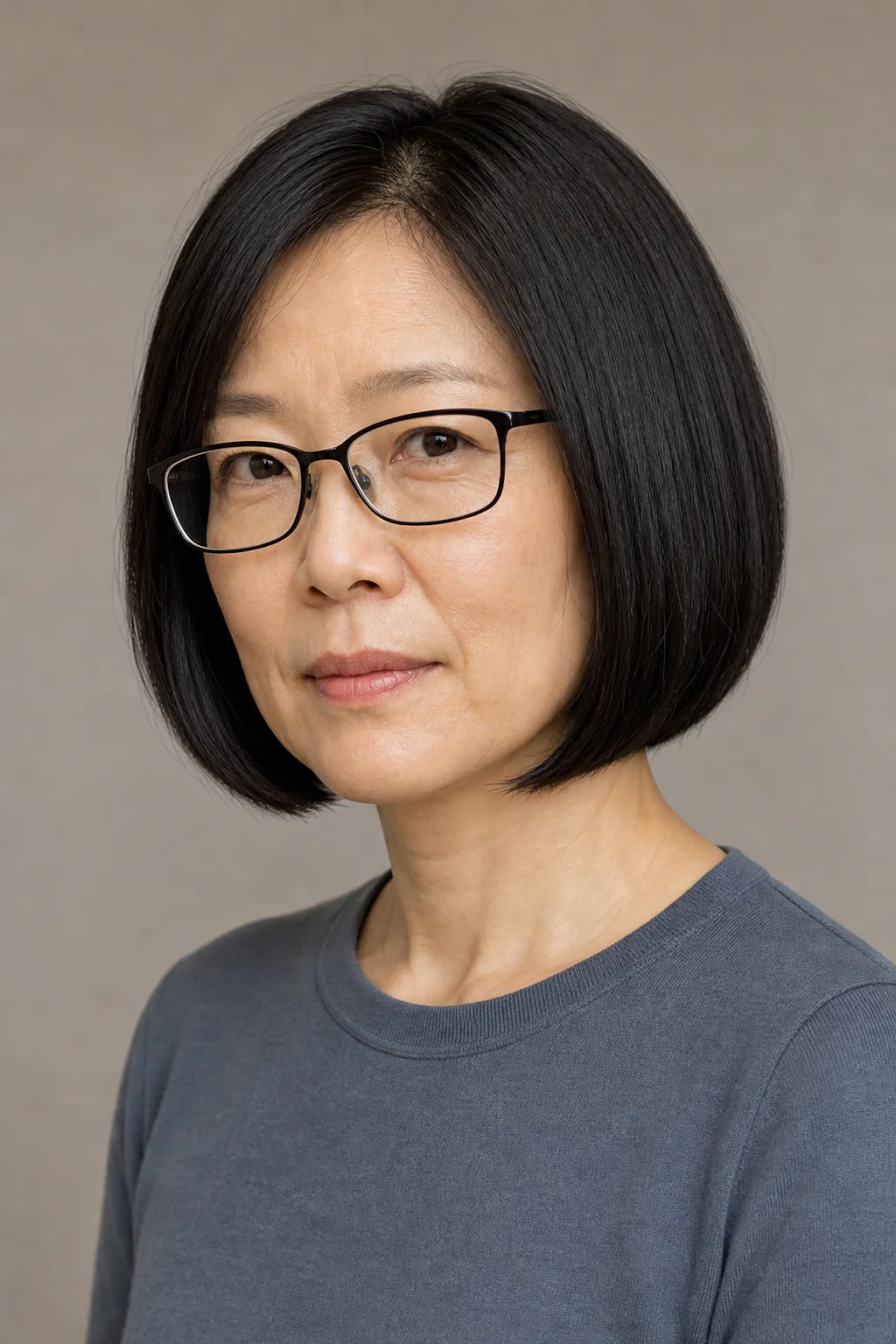
Hairstyle images in this guide are AI-generated illustrations, not photos of real clients or results. See our image standards.
What Changes in Your Hair in Your 40s
In your 40s the changes are small, they arrive one at a time, and a cut that was right for your old hair starts to work against the new. You don't need a makeover. You need to know which change is showing up, so you can ask for the matching fix.
What you notice
What it does to your current cut
What to ask for
First wiry grays at the part and temples
They stick up or catch the light along the part, and they resist the way the rest of your hair lies
A part moved a little off its usual line, length over the temples, scissor-cut ends
Slightly finer strands
Long layers separate and the ends look see-through sooner than they used to
A solid perimeter, fewer layers, placed higher
A wave that appears or drops out
A straight cut fights a new wave, and a wave cut for old straightness sits oddly
A cut made on the texture you have now, ideally seen dry
Less density at the temples and part
The part looks wider and the sides look flat by afternoon
Length or a sweep across the part, soft framing at the temples
Fine and thin are different things. Fine means the width of each strand. Thin means how many strands you have. Many women in their 40s have one without the other, and the cut depends on which.
A cut changes how full hair looks, not how much there is. If hair is falling out suddenly or coming out in patches, see a board-certified dermatologist before you change anything.
Signs Your Cut No Longer Fits Your Hair
If two or more of these are true, you need a recut, not another trim. A trim keeps the old shape. A recut rebuilds it around your hair now.
The ends look see-through when you hold them up to a window.
Your part looks wider than it did a few years ago.
The cut needs 30 minutes of styling that it used to need 10.
Grays stick up at the part and won't lie flat.
A new wave is fighting a cut that was made for straight hair.
Bring this list to the appointment and say it plainly: "I'd like a recut for my hair now, not the cut I've always had."
Long and Medium Haircuts for Women Over 40
If you're wearing long or shoulder-length hair from your 30s, small changes to the shape do the most work. These six keep the length you're used to, and they're the easiest place to start. They also cover most medium length hairstyles for women over 40.
1. Long Layers With the Shortest Layer at the Cheekbone
Think of it as a layer map. The shortest layer lands at the cheekbone, the next at the collarbone, and the rest of the hair is left almost untouched, so the bottom doesn't thin out. It keeps your length and puts the movement near your face, which is where a first wave or a lift at the temples shows. Ask for "long layers, shortest at my cheekbone, hardly any layering in the back."
2. Long One-Length Cut With a Fresh Blunt Perimeter
The perimeter is the bottom edge of the hair. On long hair that hasn't had a real cut in a while, the last inch thins into wisps, and a straight new edge makes the whole length look denser. This is for the woman who is keeping her length and whose hair is still dense. A dusting of the tips won't do it, so ask for the line to be cut straight across, and expect a trim every 8–10 weeks to keep it crisp.
3. Collarbone Lob With Ghost Layers
A lob is a long bob. Ghost layers are cut into the underside of the hair, beneath the top section, so they take out weight and let a new wave bend without leaving steps you can see on the surface. It is the cut for hair that feels heavy or flat at the ends, and it keeps the outline solid. Ask for "a collarbone lob with ghost layers underneath and the outline left solid."
4. Deep-Side-Part Lob That Softens a Graying Part
The first grays tend to collect along the part, where they catch the light. A deep side part sits an inch or two further to the side than a usual one, so hair sweeps across the line instead of falling away from it. A lob at the shoulder gives enough weight to hold that sweep. Have the stylist cut with the part exactly where you wear it, and with your hair dry, because hair falls differently once the part moves.
5. Shoulder-Length Cut With Wispy Curtain Bangs
Bangs (called a fringe in the UK) are the quickest way to soften the temples, and wispy ones are cut light enough that the forehead shows through. First, do the cowlick test. Dampen your hairline, comb the hair forward and see where it goes. If it springs up or splits in the middle, ask for longer, side-swept pieces, or skip bangs altogether.
6. Soft Mid-Length Shag for a New Wave
If a wave has appeared where your hair used to dry straight, a few layers let it form instead of dragging it flat. This is a shag in its gentlest form: layers around the crown (the top of the head) and the face, the shortest at the chin, and nothing choppy at the nape. Wash your hair and leave it alone for a day before you go in, so your stylist sees exactly what it does.
Bob Haircuts for Women Over 40
A bob in your 40s comes down to where the weight sits: at the chin, at the nape or inside the cut. The three below answer three different problems.
7. Blunt Chin-Length Bob for Fine Hair
Fine strands, plenty of them: this is the hair a blunt edge flatters most, because the strands stack into a dense line. The bob is cut to the chin bone with the ends slightly beveled, angled inward, so it curves toward the jaw rather than flicking out. Skip layers on top and the surface stays smooth and glossy. Ask for "blunt at the chin, slightly beveled, no thinning shears," and book a trim every 6–8 weeks, because this line blurs first.
8. Textured Long Bob for Wavy Hair, Cut Dry
A long bob that ends just above the shoulder, with texture from point cutting: the stylist snips vertically into the ends so they separate instead of lying in a hard line. It is cut dry, meaning the stylist cuts the hair unwashed so she sees where each wave lands. Wet hair stretches, and a wave can spring up an inch shorter than planned. Ask for "a long bob, cut dry, point cut for texture."
9. Soft Graduated Bob for Thick Hair
Graduation means cutting the back at an angle so shorter hair sits under longer hair. Here it is used to remove bulk rather than to build height: the stylist takes weight out from inside the nape and sides, in short hidden sections under the top layer, so the surface stays intact and doesn't puff out as hair gets wavier. It suits thick or very dense hair that has grown heavy. Ask for "a soft graduated bob, weight taken out from inside, nothing razored."
Short Haircuts for Women Over 40
Short works at 40 when you take it in steps, and it works best on hair that has started to go flat under its own length. Short haircuts for women over 40 grow out well when the top is left long enough to tuck.
10. Bixie for Fine Hair That Wants to Go Shorter
A bixie sits between a bob and a pixie: short at the nape and crown, with a longer fringe and sides. On fine hair, length is often what pulls it flat, so taking it off at the back lets the hair lift away from the scalp, while the longer fringe keeps the cut soft. Ask for "a bixie with the length kept in the fringe and the nape tapered lightly, not buzzed." It is a gentler step than a full pixie, and it grows into a short bob.
11. Pixie With a Longer, Tuckable Top
The top is left about three to four inches, long enough to tuck behind the ear when you want it off your face and to sweep forward when you don't. The sides and nape are tapered, cut gradually shorter toward the hairline. Because the top is already long, grow-out is the easy part: wait an extra week or two between trims and the pixie passes through a bixie stage instead of an awkward one.
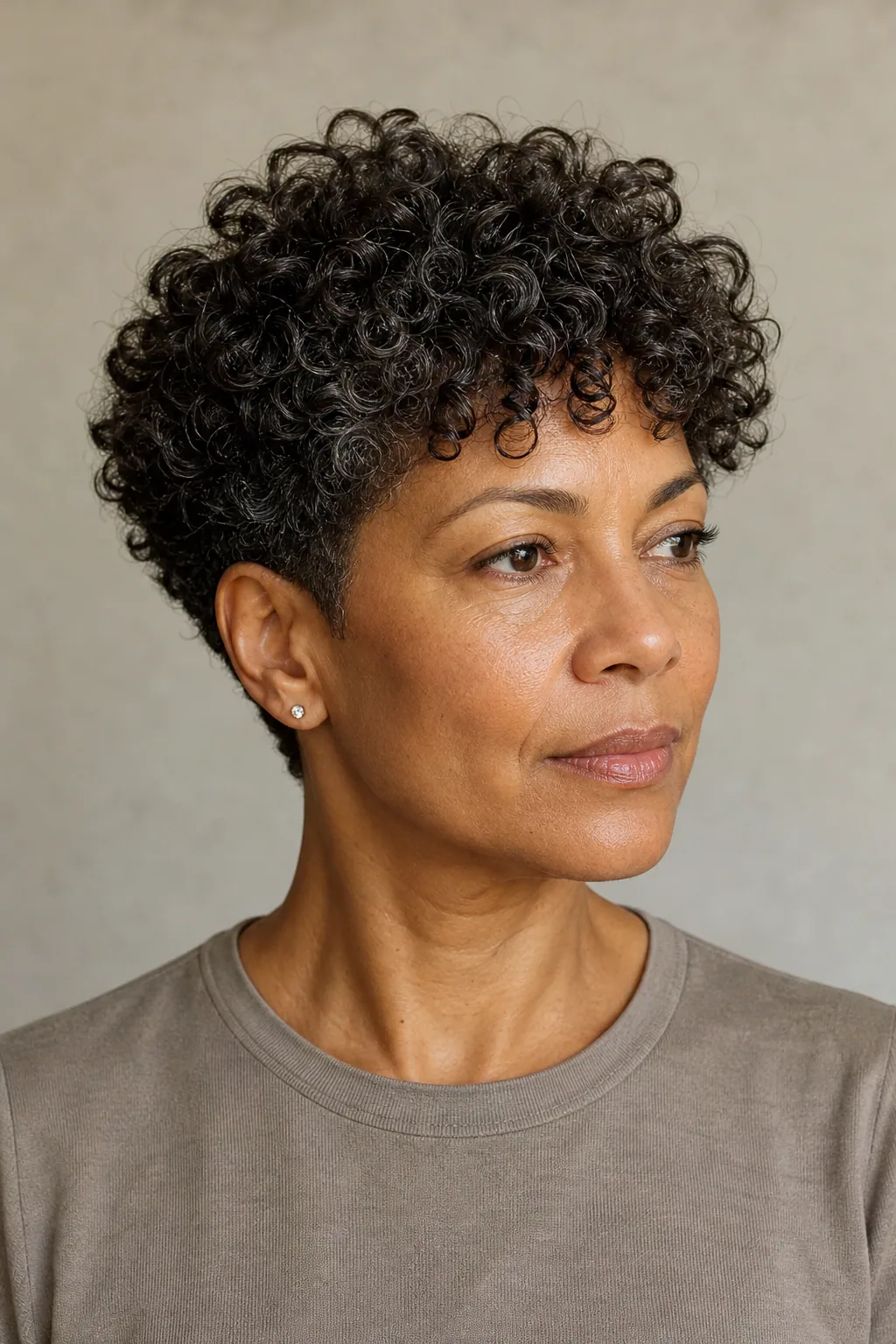
12. Curly Tapered Cut With Length on Top
This one is for loose to springy curls (3A–3C on the usual curl chart). Curls shrink as they dry, so tell the stylist to leave the top longer than you want it to land. The sides and nape are tapered so the curls don't widen into a triangle, and the cut is made dry, curl by curl, so the length is judged where it springs. Ask for "tapered sides, length left on top, cut dry."
Choose by Face Shape
Your face shape tells you where to put height and where the weight line should sit. For the full method, see how to choose a haircut for your face shape. This is a quick version for the cuts above.
Face shape
What to aim for
Cuts from this list
Go careful with
Oval
Most lengths work; pick by hair type
3, 8, 11
Heavy one-length hair with no shape
Round
Height at the crown and length that passes the chin
1, 4, 10
A blunt line ending at the cheeks
Square
Soft layers and movement at the jaw
5, 6, 8
A blunt bob ending exactly at the jaw
Heart
Fullness at or just below the chin
3, 7, 9
Lots of height at the temples
Long
Width at the sides, length no longer than the collarbone
5, 7, 9
Long, flat hair with a center part
Choose by Hair Type
Match the cut to your strands (fine or coarse) and your texture before you match it to a photo. These are the types most women notice changing in their 40s.
Fine hair. The best hairstyles for women over 40 with fine hair keep a solid edge and few layers: entries 2, 7 and 10. Avoid thinning shears, which take away the very ends that make fine hair look dense.
Thin at the part or temples. Put length or a sweep across the part: entries 4, 5 and 10.
Coarse hair, with the first wiry grays. Take weight out from inside the cut, and keep the ends scissor-cut so the grays lie flat: entries 3, 4 and 9.
Wavy hair. Cut for the wave you have now, ideally dry: entries 6 and 8.
Curly hair. Leave length for shrinkage and taper the sides: entry 12.
Cutting Around Your First Grays
A cut can make a graying part less obvious, without any color at all. Three small moves help most women.
A deep side part (entry 4) sweeps hair over the line where the first grays sit. A zigzag part, made by drawing the tail of a comb in a jagged line instead of a straight one, breaks up that line so the gray doesn't read as a stripe. And a little length over the temples (entries 1, 5 and 11) lets the surrounding hair cover where the first grays appear. If you want to blend color too, gray blending for dark hair has the options, and the cut stays the same either way.
What to Ask Your Stylist
Bring the words, not just a photo. A photo shows an outcome, but it doesn't tell the stylist what to take out and what to leave. Start with what has changed ("my part is wider," "my hair has a wave now"), then say these:
"I'd like a recut for my hair now, not the cut I've always had."
"Please keep the outline solid. No thinning shears and no razor on the ends."
"Can you cut it dry so we can see the wave where it actually sits?"
"Can the shortest layer start at my cheekbone, and the back stay almost one length?"
"Where does my part sit best? Please cut with it where I wear it."
"How often will this need a trim, and how will it grow out?"
Low-Maintenance Haircuts for Women Over 40: Trims, Styling Time and Grow-Out
Low maintenance in your 40s means either few minutes a day or many weeks between trims, and it is rarely both. Short cuts style fast but need frequent trims. Longer cuts wait longer between visits but take longer to dry.
Cut
Trim every
Daily minutes
Products (by category)
Tools
Grow-out
1. Long layers
10–12 weeks
10–20
Leave-in conditioner, heat protectant
1.5-inch round brush
Easy
2. Long one-length
8–10 weeks
5–15
Light smoothing cream, shine serum
Wide-tooth comb
Easy
3. Collarbone lob
8–10 weeks
10–15
Light mousse or air-dry cream
1.5-inch round brush
Grows into long layers
4. Deep-side-part lob
7–9 weeks
10
Root-lift spray for the part
1.25-inch round brush
Easy
5. Shoulder cut with bangs
8–10 weeks (bangs 3–5)
10–15
Heat protectant, dry shampoo
1-inch round brush for the bangs
Bangs become face-framing
6. Mid-length shag
8–10 weeks
5–10
Curl cream or mousse
Diffuser
Forgiving
7. Blunt chin bob
6–8 weeks
10–15
Smoothing cream, heat protectant
Paddle brush, 1-inch flat iron optional
Grows into a blunt lob
8. Textured long bob
8–10 weeks
5–10
Wave cream or mousse
Diffuser
Easy
9. Soft graduated bob
6–8 weeks
10–15
Light mousse, heat protectant
2-inch round brush
Stack evens out in about 3 months
10. Bixie
5–7 weeks
5–10
Light mousse, texture spray
Fingers, 1-inch round brush for the fringe
Grows into a short bob
11. Tuckable pixie
4–6 weeks
5
Light paste or pomade
Fingers
Passes through a bixie
12. Curly tapered cut
5–7 weeks
10–15
Curl cream, gel
Wide-tooth comb, diffuser
Taper softens slowly
Frequently Asked Questions
What is the most flattering haircut for a woman over 40?
The cut made for the hair you have now. For many women that means a shape between the chin and the collarbone, with a solid outline and a few layers placed near the face. Pick by your strands and texture first, then by face shape.
Should I cut my hair short at 40?
Only if you want to. Short suits fine hair that goes flat under its own length, but it needs a trim every 4–7 weeks. If you're unsure, start with a bixie, which grows out into a bob and doesn't commit you to a pixie.
What haircut makes you look younger at 40?
No haircut changes your age, but an outgrown cut can read as tired. Split ends, a flat crown and a wide part do that more than the length does. A recut that restores a clean outline and a little lift is the quickest fix. At 50 the three places shift; see youthful hairstyles over 50.
What are low-maintenance haircuts for women over 40?
The easiest are cuts that dry well on your own texture: a collarbone lob, a soft shag for waves or a bixie. If you hate daily styling, choose the cut that needs the fewest minutes. If you hate salon visits, choose a longer cut with fewer trims, such as long layers.
Is long hair okay after 40?
Yes, as long as the ends are still full. Hold them up to a window. If you can see through the last few inches, take them off and the whole length looks thicker. Plenty of women keep length into their 60s, and our guide to hairstyles for women over 60 shows what changes then.
Why has my hair texture changed in my 40s?
For many women, texture starts to shift in this decade: a wave may appear, drop out, or the first wiry grays may change how the hair lies. You don't need to know why to style it well. Ask for a cut made on your hair as it is now, and if the change is sudden or hair is coming out in patches, see a board-certified dermatologist.
What haircut is best for fine hair over 40?
A blunt, solid edge with few layers, such as a chin-length bob or a collarbone cut, makes fine hair look densest. If length is pulling your hair flat, a bixie lifts it. Avoid thinning shears.
Results vary with hair type, density, texture and face shape. This guide is educational and is not a substitute for an in-person consultation with a licensed stylist.
 Grace