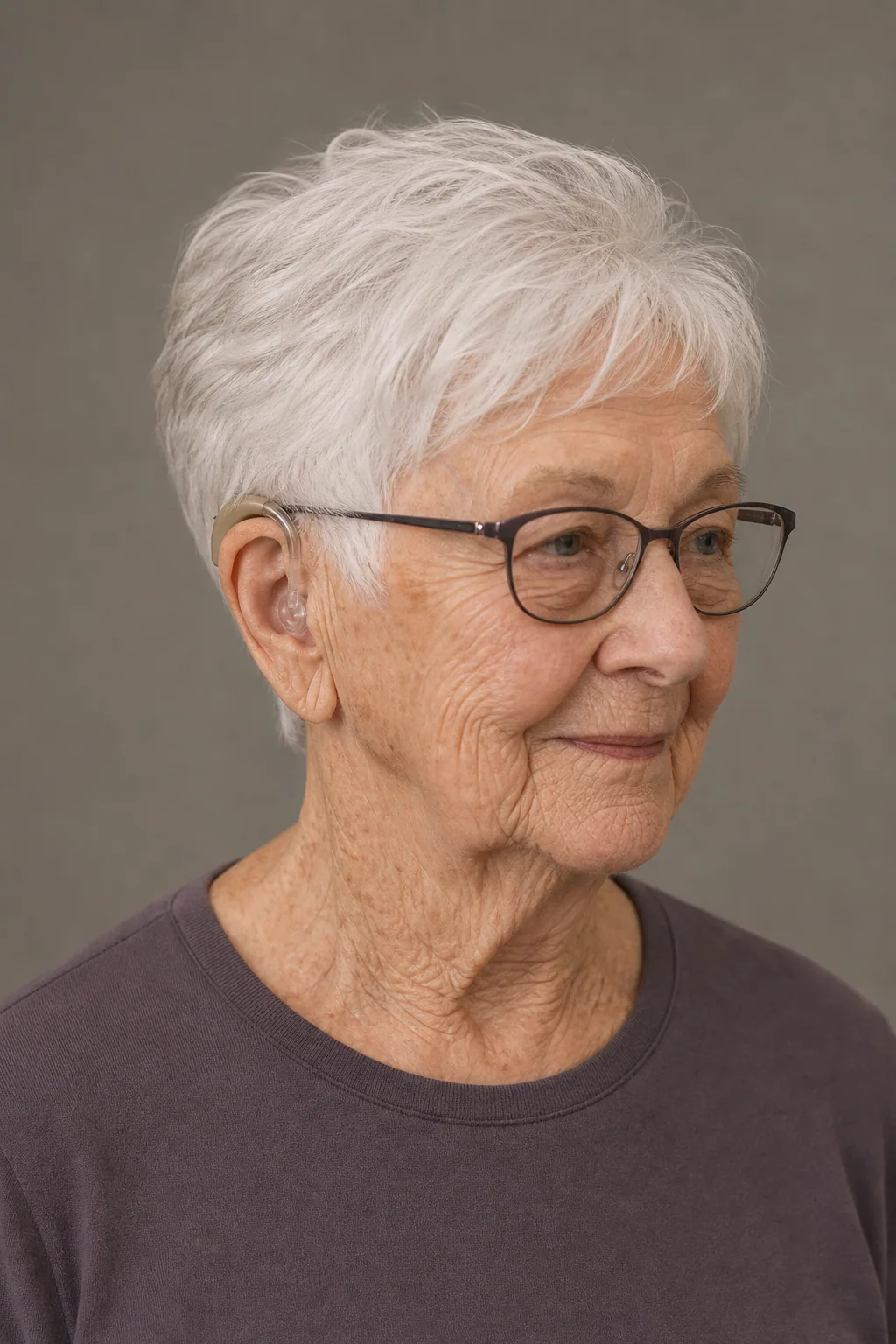
Haircuts for Women Over 70 With Fine Hair: 12 Cuts That Hold Lift
By Mickey Bolek, Owner and Lead Stylist, Michael Anthony Salon · Reviewed by Coral Pleas · Updated November 2026 · 13 min read
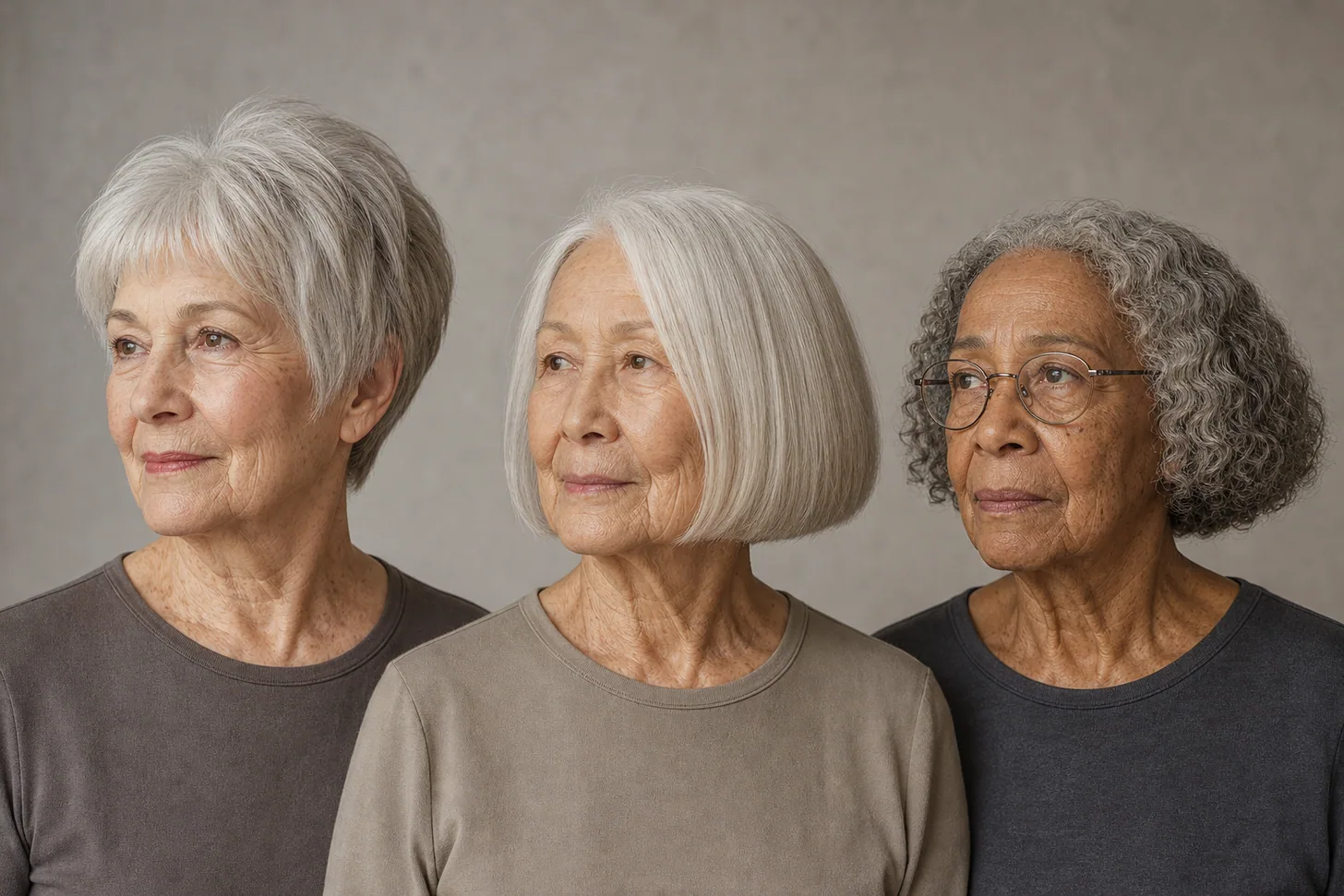
Haircuts for women over 70 with fine hair hold lift when the cut builds it in, because fine hair lies flat by noon: narrow strands can't carry the weight of their own length or of heavy product. The cuts that work have short graduation at the back, a few layers only at the crown, a solid outline and length kept off the ears. The routine is just as short: mousse at the roots and one hot-air brush with a wide barrel, so you aren't juggling a dryer and a round brush with tired arms.
Below are 12 haircuts for fine hair over 70, from pixie to collar length, with who each suits, the salon words to ask for and honest trim weeks. After them come a five-minute lift routine, products by category and who should skip what. For cuts chosen by routine first, start with our guide to hairstyles for women over 70. If you want only short options, see short haircuts for women over 70, and for the decade before, wash-and-wear haircuts for over 60 cover fine hair at an easier stage.
Hairstyle images in this guide are AI-generated illustrations, not photos of real clients or results. See our image standards.
Why Fine Hair Goes Flat by Noon, and What a Cut Can Do
Fine hair goes flat because each strand is narrow, so it bends at the root under its own weight and under anything you put on it. Layers placed in the wrong spot, rich creams and long length all make that worse. A cut changes how full hair looks, not how much there is, so the job is to put the fullness where the eye lands and keep the weight off the roots.
What happens
Why
What the cut or routine does
The roots lie flat by noon
Narrow strands have little spring and bend at the scalp
Short graduation at the back props the crown; a few short layers only at the crown; mousse at the roots, dried upward
The ends look see-through
The ends are the oldest, thinnest part of each strand, and length drags them down
A solid outline: one length at the perimeter, ends cut blunt, trimmed before they thin
The hair goes limp after styling
Fine strands coat quickly, so rich creams, oils and heavy serums weigh them down
Mousse at the roots only; a lightweight conditioner on the ends only
The scalp shows at the part or crown
That is low density, which is a separate problem from fine strands
Length kept on top, the part moved, a solid outline (see the next section)
The lift disappears by evening
Warmth, oil and a day of wear soften the set
A cool shot at the end of drying, and dry shampoo at the roots at midday
None of this is about hiding anything. It is about choosing a shape that carries the hair you have today.
Fine or Thin? Check Before You Choose
Fine means each strand is narrow; thin means there are fewer strands. Many women over 70 have both, and the two ask for different things from a cut. Check which you have before you pick from the cuts below.
The strand test: pull one hair from the crown and hold it against a sewing thread. If it feels like almost nothing, or looks thinner than the thread, the hair is fine.
The part test: part your hair in a bright mirror. If you can see a wide line of scalp, the density is low, even if each strand is a normal width.
Both: fine and low density together is common. Fine hair needs lift and a light touch; thin hair needs length on top and a solid outline.
:::table
| You have | What the cut needs | Start with entries |
|---|---|---|
| Fine, with plenty of strands | Lift at the roots, fewer layers, light products | 1, 2, 5, 9 |
| Thin, with normal-width strands | Length on top, a solid outline, a deep or moved part | 4, 6, 11 |
| Both fine and thin | A solid outline, a few layers at the crown only and a short routine | 1, 5, 6, 12 |
If hair loss is sudden or patchy, see a board-certified dermatologist before changing the cut.
Short Cuts With Built-In Lift
These four put the height in the cut itself: graduation at the back, a few layers at the crown and a part placed to lift. Short hair weighs less, so fine hair stays up longer, as long as the top keeps enough length to stand.
1. Rounded Short Cut With Lift Built at the Crown
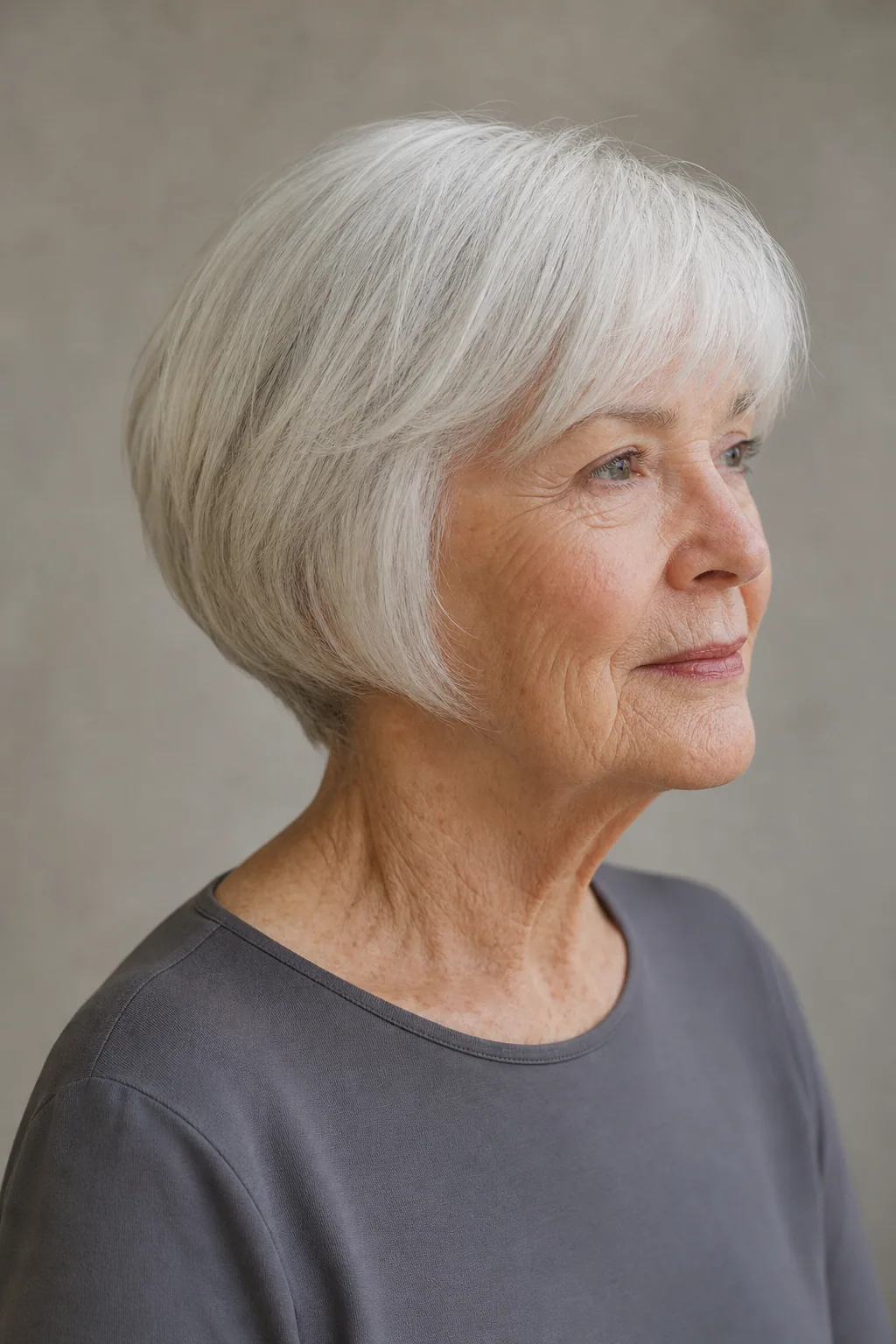
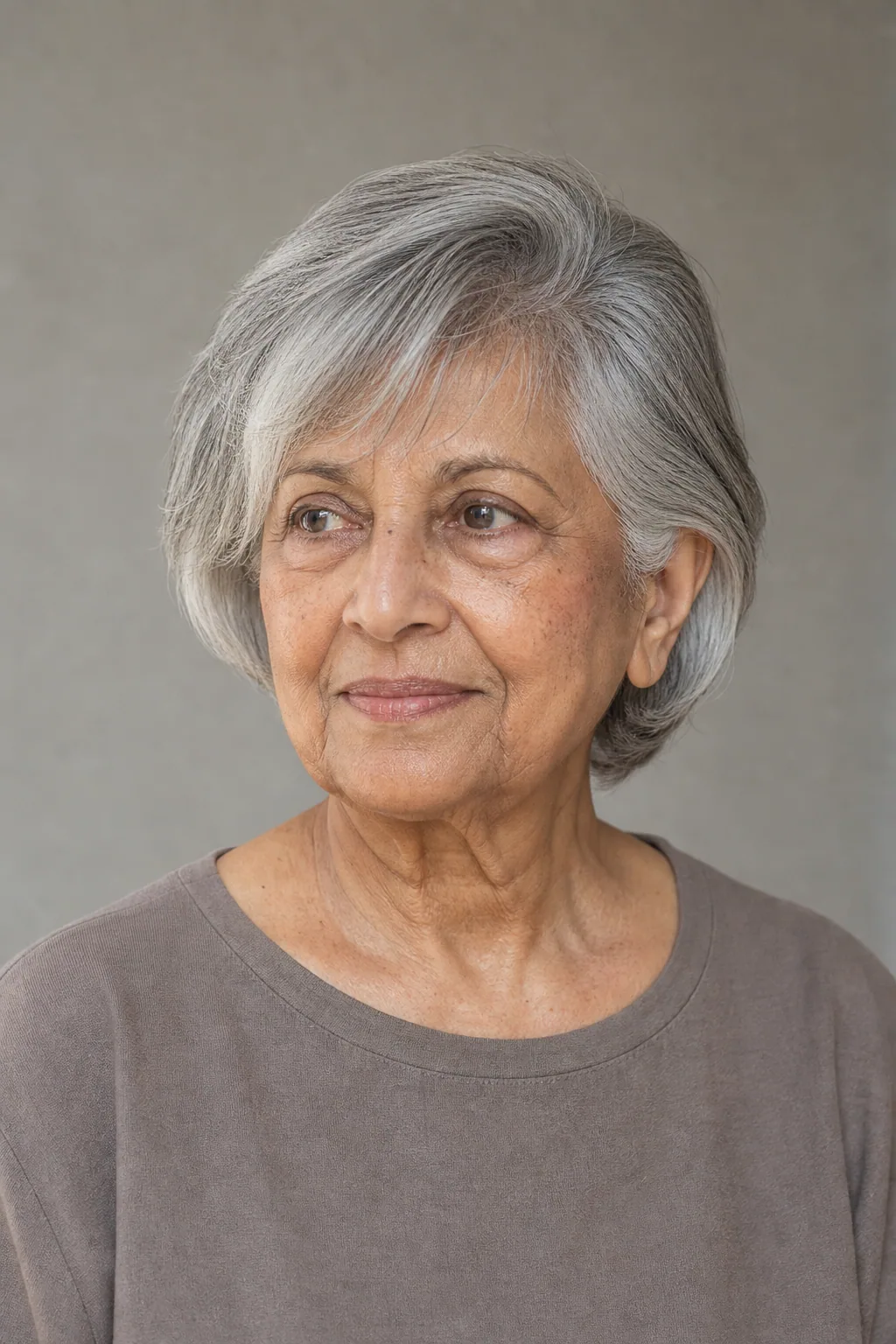
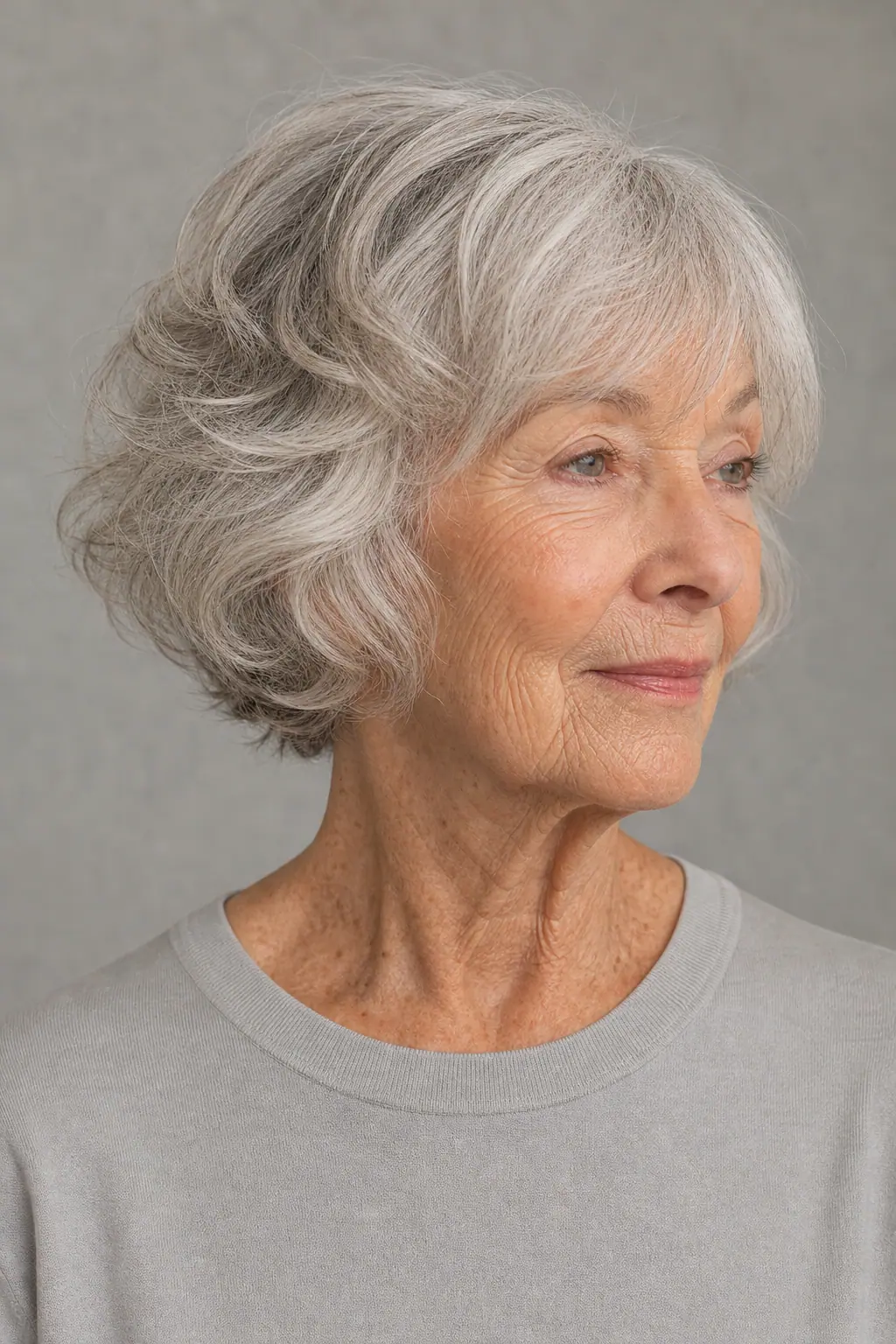
The lift is cut in, not sprayed in. The back is graduated, meaning cut in short stacked layers so it sits high, a few short layers are cut through the top of the crown only, and the outline stays solid around the ears and nape. The result is a soft dome that is still there after a night's sleep. It suits fine hair that is flat on top but has density at the sides. Ask for "a rounded shape, graduation at the back, a few layers at the crown only, and a solid edge."
2. Graduated Nape Cut That Props Up the Crown
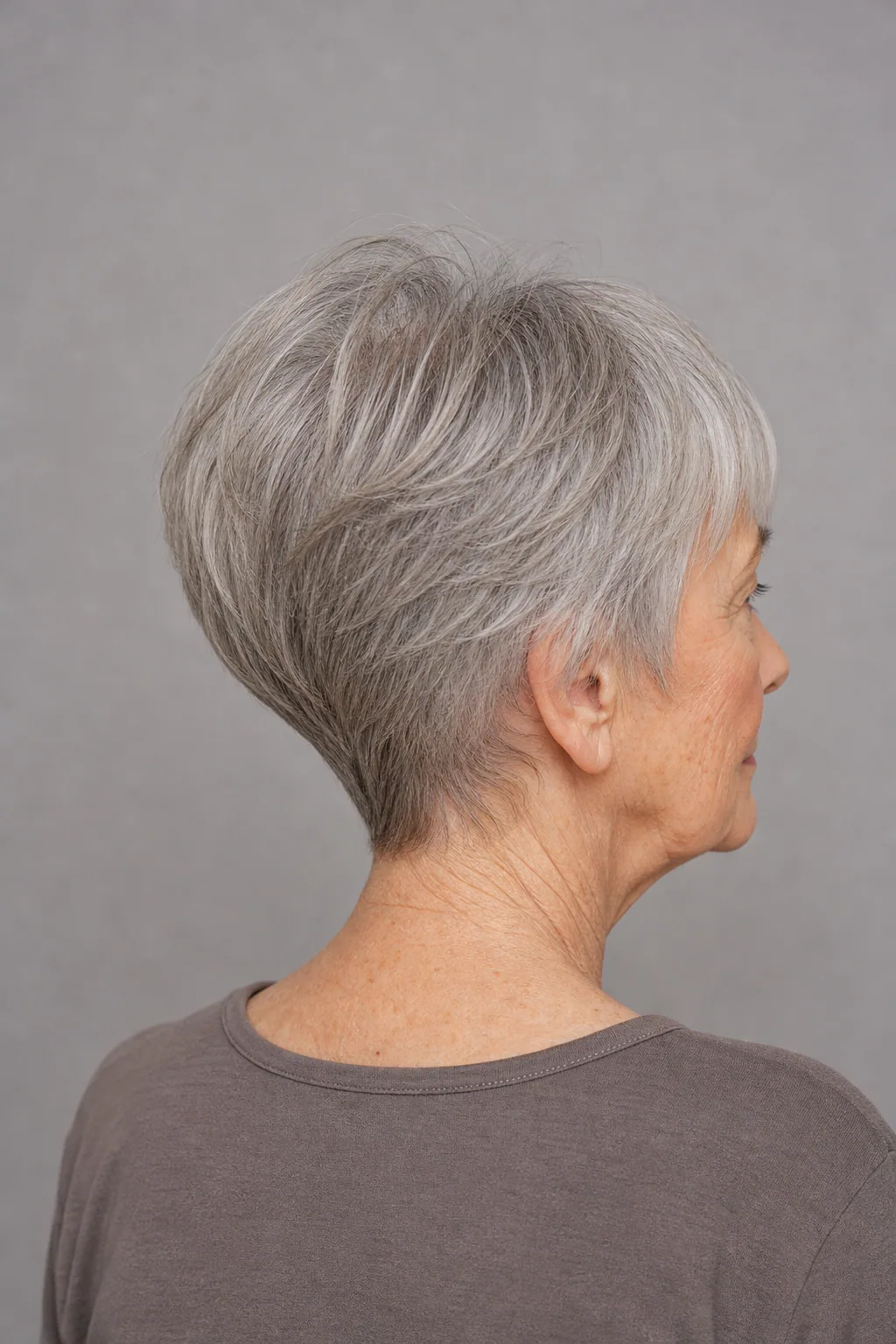
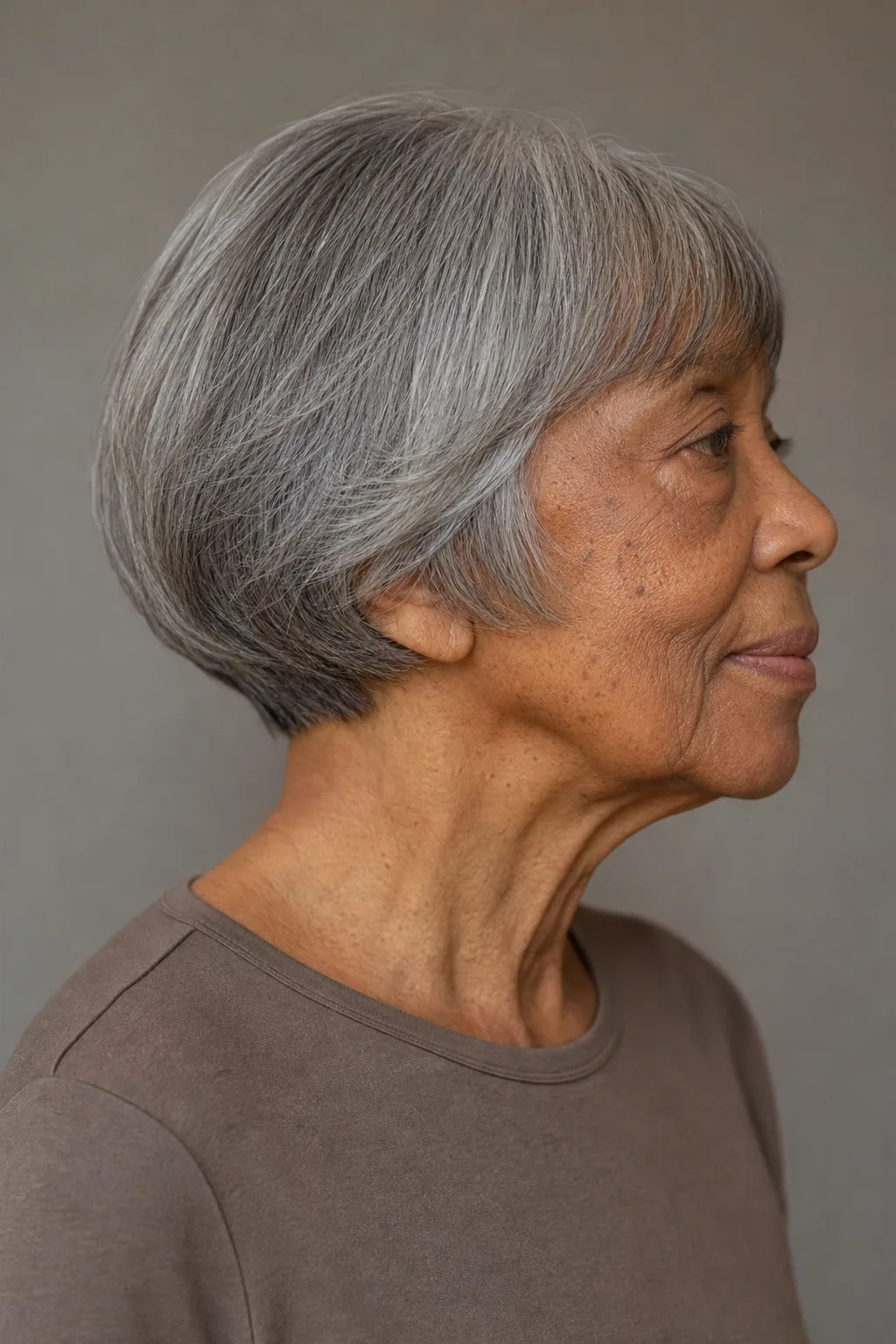
Where the rounded cut builds a dome, this one builds a shelf: the nape is graduated short and stacked, so the hair above it is pushed up and out from behind. The sides stay at the top of the ear and the top is left fuller, at about two to three inches. It suits fine, straight hair that collapses at the back of the head, and it asks nothing of your arms, because the cut does the lifting and a little mousse at the crown does the rest. The stack loses its edge first, so plan on a trim every 5–7 weeks.
3. Blunt-Topped Pixie for Fine White Hair
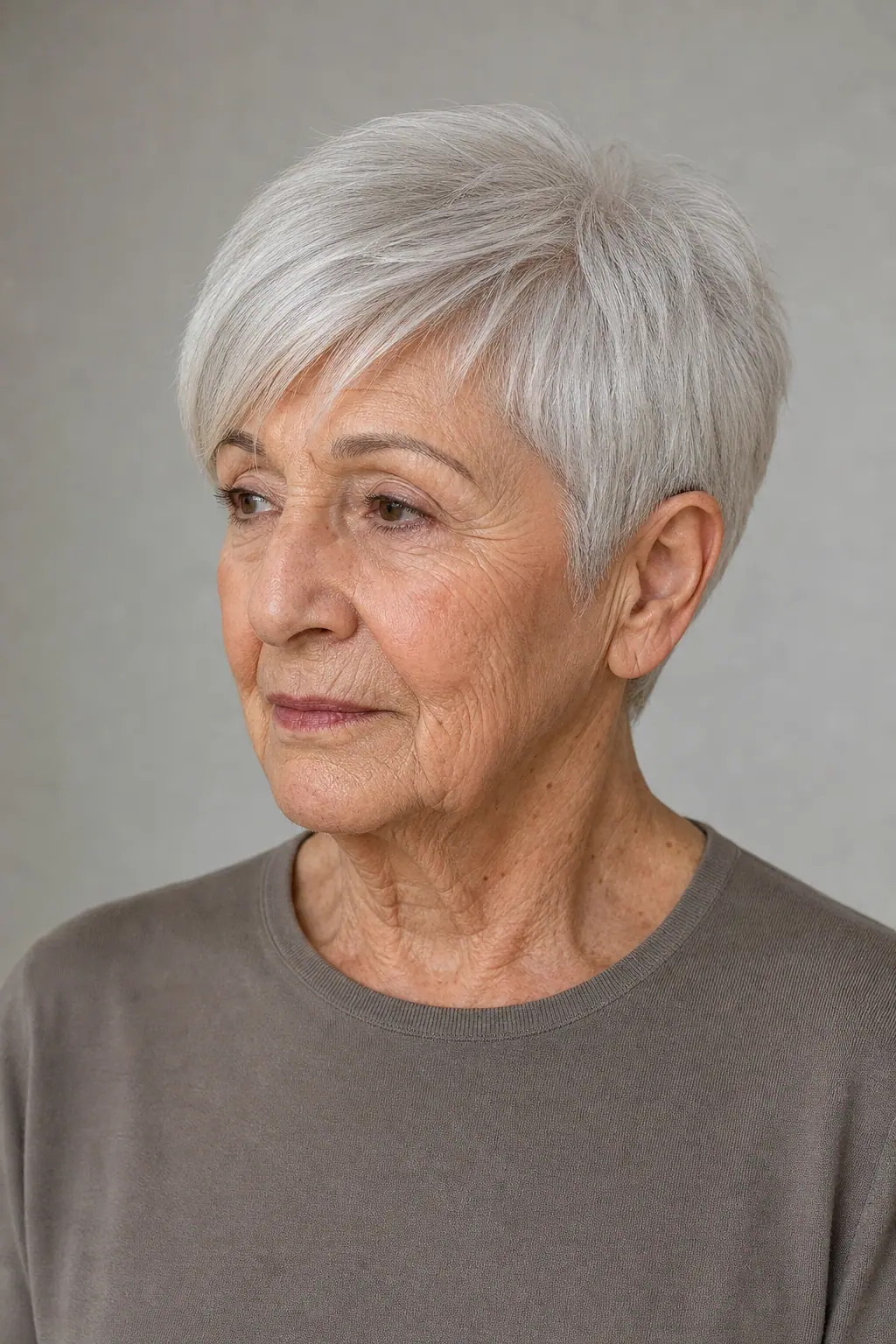
On fine hair, feathered ends can look see-through. Here the top is cut blunt, every strand held and cut straight across at the same length, about two to three inches, so the top reads fuller. The sides are tapered with scissors rather than clippers and left a little longer than on a standard pixie. Sweep the top forward and to one side with a fingertip of light paste. If the white is still growing in over dyed hair, our guide to how to go gray covers the stages. Ask for "a pixie with a blunt-cut top, not feathered, and the sides tapered with scissors."
4. Short Cut With the Part Moved for Lift
Hair grows with a habit, and after decades of the same part, fine hair lies flat in that direction. Move the part an inch or two, or switch sides, and the roots stand up where they have been trained down. Your stylist cuts the shape around the new part, with a little more length on the heavier side. At home, wet the roots, dry them in the opposite direction from the old part, then flip them over. Ask for "a cut shaped around a part on the other side."
Bobs That Keep a Full Outline
A bob holds weight at the perimeter, which makes fine hair look denser, but only if the edge stays solid and the roots are lifted. Thinning shears and heavy layers are what turn a bob wispy.
5. Blunt Chin Bob Lifted at the Roots With a Dryer Brush
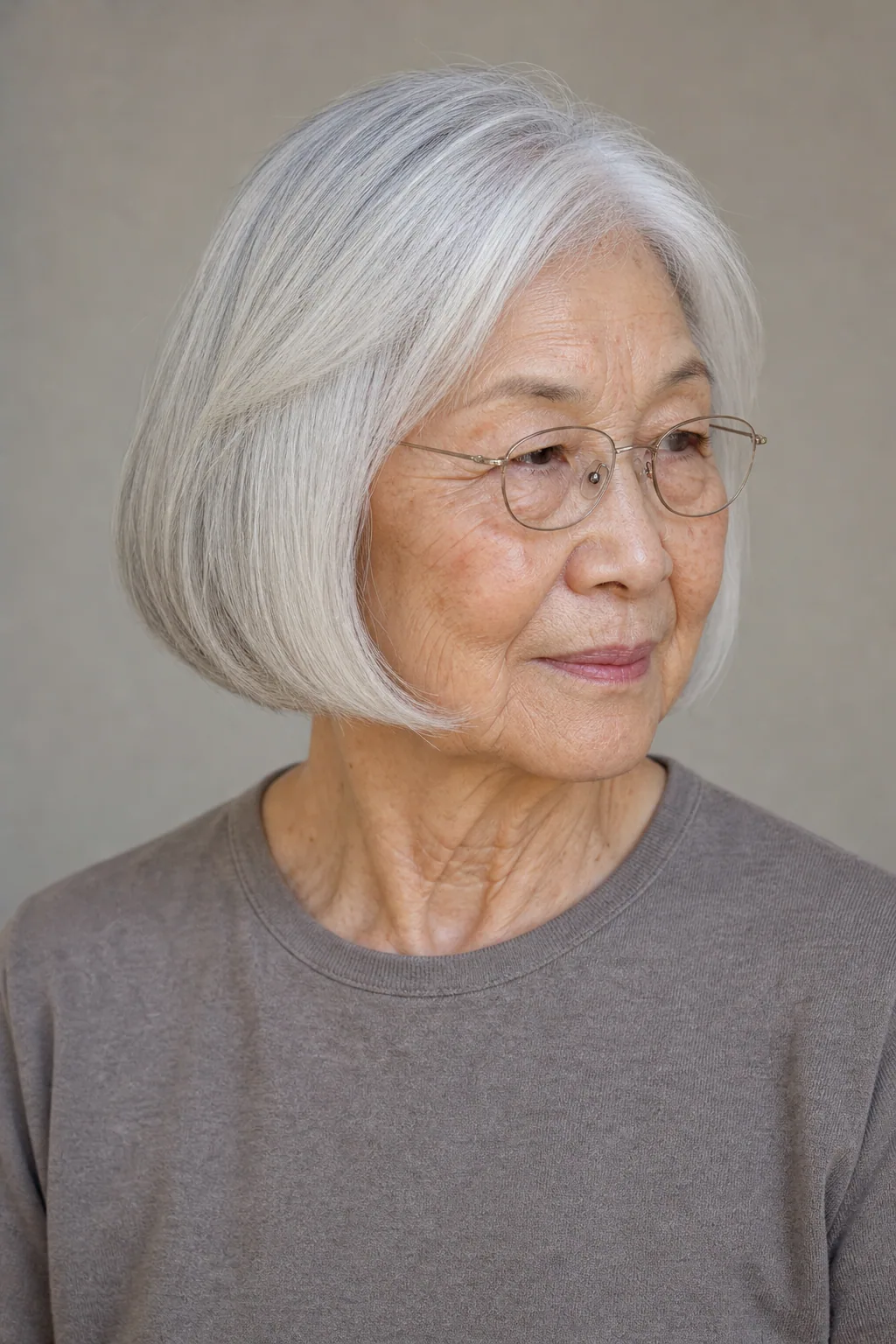
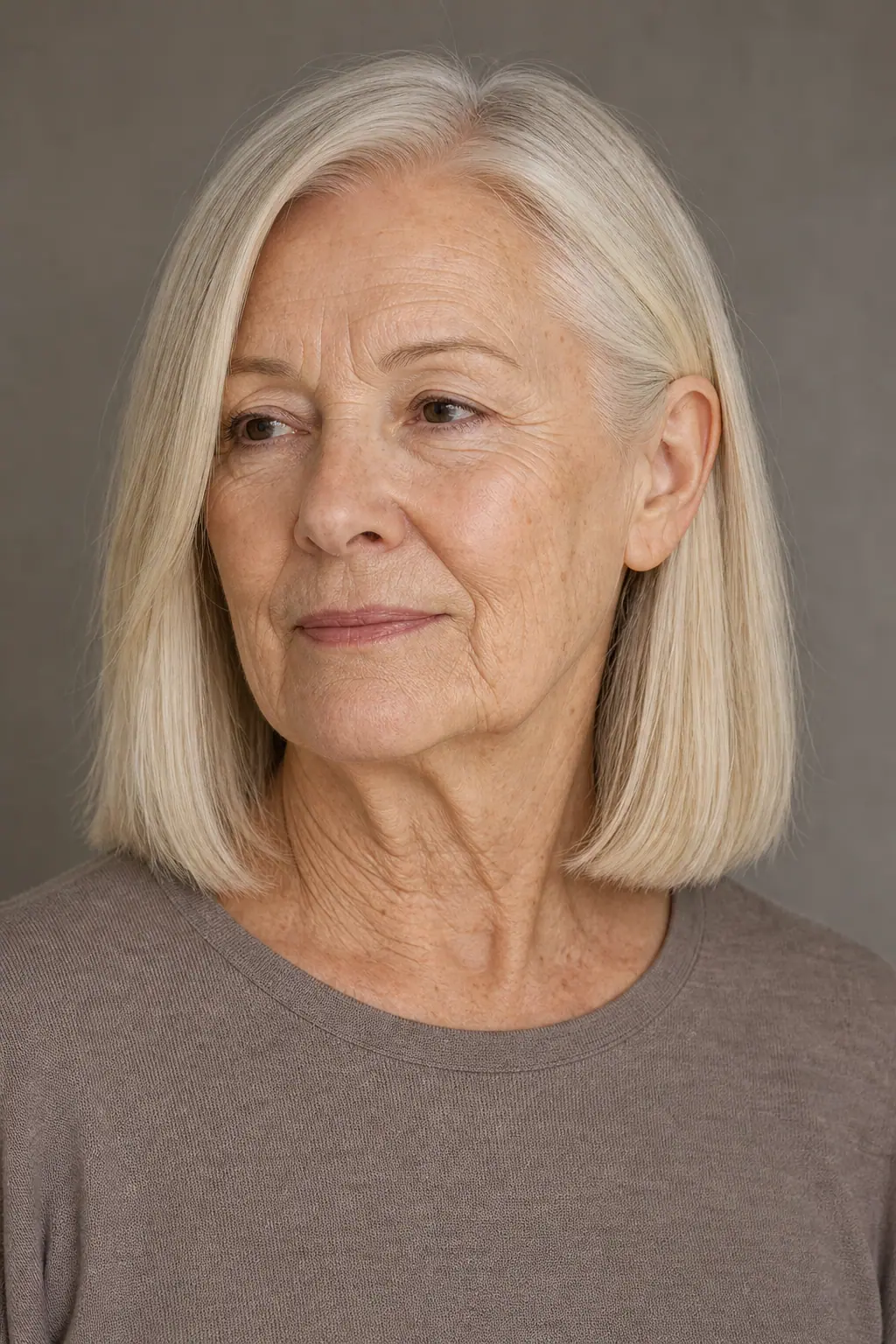
One length at the chin, cut straight across, so the outline looks fullest where fine hair is thinnest. Unlike a bob left to air-dry, this one is finished over a dryer brush: the barrel lifts the roots and turns the ends under in one pass. It suits straight fine hair that wants a polished edge. Keep it at the chin or above the collar, and trim it every 6–8 weeks, because the ends are the first to look thin.
6. Ear-Length Bob With Hidden Layers Underneath
The surface looks like one smooth length, but short layers are cut underneath, in the hair below the top layer, so they prop the top up from inside. From the outside you see a clean bob with body, and no layers show to make the ends look wispy. It suits thin and fine hair that wants fullness without looking layered. Ask for "short layers underneath only, the top layer left whole, and no thinning shears."
7. Soft Layered Crop With Roller Lift at the Front
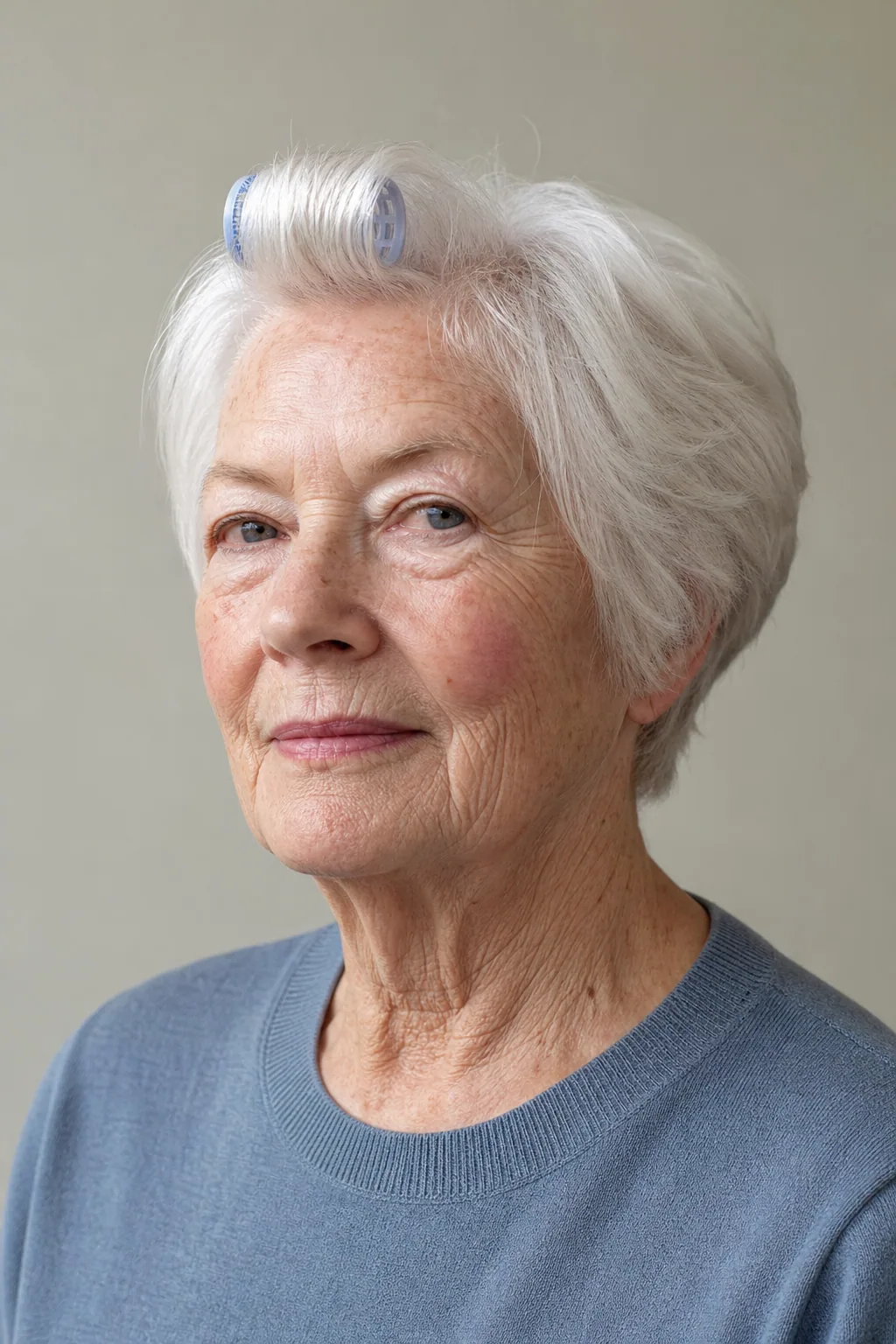
The front is the weak spot on many fine heads, where the hair lies down on the forehead. This crop keeps a little more length at the front with a few short layers behind it, and two or three Velcro rollers (1.5–2 inches) lift the front while you make coffee. Put them in after drying, with the hair still warm, and take them out when it has cooled, about ten minutes. It suits straight hair that falls flat at the hairline. Skip the rollers if reaching up tires your shoulders; a cool shot from the dryer brush will do.
Cuts for Texture and Movement
Fine hair that has some bend holds lift better than fine hair that is poker straight, so these three work with wave or curl, or add it. Each one needs a different cut and a different way of handling product.
8. Short Cut Over a Soft Body Wave
A body wave is a gentle perm that puts loose movement into straight hair rather than tight curls. Over a short, graduated cut it gives fine hair a bend that keeps it off the scalp. It suits straight, fine hair that has never held a set, and it grows out into the cut over a few months. Ask for a consultation and a test curl first, and say "a soft body wave for movement, not curl." Your stylist should tell you whether your hair can take it.
9. Fine Wavy Hair Cut to Air-Dry With Mousse
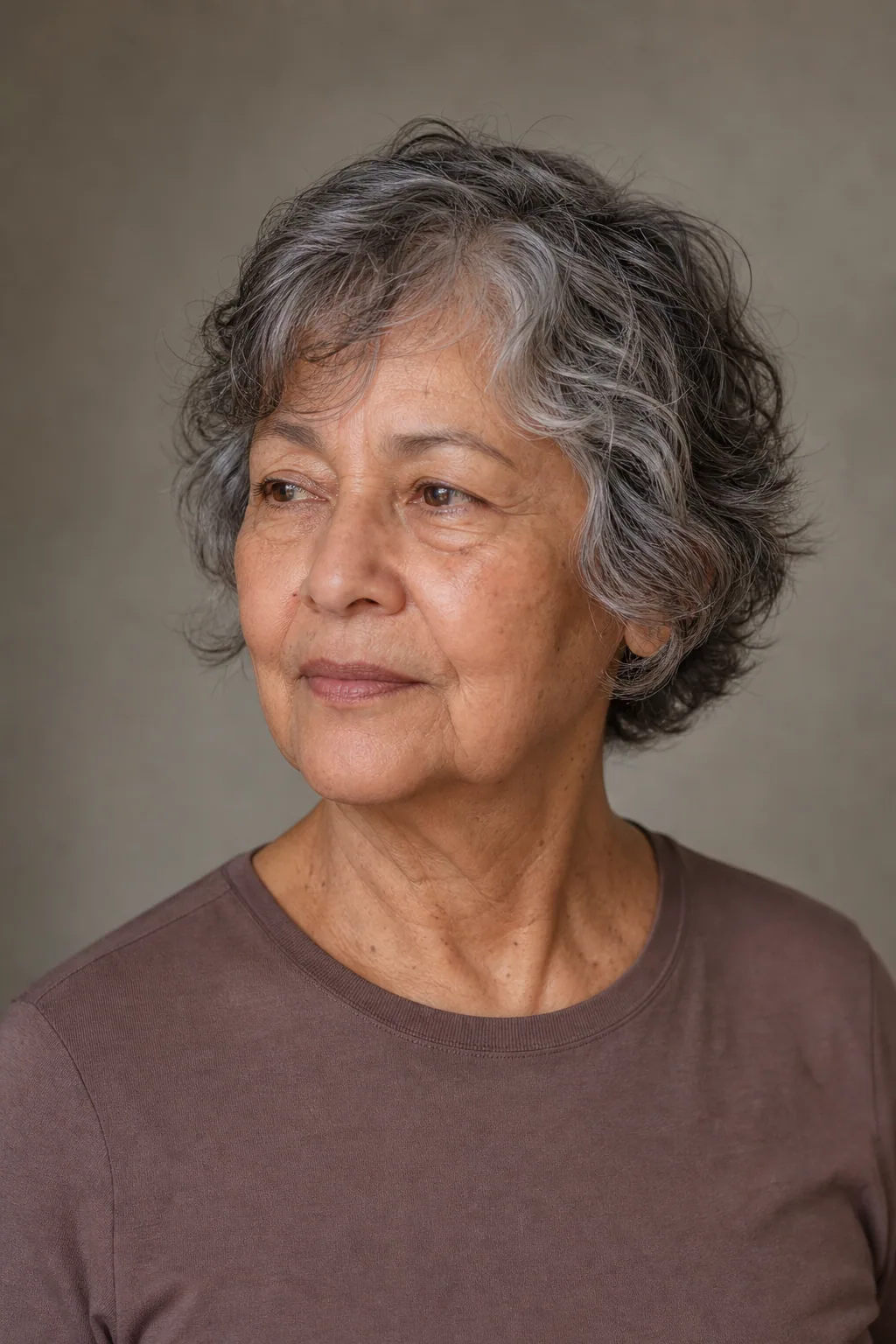
Fine wave collapses when it is weighed down and frizzes when it is rubbed. This cut is made dry, at the length where the wave sits, with the shortest hair at the crown so the wave springs up there. Blot with a soft towel, scrunch a golf-ball amount of mousse into the roots and mid-lengths while it is damp, then leave it alone. Ask for "a cut for my wave, made dry, with the weight kept off the ends."
10. Fine Curly Hair Cut Into a Rounded Shape
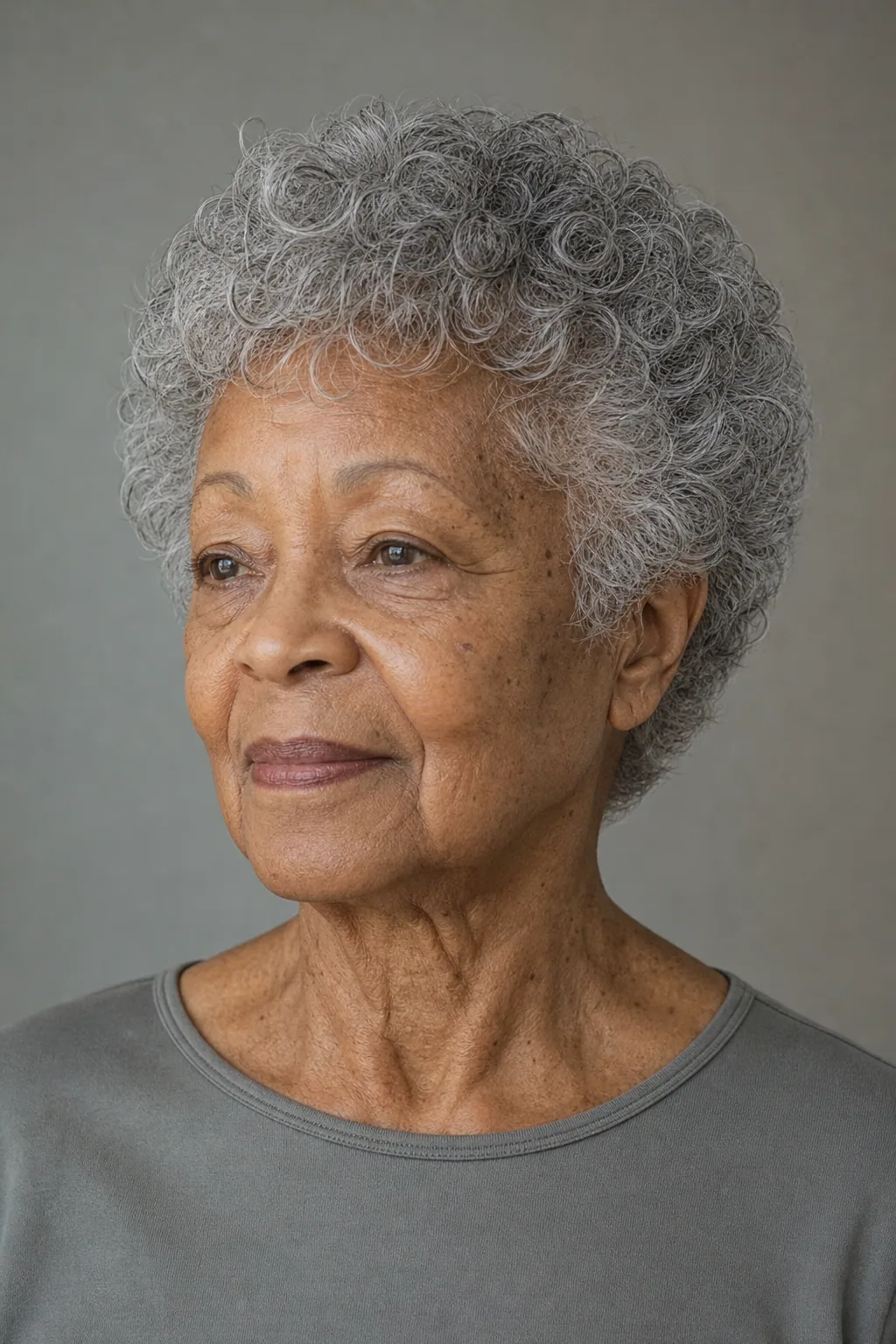
Fine curls clump together and leave gaps, so the scalp shows between them if the sides are cut too short. The cut is made dry, curl by curl, into a rounded shape with the length kept a little fuller on top, and the sides are tapered only lightly. A lightweight curl foam and a diffuser on low are enough. Skip heavy gel, which flattens the curls and leaves the roots flat. Ask for "a rounded shape for fine curls, nothing tapered close."
Longer and Practical Cuts
Length can work on fine hair if the ends are kept full, and some cuts are chosen first for how they sit with glasses and hearing aids. These two serve women who don't want to go short, and women whose accessories decide the shape.
11. Collar-Length Cut With Blunt Ends for Fine Hair Kept Longer
No layers at all: the hair is one length at the collar, with the ends cut straight across so they look dense. Fine hair this length can't carry layers without the ends looking wispy, and thinning shears would make it worse. Lift comes from mousse at the roots and a dryer brush at the crown, with the length worn down or tucked behind one ear. Have the ends dusted every 8–10 weeks, before they thin out.
12. Ear-Out Short Cut for Glasses and Hearing Aids
Glasses arms press fine hair flat along the sides, so the lift has to sit above that line. The hair around the ears is tapered clean, with scissors, so nothing catches on a frame or a hearing aid, and the fullness is kept at the crown and top where the arms don't reach. A little length is left behind the ear so the shape doesn't look cropped. Ask for "a clean edge around my ears, lift kept high on top, and check it with my glasses and hearing aids on." For more frame-by-frame advice, see our guide to hairstyles over 50 with glasses.
The Five-Minute Lift Routine for Fine Hair
Fine hair needs one product, one tool and about five minutes, because anything more weighs it down or tires your arms. The tool is a hot-air brush, also called a dryer brush: a brush barrel with a heater and fan in the handle, so it dries and lifts in a single tool. Choose a wide barrel, about 2–3 inches across, which lifts roots without tangling short or fine hair.
Blot. Press the water out with a soft towel or a microfiber towel, without rubbing. The hair should be damp, not dripping.
Mousse at the roots. Use a golf-ball-sized amount for short hair, up to an egg-sized amount at collar length. Work it in with your fingertips at the roots and the crown, and keep it off the ends.
Rough-dry. Dry with your fingers or with your head tipped upside down for two to three minutes, until the hair is about 80 percent dry.
Lift with the dryer brush. Place the barrel under a section at the crown, lift it straight up and dry from the root outward. Do the crown, then the part, then the sides, in three or four sections, in about three minutes.
Cool shot. Press the cool button for 10–15 seconds on each lifted section. The hair sets as it cools, and the lift lasts longer.
Optional rollers. Put 1.5–2-inch Velcro rollers in at the crown while the hair is still warm, and take them out after ten minutes. Use them on days you want more height.
Dry shampoo at midday. Spray it at the roots, wait a minute, then massage it in with your fingertips. It absorbs oil and brings back some lift.
If using a dryer brush above shoulder height is tiring, dry the crown from the front, with your elbows low. The cut matters here: entries 2 and 6 need the least reaching.
Products for Fine Hair by Category
Pick light products by category, use small amounts and put them where they do work: at the roots. Heavy products are the usual reason fine hair looks flat by lunch.
Category
What it does
How to use it
Watch for
Mousse
Adds grip and lift at the roots
Golf-ball to egg-size, on damp hair, at the roots only
Too much leaves a crunchy, heavy feel
Root-lift spray
Lifts on short hair or between washes
A few sprays at the part and crown, then dry upward
Sticky build-up if layered with mousse
Dry shampoo
Absorbs oil and refreshes roots at midday
Spray at the roots, wait a minute, massage
A white residue on dark or silver hair if you use too much
Lightweight conditioner
Smooths the ends without weight
A small amount on the ends only; rinse well
Never at the roots
Heat protectant
Protects the ends from the dryer brush
A light mist on the lengths before drying
Heavy, oily formulas
What to avoid: heavy oils, silicone-heavy serums and rich creams, especially at the roots. They coat narrow strands and pull them down. If hair feels flat and slightly coated after a few weeks, a clarifying wash at the salon can reset it.
Choose by Face Shape
Face shape decides where to put the fullness: fine hair at the right height and width does more than any layer. For the full method, see how to choose a haircut for your face shape.
Face shape
Good picks here
Key detail
Go easy on
Oval
1, 5, 9
Most cuts work; choose by hair type
Heavy fringe that covers the forehead
Round
2, 4, 7
Height on top and a moved part lengthen the face
Width at the cheeks or a chin-level line
Square
3, 6, 9
Soft, tapered edges at the jaw ease the corners
A blunt line that ends at the jaw
Heart
5, 6, 11
Fullness at the chin balances a wider forehead
Volume at the temples
Long
5, 6, 10
Width at the sides shortens the face
A tall, narrow top
What to Ask Your Stylist
Bring the words, not just a photo, because fine hair is easy to over-cut. Say these out loud:
"Please don't take weight off with thinning shears. My hair is fine, and I need the weight."
"Keep the outline solid, with one length at the bottom and no wispy ends."
"A few layers at the crown only, and short graduation at the back for lift."
"Show me how to use a dryer brush on my hair, and watch me do it once before I leave."
"Please check the cut with my glasses and hearing aids on."
"I want about six to eight weeks between trims. Tell me which edge will go first."
Maintenance and Styling Reality
Short cuts need more trims and fewer minutes, and the longer cuts trade the other way. These are typical ranges for fine hair; yours may differ.
Cut (entries)
Trim every
Daily styling
Tools and products
Grow-out
Rounded short cut, graduated nape (1, 2)
5–7 weeks
3–5 minutes
Mousse, dryer brush
The back loses its stack first
Blunt-topped pixie (3)
4–6 weeks
2–4 minutes
Light paste, fingers
Awkward over the ears
Part-moved short cut (4)
5–7 weeks
3–5 minutes
Mousse, dryer brush
Even
Blunt chin bob (5)
6–8 weeks
5–8 minutes
Mousse, dryer brush with a 2–3 inch barrel
Very even
Bob with hidden layers (6)
6–8 weeks
5–8 minutes
Mousse, dryer brush
The inner layers show first
Layered crop with rollers (7)
5–7 weeks
3–5 minutes, plus 10 for rollers
Mousse, 1.5–2 inch Velcro rollers
Grows into a short bob
Body wave, air-dry wavy, fine curls (8, 9, 10)
6–8 weeks
3–6 minutes
Mousse or curl foam, diffuser on low
The wave relaxes into the cut
Collar-length blunt cut (11)
8–10 weeks
5–10 minutes
Mousse, dryer brush
Very forgiving
Ear-out short cut (12)
4–6 weeks
3–5 minutes
Mousse, fingers
The edges around the ears go first
Frequently Asked Questions
What is the best haircut for fine, thin hair over 70?
A cut with a solid outline, length kept on top and a few layers only at the crown. In practice that is a rounded short cut, a blunt chin bob or a bob with hidden layers. Choose by how much scalp shows: the thinner the crown, the more the weight should sit at the jaw.
How can I make fine hair look thicker at 70?
Put the fullness where the eye lands. Keep the outline one length so the ends look dense, lift the roots with mousse and a dryer brush, and move your part an inch off center. Skip heavy creams, which lie on narrow strands and flatten them.
Is short or long better for fine hair over 70?
Short to collar length is usually better, because length drags fine hair down at the roots and the ends thin out. Long hair can work if the ends are blunt and trimmed every 8–10 weeks. If your hair already looks flat by noon, go shorter before you add more product.
Do layers help fine hair?
A few, in the right place. Short layers at the crown give lift, and hidden layers underneath prop the top. Layers through the whole head leave the ends see-through. Ask your stylist to place them at the crown and nowhere else.
Is a perm a good idea for fine hair at 70?
A soft body wave can add bend to fine, straight hair that never holds a set, if the hair is healthy. It isn't for hair that is fragile, breaking or heavily lightened. Ask for a test curl first, and expect it to relax into the cut over a few months.
What is a hot-air brush, and is it easier to use?
A hot-air brush has a brush barrel with a heater and fan in the handle, so it dries and lifts in one tool. For many women it is easier than holding a dryer in one hand and a round brush in the other. Choose a wide barrel, about 2–3 inches, and ask your stylist to show you once.
Why does my fine hair go flat by midday?
Narrow strands bend under their own weight, and oil from the scalp travels down them quickly, so they soften and cling together. Heavy products add to it. A cool shot at the end of drying and dry shampoo at the roots at midday keep it up longer.
Results vary with hair type, density, texture and face shape. This guide is educational and is not a substitute for an in-person consultation with a licensed stylist.
 Grace