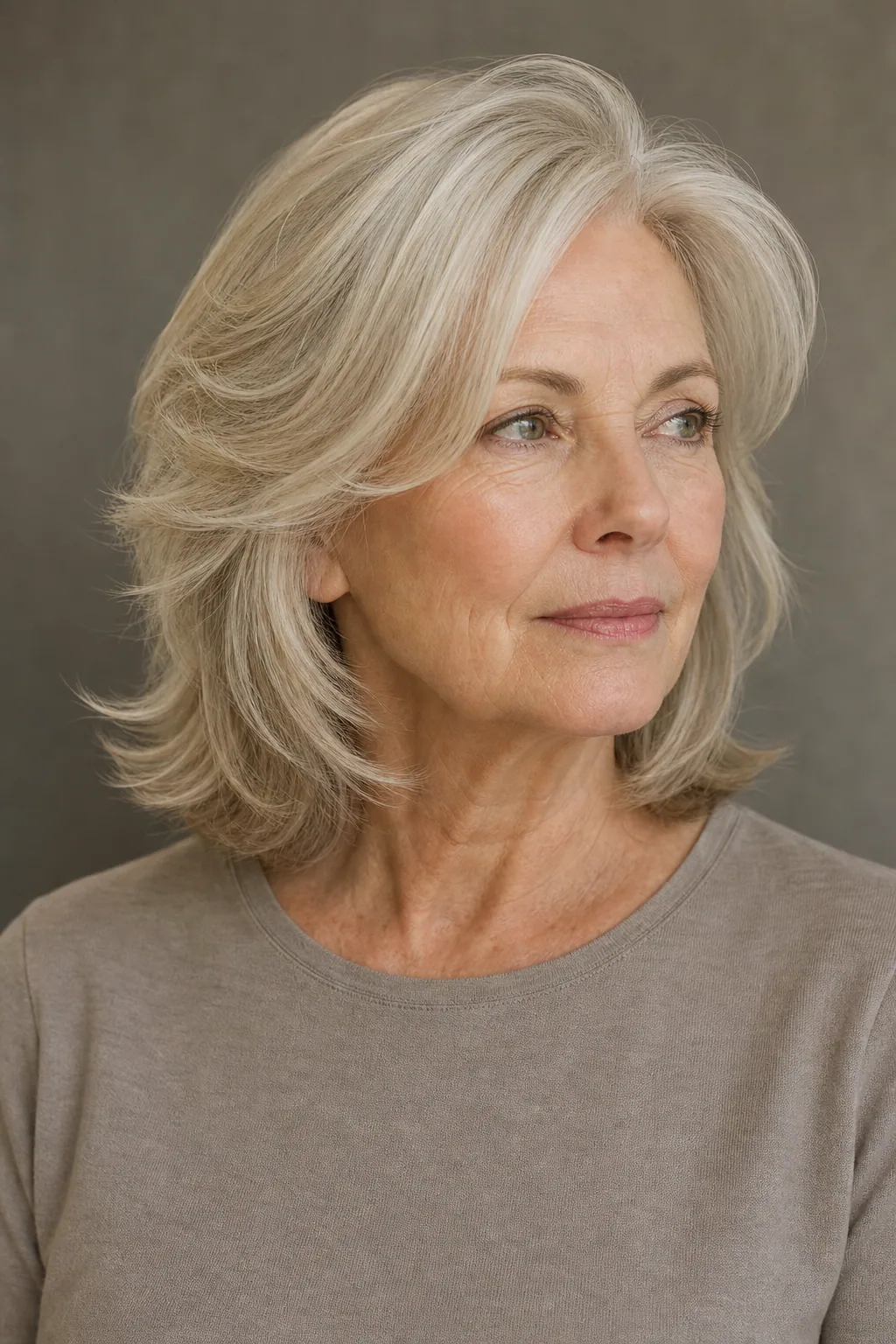
Medium-length hairstyles for women over 60, cut anywhere from the jaw to just below the collarbone, work when the ends are still full. If hair is thinner, keep the outline solid so the ends don't go see-through, and put the movement high, at the cheekbone and the crown, rather than in the ends. A simple test, below, tells you which length your hair can carry.
Below are 12 medium cuts for women over 60, grouped by texture, with who each suits, the salon words to ask for and honest trim times. After the gallery you'll find quick ways to style medium hair, cuts by face shape and hair type, and who should choose something shorter. For the whole range of lengths, see our guide to hairstyles for women over 60. A decade earlier, haircuts for women over 50 start with weight placement, and a decade on, hairstyles for women over 70 put ease first.
Hairstyle images in this guide are AI-generated illustrations, not photos of real clients or results. See our image standards.
Why Medium Length Works at 60, and When It Drags
Medium length works at 60 when the ends are as full as the hair a few inches above them, and it drags when the ends are wispy, because the weight then pulls the face and the hair downward. Hair is oldest at the tips, so by the 60s the ends are often finer than the roots. A cut changes how full hair looks, not how much there is. The job is to keep the bottom edge solid and let the movement sit near the face, where the eye goes first.
The ends test. Wash and dry your hair without product, then hold a section of the ends up to a window. Compare how thick it looks a few inches from the root with how thick it looks at the tips.
About the same thickness: your ends are full. Anywhere from the jaw to just below the collarbone is open to you.
Noticeably thinner, with light showing through: keep the length at the jaw or shoulder, ask for a blunt perimeter and skip layers below the chin.
Thin enough that you can see the window clearly through the last inch: have that inch cut off before you choose a style. See the short cuts in our guide to short haircuts for women over 60 if the thinning goes further up.
When it drags
When it works
What to ask for
Ends
Wispy and uneven, thinner than the mid-lengths
Full and blunt, or softly curved
"A solid perimeter, cut straight across"
Layers
Short layers through the bottom half
Few and long, starting at the cheekbone or chin
"Movement at the cheekbone, nothing in the ends"
Crown
Flat, with the weight all hanging below
Some lift built in by cut or roller
"Lift at the crown, so the top isn't flat"
Shape
One heavy slab, dark and shapeless
An outline with a bend or a flip at the ends
"A soft bend at the ends so it moves"
Which Medium Length Suits Your Density
Density decides the length: the closer to the collarbone, the more full hair you need at the ends. Medium length covers four stops, each with its own trade-offs.
Length
Density it needs at the ends
Styling
Trim every
Can it go up?
Jaw (chin to jaw line)
Any, including fine and thin
5–10 minutes
6–8 weeks
A half-clip only; the ends are short
Shoulder-grazing
Light to medium
8–12 minutes
6–9 weeks
Yes, a twist-and-clip or a low pony
Collarbone
Medium; thin ends look sparse here
10–15 minutes
8–10 weeks
Yes, a chignon or a clip
Just below the collarbone
Medium to thick, with full ends
10–15 minutes
8–10 weeks
Yes, any updo
Smooth and Straight Medium Cuts
Straight hair shows the cut most clearly, so the edges matter: a clean perimeter and a deliberate shape at the ends. These four keep the line solid and move the interest into the bend, the layers or the fringe.
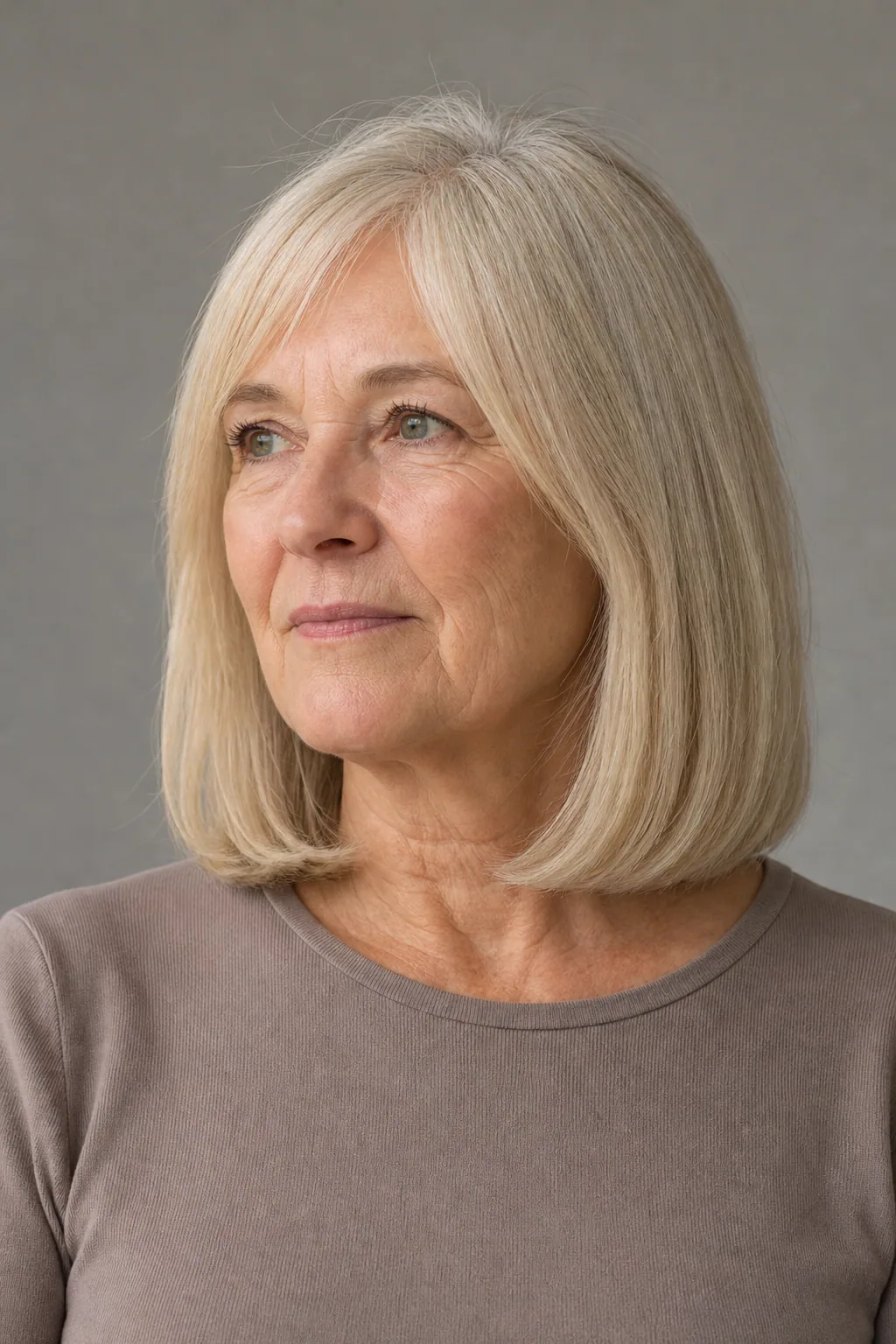
1. Blunt Shoulder-Grazing Cut With a Soft Bend at the Ends
The ends are cut straight across, so the outline looks dense, then dried with a round brush so they turn gently under or out. The bend is a blow-dry finish, not a layer. It suits fine to medium straight hair that goes limp when left one length. Ask for "blunt ends, nothing taken out of the perimeter."
2. Shoulder-Length Layers That Start at the Cheekbone
Only the front sections are layered, from the cheekbone to the shoulder, and the back stays almost one length. That puts the movement beside the face and keeps the bottom thick. It suits medium density that hangs flat on the sides. A stylist can show you where the first layer will fall by holding a section up beside your face before cutting.
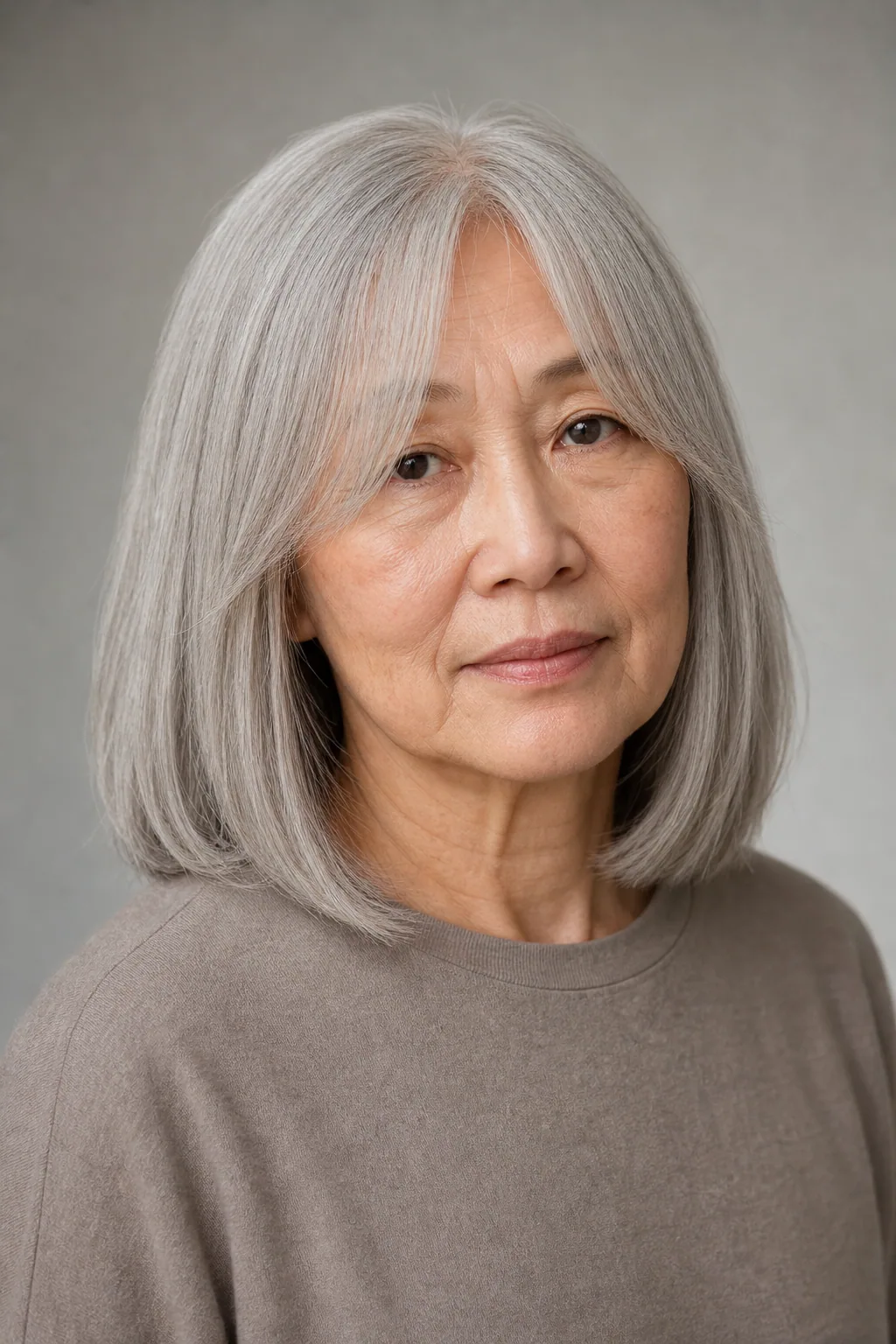
3. One-Length Cut With a Curtain Fringe for a High Forehead
A curtain fringe is parted in the middle and swept to each side. Here it is cut longer than a straight fringe, so it blends into the cheekbone, and the rest of the hair stays one length at the shoulder. The sweep shortens a high forehead and needs no layers at all. Test your hairline for a cowlick before you commit: comb the damp hair forward and see where it goes.
4. Soft Outward Flip for Straight Shoulder-Length Hair
Here the ends turn out, not under, which lifts the hair off the shoulders and away from the jaw. It is the right choice for a fuller face, or for straight hair that collapses against a collar. Dry the ends over a 1.5–2-inch round brush, or set them on one warm roller for ten minutes. A hint of flip is enough, and a stiff, set flip is where it goes wrong.
Gray and Silver Medium Cuts
Gray hair is often coarser and reflects light, so clean ends read as intentional and rough ends read as dry. Both of these use length to make the color look chosen. If you're still growing out dark color, start with our guide to how to go gray.
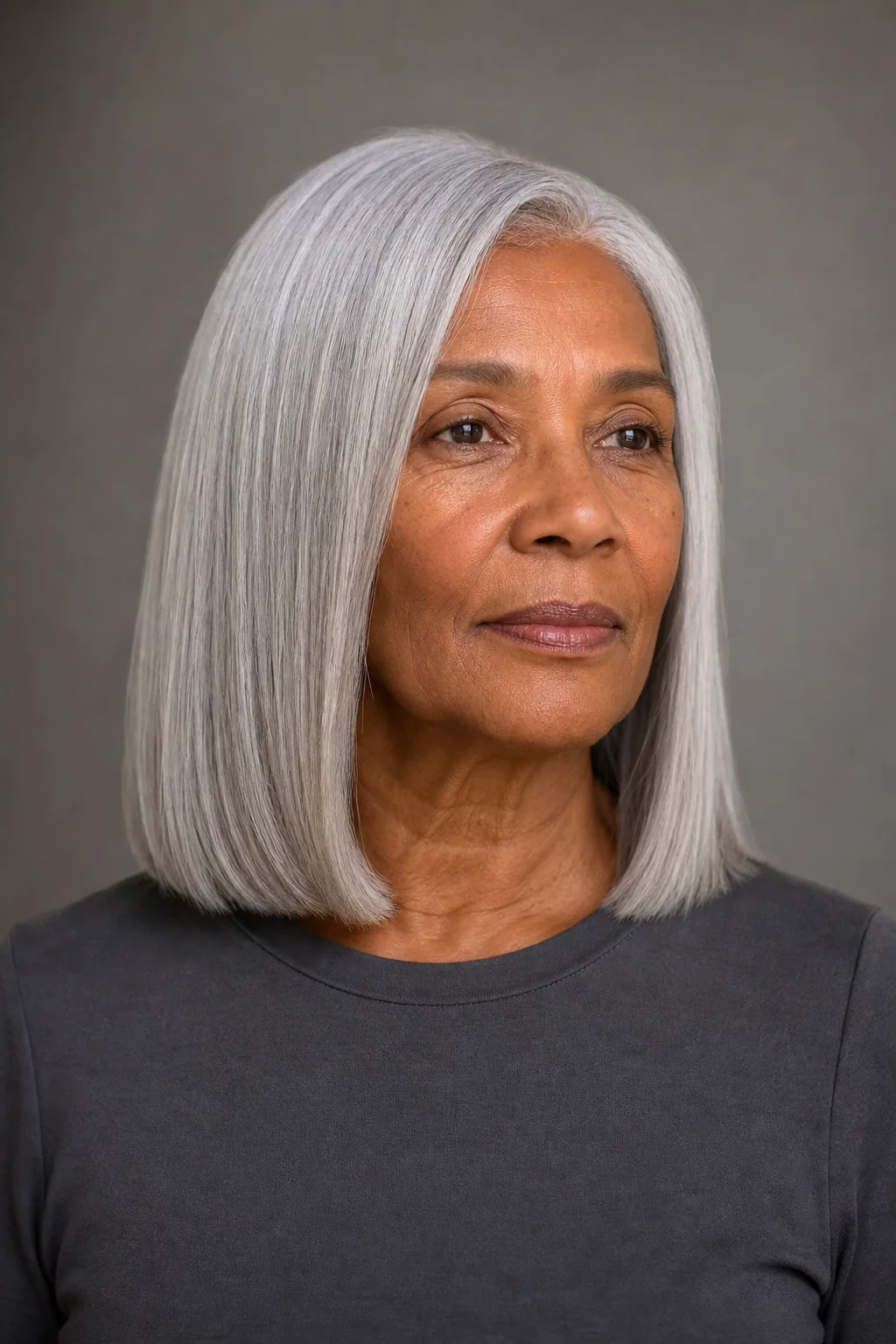
5. Medium Silver Cut With Polished, Glossed Ends
Silver and white hair show every split, because the ends are the driest and brightest part. This cut is trimmed often and blunt, so the line stays crisp, and finished with a smoothing cream and a quick pass of a flat iron. It suits straight to slightly wavy hair at the collarbone. The shine does the work, so skip heavy layers.
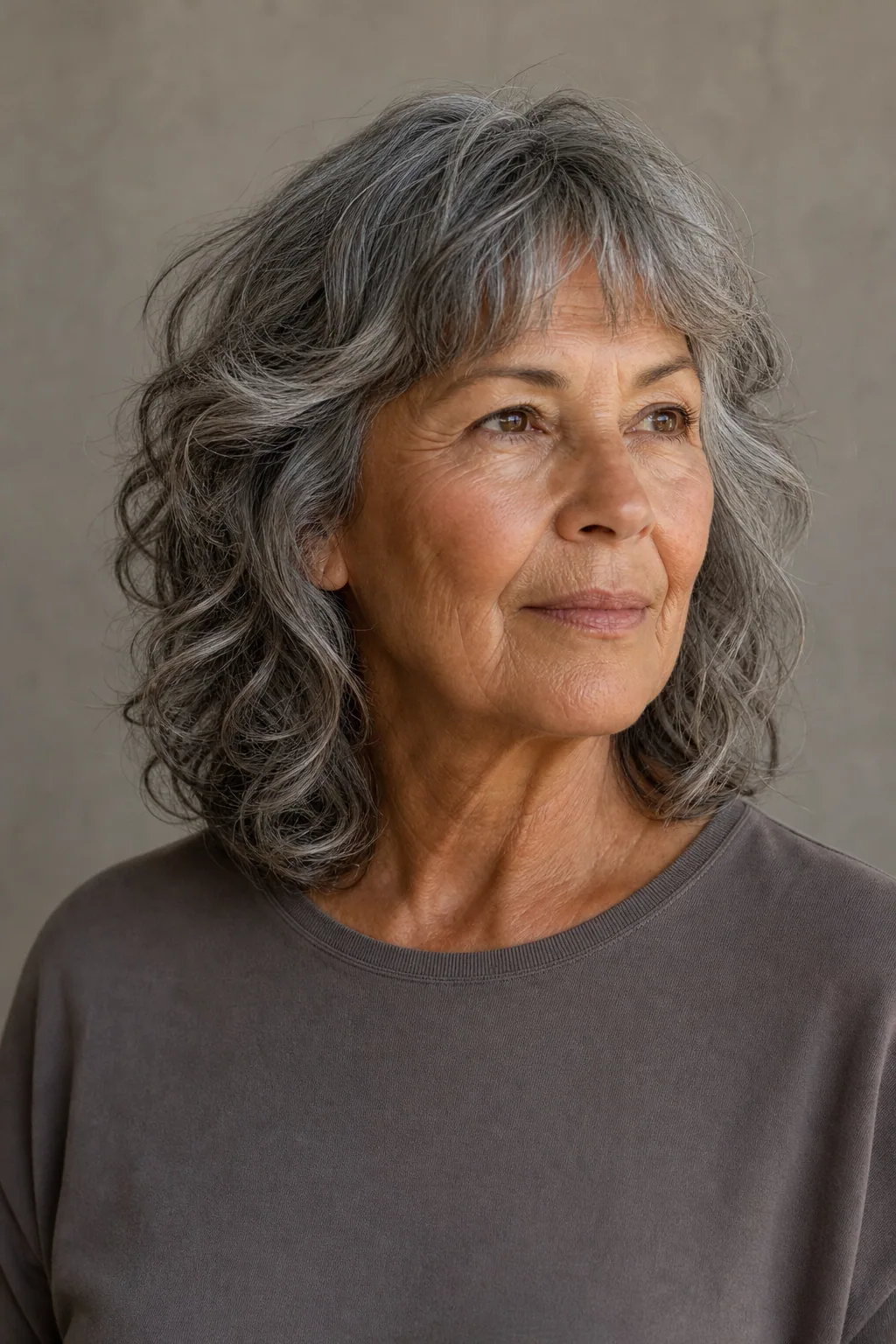
6. Salt-and-Pepper Mid-Length Cut With Long Layers
Where gray and dark hair mix, the textures often differ strand by strand, which makes a one-length cut look uneven. A few long layers, starting at the chin, even out the fall. The ends stay full. This one suits medium density, and it's the easiest to keep tidy at about eight weeks.
Wavy, Curly and Coily Medium Cuts
Wave and curl shrink as they dry, so the finished length is always shorter than the wet length, and the cut has to allow for it. Cut dry or damp, a section at a time, these keep the pattern's weight at the ends where it holds the curl together.
7. Medium Wavy Cut Diffused for Shape
The wave is cut as it falls, then dried with a diffuser on low so the shape forms before the hair is touched. A little cream, no brush. Cutting it a half-inch longer than you want allows for the spring. It suits waves that go flat or frizz when brushed. Ask for "cut it dry, just as it falls, and show me before you remove length."
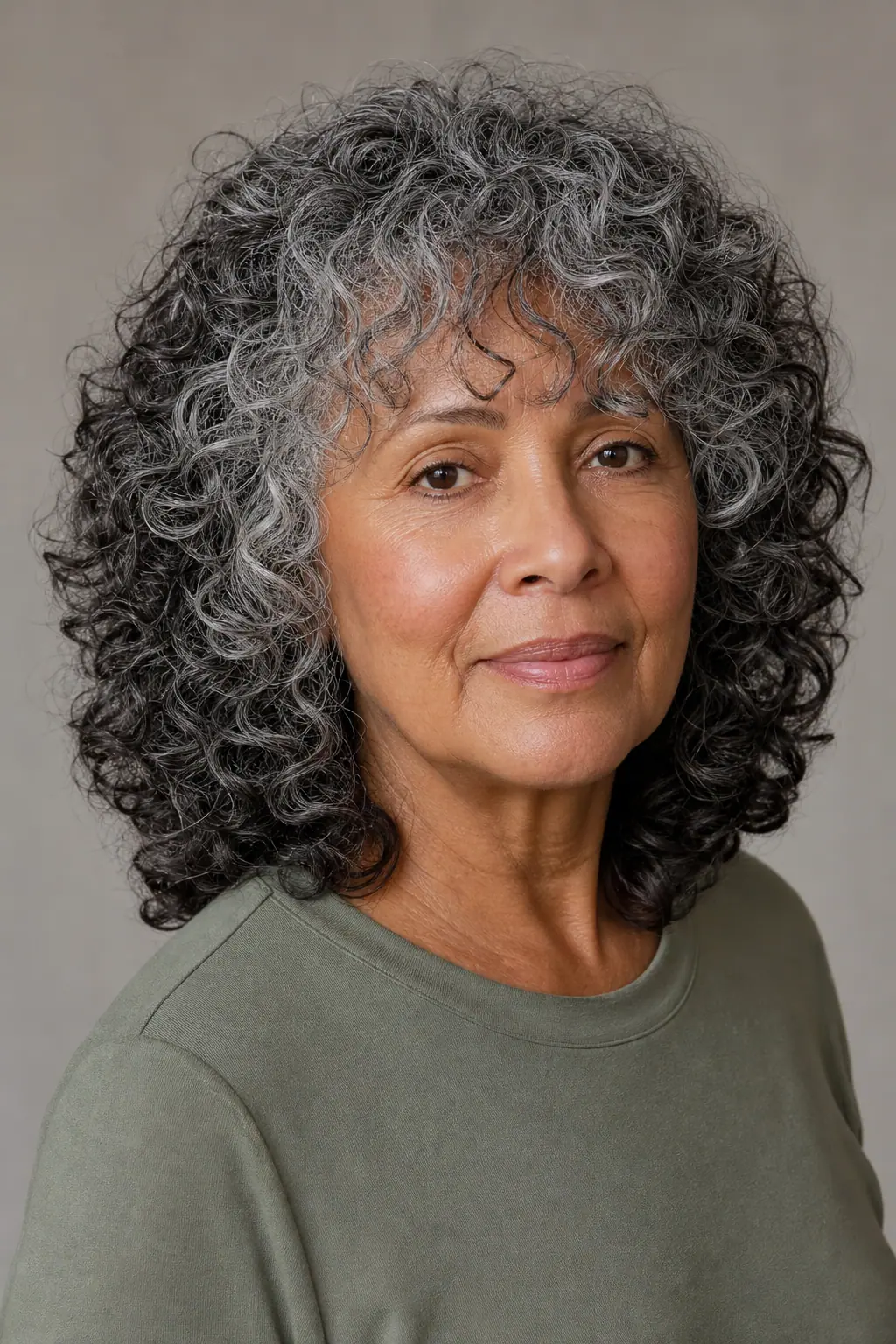
8. Medium Curly Cut With Shape at the Crown
The shortest curls sit at the crown, cut one curl at a time, and the length builds toward the bottom, so the outline is a soft dome instead of a triangle. The rounded top gives the look of fullness where curls tend to lie flat. It suits curl patterns that collapse at the roots. Scrunch cream in with the head tipped down, and lift the roots with your fingertips.
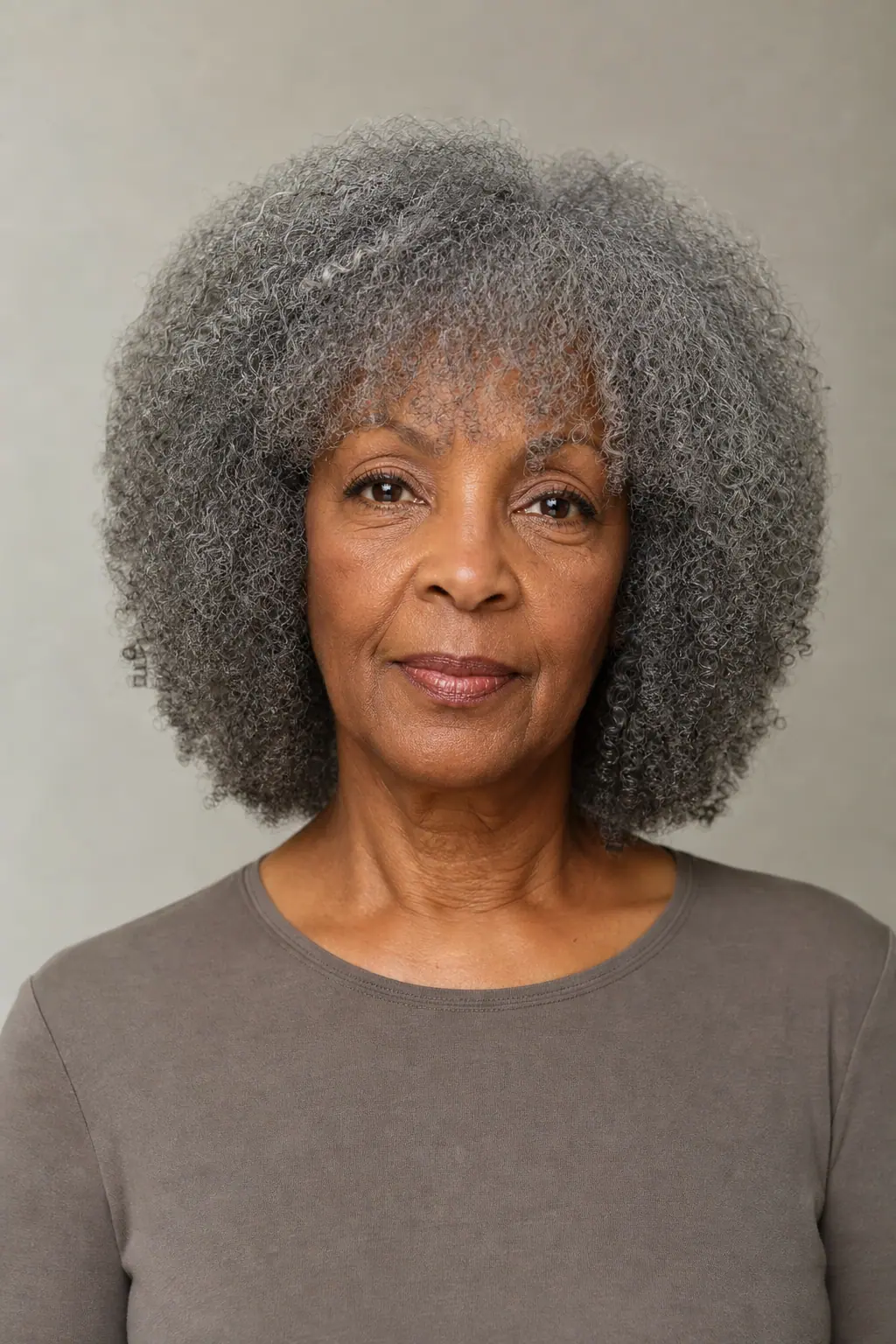
9. Shoulder-Length Coily Cut With a Rounded Silhouette
Coily hair shrinks a great deal, so a cut that looks shoulder-length when stretched may sit above the jaw when dry. Hold the length at the stretched point and shape the outline round, with the hair cut dry or stretched lightly so you can see the finished size. Twist-outs or a pick-out on damp hair keep the shape. Trims every 8–10 weeks keep the outline from thinning at the edge.
Versatile Medium Cuts
These three earn their length: they can be tied up, styled flat or worn with glasses.
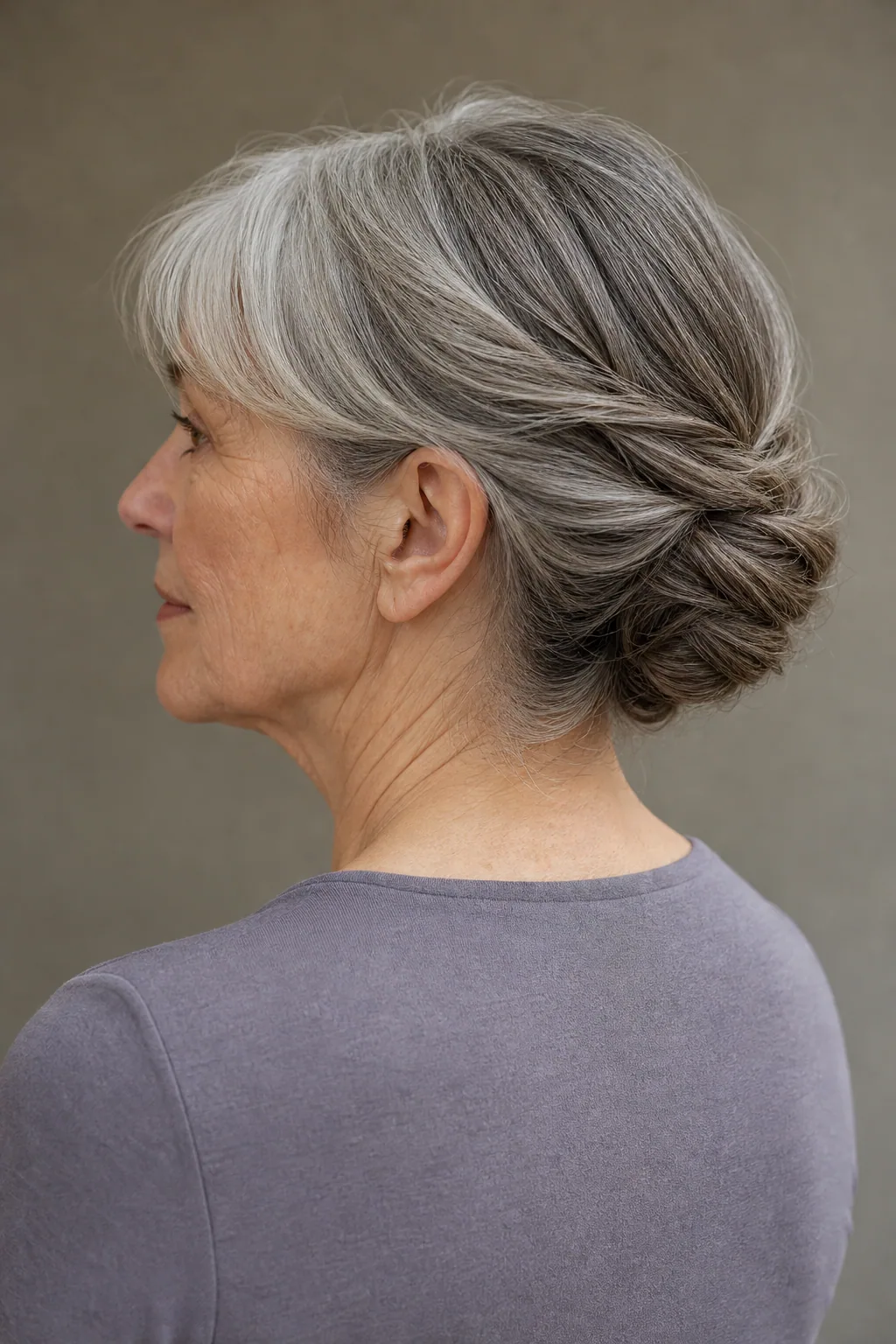
10. Medium Cut With Enough Length for a Low Chignon
A low chignon needs about two hands' width of length behind the ears, which is around the collarbone, with even weight at the ends. This cut keeps the back blunt and the layers short in the front only, so the knot stays full. It suits medium to thick hair and anyone who wants an occasion option. For styling it for an event, see mother of the bride hairstyles.
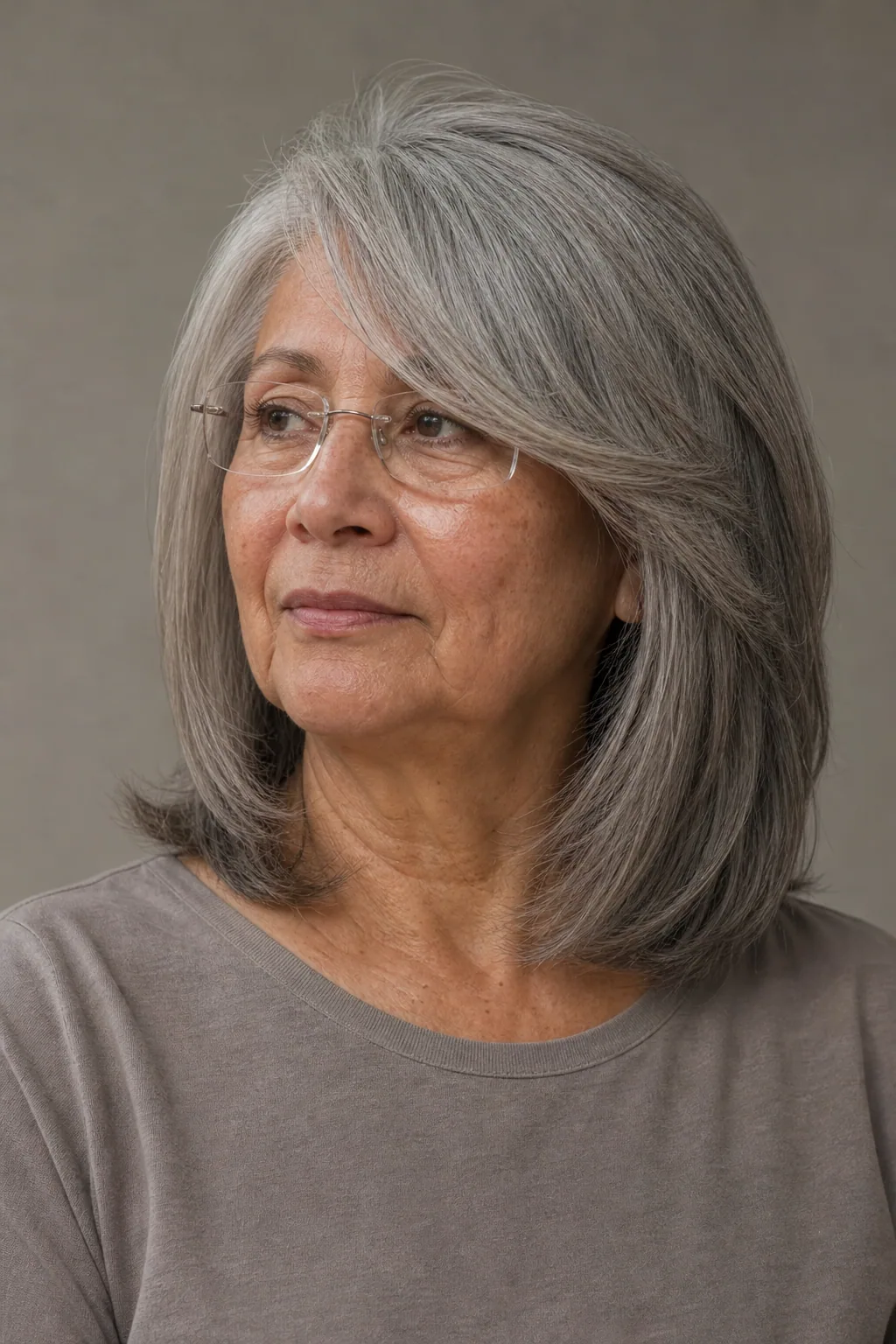
11. Medium Cut With Side-Swept Bangs That Clear Glasses
Side-swept bangs are cut long, so they pass the brow bone and sit above the top rim of the frames. The shoulder-length back is left blunt. It suits readers who wear glasses and want a fringe without lashes catching on it. Ask for "side-swept, longer than the lens, so it doesn't brush the glass."
12. Soft Feathered Layers Brushed Away From the Face
Feathered layers are cut at an angle so each ends in a point, and here they sweep back from the forehead and cheekbone instead of falling forward. They show the face and give height at the temples. It suits fine to medium hair with a clear forehead. A dab of root spray and a round brush at the front is all it needs.
Quick Ways to Style Medium Hair
Medium hair gives you more options than short hair in the same ten minutes. These four tricks cover most mornings.
A 10-minute blow-dry with a 2-inch round brush. Dry the roots first with the nozzle pointing down, then roll the ends under (or out) over a 1.5–2-inch brush and finish with cool air to set it.
Velcro rollers at the crown. Two or three 1.5–2-inch rollers set in dry hair, left five to ten minutes, give lift that holds without product.
The twist-and-clip. Twist the hair from the nape, fold it up and fix it with a claw clip. It works from shoulder length and takes under a minute.
A low chignon for occasions. If you want to wear it up for an event, ask your stylist for a trial at the cut. The mother of the bride hairstyles show how to build it.
Length and an outward flip lift the line past the cheeks
A jaw-length cut with width at the cheeks
Square
2, 3, 7
Soft layers and a curtain fringe take off the corners
A blunt line ending at the jaw
Heart
1, 6, 10
Weight at the collarbone balances a wider forehead
Volume at the temples
Long
3, 8, 11
Width at the sides and a fringe shorten the face
Straight, flat, one-length hair with no fringe
Choose by Hair Type
Match the cut to two things: strand thickness (fine or coarse) and density (how many hairs there are).
Fine hair (narrow strands, any density): a blunt perimeter and few, high layers. Entries 1, 2 and 12.
Thin hair (low density, scalp shows at the part or crown): length at the jaw or shoulder, a solid edge and lift at the crown. Entries 1, 3 and 4. If the loss is sudden or patchy, see a board-certified dermatologist.
Coarse or gray hair: clean ends, a smoothing cream and a long layer or two to release weight. Entries 5 and 6.
Wavy hair: cut as it falls and finished with a diffuser. Entry 7.
Curly hair: shortest curls at the crown, length at the ends. Entry 8.
Coily hair: hold the length at the stretched point and shape the outline round. Entry 9.
What to Ask Your Stylist
Bring the words, not just a photo: where the length lands, how the ends are cut and where the layers start. Say these out loud:
"I want the ends cut straight across, and a solid line at the bottom."
"Put the layers at my cheekbone and leave the back long."
"Show me where the length will land when it's dry, before you cut."
"I want lift at the crown. Don't take weight out of the ends."
"I wear glasses. Keep the fringe above the top of the frames."
"Tell me when I'll need the next trim, and what it will look like in between."
Maintenance and Styling Reality
Medium cuts need fewer trims than short ones and a little more styling time. Pick the trade-off that fits your week.
Cut (entries)
Trim every
Daily styling
Products and tools
Grow-out
Blunt and flipped (1, 4)
6–8 weeks
8–12 minutes
Heat protectant; 1.5–2-inch round brush
Grows evenly
Layered (2, 6, 12)
7–9 weeks
10–12 minutes
Root-lift spray; 1.5–2-inch round brush
Layers join the length
Fringe cuts (3, 11)
8–10 weeks (fringe 3–4)
5–10 minutes
Light cream; 1-inch round brush
The fringe joins the layers
Silver and gray (5)
6–8 weeks
8–12 minutes
Smoothing cream; 1-inch flat iron
Even and forgiving
Wavy and curly (7, 8)
8–10 weeks
5–10 minutes
Curl cream; diffuser on low
Keeps its shape
Coily (9)
8–10 weeks
10–15 minutes
Leave-in cream; wide-tooth pick
Edge grows evenly
Chignon-ready (10)
8–10 weeks
10–15 minutes
Pins and a claw clip, 2–3 inches
Very forgiving
Frequently Asked Questions
Does shoulder-length hair drag the face down after 60?
It can, when the hair is one flat length with thin ends, because the line falls straight from the cheek to the shoulder. Put some movement beside the face, with a bend at the ends or a few layers from the cheekbone. A soft shape keeps the eye on the cheekbone, not the jaw.
What medium length haircut is best for fine hair over 60?
A blunt shoulder-grazing cut with a soft bend at the ends, because a solid edge makes fine hair look fuller. Keep layers few and high. Ask your stylist to hold the hair at the length you want before cutting, so you can see whether the ends hold.
How do I add volume to medium-length hair over 60?
Dry the roots first, with the nozzle pointing down and the hair lifted at the crown. Two or three Velcro rollers, set in dry hair for five to ten minutes, give lift that outlasts a spray. Cut matters most: keep the top a little shorter than the ends so it can stand.
Should I have layers in medium hair at 60?
Yes, a few, if the ends are full. Start the first layer at the cheekbone or chin and leave the bottom inch untouched. If your ends are thin, skip layers below the chin, because they make the outline look see-through.
How often should medium-length hair be trimmed?
Every 6–8 weeks for jaw-length and blunt cuts, and every 8–10 for collarbone cuts, wavy hair and curls. The ends go first at this length, so book the next visit before you leave. Hair that is color-treated or heat-styled often needs the sooner end of the range.
Is medium length easier than short hair?
For most people, it is a change in kind, not a step up in effort. You trim less often and can tie hair back, but it takes a few more minutes to dry and style. If you want the fewest minutes, short hair that follows your natural fall will beat medium.
Does gray hair suit medium length?
Yes, if the ends are kept clean. Gray hair is often coarser and catches the light, so blunt ends read as chosen. Trim every 6–8 weeks and use a smoothing cream to keep the ends from looking rough.
Results vary with hair type, density, texture and face shape. This guide is educational and is not a substitute for an in-person consultation with a licensed stylist.
 Grace