Medium Shaggy Hairstyles for Women Over 60: 12 Soft Shags
By Melissa Timperley, Salon Owner & Hairdressing Educator · Reviewed by Coral Pleas · Updated November 2026 · 12 min read
A shag over 60 should be soft, not choppy: the layers are cut with scissors or point-cut, they sit at the crown and around the face, and the weight stays in the ends. Gray and white hair is often coarser and drier, and it frizzes at heavily razored ends, so a good shag puts its movement high and keeps the outline full. On fine hair that means fewer layers placed higher; on thick or wavy hair, more layers cut into the interior.
Below are 12 medium shaggy hairstyles for women over 60, grouped by fine, gray, wavy and curly hair, with who each suits, the salon words to ask for and honest trim times. For the whole range of lengths, see our guide to hairstyles for women over 60. If you want shoulder-length hair without the layers, start with medium-length hairstyles for women over 60.
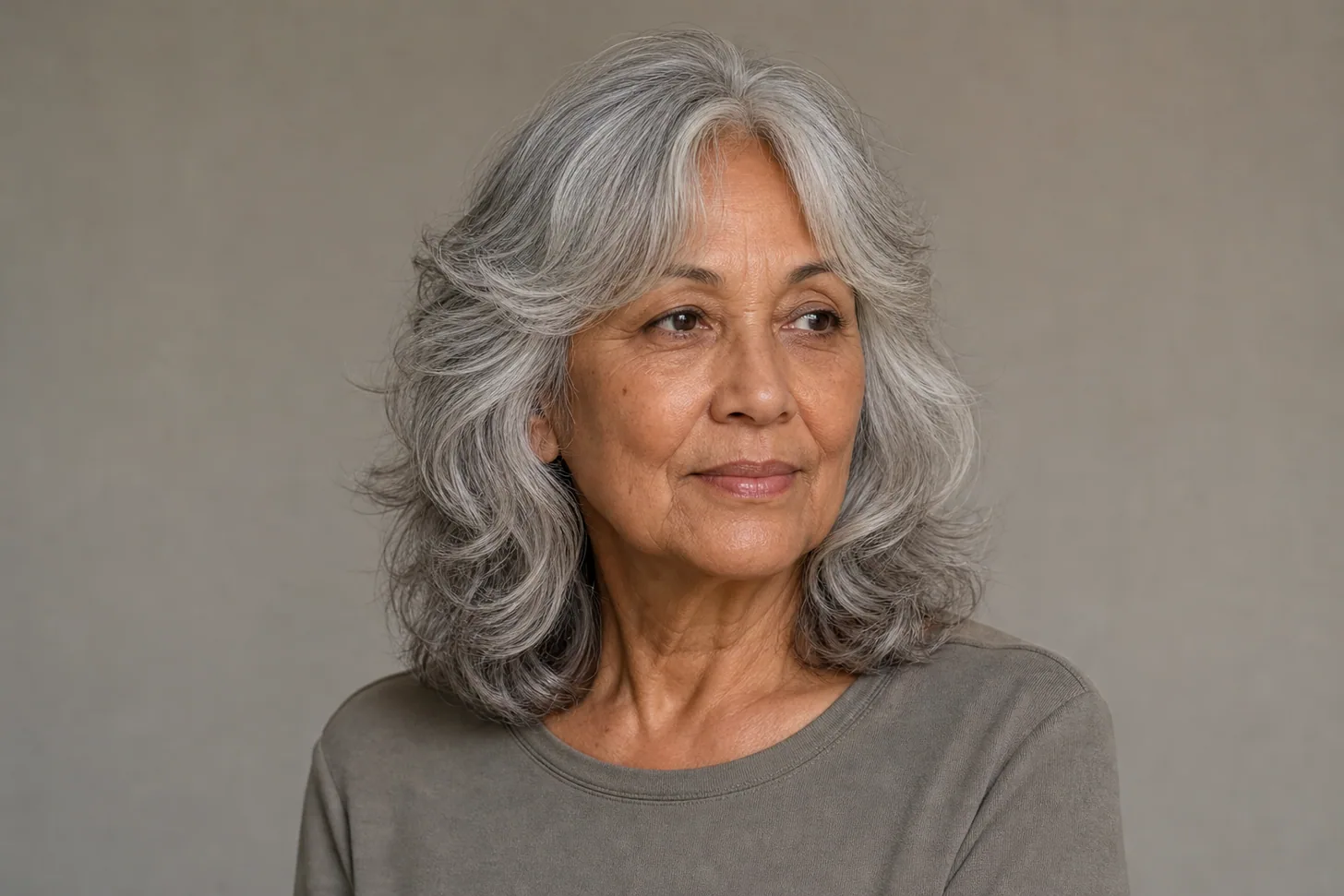
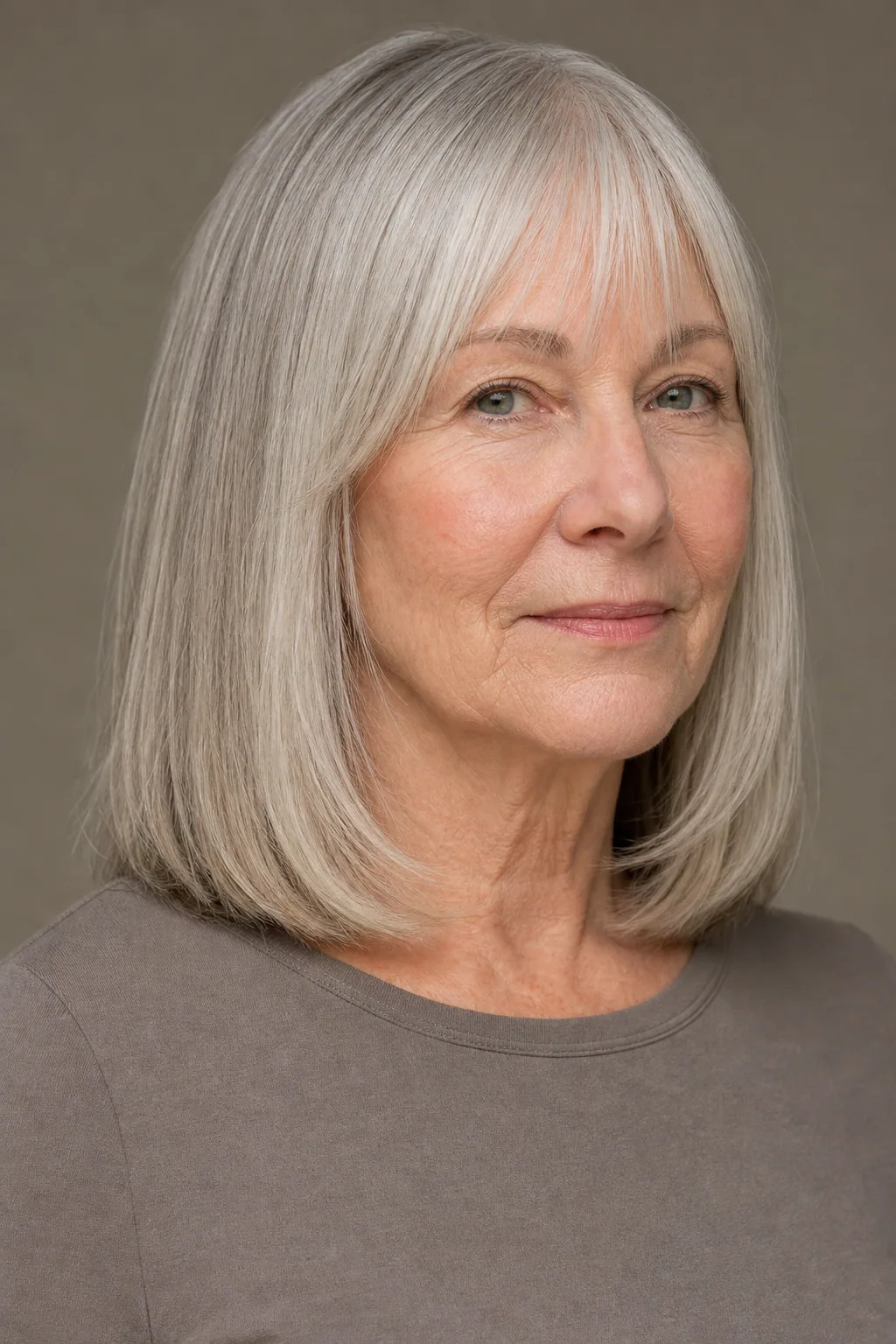
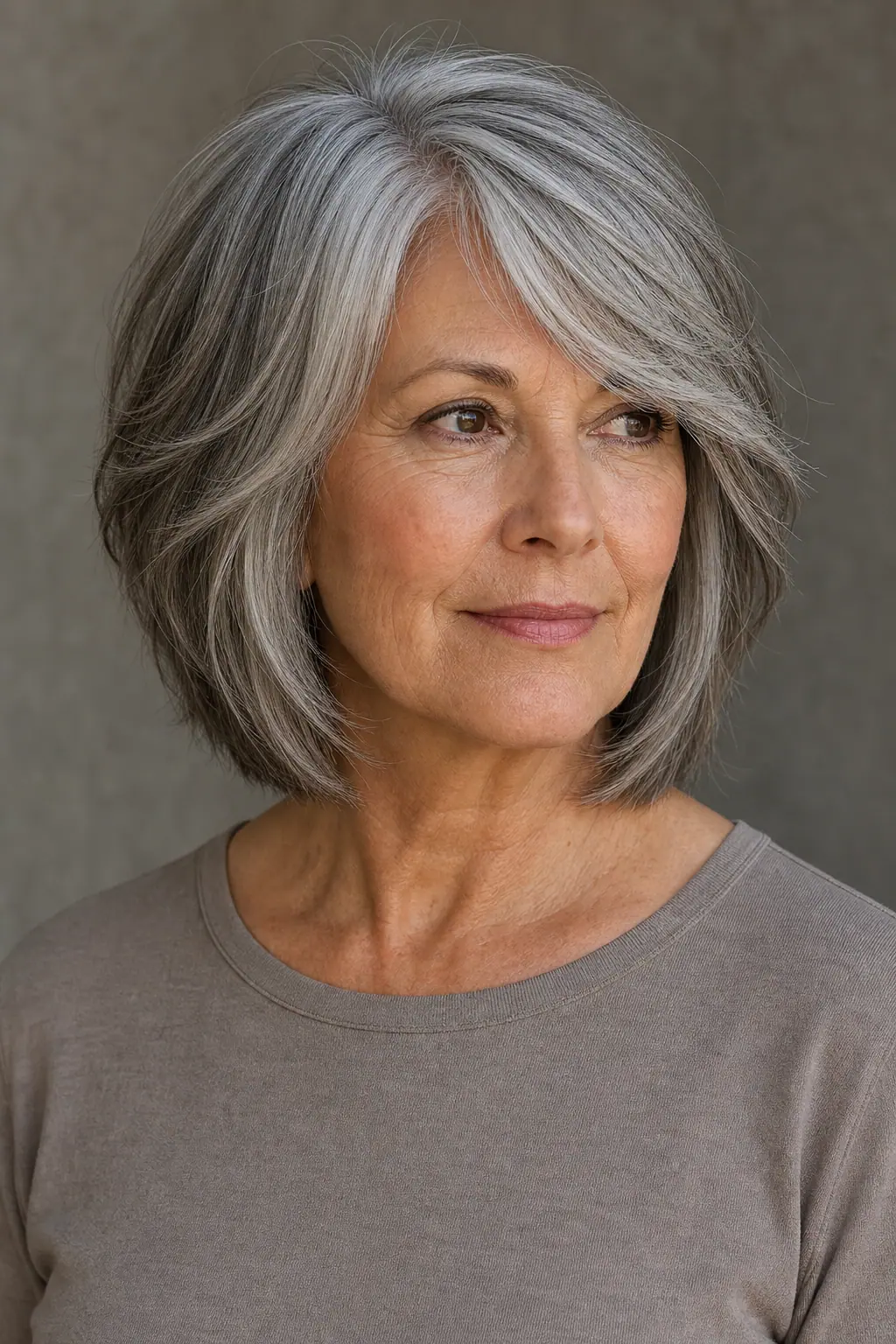
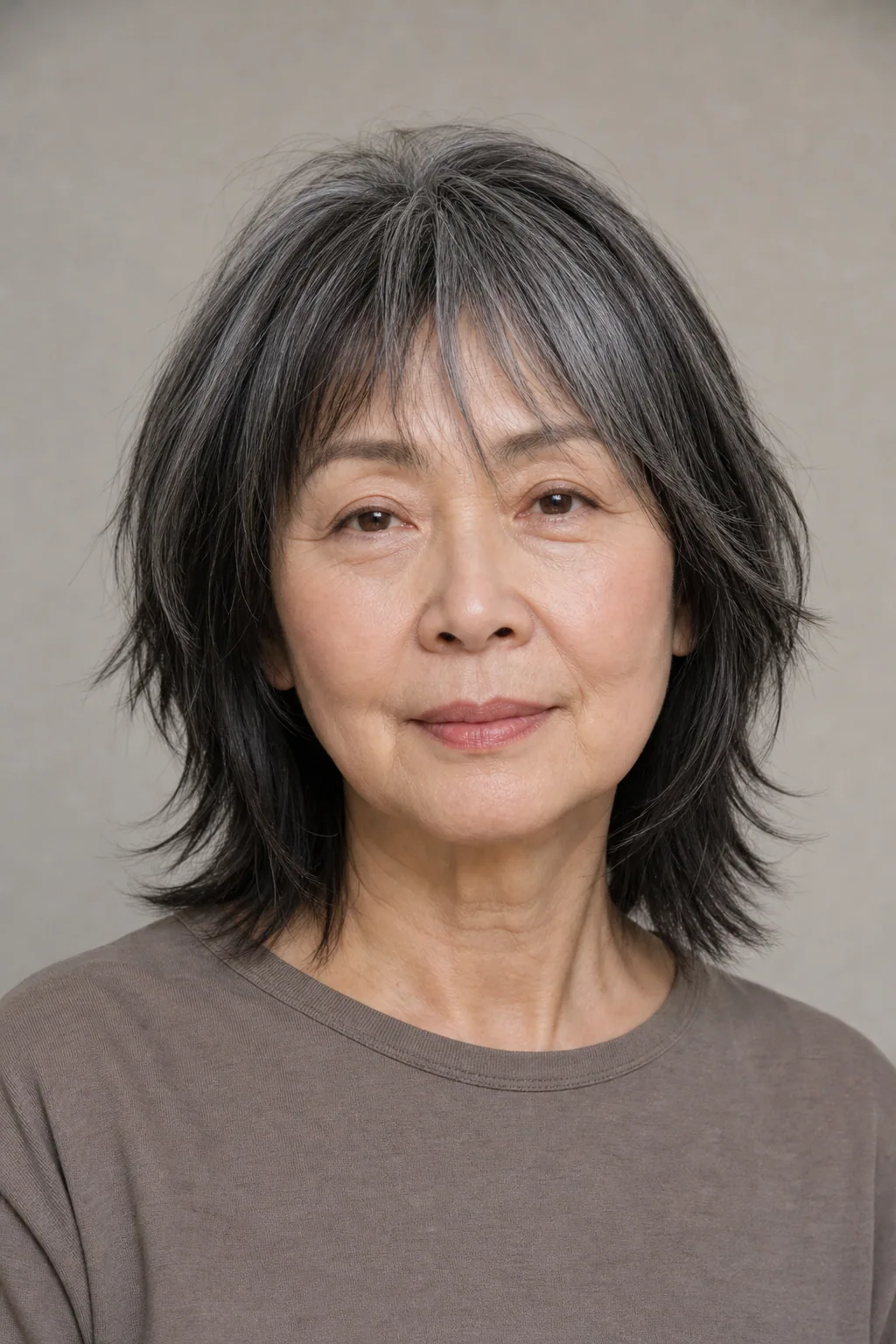
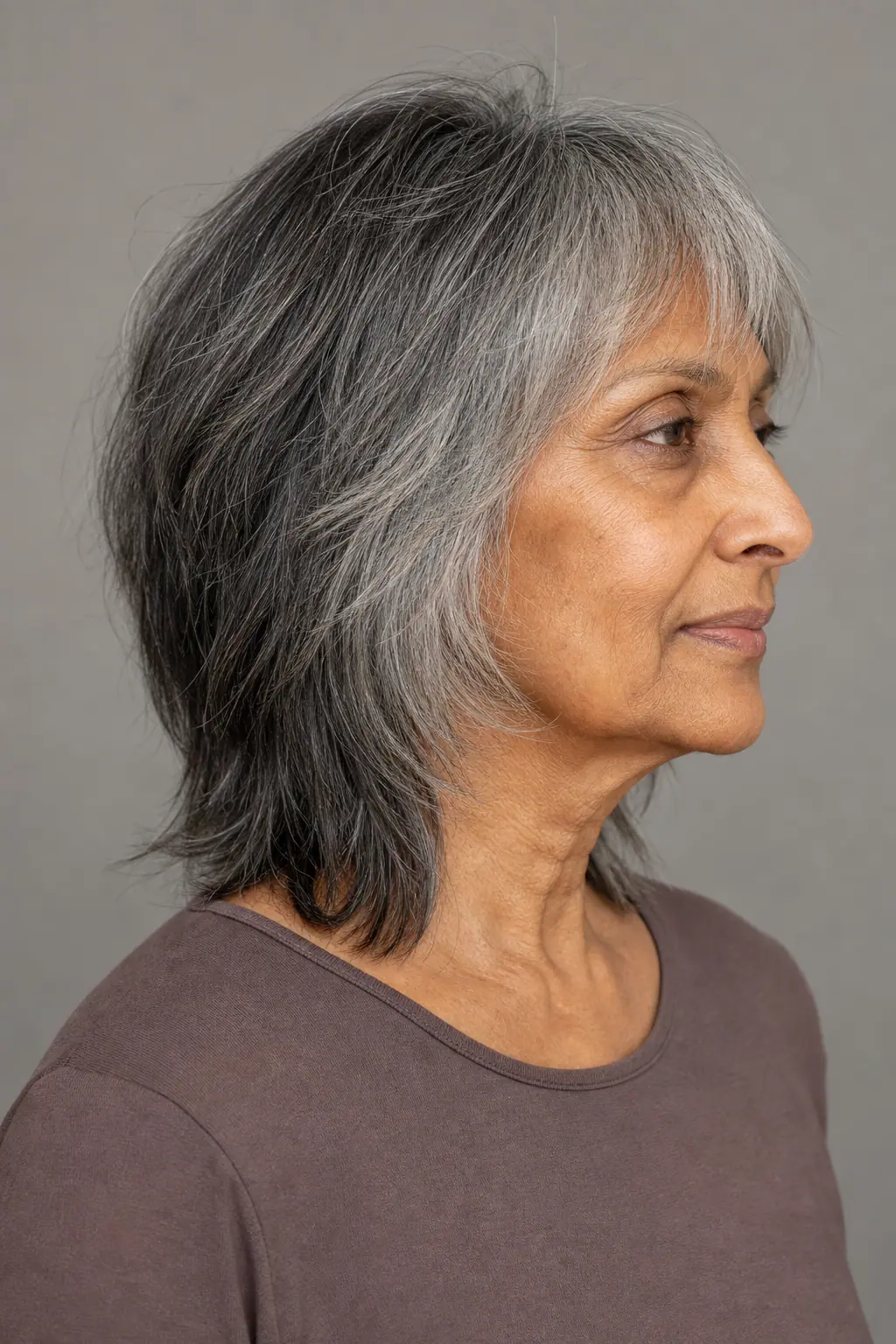
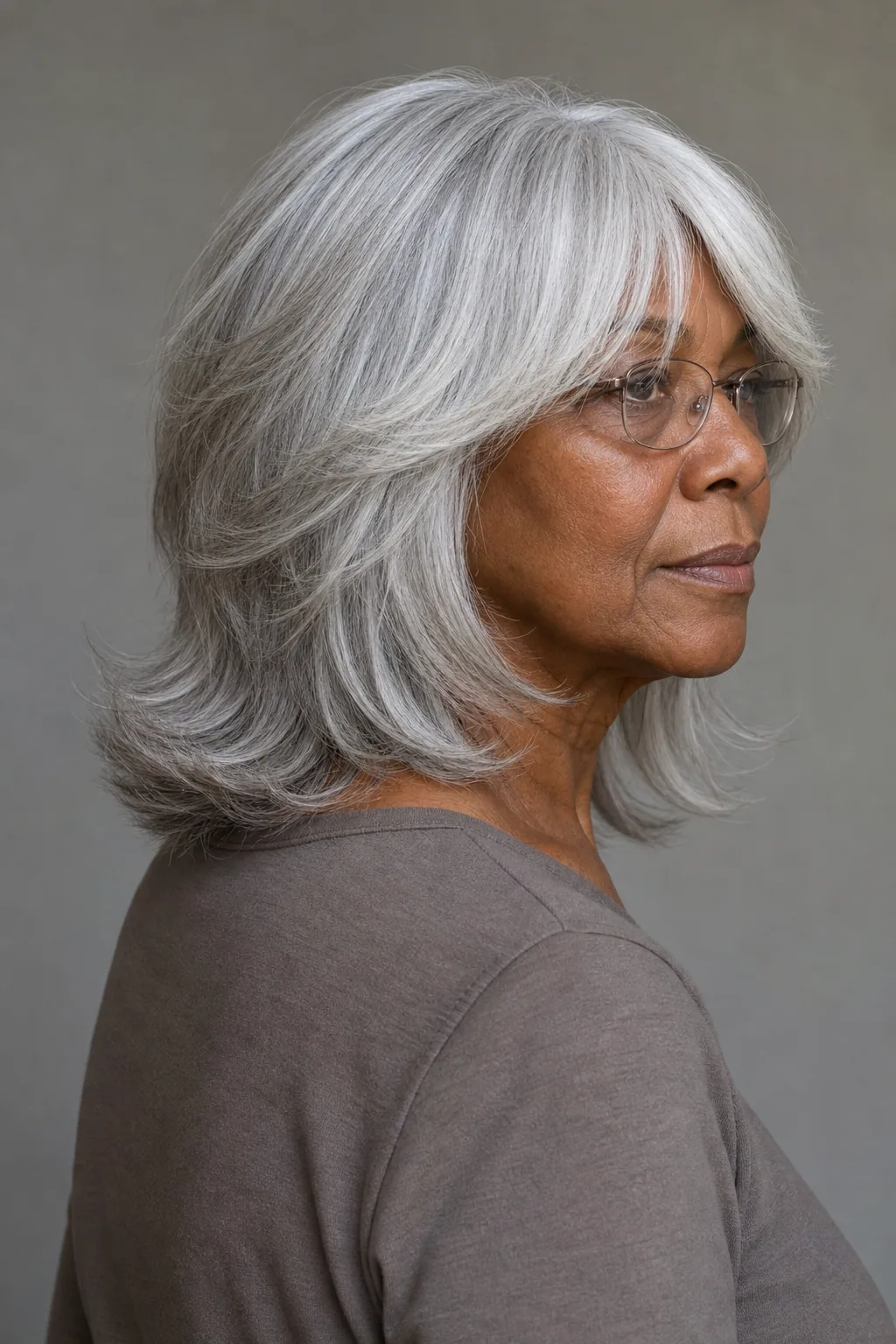
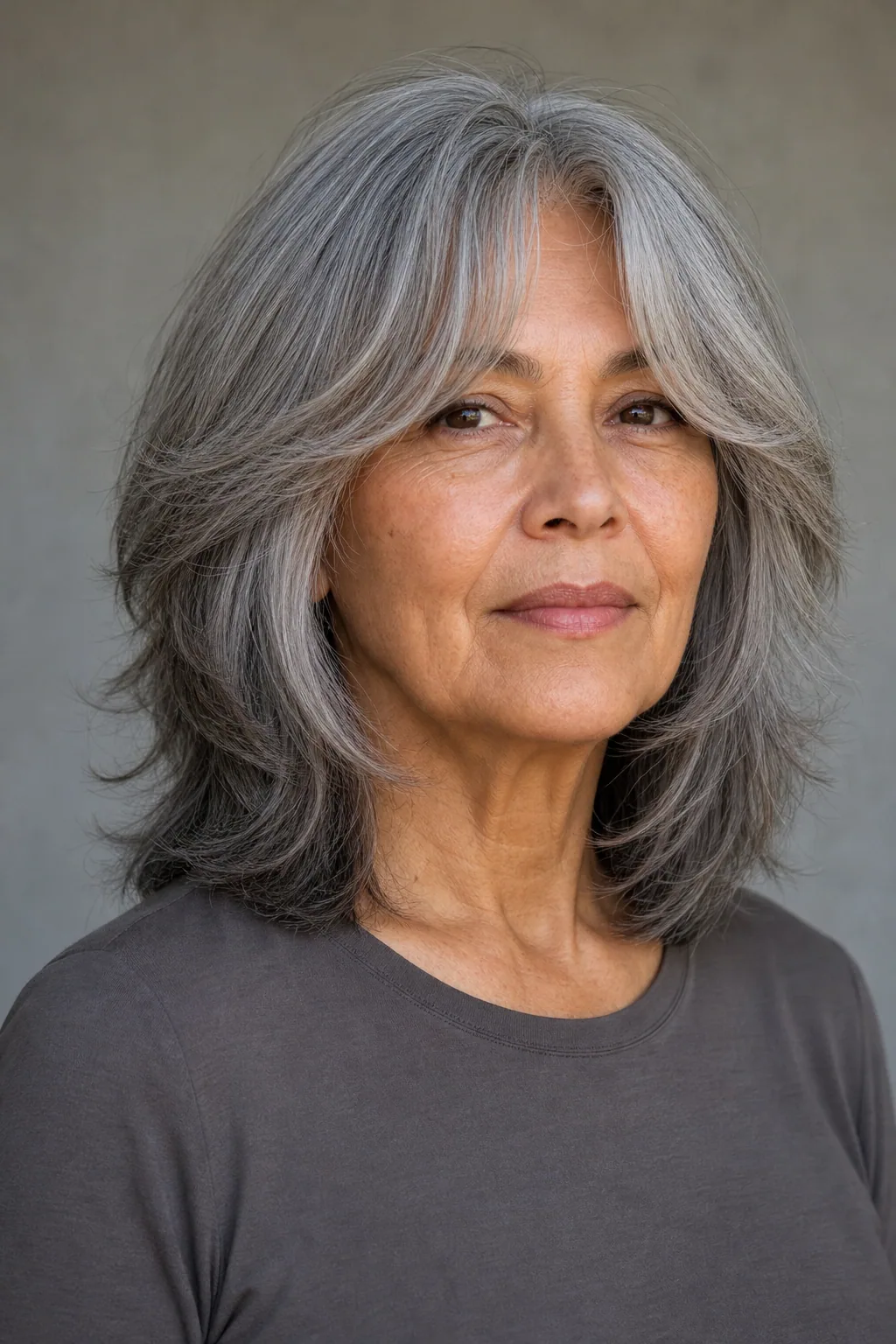
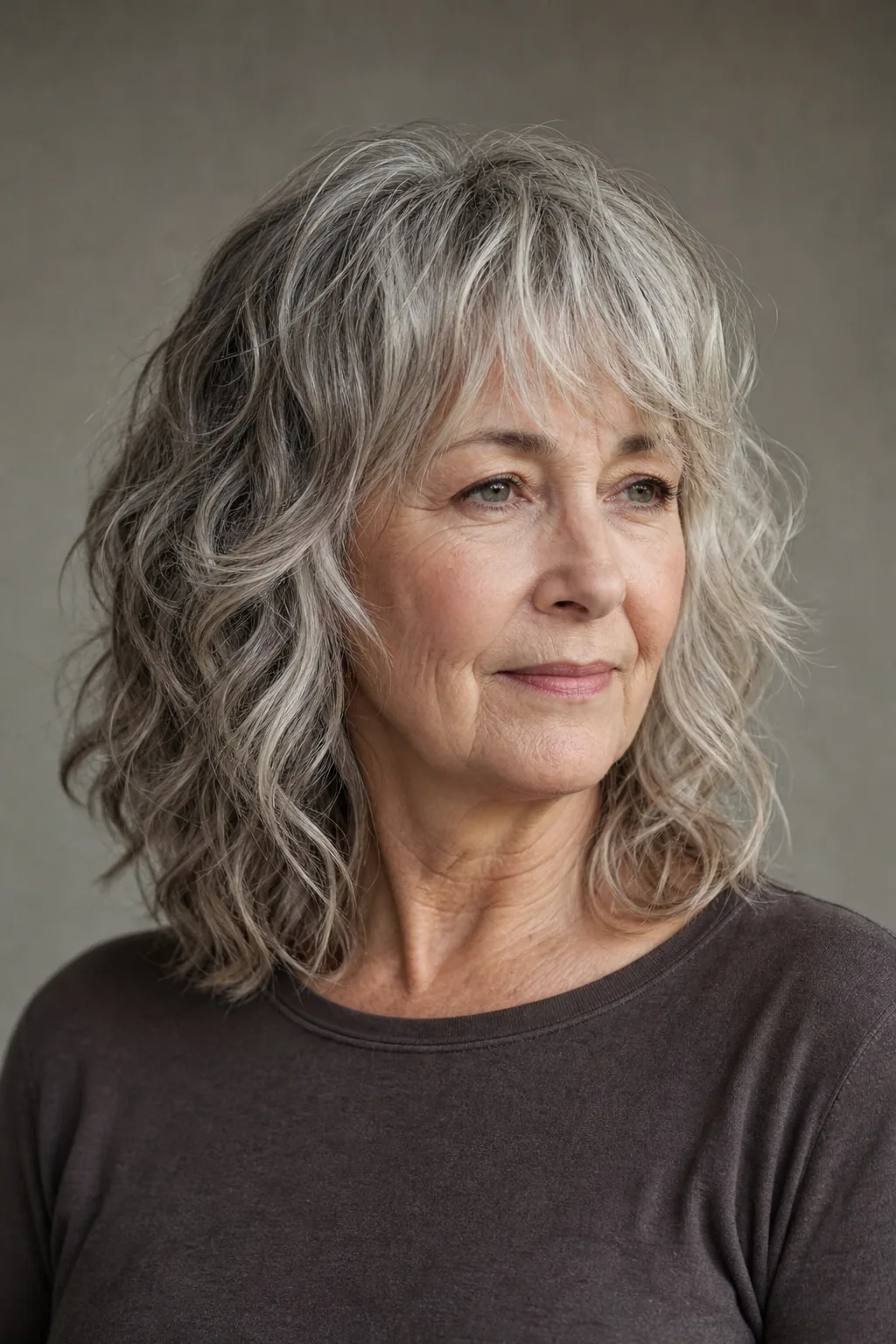
Hairstyle images in this guide are AI-generated illustrations, not photos of real clients or results. See our image standards.
Soft Shag vs Choppy Shag: What Changes After 60
A soft shag is layered with scissors or point cutting, mostly at the crown and around the face, and it keeps full ends; a choppy shag is layered with a razor or thinning shears all the way through, and its ends go thin and frizz. After 60 the difference matters more, because gray and white hair is often coarser and drier. Razored ends split into fine wisps, and no cream closes them. A cut changes how full hair looks, not how much there is, so the job is to put the movement where it shows and keep the weight where it holds the outline.
Choppy shag
Soft shag
Layers
Short layers all over, including underneath
Longer layers, shortest at the crown and around the face
Ends
Thinned and wispy
Full, with a point-cut edge
Tool
Razor or thinning shears
Scissors and point cutting
Fringe
Short, heavy, cut in a hard line
Wispy, curtain or side-swept, cut to move
How it dries
Needs product and heat to look intentional, and frizzes without them
Air-dries or diffuses into shape in 5–10 minutes
Who it suits
Dense hair with little frizz and a smooth texture
Fine to thick, and gray, coarse, wavy or curly hair
Point cutting means the scissors snip upward into the ends instead of straight across, so the edge breaks into soft pieces and the hair keeps its weight. If a razor comes out, say you would like scissors on the ends. For a shorter version of the same idea, the shaggy bixie in our short haircuts for women over 60 is cut the same way.
Where the Layers Go: Matching the Shag to Your Density
The number of layers depends on density: the fewer hairs you have, the fewer layers and the higher they sit. Density is how many hairs are on your head, not how wide each strand is, and fine strands can be dense while coarse ones can be sparse. A quick check is to part your hair when it is damp. If a lot of scalp shows along the part, treat it as low density.
Density
Layers
Where they sit
Fringe
What to ask for
Low (fine or thin hair)
2–4
Above the chin, from the crown to the cheekbone; none underneath
Wispy and cut dry, or none
"A few high layers, and keep the ends full"
Medium
4–6
From the crown to the collarbone, shortest at the cheekbone
Curtain or side-swept
"Soft layers from the crown, no short pieces underneath"
High (thick, coarse or wavy hair)
6–8
Cut into the interior and through the mid-lengths, not only the top
Curtain, left long enough to tuck
"Take weight out from inside with scissors, and leave the ends full"
These are starting points, not rules. Wave and curl pull up as they dry, so the same layers look shorter on wavy hair than on straight, and your stylist should cut them with that in mind.
Shags for Fine Hair
On fine hair, a shag works when the layers are few, set high and cut with scissors, so the ends stay solid. Too many layers, or layers that start low, make the ends see-through.
1. Collarbone Shag With a Few High Layers
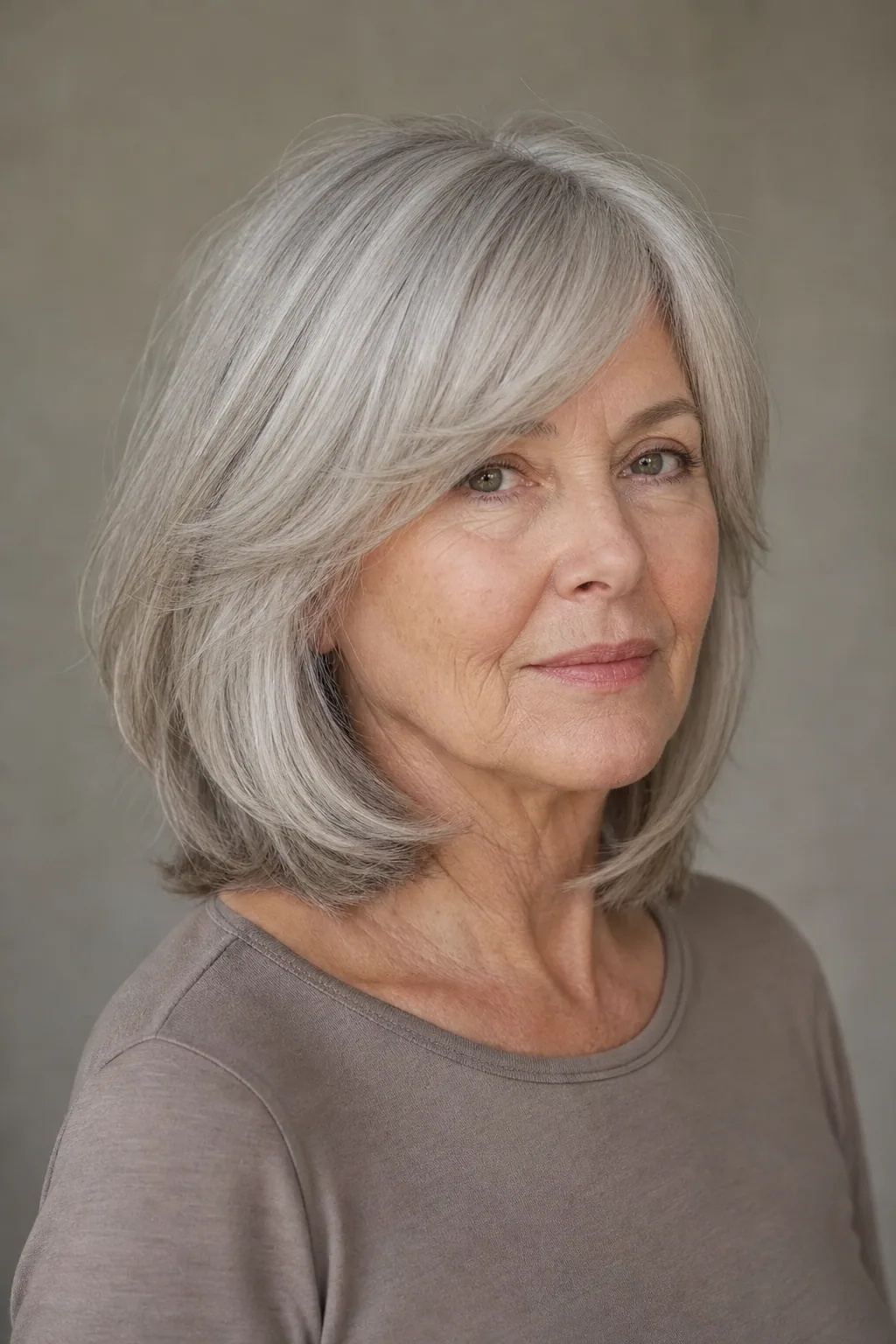
Three or four layers, all starting at the crown and ending at the cheekbone, give fine straight hair lift without taking anything from the perimeter, which stays blunt at the collarbone. The layers do the work on top, and the length does it underneath. It suits fine hair of medium density that goes flat by the afternoon. Ask for "a few layers, all above the chin, and nothing short underneath."
2. Shag With the Weight Left in the Ends for Thinning Hair
When hair is thinning, the ends are what hold the outline, so this shag takes nothing from them. The layers are cut only at the crown and the sides of the face, and below the chin the hair falls in one solid line, which is the weight line, the lowest edge where the hair is heaviest. Say "don't take weight off the ends with thinning shears," and part it deeper to one side to cover more scalp.
3. Soft Shag With Wispy Bangs for Fine Gray Hair
Fine gray hair can look flat from the front, and a wispy fringe adds the height there. The bangs are cut dry, in the way your hair naturally falls, and point-cut so the edge is soft and see-through instead of a solid line. Behind them the layers are the same few high ones as entry 1. Plan on a trim every 3–4 weeks to keep the fringe off your eyes.
Shags for Gray, Silver and Coarse Hair
Gray and white hair is often coarser and drier than the hair it replaced, so it needs scissor-cut ends, a little slip from a cream and layers with weight behind them. If you are still growing color out, our guide to how to go gray covers the transition, and a shag suits every stage of it.
4. Salt-and-Pepper Shag With Point-Cut Ends
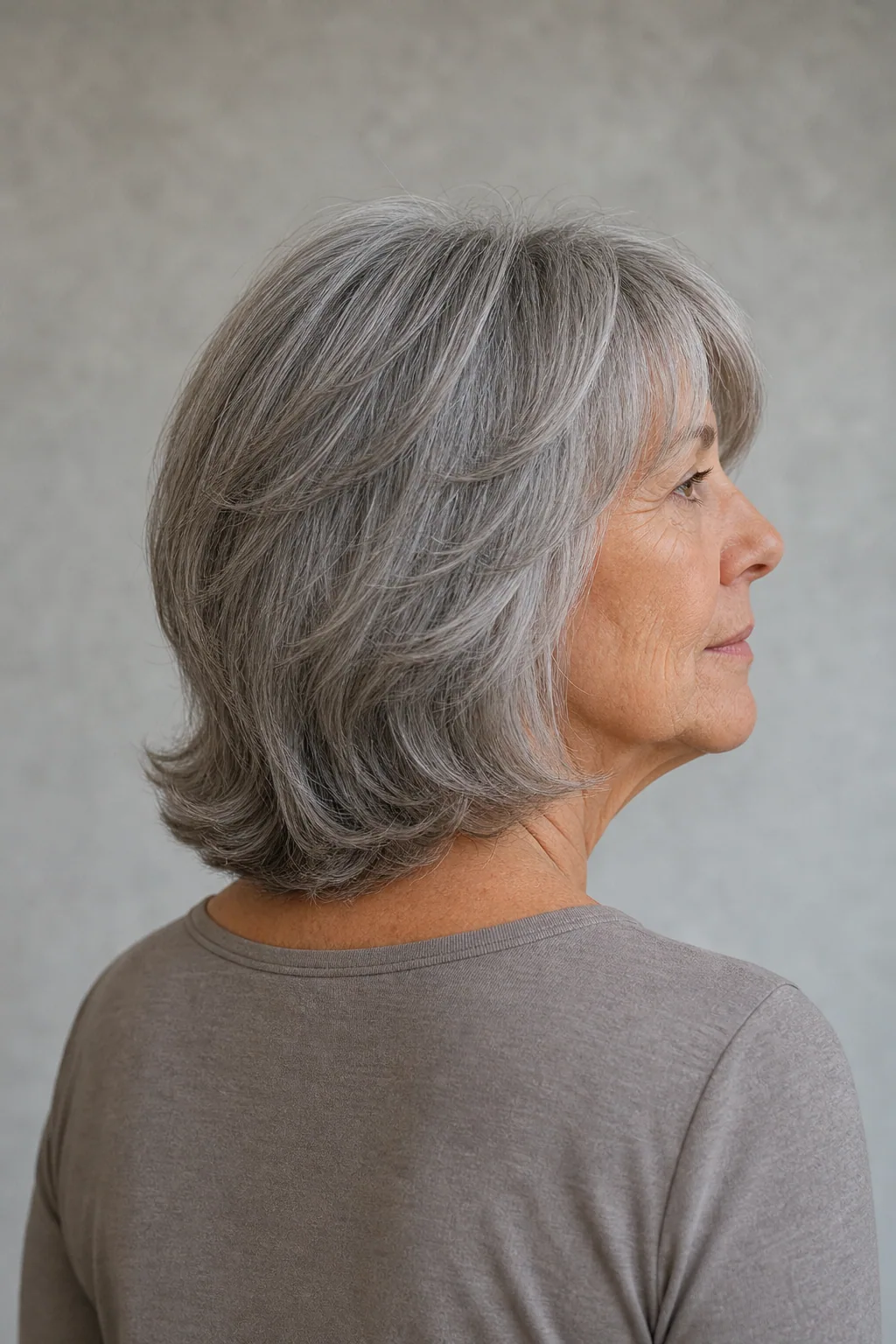
Where the gray strands are coarser than the dark ones around them, razored ends frizz first, so this shag is finished with point cutting, scissors only. The ends break into small pieces that give the texture a razor would, with no wisps at the tips. It suits straight to slightly wavy hair of medium density. Ask for "point-cut ends, scissors only, no razor."
5. Silver Shag Smoothed With a Cream
On silver hair the shag does its work in the finish. A nickel-sized amount of smoothing cream worked through damp mid-lengths and ends keeps dry silver from puffing, and heavy oils are best left out because they sit on the surface and weigh the layers down. Air-dry, or dry on low heat, then run your fingers through the crown once. It suits coarse, dry silver that frizzes in humid weather.
6. Shoulder Shag With Curtain Bangs for Thick Gray Hair
Thick hair needs weight taken out from inside, so the layers here are cut into the interior, not only on top, with the shortest at the cheekbone and the perimeter at the shoulder. Curtain bangs are parted in the middle and swept to either side, and they grow out into the face layers. The long layers in our wash-and-wear haircuts for over 60 start at the chin, while this cut has shorter crown layers, so it has more shape and a little more upkeep. Ask for "interior layers with scissors, ends left full."
Wavy, Curly and Coily Shags
Wave and curl change the rules: the layers are cut to the pattern, ideally dry, and slightly longer than you plan to wear them. Curl pattern often changes in the 60s, so ask for the cut that suits the hair you have now.
7. Shoulder-Grazing Wavy Shag Diffused on Low
Here the drying matters as much as the cut. The shortest layer sits at the chin and the perimeter just touches the shoulders, which gives the wave room to stack. Scrunch in a light wave cream, hold a diffuser on low heat under the waves until they are mostly dry, and then leave them alone, because touching wet waves breaks the clumps into frizz.
8. Curly Shag Cut Dry
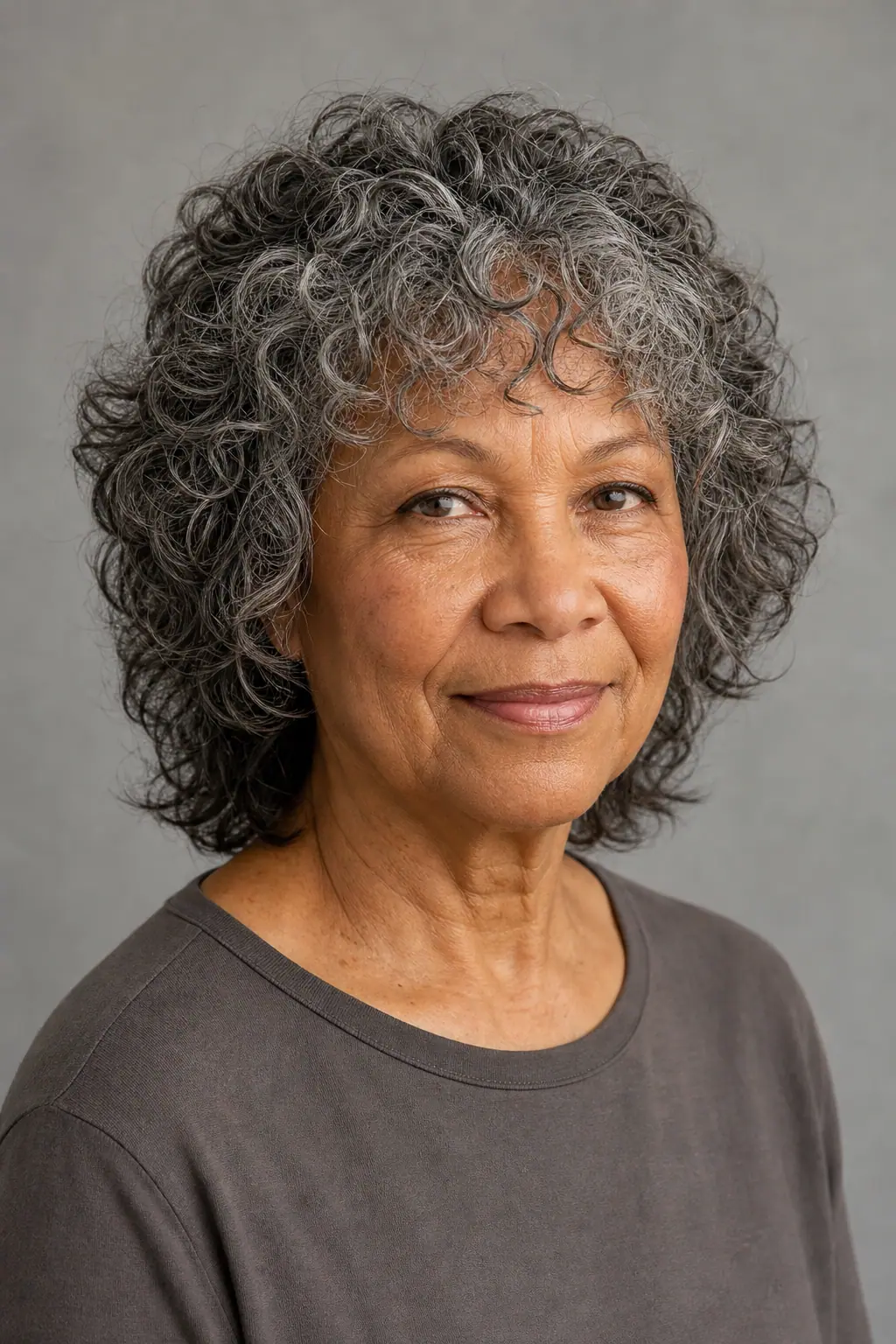
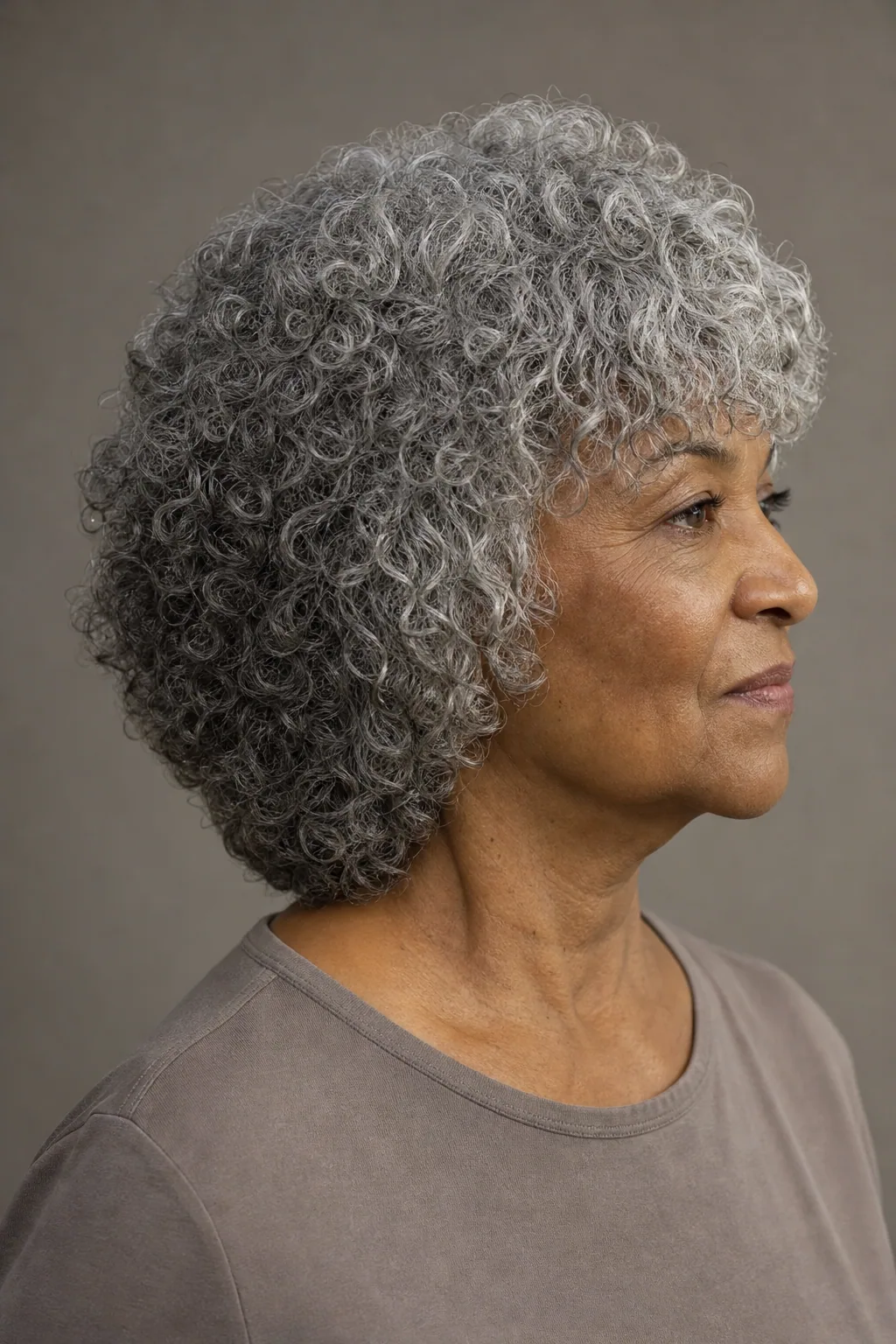
Curly hair is cut dry, curl by curl, so the stylist sees where each one springs up and lands. At medium length the layers round the shape, shorter at the crown so the curls stack upward and longer at the face and nape. Razors and thinning shears break a curl clump into frizz, so ask for scissors only. Ask for "a dry cut, curl by curl, with rounded layers."
9. Coily Shag Shaped in Rounded Layers
Coily hair shrinks as it dries, so the layers are cut in rounded steps rather than a straight line, building height at the crown and staying full at the sides. The even short shape in our wash-and-wear guide is one length all over, while this one keeps more length around the perimeter and leaves the ends untapered. Have it shaped dry, in its natural state, and finish with a water-based leave-in and a light butter.
Shag Variations
These three change one thing about the shag: the length, the fringe or the finish. Each keeps the same rule of scissor-cut layers and weight in the ends.
10. Shaggy Lob With Side Bangs
A lob, or long bob, ends between the chin and the shoulder, and here it is layered lightly at the crown and sides. The long side-swept bangs blend into the face-framing layers, so there is no separate fringe to grow out. It carries less bulk than a jaw-length shag, and it suits straight to slightly wavy hair of medium density. Ask for "a layered lob with side bangs that blend into the layers."
11. Mid-Length Shag With a Fringe That Clears Glasses
The fringe ends just above the top rim of your frames so it never rests on the lenses, and the side layers start below the arms so no short pieces catch there. Ask your stylist to check both with your glasses on. For frame shapes, fringe length and progressive lenses, see our guide to hairstyles for women over 50 with glasses.
12. Polished Shag Blow-Dried With a Round Brush
For a smoother finish the layers stay long and blended, and the hair is dried with a 1.5-inch round brush, rolling the ends under and the crown up. The result is polished, not sleek, because the layers still move. It suits straight or slightly wavy hair, takes 10–15 minutes and needs a heat protectant and a root-lift spray at the crown.
How to Style a Shag Over 60
A soft shag takes 5–15 minutes depending on how you dry it, and the method should follow your texture. Keep heat low, since gray hair is often drier, and choose products by category: a light styling cream for straight hair, a wave or curl cream for pattern, a root-lift spray for the crown and a smoothing cream for the ends.
Method
Best for
How
Minutes
Products and tools
Air-dry
Straight to slightly wavy, fine to medium (1–5, 10, 11)
Blot with a microfiber towel, work cream through the ends, rough-dry the crown with your fingers
3–5
Light styling cream; wide-tooth comb
Diffuse
Wavy and curly (7, 8)
Scrunch in cream, dry on low heat with the diffuser under the waves, don't touch until mostly dry
8–12
Wave or curl cream; diffuser 4–5 inches across
Round brush
Straight hair that wants polish (3, 12)
Dry the roots first, then roll the ends under in sections
Height at the crown and length at the front lengthen the face
Layers that end at the cheekbones and add width there
Square
3, 7, 10
Soft, wispy layers near the jaw take off the corners
A blunt line that ends at the jaw
Heart
2, 5, 12
Fullness at or below the chin balances a wider forehead
Volume at the temples
Long
6, 8, 11
Width at the sides and a fringe shorten the face
Flat, long layers with no fringe
Choose by Hair Type
Match the shag to two different things: strand width (fine or coarse) and density (how many hairs there are). Fine hair has narrow strands and can be dense, and thin hair has low density, whatever the strand width.
Fine hair: few, high layers and a solid edge. Entries 1, 3 and 12.
Thin hair (low density, scalp shows at the part or crown): the layers at the crown and face only, and the weight kept in the ends. Entries 2 and 3. If the loss is sudden or patchy, see a board-certified dermatologist.
Thick or coarse hair: layers cut into the interior with scissors. Entries 4, 6 and 8.
Wavy, curly or coily hair: cut for the pattern you have now, ideally dry. Entries 7, 8 and 9.
Gray, silver or white hair: point-cut ends and a smoothing cream. Entries 4, 5 and 6. If you are growing out dark color, see our guide to blending gray into dark hair.
What to Ask Your Stylist
Bring the words, not just a photo: where the layers start, which tool touches the ends and what stays long. Many readers say "don't let them take a little weight off," and the same sentence applies here. Say these out loud:
"A soft shag, scissor or point cut, no razor on the ends, the shortest layer at the cheekbone, and keep the weight in the ends."
"Don't take weight off the ends with thinning shears."
"My hair is fine (or thick). How many layers can it carry, and where should they start?"
"Cut it the way it dries, and dry if it's wavy or curly."
"I wear glasses. Check the fringe and the side layers with them on."
"Show me how it will grow out, and when I'll need the next trim."
Maintenance and Grow-Out
A shag keeps its shape for 6–8 weeks, with the fringe needing a trim sooner. Pick the finish that fits your week.
A shag grows out into long layers more easily than a blunt cut, because nothing has a hard line to lose. The crown layers are the first to stop lifting, usually around the time you are due for a trim, and you can ask your stylist to leave the shortest ones a little longer if you plan to grow it. If you want to move from layers toward a one-length shape, ask for the crown to be left alone and the ends kept full.
Frequently Asked Questions
Is a shag haircut good for women over 60?
Yes, when it is soft. Scissor-cut layers at the crown and face add lift and movement, and full ends keep the outline looking solid. A choppy, razor-cut shag is the version to skip, because gray hair is often drier and frizzes at the tips.
Does a shag work on fine hair over 60?
It can, with fewer layers placed higher. Two to four layers above the chin lift the crown and leave the ends solid, whereas many short layers make fine ends look see-through. Ask your stylist how many layers your hair can carry before the first cut.
What is the difference between a shag and layers?
Layers describe any cut where the hair is stepped in length, and a shag is a layered cut that is shortest at the crown and around the face, usually with a fringe and a lot of movement. Plain layers can be long and even, while a shag is shaped. If you want just a little movement, ask for long layers, not a shag.
Can you get a shag with gray hair?
Yes, and it can look intentional on gray. Because gray is often coarser, ask for scissor-cut or point-cut ends, and use a smoothing cream on damp hair so the layers sit softly instead of frizzing.
How often does a shag need cutting?
Every 6–8 weeks keeps the layers in place, and the fringe usually needs a trim every 3–4 weeks. If you wear it curly or coily, a shorter interval keeps the rounded shape from going lopsided. Book the next visit before you leave.
Should a shag have bangs?
Not necessarily. Without bangs, the shortest layer at the cheekbone does the framing, and you can pin or tuck the sides while it grows. With bangs, ask for them wispy or curtain-style and cut dry, so they move and can be tucked.
Does a shag need styling every day?
Not a full routine. Most soft shags need 5–10 minutes, and many just need a cream and an air-dry or a quick diffuse. If you want it polished, plan on 10–15 minutes with a round brush.
Results vary with hair type, density, texture and face shape. This guide is educational and is not a substitute for an in-person consultation with a licensed stylist.
 Grace