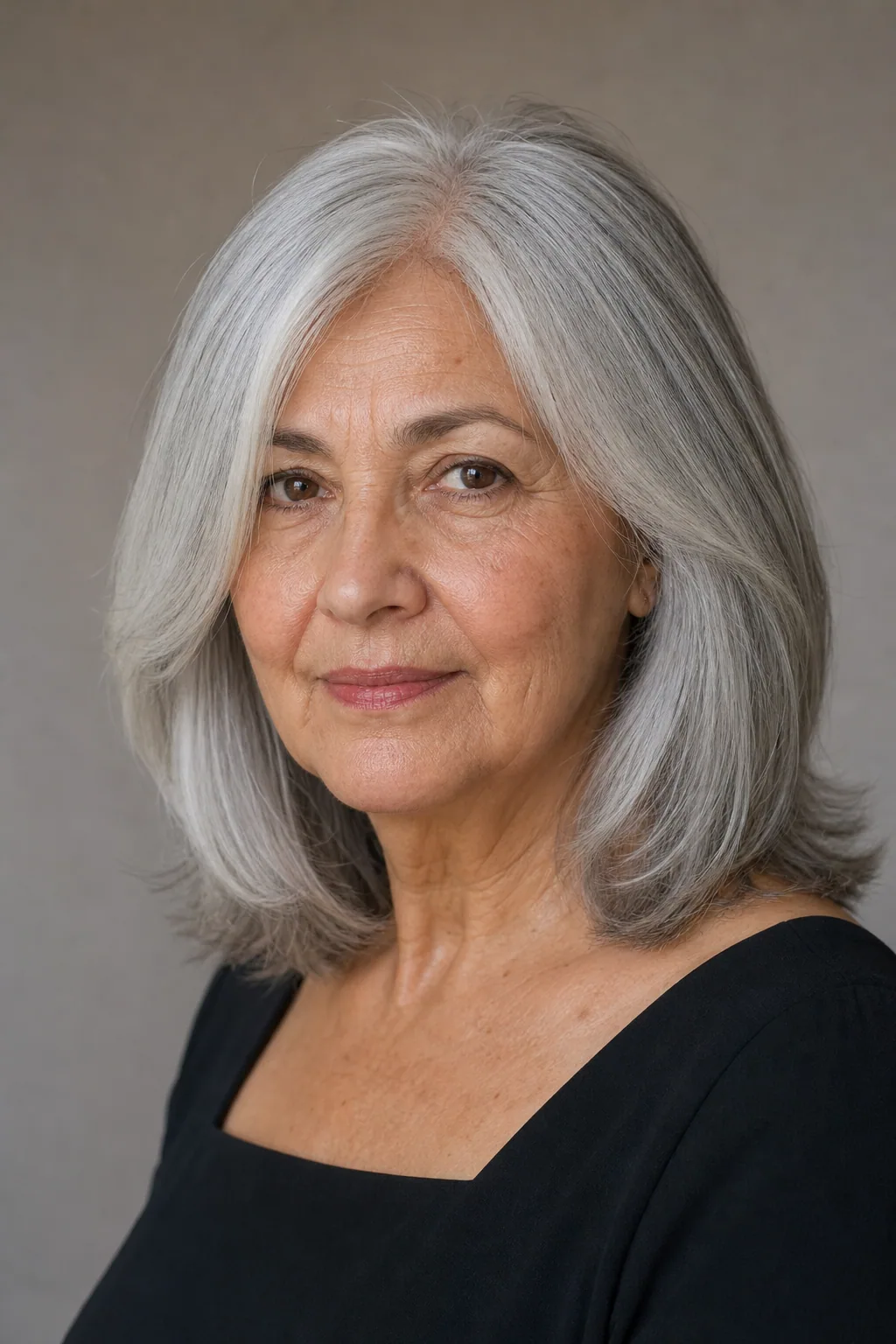
Mother of the Groom Hairstyles: Softer, Lower-Profile Looks for Your Son's Wedding
By Sharon Blain OAM, Global Hairdressing Educator · Reviewed by Coral Pleas · Updated November 2026 · 13 min read
The best mother of the groom hairstyle is usually softer and lower-profile than the mother of the bride's: polished, comfortable and in keeping with the formality, and coordinated with the bride's mother rather than matched to her. It is the same wedding day with a different role. You are often a host at the rehearsal dinner and a guest of the bride's family on the day, so your hair needs to work at two events, and it is rarely the style the photographer's eye goes to first.
Below are 12 mother of the groom hairstyles for short, medium and long hair, in low updos, half-up and down styles, with the salon words to bring to your appointment. After them come hats and headpieces, and how to make a style hold over a long day. For the dress neckline, the 12-hour-day planning, the booking timeline and the trial list, which are the same for both mothers, see our guide to mother of the bride hairstyles.
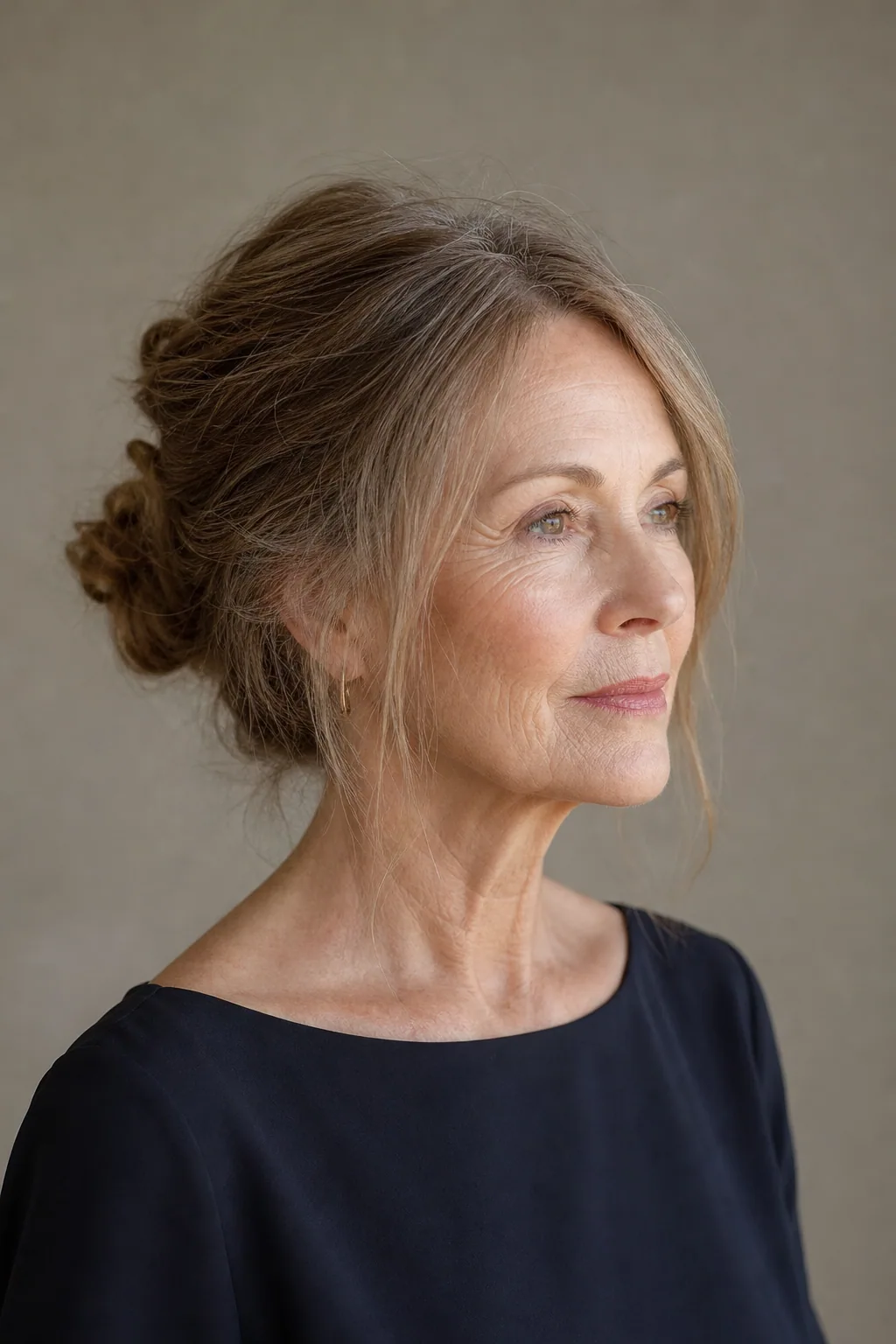
Hairstyle images in this guide are AI-generated illustrations, not photos of real clients or results. See our image standards.
How Mother of the Groom Hair Differs
The mother of the groom's hair differs from the mother of the bride's in role, not in rules: she is often a host one evening and a guest the next, so the style tends to be calmer, lower on the head and easier to wear. Nothing here is a requirement, and plenty of mothers of the groom wear a full updo. These are the usual differences, and the reasons behind them.
Mother of the bride
Mother of the groom
Role on the day
Often a host: she is usually closest to the planning and the bride's morning
Often a host at the rehearsal dinner, and a guest of the bride's family at the wedding
Getting ready
Commonly with the bride and her party, in the same room
Commonly separately, with her own stylist or at home, or with the groom's family
Photos
In many of the bride's getting-ready and family photos
In the groom's family photos and the formal group shots, and fewer of the morning
Typical formality
Usually set by the bride's choices, and the closest to them
Set by the couple and the venue, and she may need to ask, since she isn't in the planning
Profile of the style
Often the more elaborate of the two, since she is more in the frame
Often softer and lower, so it sits quietly beside the bride's mother's
Two things follow from this. The first is that you will probably be choosing a style without seeing what the bride's mother is wearing, which is why the next section is about asking. The second is that you may need the hair to work twice: once for a rehearsal dinner you are hosting, and once for the wedding. The basics are the same for both mothers: the dress neckline and the length of the day. Our mother of the bride hairstyles guide covers them in full, with the neckline table, the pins and anchor points, the booking timeline and what to bring to a trial. Use that page for the planning, and this one for the role.
Coordinating With the Bride's Mother and the Couple
Ask three things before you choose a style: how formal the wedding is, what colors the dress and the wedding party will be wearing, and whether anyone is booking a stylist for the mothers. The answers narrow the choice more than any photo does. Ask the couple, since they have decided all three, and ask early enough that the answer can still change your plan.
Ask the couple about formality. "Black tie" and "garden party" call for different hair even at the same time of day. A sleek low knot belongs at the first and a loose bun at the second.
Ask about colors and the dress. You don't need the exact shade, but a note on whether the neckline is high, open or off-shoulder tells you whether hair should be up or down. Then use the neckline table in mother of the bride hairstyles, which works for any mother in a dress.
Ask about the day's schedule. When are family photos, and is there time between the ceremony and the reception? A style has to survive both.
Don't copy the other mother's style. Matching reads as a plan, and rarely as a coincidence, and it can compete. Aim for the same level of formality and a different shape: if she wears an updo, a half-up or a polished down style sits well beside it, and the reverse.
Send one message. A short text to the bride's mother, such as "I'm planning a low style, what are you thinking?", is enough. It is a courtesy, not a request for permission.
If you are joining the bridal party's stylist, ask for your own slot and where you are in the order. Ask how long your style takes, and book it so you are finished before the family photographs, with a buffer. If you have your own stylist, tell the couple, so the schedule isn't built around you.
Two Events, Two Looks: Rehearsal Dinner and Wedding Day
One cut can do both events: wear a softer, simpler finish at the rehearsal dinner and build the same cut into something more formal on the wedding day. The cut and the length stay the same, and only the finish changes. That means no extra salon visit for a cut, and no hair that looks unlike you on the first evening.
Event
Finish
What to book
Rehearsal dinner
A blow-dry with soft shape, loose waves or a loose low twist. Relaxed, and easy to sit in for a long dinner
A blow-dry at the salon, or a home blow-dry if you are confident. Nothing that needs a stylist's hours
Wedding day
A more formal finish built on the same cut: a low updo, a half-up style or a polished down style
The easiest way to get two different looks is to choose a wedding style that begins as the rehearsal style. A smooth blow-dry on the first evening becomes a low knot or half-up style on the day. A loose wave becomes a brushed-out curl or a pinned side. Show your stylist both occasions at the first appointment, so the cut is shaped for both.
Wash between the events. Wash your hair after the dinner, or the morning of the wedding, as your stylist advises. Many stylists prefer a day-old base for an updo, because clean, soft hair is slippery. Ask yours which day suits your hair.
Protect the first style overnight if you want to reuse it. A loose twist or a silk scarf keeps a blow-dry smooth, though a style set the evening before is a base, not a finish.
Dress the dinner down by one level. Skip the jeweled clip and the strong hold, and keep them for the wedding.
Low-Profile Updos
A low-profile updo sits at or below the crown, shows the neck and ears, and stays comfortable for hours, which is why it suits a mother of the groom. These four are quiet in shape but finished with care, so they read as polished beside the bride's mother's style.
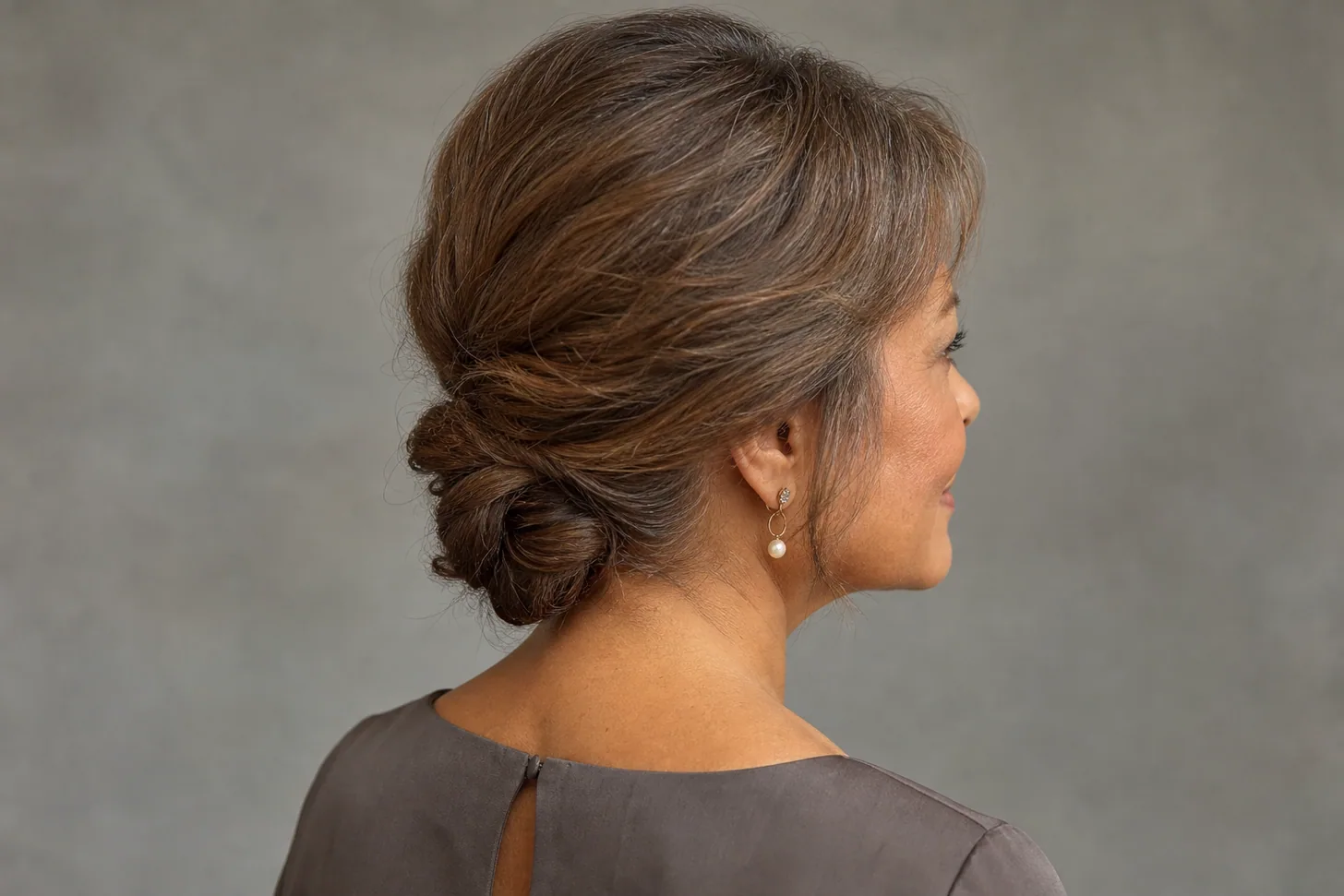
1. Soft Low Twist at the Nape
This is the easiest updo to wear for a host: the hair is gathered at the nape, twisted once and tucked, with just a few pins and no backcombing. It leaves the crown flat and the sides soft, so it looks calm from behind and sits well in the groom's family photographs. It suits medium to long hair that is a little textured. Ask for "a loose twist at the nape, tucked, with the fewest pins that will hold."
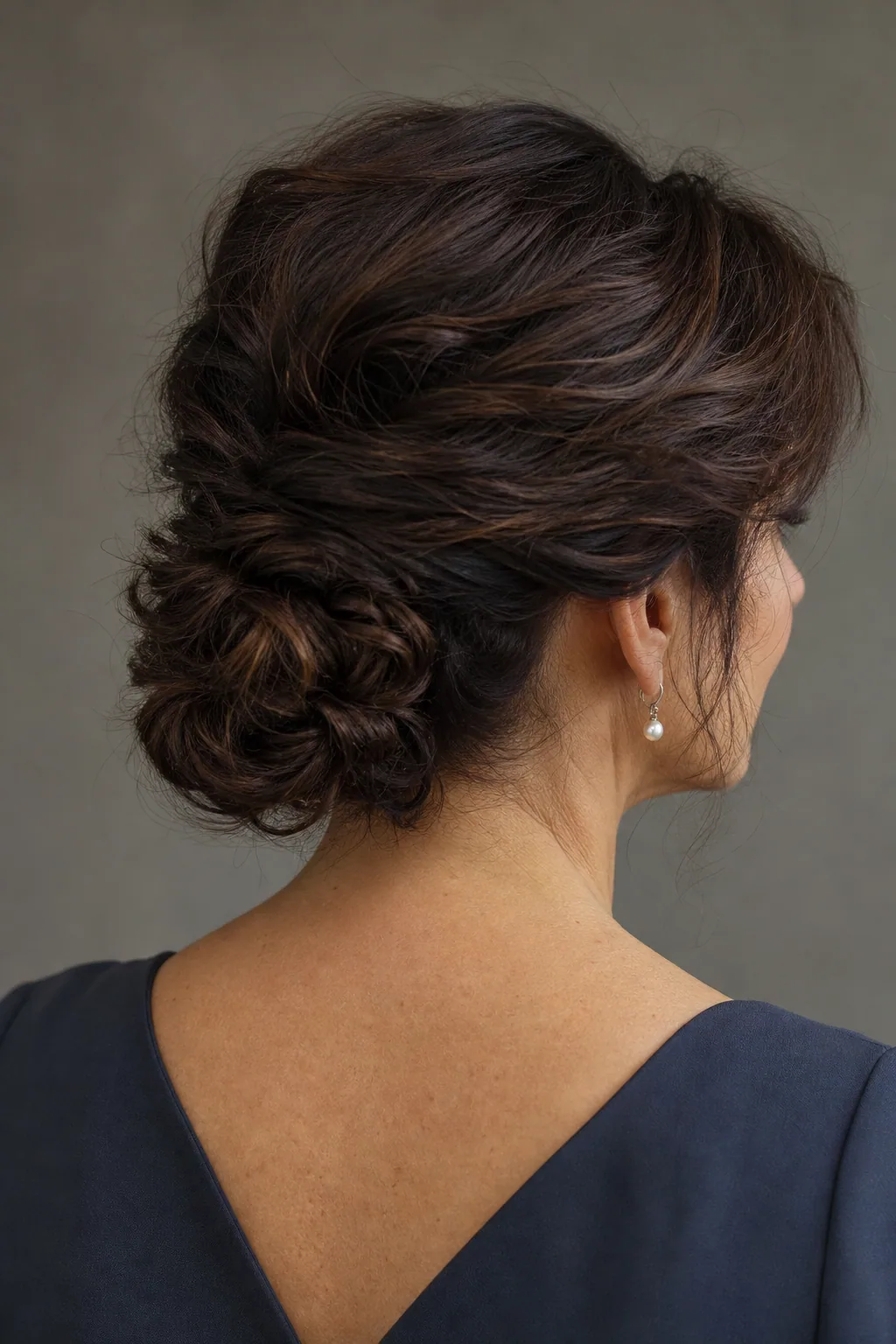
2. Loose Low Bun With Face-Framing Pieces
A low bun with a few strands left out at the temples and the cheekbones softens the face where a smooth bun can look severe. The length frames each side of the face, which helps when you are meeting a room of new people for the first time. It works for collarbone-length hair and longer, and hair of any texture. Ask for "a loose bun, with two or three pieces left out at the front and curled under."
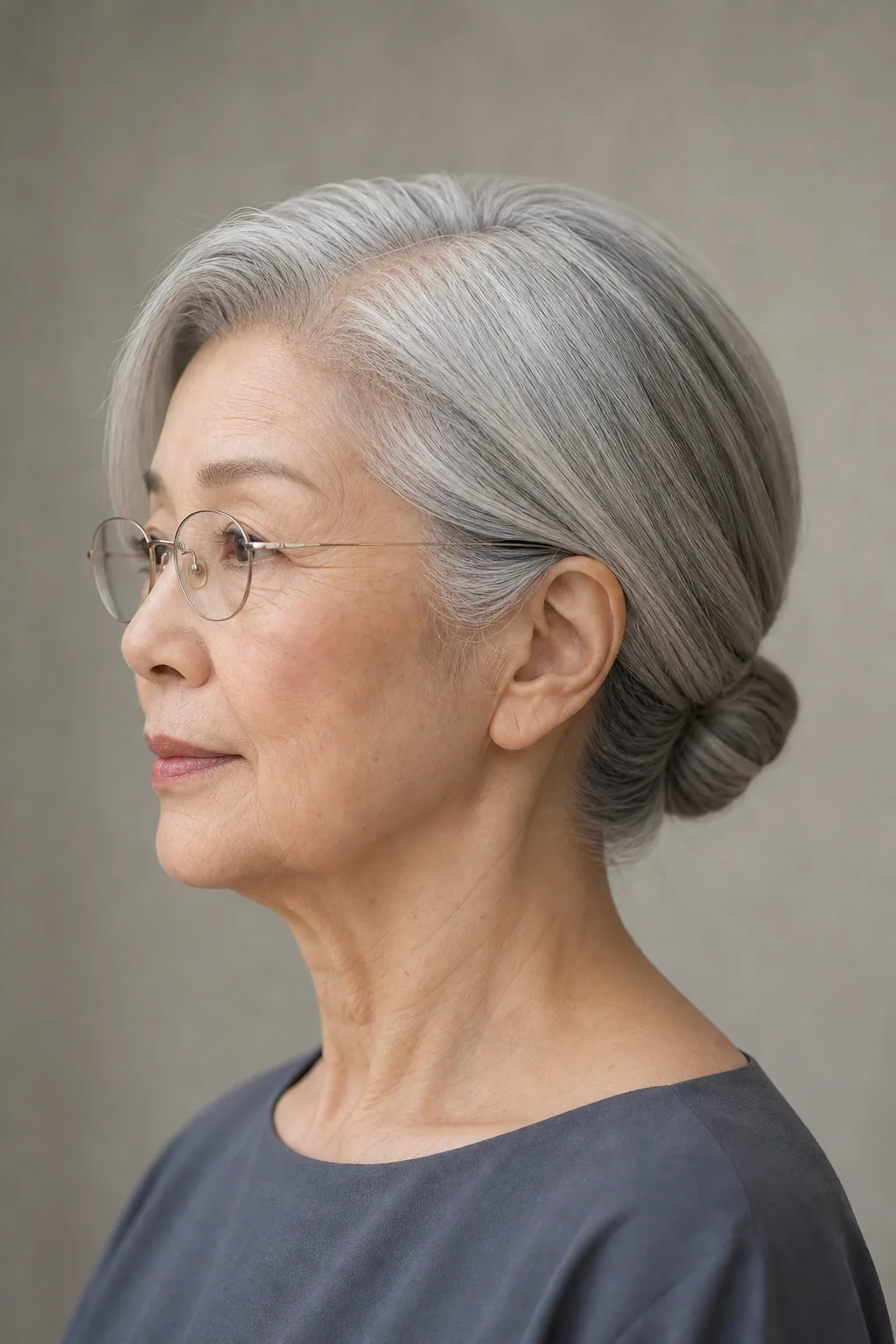
3. Sleek Side-Parted Low Knot
A deliberate side part and a smooth, close knot at the nape give a formal evening wedding a clean line, and they read as quietly dressy beside a more textured style on the bride's mother. The side part adds lift at the crown without needing height. A light shine serum on the surface is enough, and silver hair looks especially good this way. Ask for "a deep side part, smooth sides and a knot sitting at the nape."
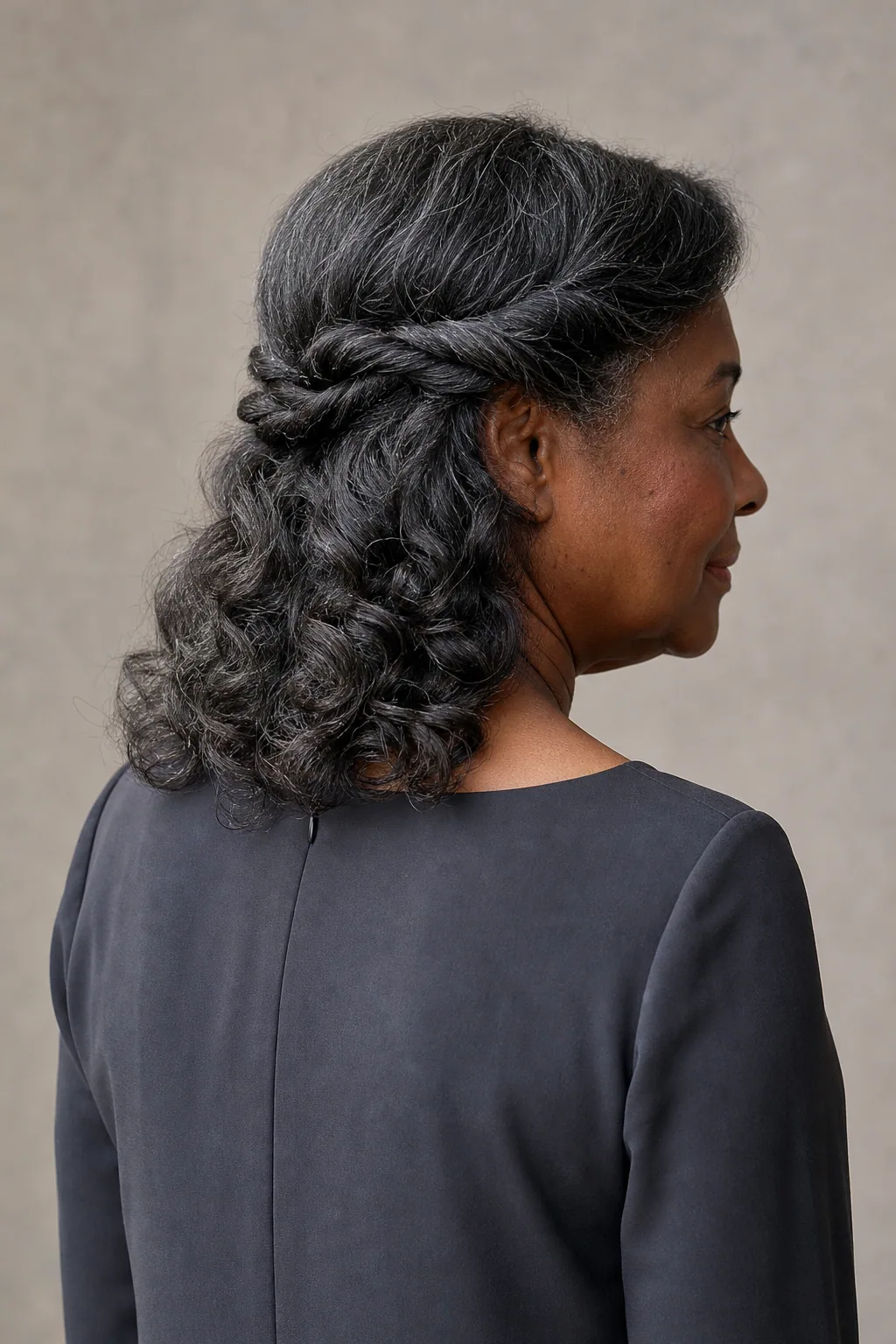
4. Twisted Half-Crown Pinned at the Back
Two thin sections are twisted from the temples and crossed at the back of the head, pinned where they meet, with the rest of the hair left down or tucked into a low roll. It takes the hair off the face without a full updo, and it keeps its shape for the dancing at the end of the night. It is a good partner for a dress with a covered back. Ask for "two small twists crossed and pinned at the back, with the rest left soft."
Half-Up and Down Styles
Half-up and down styles give the most comfort and the least hold, so they suit a dry day, a shorter event or hair that doesn't like pins. Down hair photographs softly, and it sits calmly beside a more structured style.
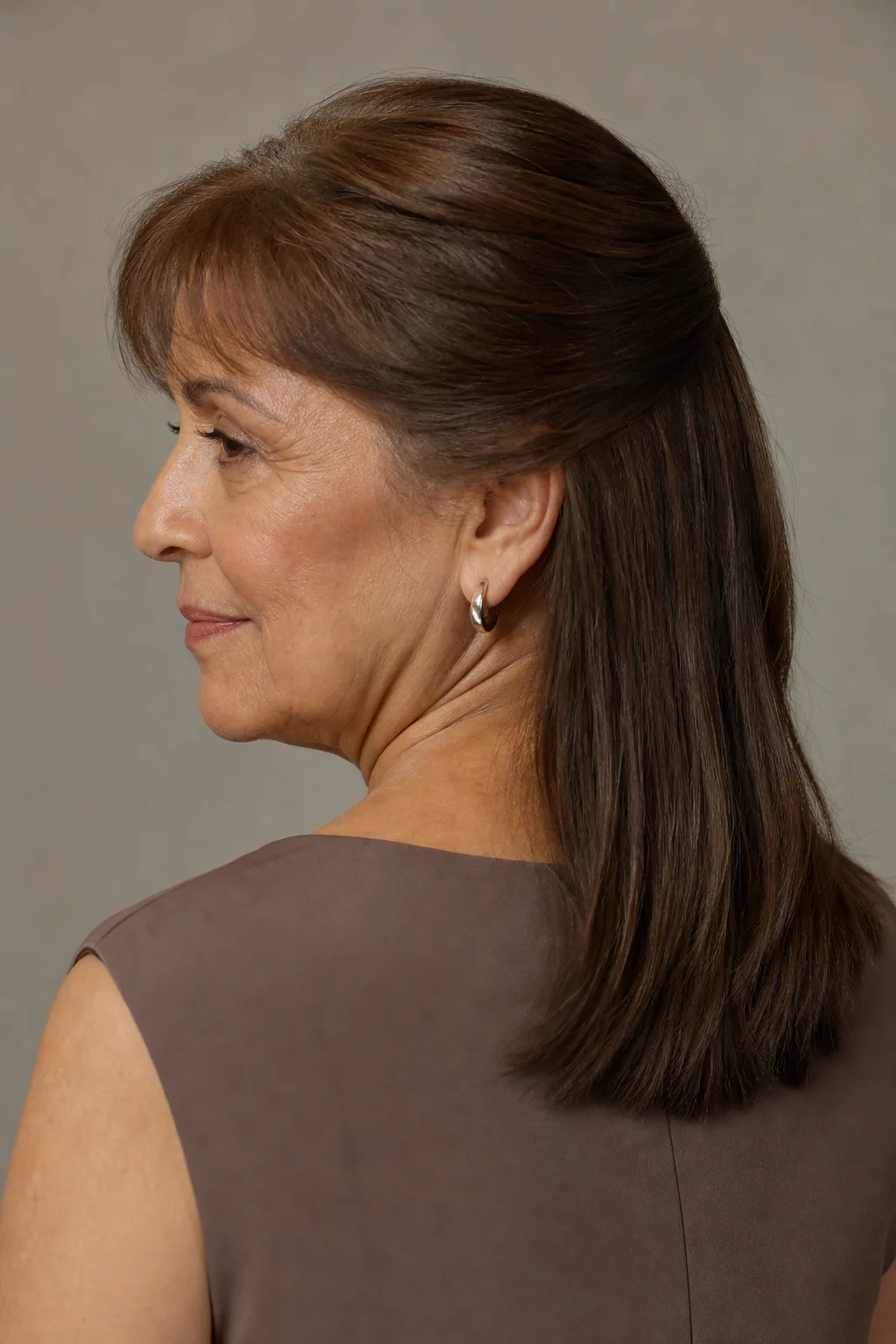
5. Half-Up Style Secured With a Small Comb
The top section is smoothed back and held by a small comb or two flat pins, with no twist and nothing to rebuild, and the rest is left to fall. It keeps the hair off your face for photographs and takes minutes to fix. A comb holds best on hair with a little grip, so brush it out of freshly washed, silky hair first. Ask for "the top section combed back and set with a small comb, the lengths left loose."
6. Smooth Shoulder-Length Blow-Dry Tucked Behind One Ear
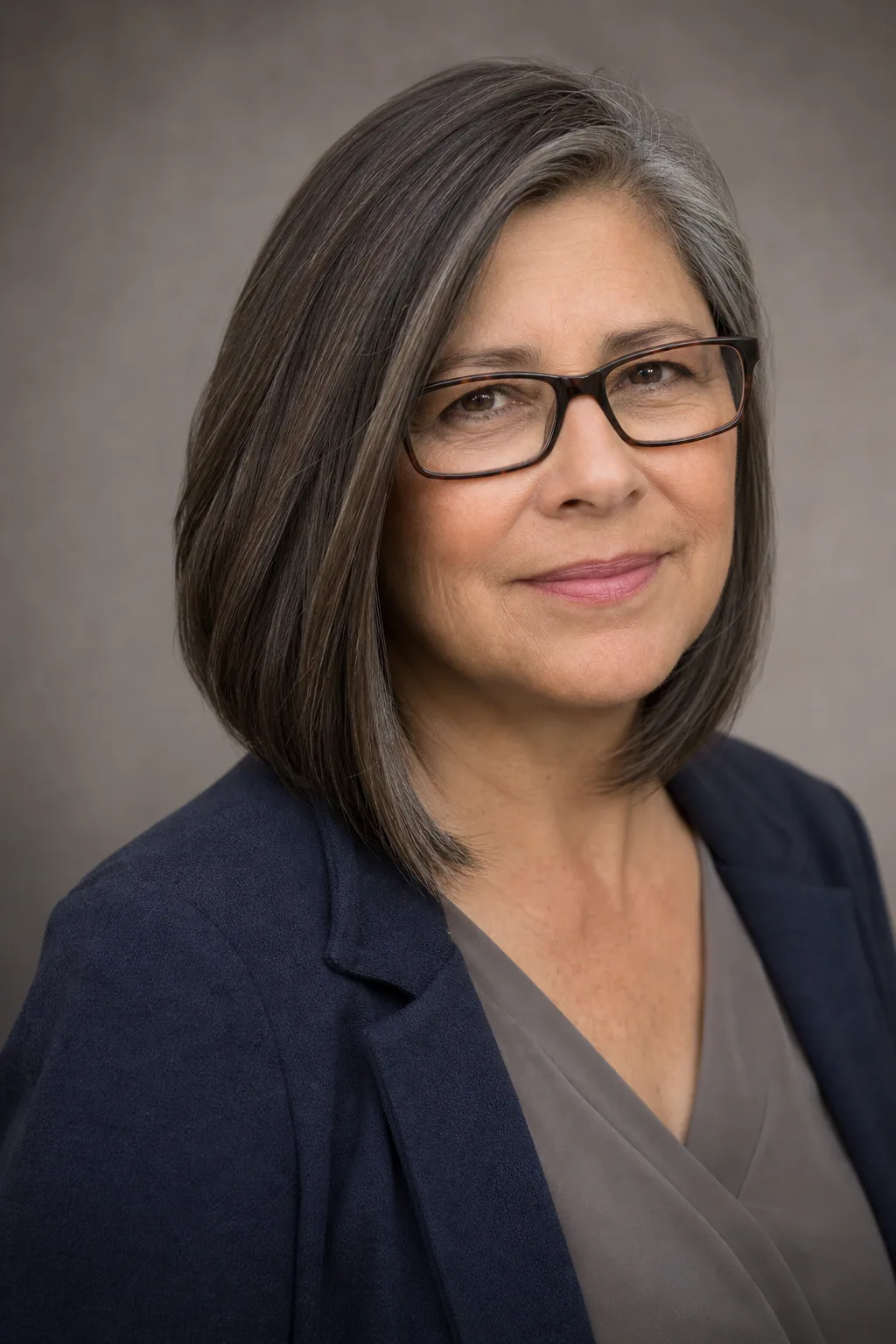
A smooth, even blow-dry with one side tucked behind the ear so an earring shows. It is the natural choice for a rehearsal dinner and a plain version of a wedding-day style, and it is comfortable to wear for hours. It suits a shoulder-length cut with some movement, and if you want the cut itself, see medium-length hairstyles for women over 50. Ask for "a smooth blow-dry with a deep side part and one side tucked."
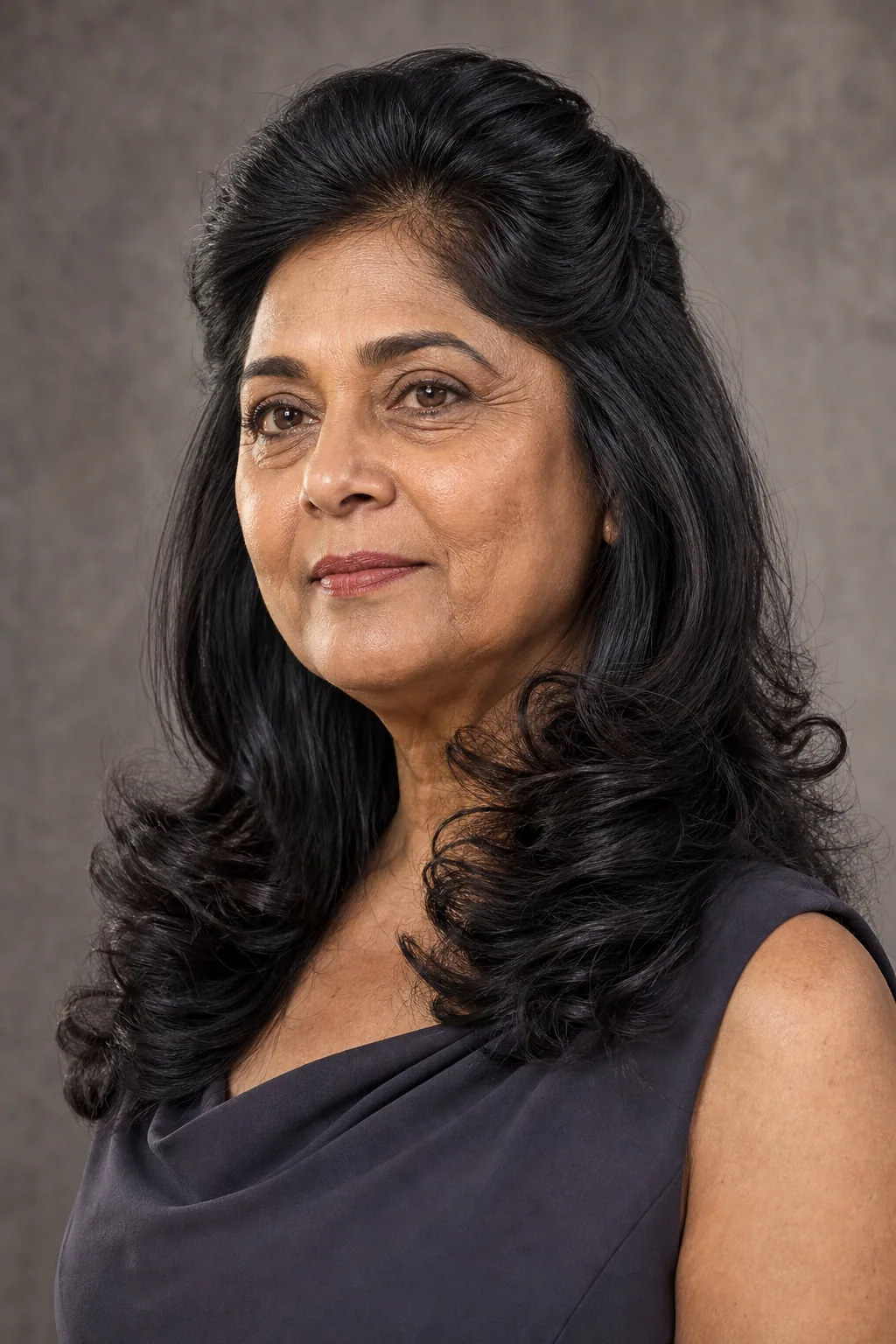
7. Soft Brushed-Out Curls for an Evening Reception
Hair is set in large rollers or with a 1½-inch barrel, then brushed through so the curls merge into loose, full waves, and the front is pinned back with a flat pin or two. It has the fullness of a night out without the stiffness of a set curl. It suits medium to long hair with enough density at the ends to hold a bend. Ask for "large curls brushed out into a soft, full wave, and the front pinned off the face."
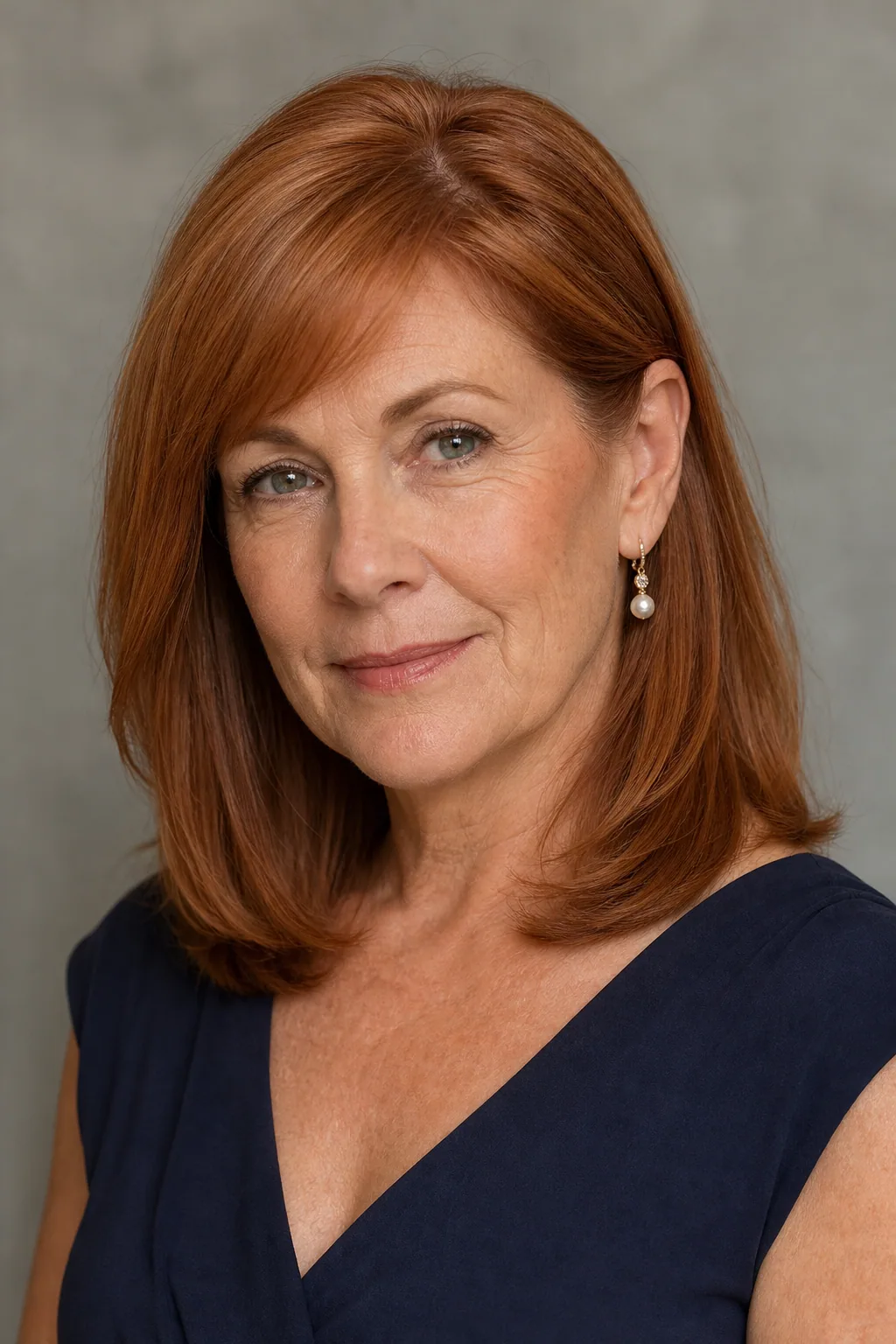
8. Polished Straight Lob With a Side Sweep
A blunt or lightly layered lob, at the collarbone or just above it, is smoothed straight and swept over to one side across the forehead. It has little to go wrong, which suits a day that begins early, and the length is easy to wear with a jacket or a shawl. It looks best on hair that is healthy at the ends, since the finish shows every split. For the cut itself in your 60s, see medium-length hairstyles for women over 60. Ask for "a smooth finish with the sweep set from a deep side part."
Short Hair and Bobs
Short hair is styled for the day, not recut for it: the options are smoothness, a fringe and a small accessory. This section is about styling the cut you have. If you are deciding on a short cut as well, see our guide to short haircuts for women over 60.
9. Pixie Styled Smooth With a Side-Swept Fringe
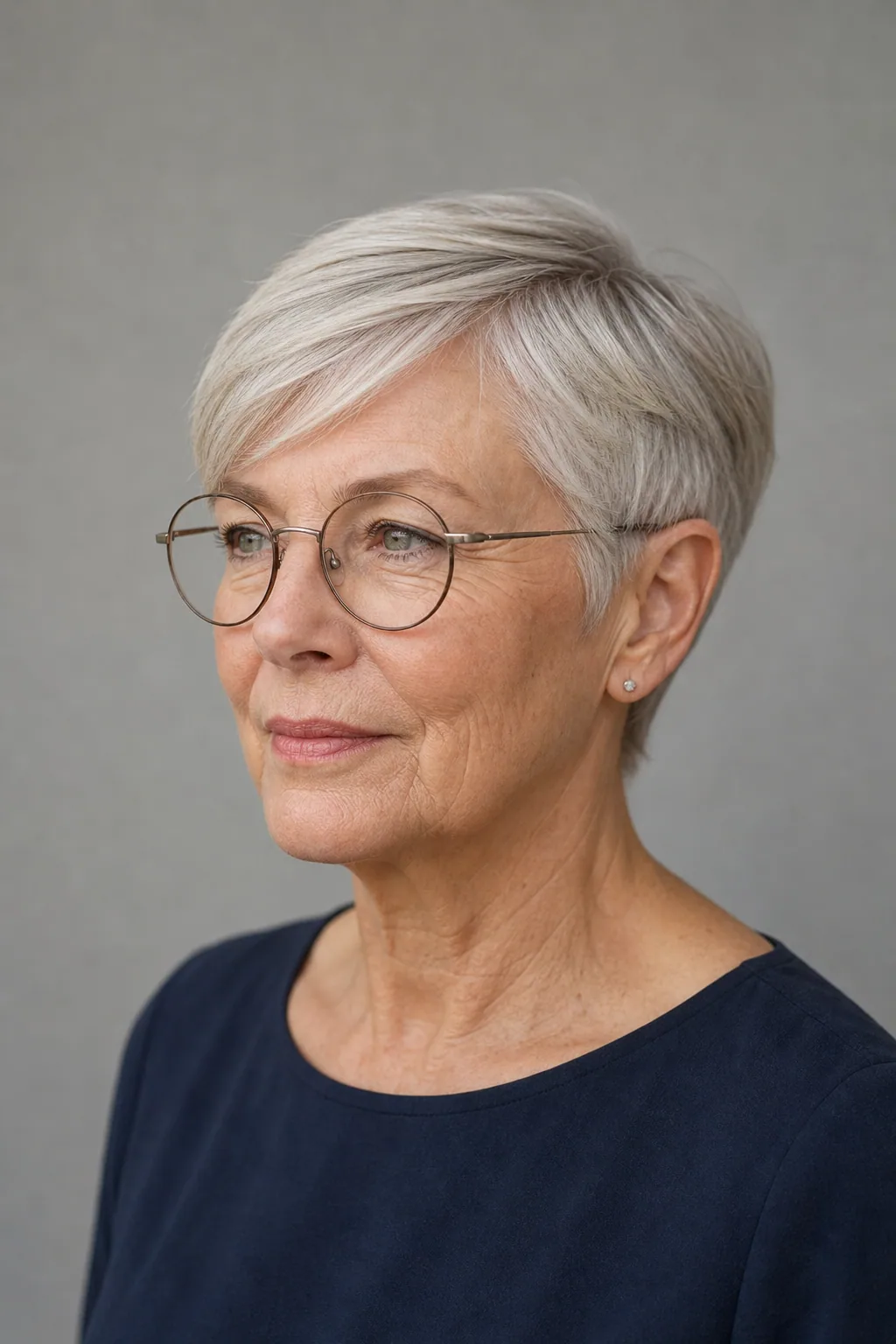
Rather than adding texture, you can finish a pixie smooth and neat: a touch of cream for control, the sides combed close and the fringe swept to one side. It reads polished in daylight and in the family photographs, with no pin or clip to manage. It sits well with glasses, since the sweep clears the lens, and it suits fine, straight hair that lies flat. Ask for "a smooth finish, the sides close and the fringe swept to one side."
10. Short Bob Shaped to Sit Under a Hat Brim
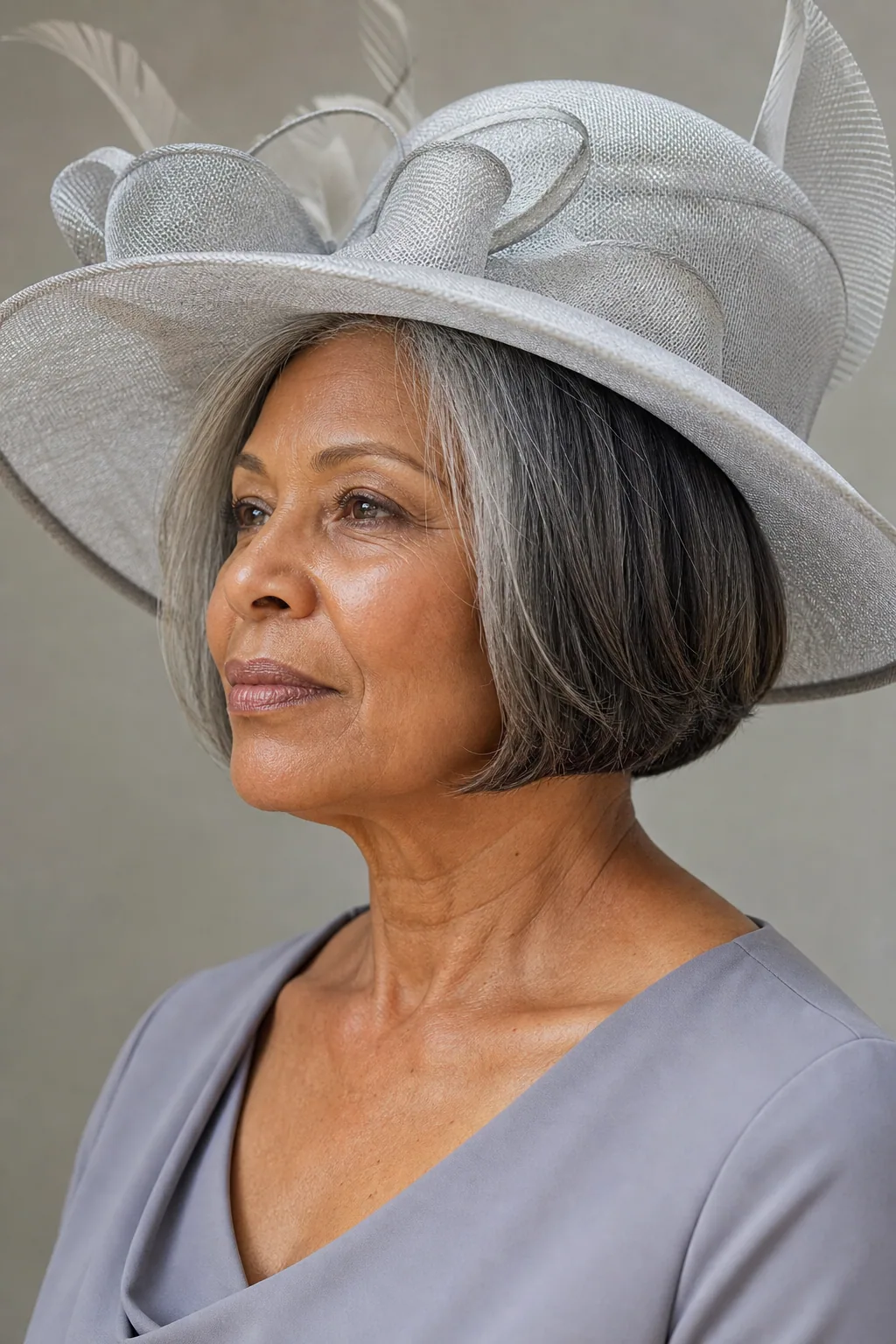
A chin-length bob is blow-dried with the ends turned slightly under and the crown kept low, so a hat sits on top without flattening the shape or pushing out the sides. The bob has a contained line at the nape, which is what a hat brim touches first. It is the one to choose for a morning or formal wedding where a hat is expected. Ask for "a bob dried with the crown kept low and the ends turned under, to wear under a hat."
Texture and Gray
Curls and silver hair have the most to gain from preparation, because both show the finish: curl definition stays only if it is set well, and silver reads as polished when it is smooth and shiny. Neither needs a different cut. Both need a plan for the day.
11. Defined Curls Pinned Up at One Side
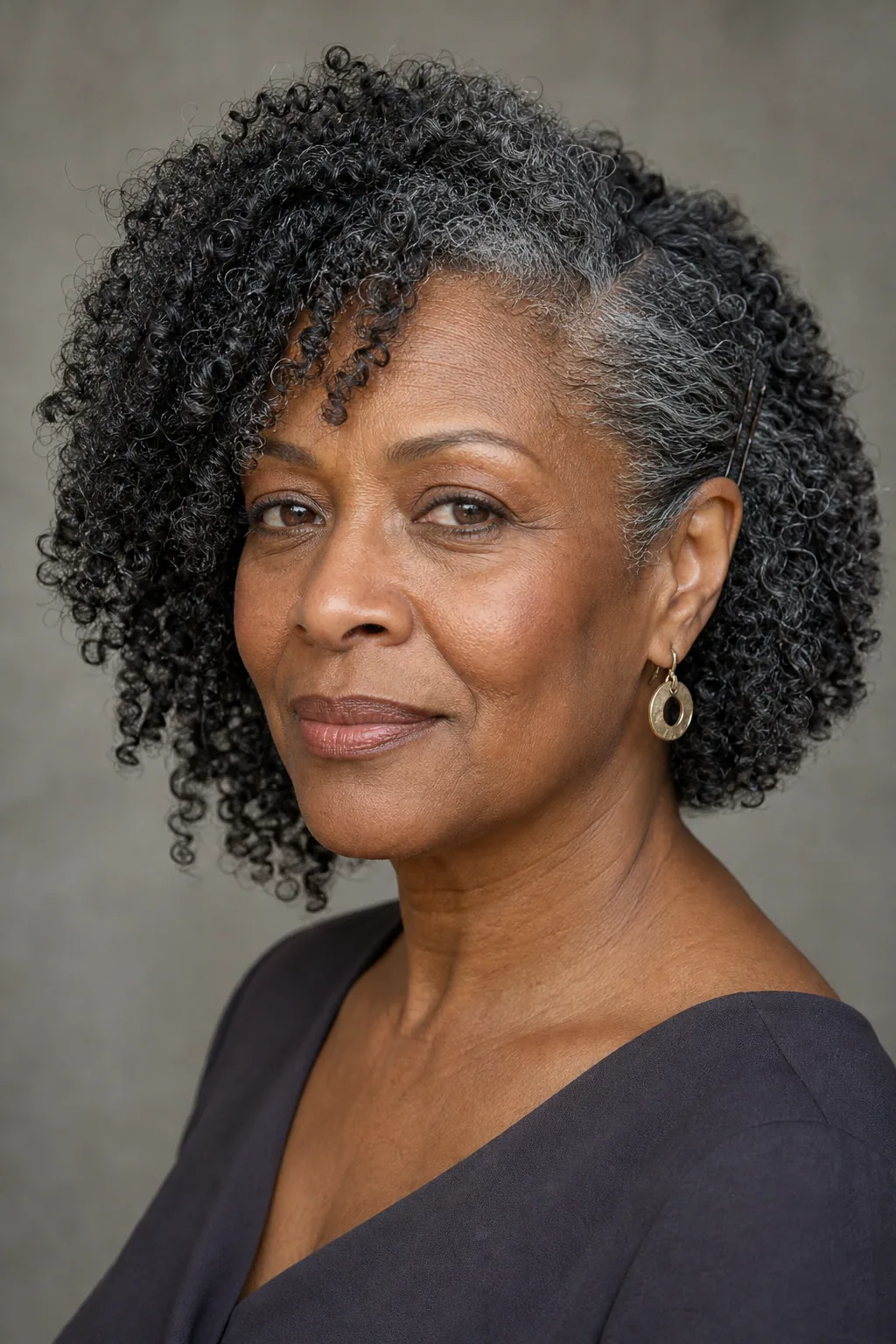
Curls are defined with a curl cream and dried with a diffuser, and one side is pinned up above the ear with a decorative pin or a flat clip, leaving the rest of the curl pattern as it is. It keeps the natural texture and clears one ear and one side of the neck, which helps with earrings and a high collar. It suits wavy, curly and coily hair. Ask for "the curls defined and dried with a diffuser, and one side pinned up."
12. Silver Hair Blow-Dried Full With a Shine Finish
Silver hair is blow-dried with a round brush for body at the roots and a smooth finish on the lengths, then given a drop of shine serum on the ends only. Silver reflects the light, so a smooth surface looks luminous in photographs, and the lift at the roots stops it from looking flat. It suits shoulder-length hair and chin-length cuts. For cuts that suit silver and how to keep its tone, see gray hairstyles for women. Ask for "body at the roots, a smooth surface and shine on the ends."
Hats, Fascinators and Headpieces
A morning or formal wedding may call for a hat or fascinator, and the hair has to be built around it, not under it. Whether you need one depends on the venue, the time of day and the families' traditions, so ask the couple.
A hat sits on the crown. A big brim rests at the hairline and around the ears, so volume and width at the sides will be pushed out. Choose a low crown and a smooth side finish, as in entry 10.
A low bun leaves room. A bun at the nape sits below the back of a hat. A high bun sits underneath it and tips it forward.
Fascinators need a pin point. A fascinator on a band holds against smooth hair, and one on a clip or comb needs a firm section of hair to grip. Ask your stylist to anchor it with a small hold of hair beneath, and to place it at the side where your glasses arm is not.
Pin it, then test it. Put the hat on at your trial and move your head, and hug someone. A hat that slips is worse than none.
Keep the hat on or off by plan. If it comes off after the ceremony, the style underneath has to look finished without it, which is why a low, smooth style or a sleek side part works well.
Mother of the Groom Hairstyles Over 50: Making Styles Hold
After 50, a style holds best when the prep does the work: a day-old base, a root lift, a flexible-hold finish and fewer, better-placed pins. This section is about the styling, not the cut. For fine, thin or gray hair after 50, with padding, backcombing and shine for silver, see the over-50 section of mother of the bride hairstyles, which applies here too.
Start from the day before. Hair that was washed and blow-dried the day before holds a pin better than hair washed that morning, and the hold lasts longer through a dinner and a dance.
Add lift at the roots, not at the ends. A root-lift spray on damp hair, blow-dried upward, gives the crown height without needing backcombing, and it flattens more slowly.
Use a flexible spray, from a distance. A stiff spray flattens hair and shows as a crust at the roots in photographs. Spray from arm's length, and a second light pass is enough.
Fewer pins, placed well. A few pins in a cross hold better than a dozen scattered. Two flat pins and a comb are enough for a half-up style.
Plan for the weather. Humidity softens smooth styles and wind loosens loose ones. If the reception is outdoors, a low, secure shape is safer, and a small container of pins in your bag is cheap insurance.
Choose what you can fix yourself. A style you can repair in a bathroom in two minutes, with a comb and two pins, is better than one that needs a stylist.
Should the mother of the groom wear her hair up or down?
Choose by the dress and the time of day: up or half up for a high neck, strapless or formal evening dress, and down for a V-neck or a day wedding. A low style sits quietly beside the bride's mother and lasts longer than a high one. If you can't decide, a half-up style is the safest choice.
Should the mother of the groom get her hair done professionally?
You don't have to, but it is worth it for the wedding day, when you will be photographed from every side and have no time to fix anything. A blow-dry at the salon is enough for the rehearsal dinner. If you do it yourself, practice the style once before the day.
Does the mother of the groom get ready with the bride?
Usually not. The bride gets ready with her own party, and the mother of the groom commonly gets ready separately, at home or with the groom's family. If the couple invites you to join, ask for your own time slot so you aren't rushed.
What hairstyle suits a mother of the groom over 60?
A low twist, a loose low bun or a smooth blow-dry with a deep side part suits most hair over 60, because each is comfortable and flatters the face. Silver or grey hair looks its best when it is smooth and has a little lift at the roots. Avoid heavy backcombing, which is hard to take out.
Can the mother of the groom wear the same style as the mother of the bride?
You can, but it reads as a plan, and it can look like competition. Match the level of formality and choose a different shape: if she wears an updo, try a half-up or a polished down style, and the reverse. A quick text before the day helps you both avoid a surprise.
What should I do with my hair for the rehearsal dinner?
Wear a softer, simpler version of your wedding style: a smooth blow-dry, loose waves or a loose low twist. Skip strong hold and large accessories, and keep your cut the same for both events. Wash your hair afterward, as your stylist advises, before the wedding day.
Results vary with hair type, density, texture and the style of your dress. This guide is educational and is not a substitute for an in-person consultation with a licensed stylist.
 Grace