Gray Hairstyles: 14 Cuts That Make Gray Hair Look Modern
By Jules Peacocke, Founder of Lily Jackson Hair + Makeup · Reviewed by Coral Pleas · Updated November 2026 · 13 min read
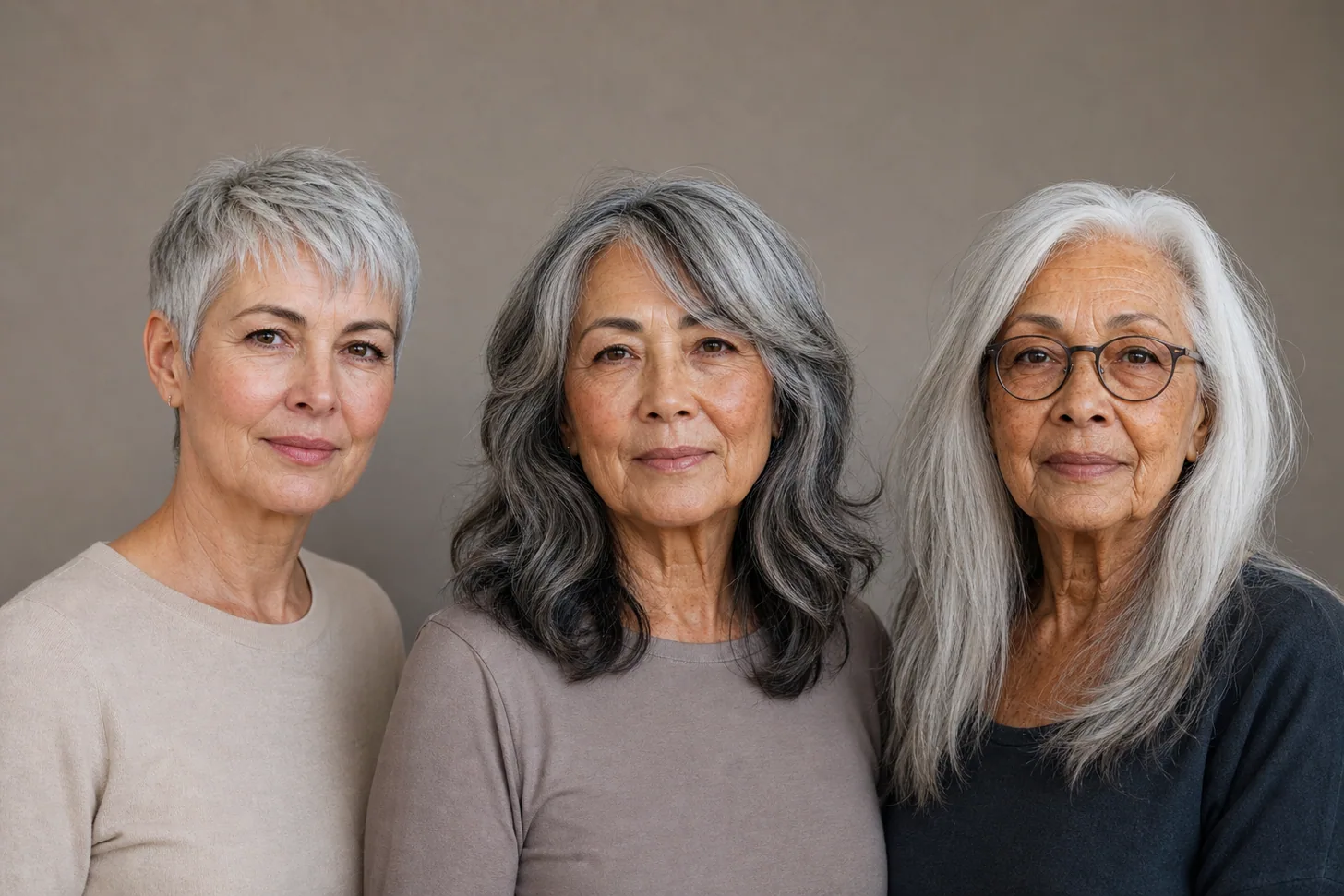
Gray (or grey) hair styles look modern when the cut gives the hair a clean outline, healthy ends and a bright, even tone, because gray hair is often coarser, drier and more reflective than the hair it replaces. That makes it show every rough edge and every frizzy end, so clean lines, a defined shape and a little gloss beat heavy, choppy texture. You don't have to hide the gray. The 14 cuts below are for women in their 50s, 60s and 70s, and most take 3–10 minutes a day.
This page is sorted by length and by the kind of gray you have: salt-and-pepper, mostly gray, silver or white. It covers short, medium layered, long, curly and coily, and contrast and shine, then how to keep gray bright, what to ask your stylist, and who should skip heavy texture. For a closer look at the shortest cuts, see our short haircuts for women over 70.
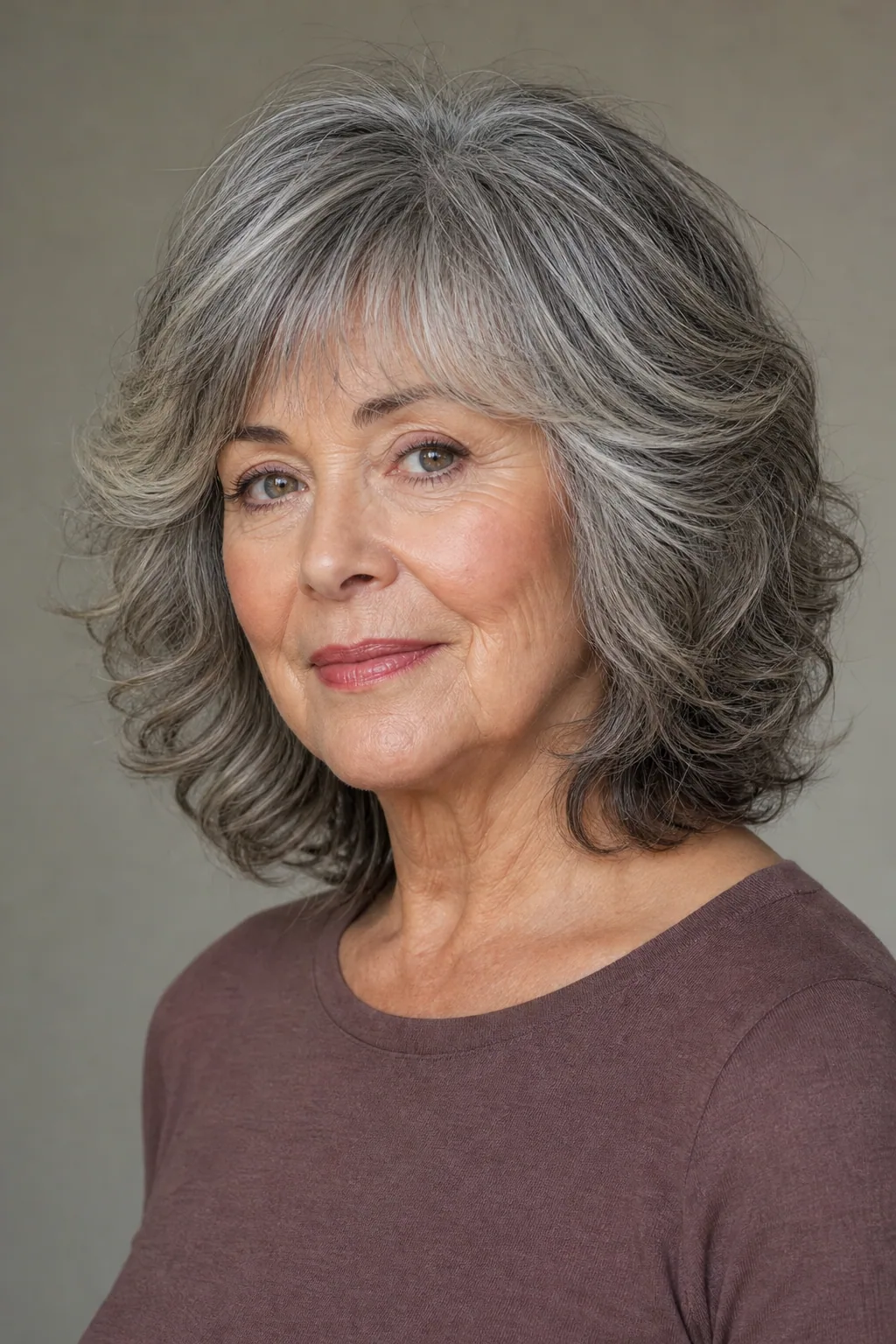
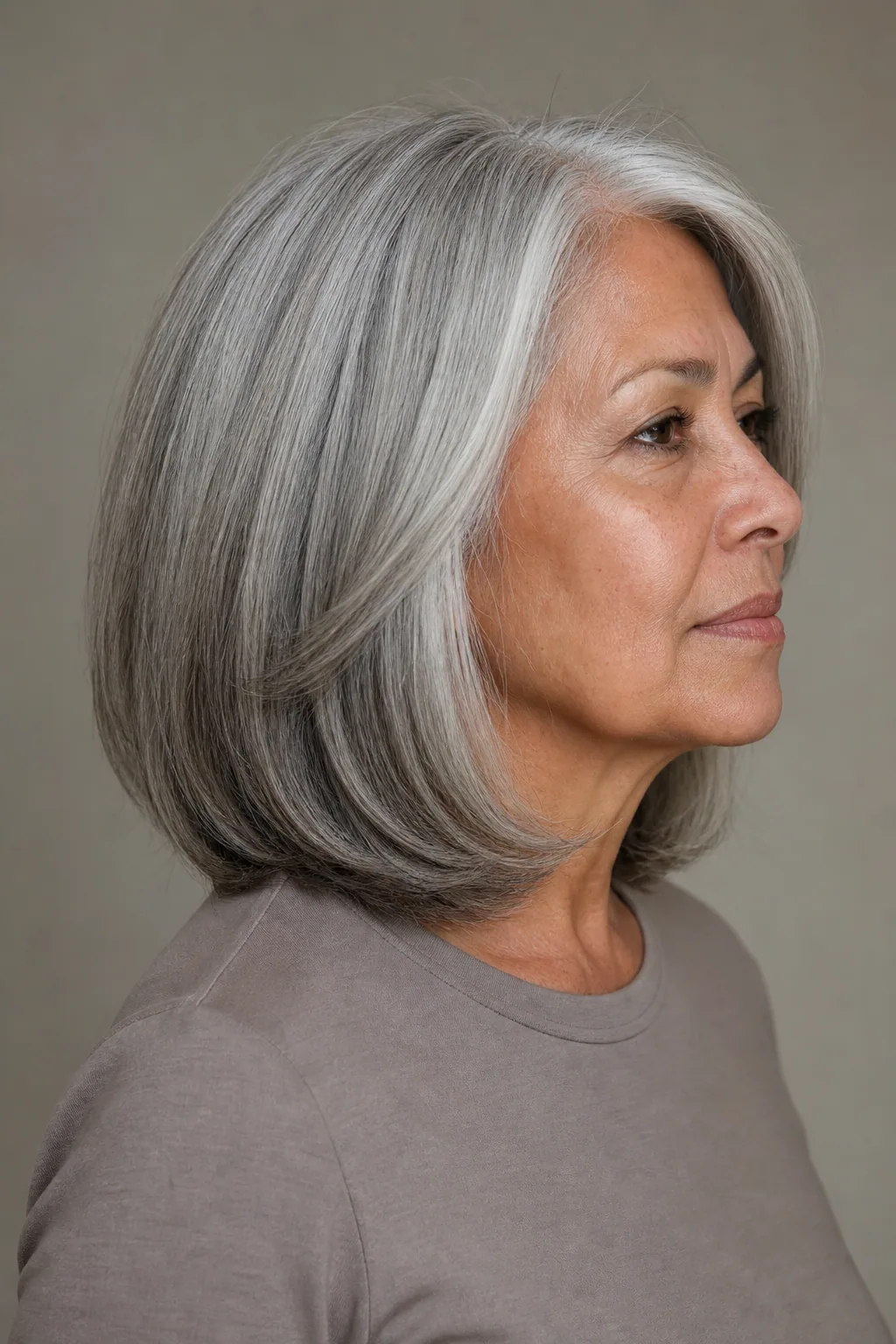
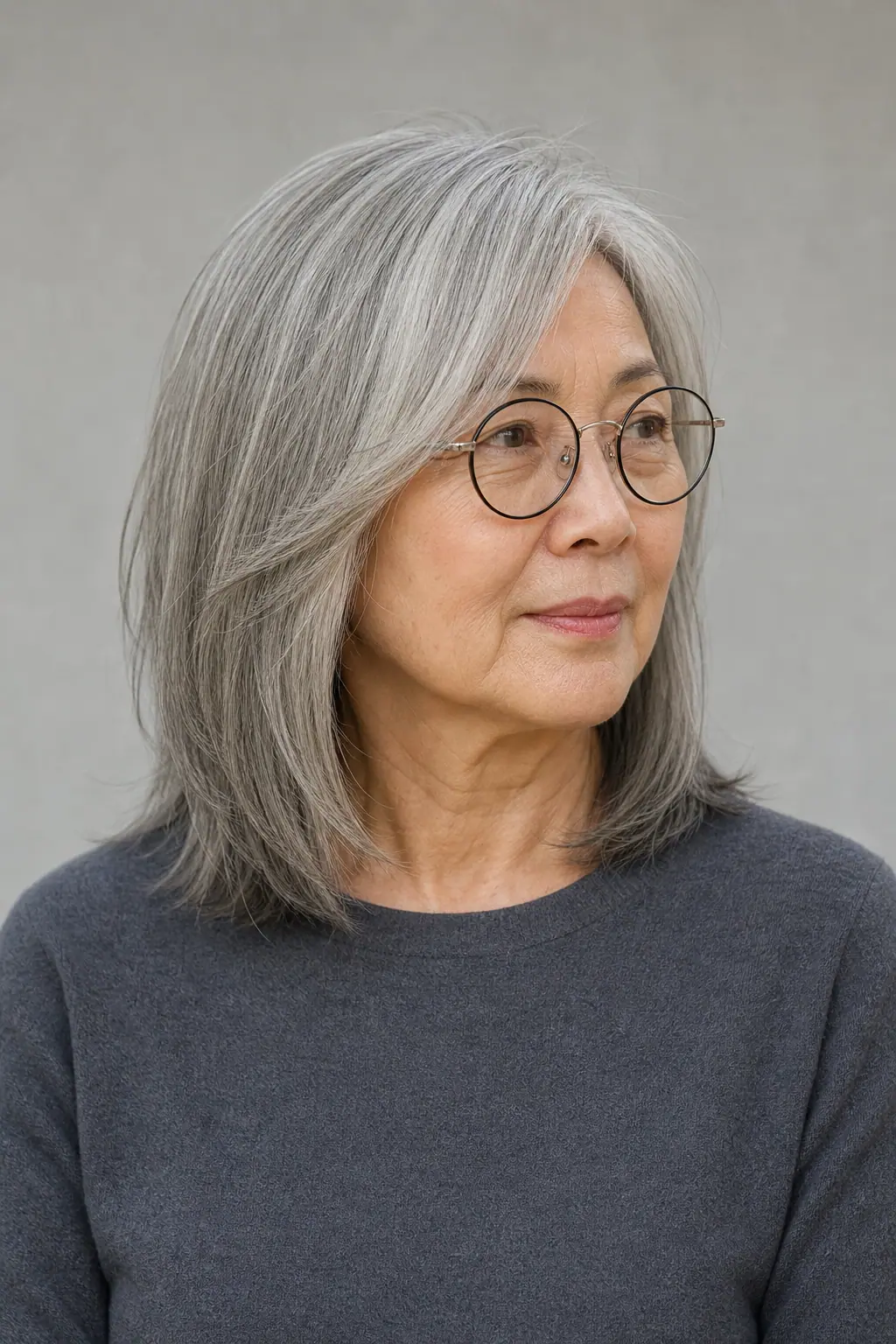
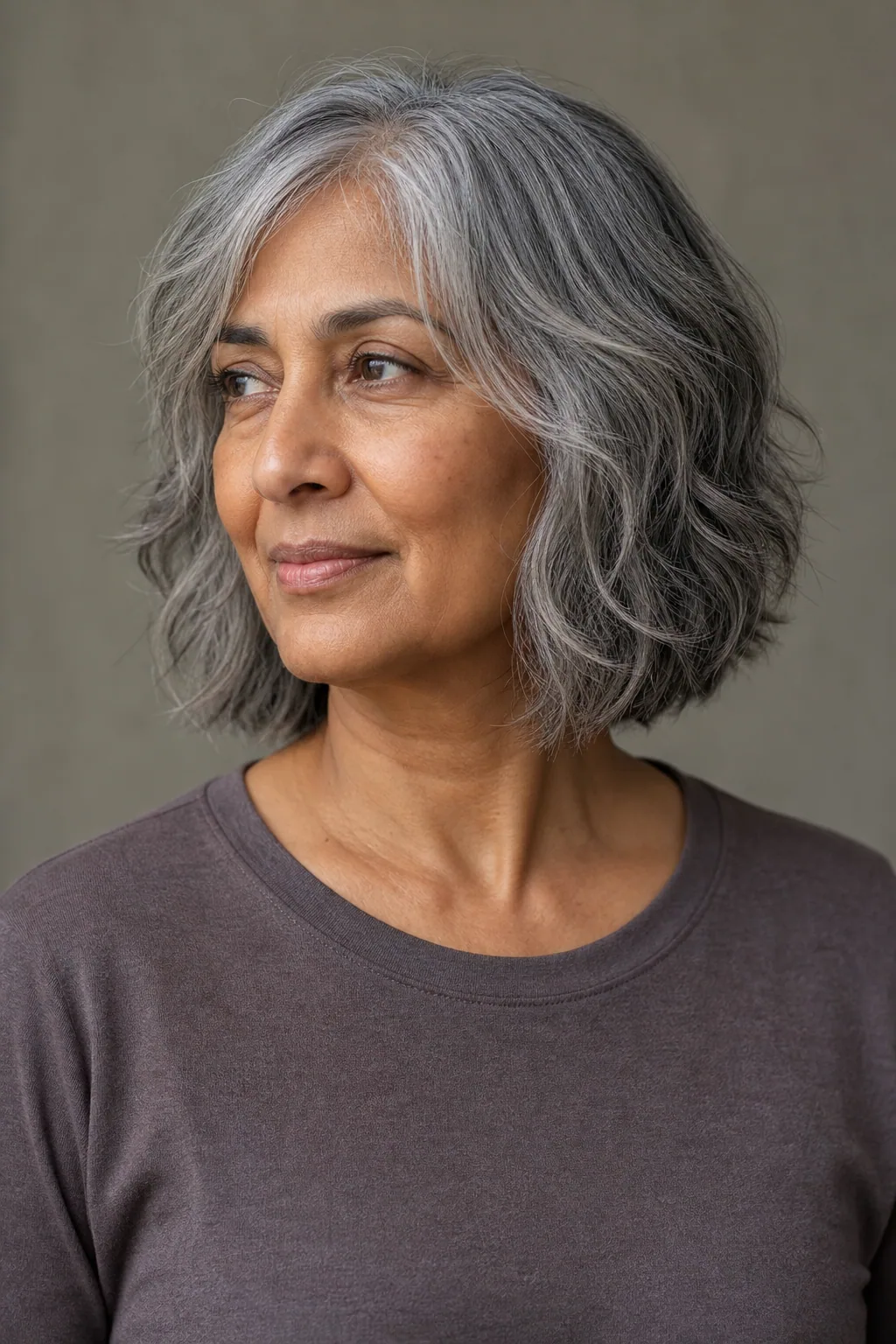
Hairstyle images in this guide are AI-generated illustrations, not photos of real clients or results. See our image standards.
Why Gray Hair Needs a Different Cut
Gray hair isn't just a color change: it often has a different texture, and a cut that suited your hair at 40 can fray on it at 60. The pigment is gone, so the hair also shows light, dryness and yellow tones more than darker hair does. Keep four words apart. Gray is a mix of pigmented and white strands. Salt-and-pepper is gray with enough dark strands that the two tones read side by side. Silver is the bright, cool look gray can have when it is healthy and clean. White has no pigment left. A cut changes how full hair looks, not how much there is, and none of this is about hiding gray.
What gray does
What it does to a cut
What to ask
Grows in coarser or wirier
Stands away from the head; choppy layers and razored ends frizz
Scissor-cut or point-cut ends, and weight left in the ends
Grows in drier
Ends split and look rough, which shows more on pale hair
A blunt or soft hem, trims on schedule, and a gloss
Reflects light
A smooth, even line looks glossy; a ragged line looks messy
A clean outline checked dry, with no stray long pieces
Yellows or turns brassy
A dull cast reads as tired next to the face
A tone check at each visit, and the care in the bright-hair section below
Changes texture or pattern
The old cut sits differently: straight hair kinks, curls loosen
A cut for the texture your gray has now, ideally checked dry
The look that reads as modern is a deliberate outline, healthy ends and clear, bright tone. Layers, fringes and length can all work on gray. They work best when the lines are clean.
Match the Cut to Your Kind of Gray
The kind of gray you have decides what the cut needs to do, because salt-and-pepper, mostly gray, silver and white hair each behave and reflect light differently. Find yours, then use the entry numbers as a short list. If you're still deciding between color and gray, see our guide on how to go gray first.
Your gray
What flatters it
Entries
Salt-and-pepper (dark and white strands mixed)
Visible, varied layers that let both tones show; nothing slicked flat
4, 5, 8
Mostly gray (a little pigment left, often wiry)
Clean lines and scissor-cut ends that calm the texture
3, 6, 9
Silver (bright, cool, clear)
A smooth, even outline that catches light; keep it clean
2, 7, 10
White (no pigment, often fine or wiry)
A strong shape, a polished finish and regular tone care
1, 13, 14
Curly or coily gray
A shape built for today's pattern, cut dry
11, 12
Several kinds can live on one head. Many women have white at the temples and salt-and-pepper through the back, so use the entries as a guide to what each part needs. For the 60s, our hairstyles for women over 60 page sorts cuts by density and face.
Short Gray Hairstyles
Short is where gray has the least room to frizz, so the outline carries the whole look. These three are a short selection. For the full set of very short, crop and pixie shapes on white and silver hair, see short haircuts for women over 70.
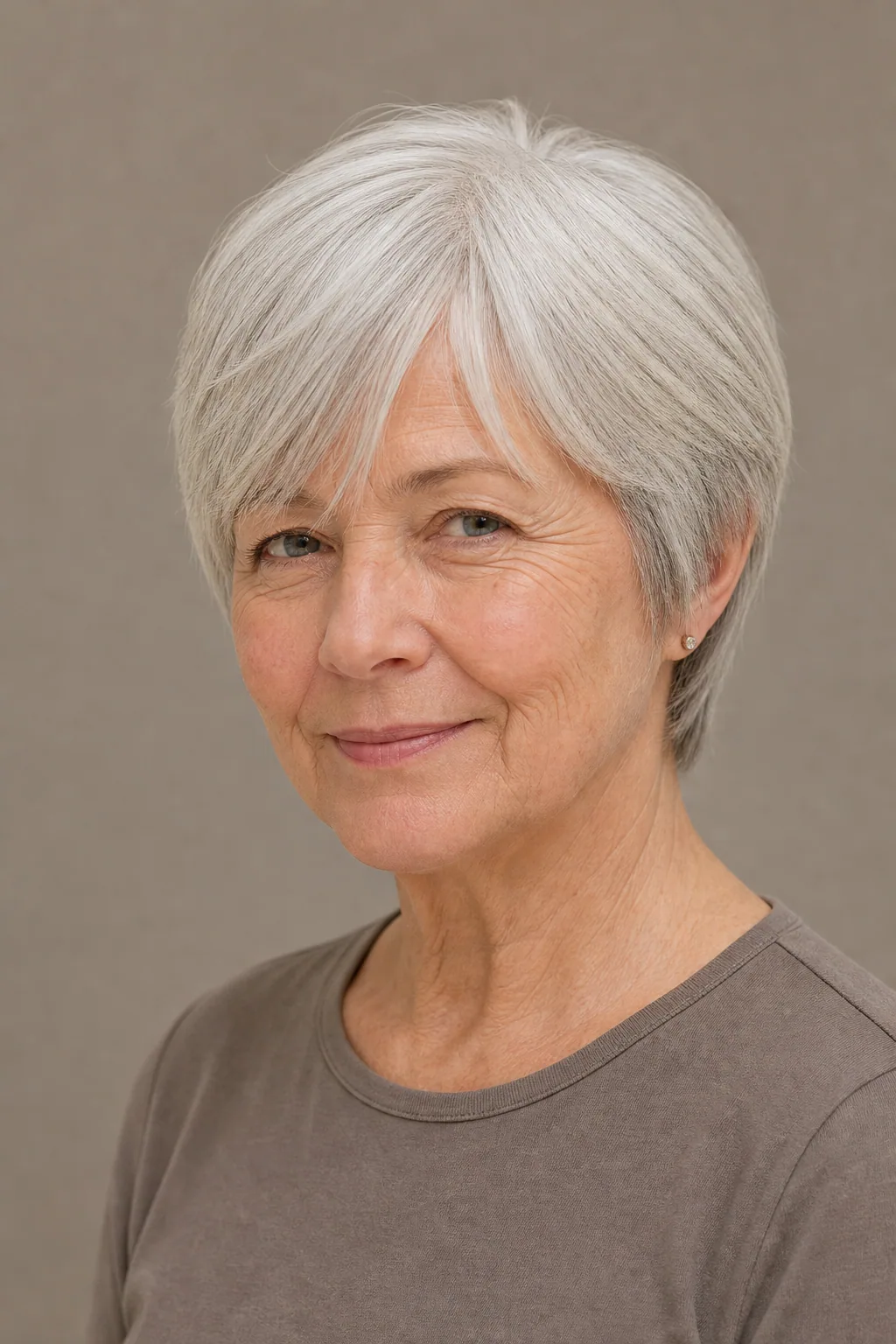
1. Clean-Lined Gray Crop With a Soft Fringe
The sides and nape are cut close with scissors, and the fringe (bangs) is cut in one soft, slightly curved line from temple to temple that stops at the brow. On gray, that single clean line is what makes a short cut look decided rather than grown out. It suits fine to medium hair, and it works especially well on white that has gone fine. Ask for "a close crop with a soft curved fringe, cut with scissors, no thinning shears."
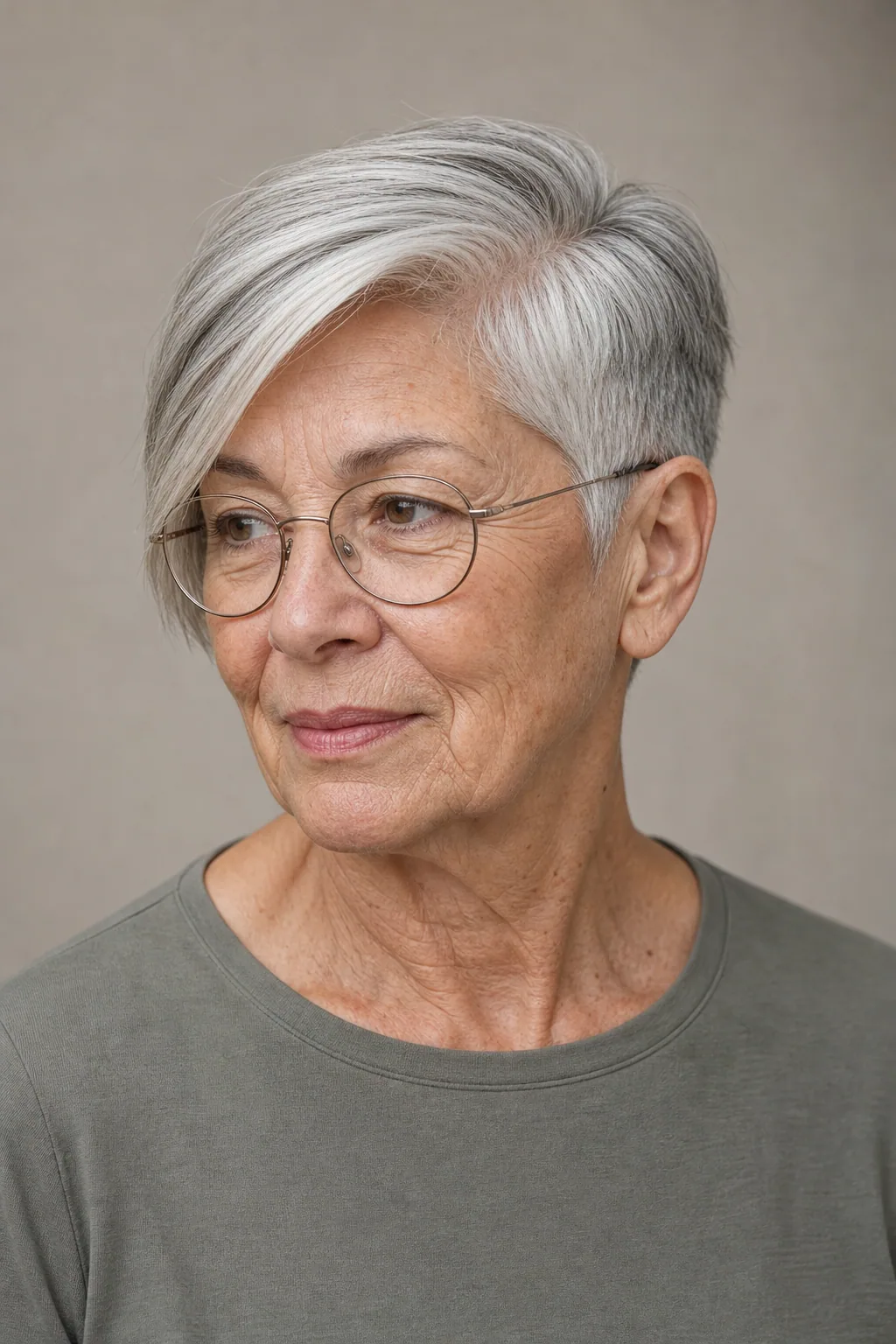
2. Silver Pixie With a Polished Side Part
The top is left about two to three inches and combed to one side from a defined part, with the sides and nape kept short and clean. It's a smooth, sleek pixie, where the shape comes from the part and a little shine. A fingertip of smoothing balm warmed in the palms and run over the top takes the fuzz off silver. Book a trim every four to six weeks, since the part and the sides lose their line first. Ask for "a pixie with a long top and a clean side part."
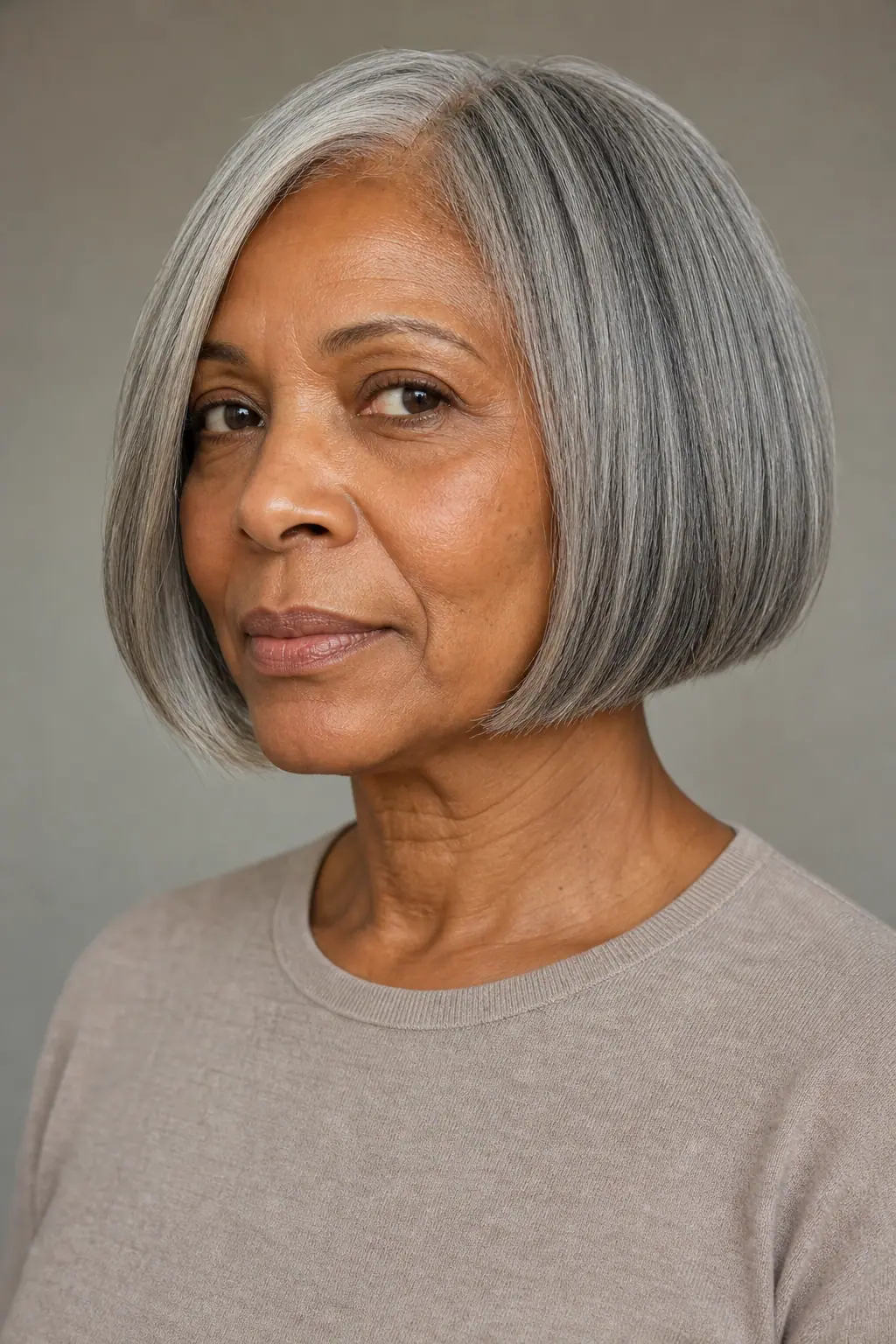
3. Short Gray Bob With a Sharp Perimeter
This bob sits at the chin, with the perimeter (the outer edge, where hair ends) cut to one sharp line and then checked dry. On coarse or mostly gray hair, a precise edge is what stops ends flaring. The line needs a trim every five to six weeks, because the edge is the point and it blurs fast. Dry with a paddle brush in about 5–8 minutes. Ask for "a chin-length bob with a sharp perimeter, ends scissor-cut." For a crisp edge on silver, see youthful hairstyles over 50.
Medium Layered Gray Hairstyles
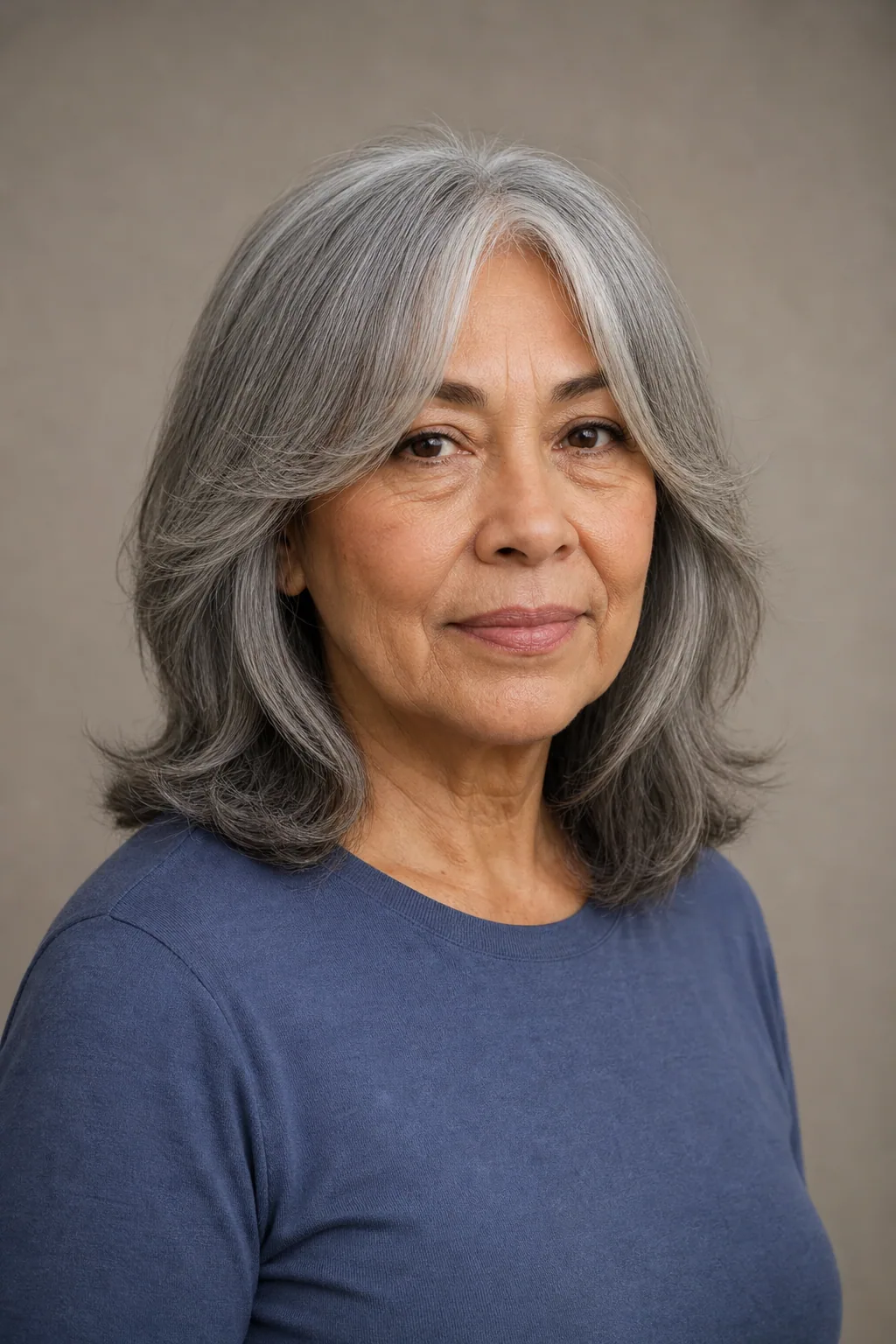
Medium layered gray hairstyles work when the layers are few, long and scissor-cut, so the ends stay full and the layers add movement instead of fuzz. Shoulder length and just above it is the range where gray looks its best for many women, because it is long enough to move and short enough to stay healthy. For the length in full, see medium-length hairstyles for women over 60, and for the choppier version, shag haircuts over 60.
4. Medium Layered Cut for Salt-and-Pepper Hair
In salt-and-pepper, the look comes from dark and white strands moving against each other, so the layers are cut to let both tones show. The stylist cuts the layers dry, section by section, and sees which strands spring up. Layers at the crown are slightly shorter, so the top doesn't lie flat, and the ends are left full. Keep product light, because heavy cream slicks the strands together and hides the mix. Ask for "long, scissor-cut layers, cut dry, with nothing heavy on top."
5. Shoulder-Length Gray Layers That Turn In at the Ends
The ends bend inward without a brush or a flat iron. The inner layers are cut slightly shorter than the outer ones, which gives the ends a curve of their own. A turned-under end also looks tidier on coarse, dry gray than a straight one. It suits straight to slightly wavy hair, and the style takes about 5 minutes with a round brush on the last inch only. Ask for "shoulder-length layers with inner layers cut shorter, so the ends turn under."
6. Collarbone Gray Cut With Long Face-Framing Layers
Gray often grows in densest at the temples and hairline, so the pieces next to the face are the brightest part of the head. This cut leaves the body at the collarbone and cuts only the front pieces long and slanted, starting at the cheekbone and falling past the chin, which puts the clearest strands near the skin. It suits medium to thick hair and is forgiving through the grow-out. Ask for "one length at the collarbone, with long layers cut only around the face."
7. Layered Silver Lob
A lob is a long bob, here cut to just above the collarbone, with soft layers beginning at the jaw. At that length the ends clear the shoulders and collars, so they aren't rubbed and roughed up all day, which matters for dry silver. It holds its shape unstyled, and the light lies flat on the smooth line of a one-length lob. Ask for "a lob that stops above the collarbone with soft layers from the jaw, ends point cut." A trim every six to eight weeks keeps the line.
8. Medium Gray Layers With Curtain Bangs
Curtain bangs part in the middle and sweep to each side, and on medium layers they take the focus to the face. Gray bangs spring up when dry, so they are cut dry and left a little long, around the cheekbone. Fine and medium hair carries this best, and a gentle grow-out into face-framing layers is built in. Dry the bangs first, with a small round brush, before the rest. Ask for "curtain bangs cut dry, to the cheekbone, blended into the layers."
Long Gray Hairstyles
Long gray hair looks deliberate when the ends are thick and the line is clean, and it looks tired when the ends are thin and split. The test is the last two inches: if they are still full and the same width as the hair above them, length can work. These two are the long end of the page. See hairstyles for women over 60 for the in-between lengths.
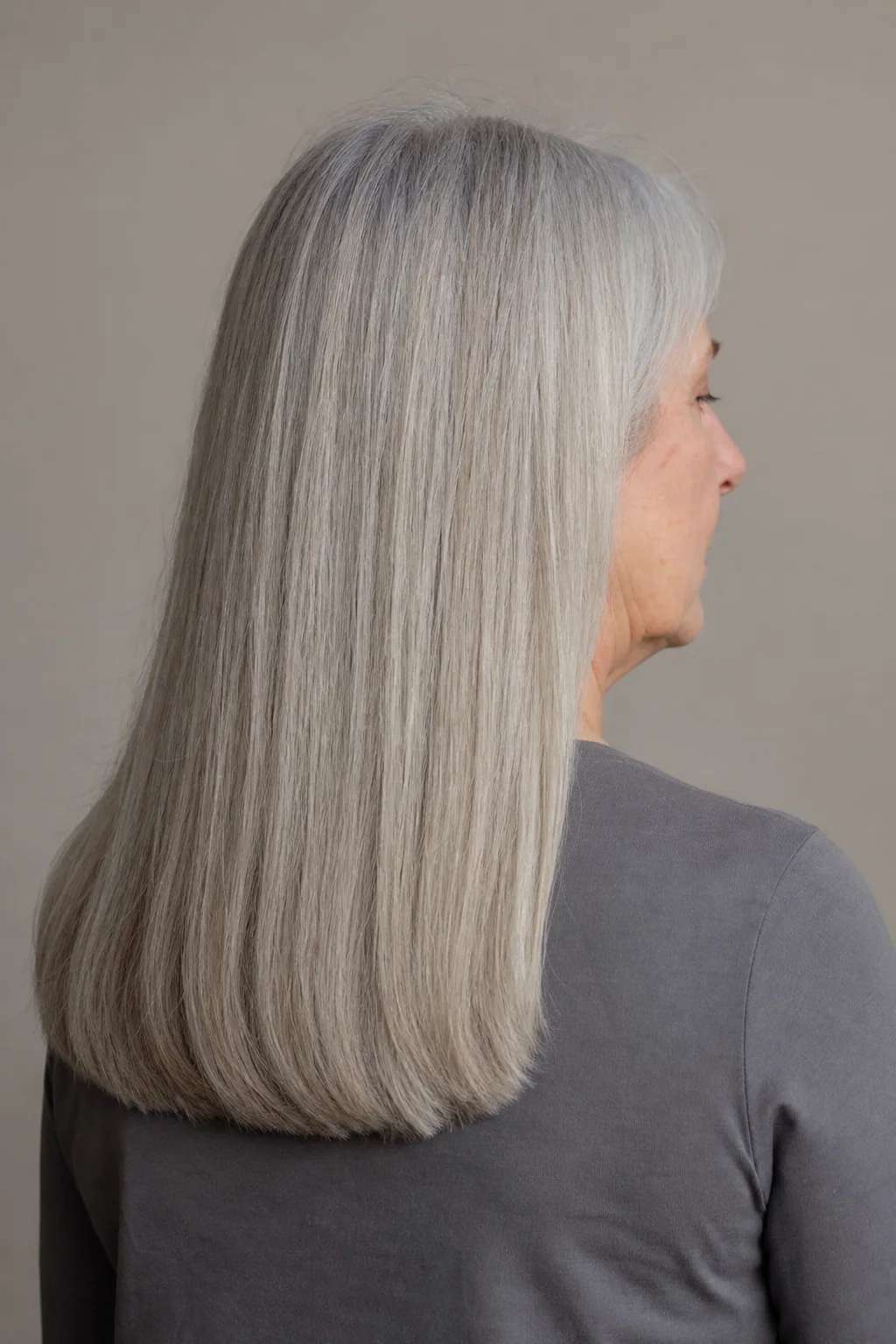
9. Long Gray Hair With a Blunt, Healthy Hemline
There are no layers, only a hemline: the bottom edge, cut straight or with a soft curve and left thick. A blunt line shows split ends less than a layered one does, so the length reads as healthy. It suits coarse or thick gray best, and it is the easiest long cut to get right. Trim every 8–12 weeks, taking off less than an inch if the ends are fine. Ask for "a blunt hemline, no layers, just dust the ends."
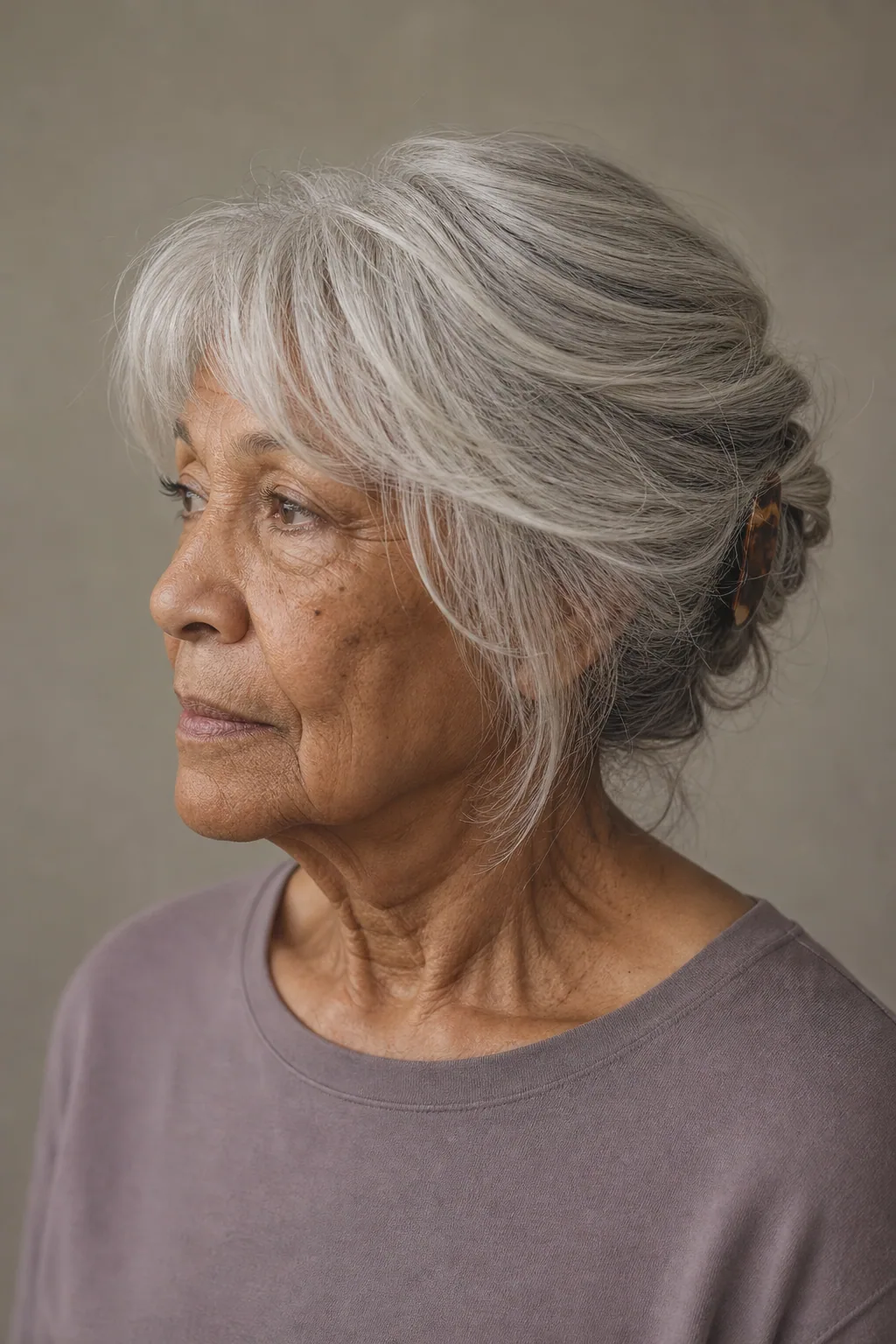
10. Long Layers on Silver Hair, Worn Loose or Twisted Up
Long layers cut low, starting below the chest, keep the weight at the ends and still let the hair move. The layers are long enough to gather, and silver hair is often coarse enough to grip a clip, so it holds a twist, a low bun or a claw clip without pins. Down, it needs a drop of smoothing serum on the ends. Ask for "long layers that start low, with enough length to twist up."
Gray Curls and Coils
Gray curls and coils change as they come in: the pattern can loosen, the strands can turn drier, and the gray and darker hair may curl differently, so the cut has to read the hair as it is now. Both of these are best cut dry.
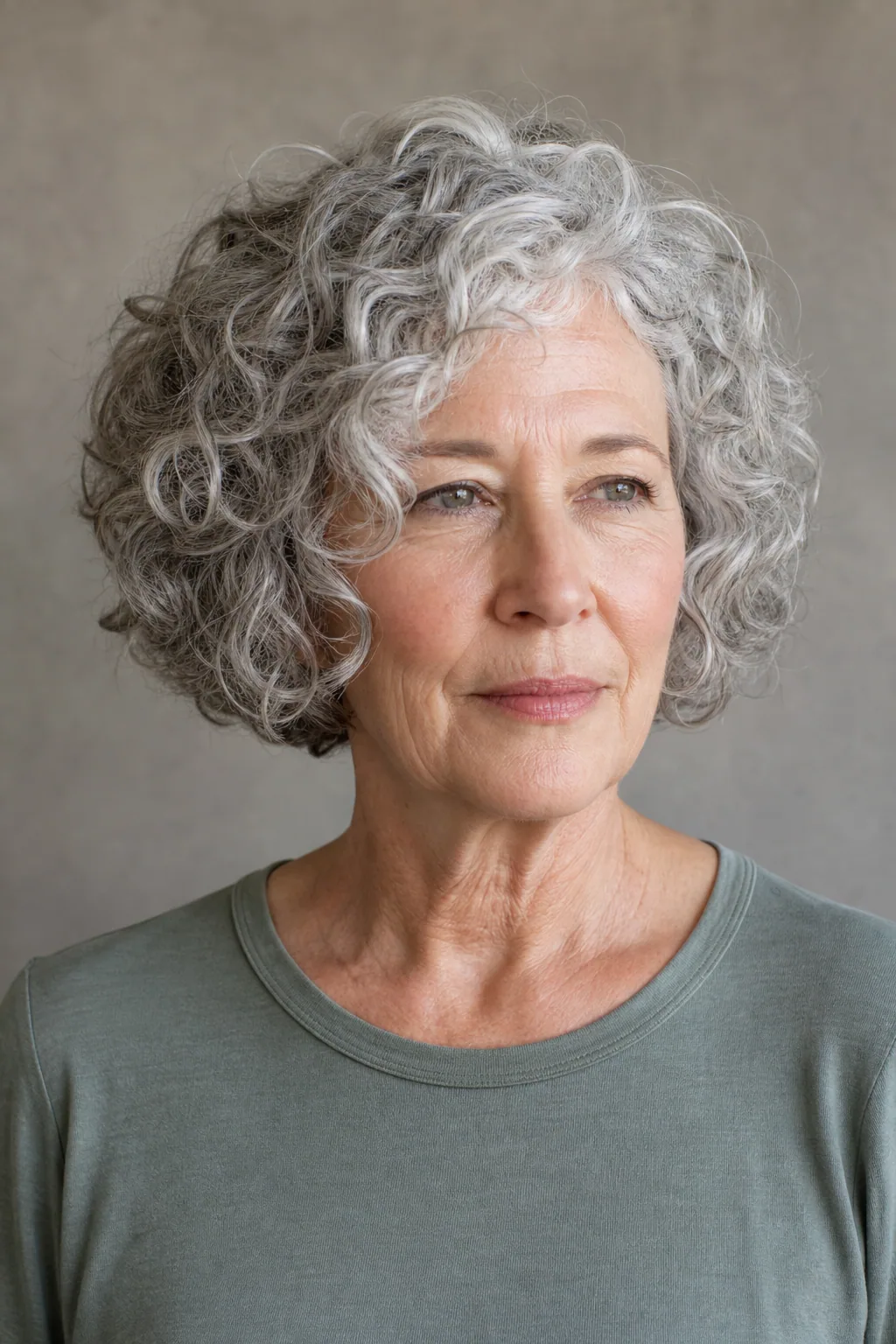
11. Round-Shaped Gray Curls With the Weight at Chin Level
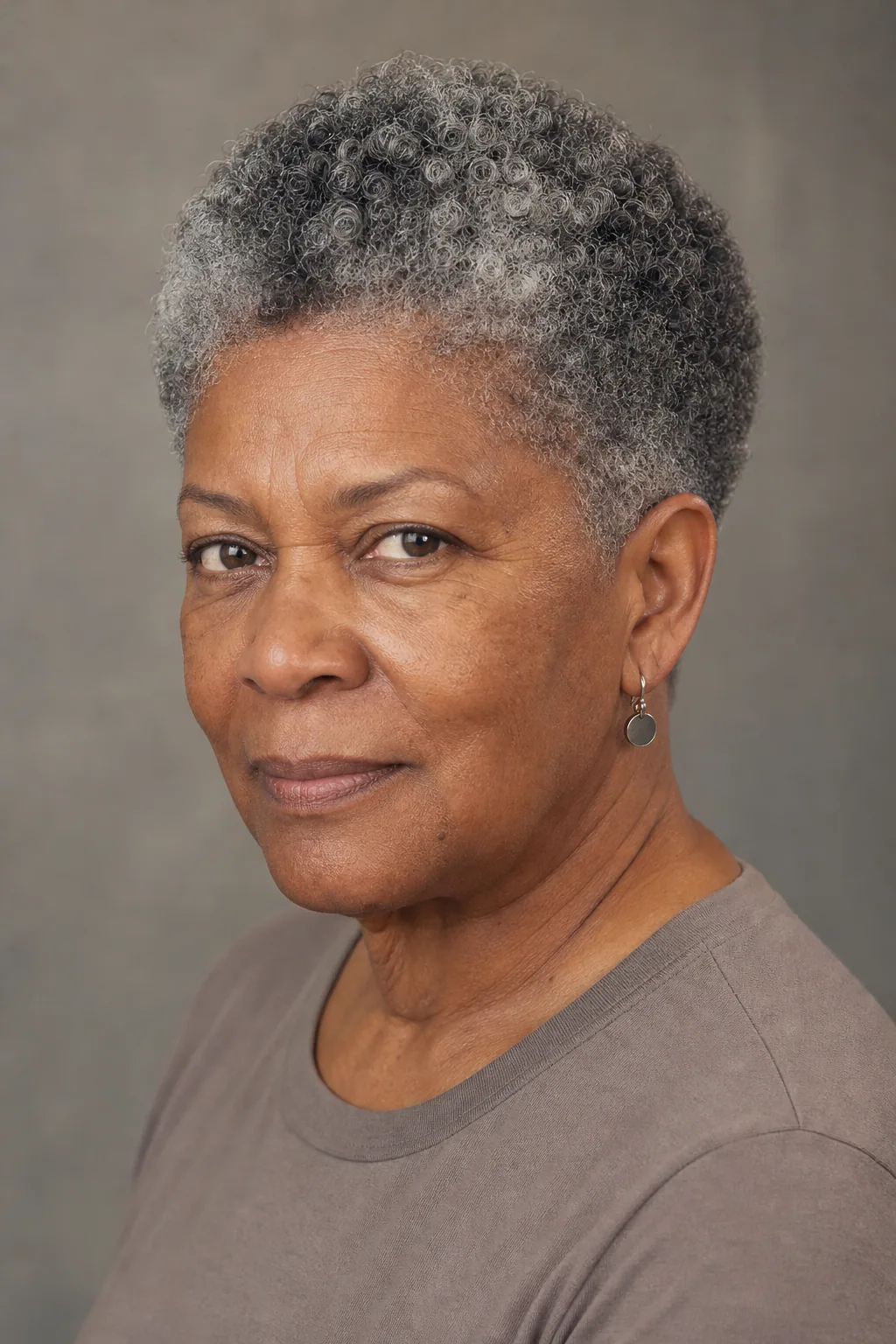
The curls are shaped into a soft round at chin level, with the longest length at the bottom of the curve and slightly shorter pieces around the crown, so the shape doesn't turn into a triangle. Dry gray curls can lose their definition, so this cut leans on a moisturizing leave-in and a curl cream on wet hair, then a diffuser or air-drying. Chin length holds the curl better than shoulder length, where the weight pulls it loose. Ask for "a chin-level round cut, dry, curl by curl."
12. Coily Gray Cut That Evens Out Two Textures
On coily hair, gray strands often coil tighter, looser or drier than the darker strands around them, and the difference can make a shape look uneven. The taper is cut closer at the sides and nape, and the length on top is trimmed to even the two textures. The aim is a smooth, rounded outline, not a slope. A deep conditioner once a week helps the gray feel as soft as the rest. Ask for "a taper that follows my hairline, with the top cut to even out the textures."
Gray With Contrast and Shine
Some gray looks best when you leave the contrast alone, or push the shine instead. These two let gray be gray.
13. Gray With a White Front Section Left to Show
Some women grow in a natural white section at the front or temple, and the cut can frame it rather than cover it. The stylist cuts the front into the fringe or a side sweep and leaves its color alone, so the white falls where the eye lands first. It works because the contrast with darker or salt-and-pepper hair is real, not painted on. Part the hair so the white section falls on the side you like. Ask for "cut the front so the white falls forward and frames the face."
14. Glossed White Bob Cut for Shine
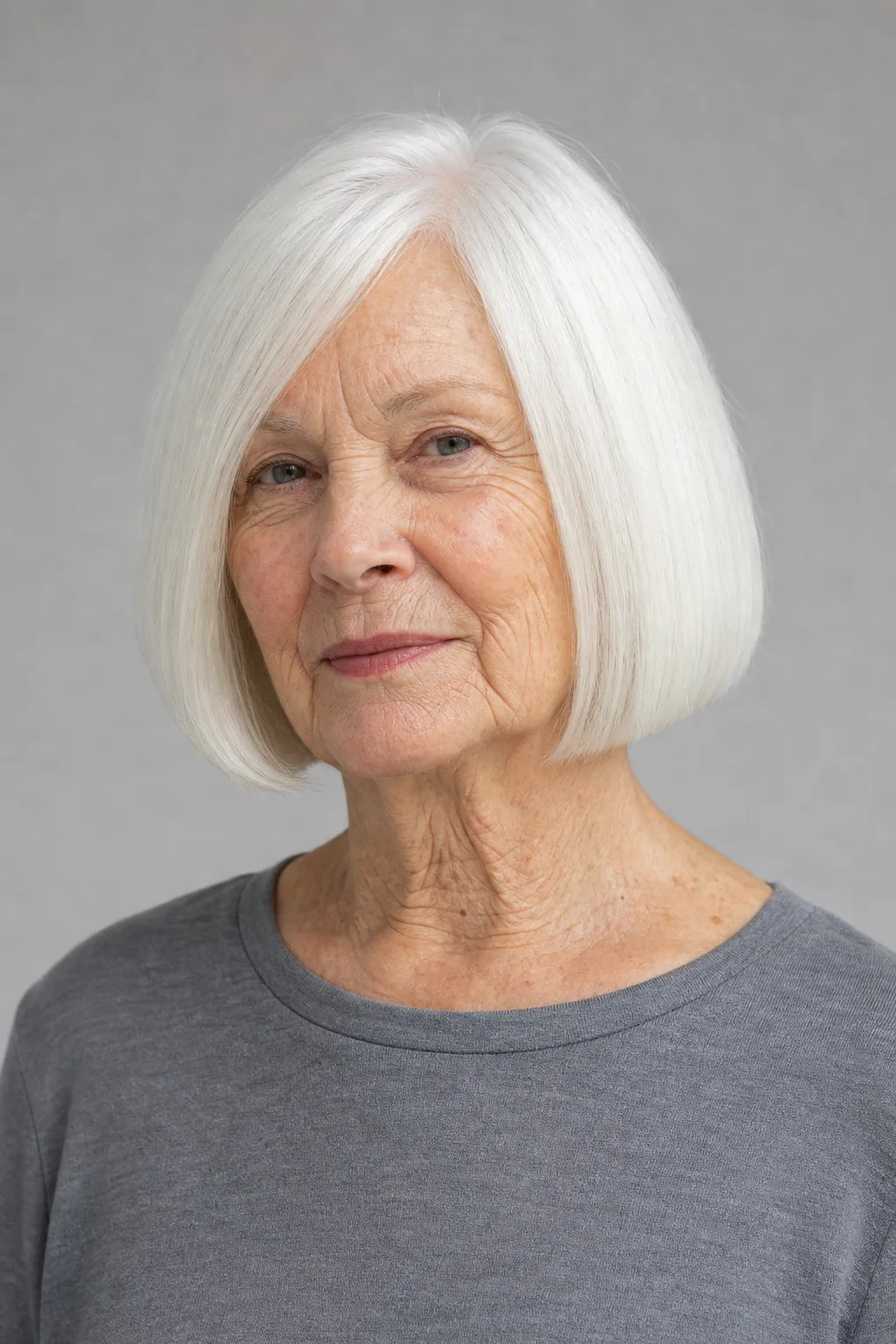
White hair has no pigment, so it reflects light off its surface, and a chin-length one-length bob with an even, smooth edge is the cut that gives it the most to reflect. A salon gloss, a sheer coat applied after washing, brightens the tone and sets the shine, and a blunt edge catches it. Straight to slightly wavy hair suits it, with a 5–8 minute blow-dry. Ask for "a one-length bob at the chin, ends scissor-cut, and a gloss to finish."
Keeping Gray Bright: Gloss, Toner and Purple Shampoo
Gray stays bright with a clear tone and healthy ends, and most of the work is a short routine in the shower and a gloss every few visits. Gray is more porous than pigmented hair, so it picks up yellow from heat, hard water, smoke and sun more easily. The full routine, with a product category for each problem, is in the care section of our guide on how to go gray. In short:
Purple shampoo cancels yellow. Use it once a week or less to start, and less if the hair turns lilac.
Gloss or toner is a salon treatment that adds shine and corrects brassy tones. Ask how long yours lasts, because it fades.
Trims keep the ends from splitting. Ends are the first thing a pale, dry head shows.
Heat protectant goes on before any blow-dry or hot tool.
If you color part of your hair or are blending, see gray blending for dark hair for how a colorist handles it.
Gray and Your Wardrobe, Makeup and Glasses
Gray next to pale skin can look low in contrast, so a clear outline and a little definition at the brows and lips, or a frame with some weight, help the face show against it. There are no rules about color here, only that a stripe of strong color near the face can make silver look cooler or yellow look stronger. If you wear glasses, a frame with a little contrast against the hair helps, and our hairstyles over 50 with glasses page covers how a cut sits with frames.
Height on top and long face-framing pieces lengthen the face
A chin-length line that ends at the widest part
Square
4, 8, 11
Soft layers and a round outline soften the jaw
A sharp, jaw-length line
Long
3, 7, 14
Width at the sides and a line at the chin shorten the face
Length with flat, straight sides
Heart
5, 7, 14
Fullness at the jaw balances a wider forehead
Heavy fringes cut short
Oval
Any
Choose by the kind of gray and your routine
Nothing in particular
What to Ask Your Stylist
Bring words, not just a photo: the length, where the weight sits, how the ends are cut and what to avoid. Say these out loud:
"Please use scissors or point cutting on the ends, not a razor, because my gray frizzes."
"I'd like a clean outline, with a defined perimeter and no stray long pieces."
"Can you add a gloss to brighten the tone, and tell me how long it lasts?"
"Please cut it for the texture my gray has now, and check it dry before you finish."
"How often should I trim this, and how will it grow out?"
How Often Each Gray Cut Needs Care
The shorter or crisper the cut, the sooner it needs a trim, and a gloss comes on a separate schedule. These are typical ranges for average-density hair.
Cut
Trim every
Daily minutes
Gloss or tone check
Grow-out
Short crop or pixie (entries 1, 2)
4–6 weeks
2–5
Every few visits
Awkward over the ears for a few weeks
Short bob (entry 3, 14)
5–7 weeks
5–8
Every few visits
Even; the line blurs
Medium layered (entries 4–8)
6–8 weeks
5–10
Every few visits
Forgiving
Long (entries 9, 10)
8–12 weeks
5–10
Every few visits
Very forgiving
Curls and coils (entries 11, 12)
8–10 weeks
5–10
As the tone drifts
Even, if the shape is round
Contrast (entry 13)
6–8 weeks
3–8
Optional
Depends on the cut
Frequently Asked Questions
What hairstyles look best with gray hair?
Cuts with a clean outline and healthy ends look best on gray, from a short crop to long layers. Gray is often coarser and reflects light, so a smooth, defined shape reads as chosen. Choose by the kind of gray and your face shape, and avoid heavy, choppy texture.
Is short or long better for gray hair?
Neither is better; healthy ends decide it. Short gray is easy to keep neat, and long gray works if the ends are still thick. Medium length, around the collarbone, is the most forgiving for many women, as it moves without fraying.
What haircut makes gray hair look modern?
A cut with a defined line and a smooth finish. A sharp or soft hemline, scissor-cut ends and a gloss to brighten the tone make gray look current. A shaggy, razored cut tends to look messy on coarse gray.
Do layers work on gray hair?
Yes, if they are few, long and scissor-cut. Gray is often wiry, so choppy layers can stand away from the head. Ask for layers that start at the chin or lower, with the ends left full, and a smoothing cream to settle them.
How do I stop gray hair looking frizzy?
Start with the cut: scissor-cut ends and a clean line frizz less than razored ones. Then use a moisturizing conditioner and a pea-sized amount of smoothing cream on damp ends, and protect the hair from heat. A trim every 6–8 weeks takes off split ends before they spread.
Should gray hair have bangs?
It can. Bangs frame the face and cover a high forehead, and gray bangs spring up when dry, so ask for them to be cut dry and left a little long. A curtain fringe or a soft side sweep is easier to grow out than a short, blunt one.
What is the best medium length haircut for gray hair?
A collarbone or shoulder-length cut with long, scissor-cut layers is the most forgiving. Keep the layers few, start them at the chin or below and leave the ends full. A layered lob stays tidy with a trim every 6–8 weeks.
Results vary with hair type, density, texture and face shape. This guide is educational and is not a substitute for an in-person consultation with a licensed stylist.
 Grace